More than Just Versailles: Grand Châteaux near Paris

While the Loire Valley (two hours south of Paris) is home to the best variety of French châteaux, there are also impressive palaces much closer to Paris. Two years ago, on my scouting trip, I learned so much about the châteaux near Paris and along the Loire Valley that I came home not with the expected one television script…but with two. Of course, one script was “The Châteaux of the Loire Valley.” The other was “Side-Trips from Paris: Kings and Nobles Gone Wild” — a show dedicated to Versailles, Vaux-le-Vicomte, and Fontainebleau.

p18-scout-fountainbleu
A fun way to get exercise is to run around a vast royal or noble estate and “scout” for a good camera angles. The challenge involves the light, which dictates what is useless, do-able, or wonderful. Scouting the backyard of the palace at Fontainebleau, we came up with this perfect place to film a bit where I talk directly to the camera. Below are the three “on cameras” I did at this palace: #76 (in front), #79 (inside), and #85 (in the back, where this photo was taken — this was the close of the show). By the way, along with just visiting these lavish palaces, it was fun to work a little meaning into the scripts as, in #84. The wording is not final (since it’s not “on camera,” we can tinker with the language before I record it), but it sums up the message I’m hoping to share:

[76, on camera] Shifting from medieval piety back to royal excess, it’s time for one last palace. In the 16th and 17th centuries, Paris’ booming elite class made this area Europe’s château heartland. Most of these lavish getaways began small — as hunting lodges — and then grew.

[79, on camera] It seems every king, queen, and emperor since has loved this palace. Louis XIII was born here, Louis XV married here, and after the anti-monarchy chaos of the French Revolution, Napoleon reigned as emperor right here.

[84, montage of people frolicking] All this royal, noble, and imperial excess and the resulting political upheaval is not necessarily a bad thing. I see it as the growing pains of democracy. Ponder these symbols of excess — once so out of reach, and today the playground of the public. Why are today’s French so hell-bent on defending their freedom? Perhaps it has something to do with their heritage of struggling under the thumb of abusive power.

[85, on camera] Whatever the case, when you travel here, it’s clear: The powerful of France’s past have left today’s visitors with some amazing and thought-provoking sights. Thanks for joining us. I’m Rick Steves. Until next time, keep on travelin’.

p19-crew-at-ftnblu It takes six pretty intense days of scrambling to film a 30-minute episode. I grabbed this shot of our crew (producer Simon Griffith, photographer Peter Rummel, and me) at a happy moment when we had just shot the last bit to complete our first program. Next up: Châteaux of the Loire. Keep on travelin’.

p20-steve-rick-cheverny Steve Smith and I have been working together on our France guidebook for over 20 years. We wrote the first edition when Steve lived in an apartment in Paris and I slept on the street in the old VW Westfalia van we co-owned (back when eating and sleeping included lots of picnicking and camping). While Steve is the guiding force when it comes to France at ETBD, I try to join him for a week or two of research each year. This shot was taken just after the hunting dogs were fed at Château de Cheverny.

My Most Exciting Challenge: Writing TV Scripts on the Road

p17-on-camera-twoOne of the most exciting creative challenges in my work is fine-tuning a television script as we film the show. While I try to leave home with a good script, I’ve learned that there’s no way to polish it until we’re right there and we know what images we have to work with. We check our gear at the desk upon arrival at a great sight like Versailles and “scout” the sight with the producer and cameraman. Then producer Simon and I sit down to tighten and flip-flop and rewrite. We need to decide what passages are “easy to cover” (in other words, can be illustrated by vivid visuals) and what items are boring to cover and therefore need to be done with me talking to the camera (an “on camera”). Here in Versailles, one room was closed and several other bits I was excited about just wouldn’t “read” well for TV.  And we decided to add the queen’s wing and follow the war room with the peace room so we could end on a more positive message. Here’s what we wrote and filmed that wasn’t originally in the plan, but made our coverage of Versailles much better for the eye (and more meaningful, as well):

[on camera] Versailles was home to a hundred years of queens. They had their own quarters and, while their kings were out making war and having affairs, their wives pursued their own passions — from philosophy to music.

This room, where 19 princes were born, was decorated by Marie-Antoinette and looks just as it did in the days of the last queen.

Louis ruled from 1643 to 1715. By the end, he was tired of fighting. Here, in the Peace Room, peace is granted to Germany, Holland, and Spain, as cupids play with discarded weapons and swords are pounded into violins. Louis bestows an olive branch on Europe as his queen cradles their baby twin daughters.

[on camera] At the end of his long reign, Louis, having exhausted France with his many wars, gave this advice to his great-grandson, the next Louis: “Be a peaceful king.”

The Palace of Versailles: Mobbed by Tourists

Shuffling through Europe’s most crowded palace on one of the most crowded days of the year (a Sunday in July), I was struck by the cameras, groups, iPads, humidity, and exhaustion on people’s faces. In spite of the crush, you can feel the gasps of excitement when the long train of royal staterooms reaches the Hall of Mirrors. I was moved to struggle upstream. This video clip shares an experience I’ll never forget. What is your worst crowd experience at a great sight in Europe?

If you can’t see the video below, watch it on YouTube.

Versailles: Europe’s Favorite Palace

I’m spending a couple of weeks in the area around Paris to make two TV shows on the great palaces and châteaux of the region. Most of these castles are run like businesses, and need a certain amount of visitors to stay in the black. Versailles is the dominant attraction in the area, drawing a flood of visitors every day while nearby palaces struggle to get a crowd.

p14-hall-mirrors-crowd Visiting Versailles on a weekend in midsummer comes with the worst possible crowds. A steady crush of visitors shuffle through the hot and muggy one-way route, as if enduring some horrible punishment. The magnificent Hall of Mirrors is the payoff, and even with a mossy carpet of tourist heads, it’s a thrill to see.

p15-crew-hall-of-mirrors Most great sights in Europe are closed one day a week to the public. But that doesn’t mean they take the day off. That’s the day the furniture is dusted, paintings are moved around, elite visitors and their entourages are given private tours, and film crews (like us) are busy doing their work. We filmed on Sunday to show the reality — a palace packed with tourists. And then we came back on Monday (when it’s closed) to shoot all the details of the furniture, paintings, and my “on cameras.” Being in the Hall of Mirrors with a mob is good. Being there all alone hits you much deeper. Even if you don’t have VIP film crew access, you can still have the Hall of Mirrors (almost) all to yourself: Just visit midweek, during the last hour of the day.

p16-steve-laptop I am so proud of our France guidebook. Being in France, I’m meeting happy travelers with the book everywhere I go. And it’s the labor of love of my co-author, Steve Smith. Steve joined us as part of our TV crew. He’s our fixer (he arranged the permissions for our big camera), our guide, our driver, and my on-camera sidekick as we produce these France shows. And, an expert at multitasking, whenever there’s down time on the TV production end, Steve is busy updating the details of our guidebook. While we worked for five hours in an empty Palace of Versailles, Steve was on call, online, on the phone, and on his laptop.

Guest Blogger: The Travelphile and a Sense of Place

Where we travel and how we travel shapes our travel experience — obviously. And who we travel with does, too. I’ve been traveling quite a bit lately with a remarkable woman, Trish Feaster. We’re different types of travelers — and I’ve been struck by how those differences broaden and enrich my travel experience.

Trish is a linguist, while I am a confirmed monoglot. Her love of language has given my recent travels a new dimension. She’s a foodie, while I’m an “intermediate eater.” Her ability to get the same joy out of a menu that I get out of an art gallery has broadened my cultural experience (and even — a little bit — my waistline). And her emphatic joie de vivre tempers my workaholism in a way that — ironically — makes me especially productive as a travel writer. I find that now I experience, and write about, things that I wouldn’t have made time for if I were on my own.

Trish is an avid photographer as well as an inspiring writer. Her blog, The Travelphile, provides a showcase for her work. (It also gives a more candid look at my non-European travels than you’ll get on my own blog, as we enjoy lots of travel fun that has nothing to do with Europe.) I think her insightful blog entries complement my own, and she deserves more readers. To give you a taste of Trish’s writing, she’ll be occasionally guest-blogging here in the coming weeks. I hope you’ll enjoy her take on traveling; if you do, please follow her blog. Thanks.

A Place That’s All Your Own

One of the most annoying things about travel/tourism is that if you’re going to someplace that’s popular, everyone else is too. That means crowds, lines that seem to have no end, pushing and shoving, and odors that you didn’t think were humanly possible. With all of that mass of humanity, patience and a good sense of humor seem to melt away quicker than ice under a scorching sun.

Although most people would prefer to travel in low or shoulder season to avoid crowds (and elevated prices), for many, that’s simply not possible. One way to get around that scene is to not be in it. Find a better way to enjoy your travels by being in a place when there are few people and make it a place that’s all your own — even at the busiest time of the travel season.

This summer, because I’ve been working as an assistant guide, I have been, by necessity, out and about when everyone else is. While being on a tour has its privileges (such as guided tours with incredibly talented and smart local guides or entrances to sites/activities without waiting in line), it’s still next to impossible to avoid the fact that everyone and their mother is at the same place you are everywhere you go.

To have a more peaceful and intimate experience, I made a conscious effort to enjoy the places we visited either really early in the morning or really late at night. Now obviously I wasn’t getting into museums with an Early Admission Ticket like at Disneyland (Whoa, there’s a idea! Museums, get on that!), and I certainly didn’t do this every day. But, I did get to see places in ways that most travelers — or even locals for that matter — don’t. It takes effort and sometimes a little bit of planning (going to bed early so you can be up at 6 a.m., resting in the afternoon so you can be up until 1 a.m.), but it’s so worth it to watch the sunrise over a glassy lake, to be one of twelve people standing on the Mont Saint Michel causeway at midnight listening to the waves kiss the shores of the sandy bay, to dance like no one is watching in front of the Eiffel Tower, to smell the fresh cut hay just two miles away from the nearest castle, or to be the first person of the day to stroll through the main street of a town that is just on the verge of waking up. Even if you do it just to get a pristine photo without others blocking your view, you can have a really magical moment if you can find a way to enjoy a place all on your own.

Here are just some of the places where I took advantage of being out and about when the the crowds were getting their beauty sleep.


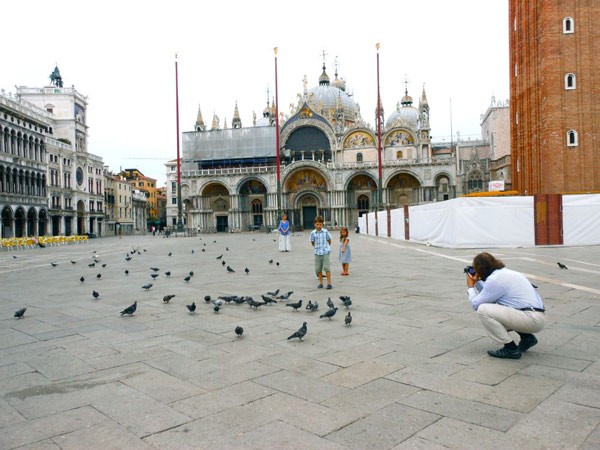
At 5:30 in the evening, what once was a empty square is peppered with a few too many people.

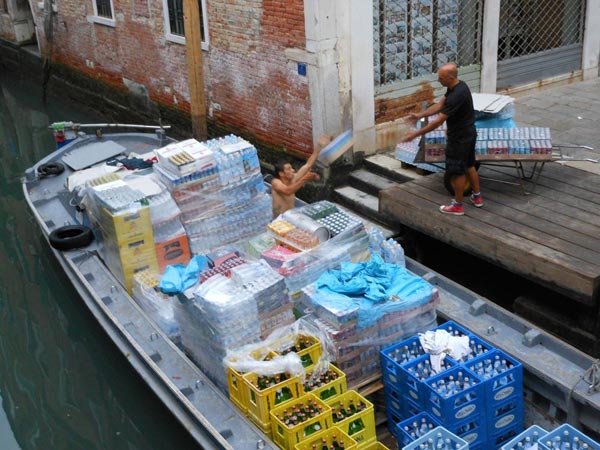
Early in the morning, boats haul their goods to merchants of Venice.

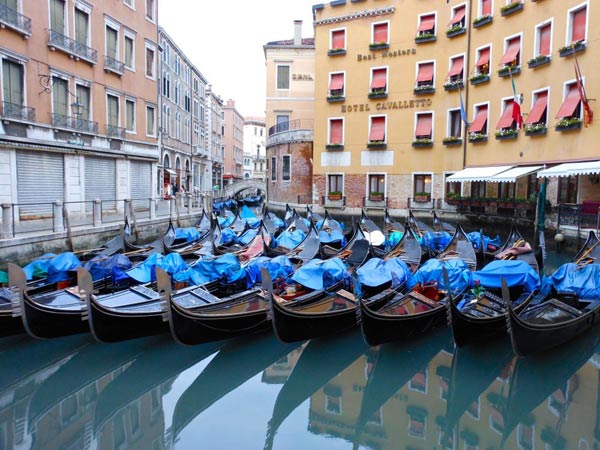
Gondolas nestle together in the cove of a canal in the early morning hours before the tourists arrive en masse.

This family and I had the same idea: get up early and have Venice all to yourself.

The peace and tranquility of Venice are best enjoyed early at morning or late in the evening.

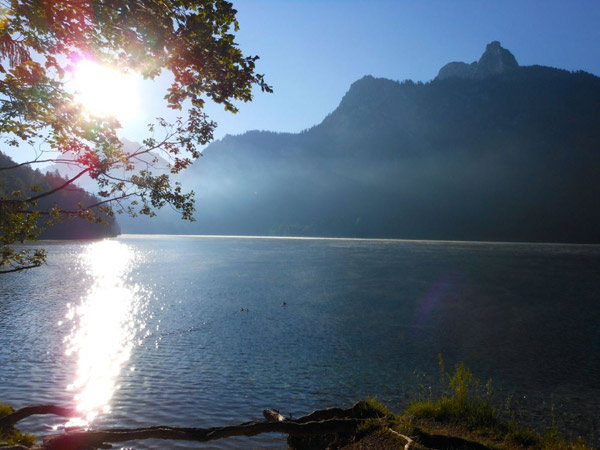
On this morning, I ran from Austria to Germany and was treated to a calming moment on a lake before joining the crowds later that day at Neuschwanstein Castle.

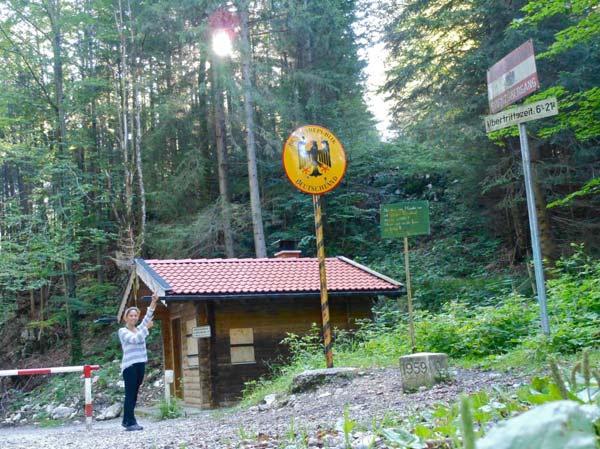
Even the Austria/Germany border guard wasn’t up and about at this early in the morning.

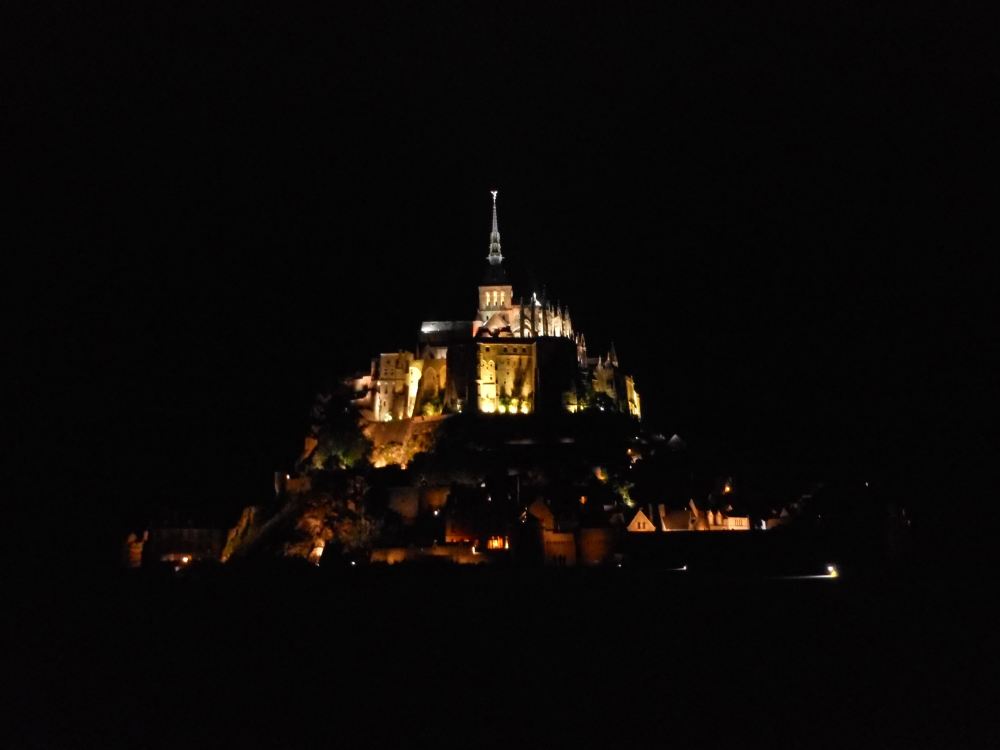
Le Mont-Saint-Michel has stood majestically as a beacon to pilgrims for centuries, and at night it is at its most striking and its most tranquil.

It’s hard to imagine that in only an hour from when I took this shot, this place was full of people standing practically shoulder-to-shoulder.

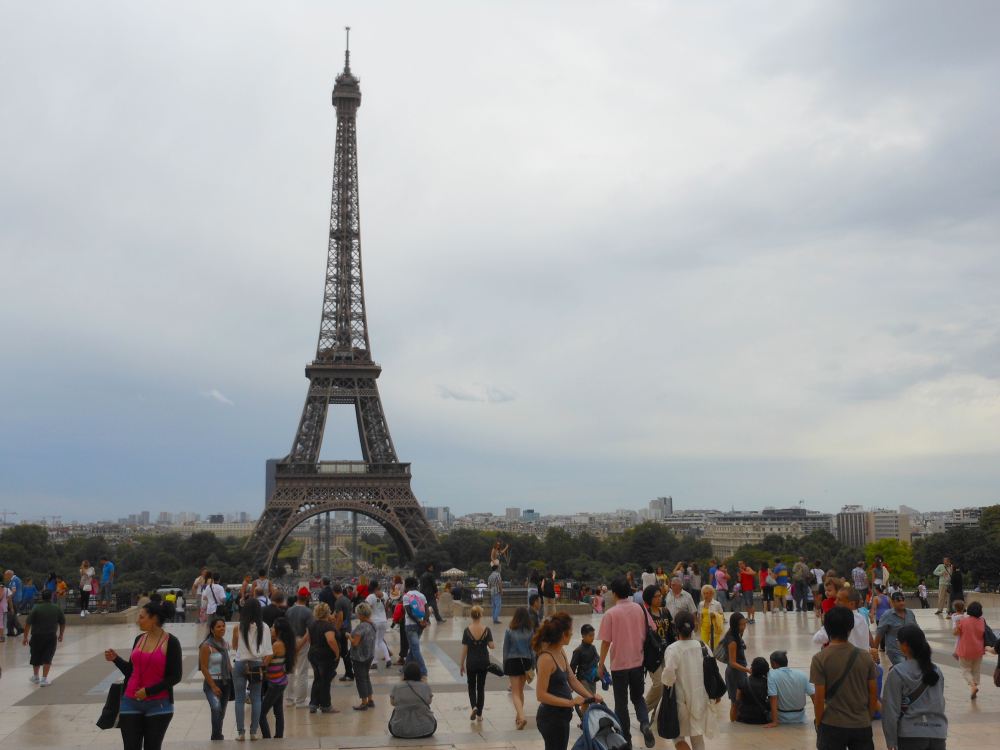
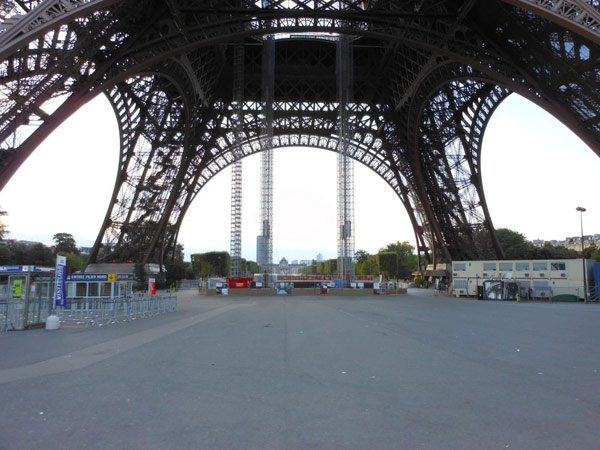
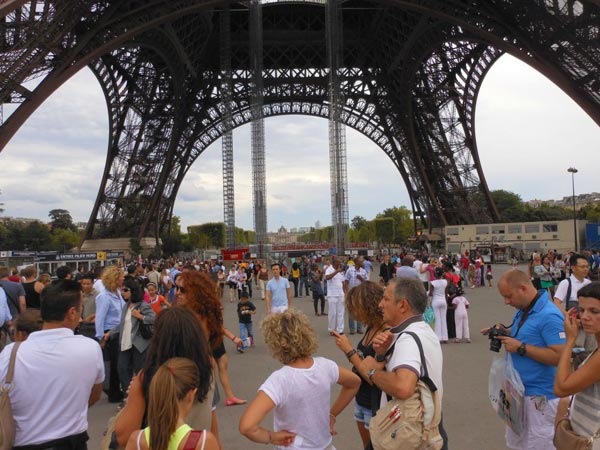
People were waiting for two hours just to buy their tickets so they could stand in line again to take the elevator up the Eiffel Tower.

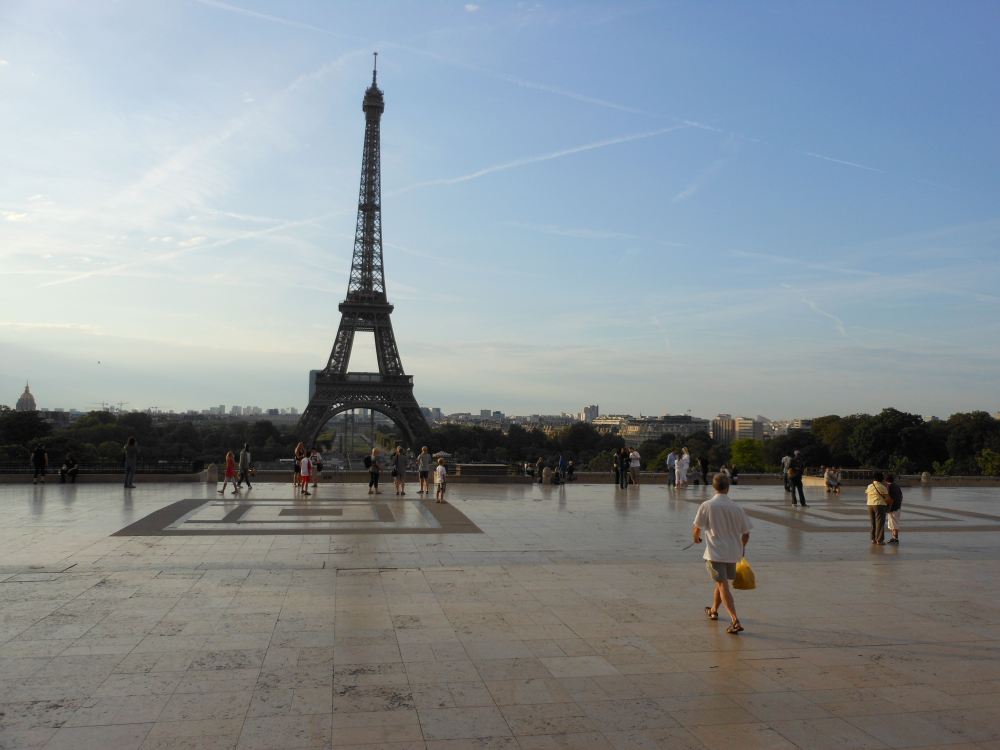
Early in the morning, you can get a nearly unobstructed view of the Eiffel Tower.