At Rick Steves’ Europe, we have two things in abundance: a passion for providing practical information for better travels, and talented people on our staff. And you’ll see what I mean on the Rick Steves Travel Talks page, where you can watch more than 60 travel classes for free.
Here’s some big news: Our latest free, streaming travel videos are…language classes! If you’ll be traveling to lands where people speak German, French, Italian, or Spanish (or just want to hone your language skills a bit because it’s fun), grab your favorite travel partner, pour yourselves an appropriate beverage, and join us for a fast-moving and instructive hour.
We offer travel classes throughout the year at our Edmonds headquarters, and this is our chance to send our great teachers into your world. Good luck — or perhaps I should say, “Viel Glück…bonne chance…in bocca al lupo…buena suerte!”
I’ve gained a renewed appreciation for two easygoing and easy-to-enjoy beach towns that stand like sister cities, each just a few miles from the France-Spain border. Both Collioure, in France, and Cadaqués, in Spain, are off the mainstream when it comes to Riviera holiday spots. And each has a delightful ambience — with welcoming beaches and fun restaurants.
Collioure, FranceCadaqués, Spain
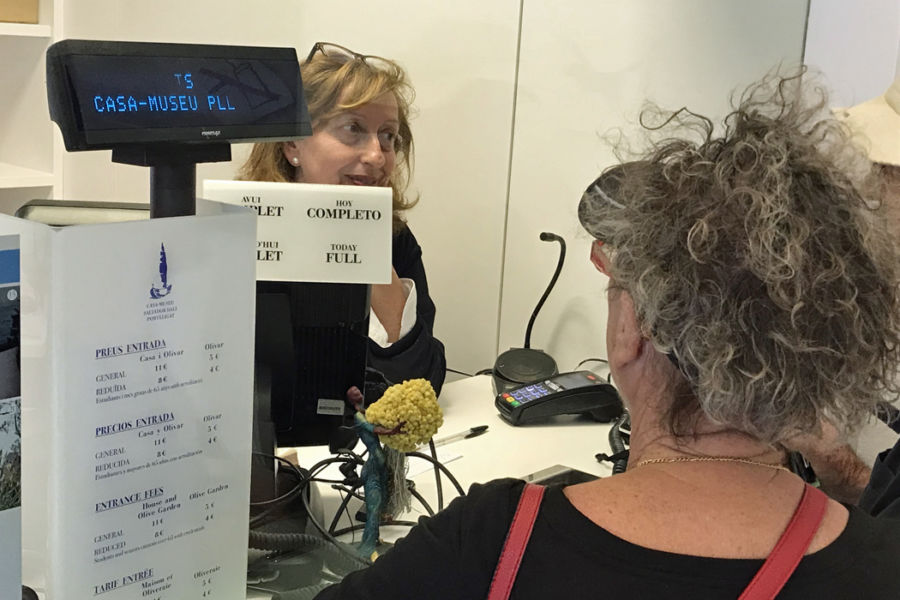
A warning: Most travelers in Cadaqués are there to see the home of Salvador Dalí — which I consider the most interesting home of a dead person in all of Europe. As it’s really popular and only lets in eight visitors at a time for escorted tours, you must get reservations online in advance.
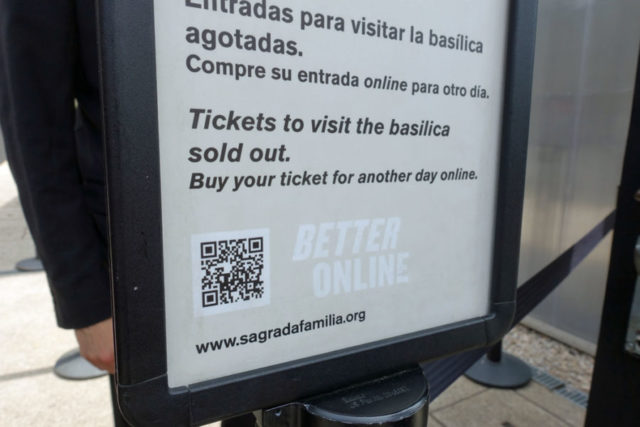
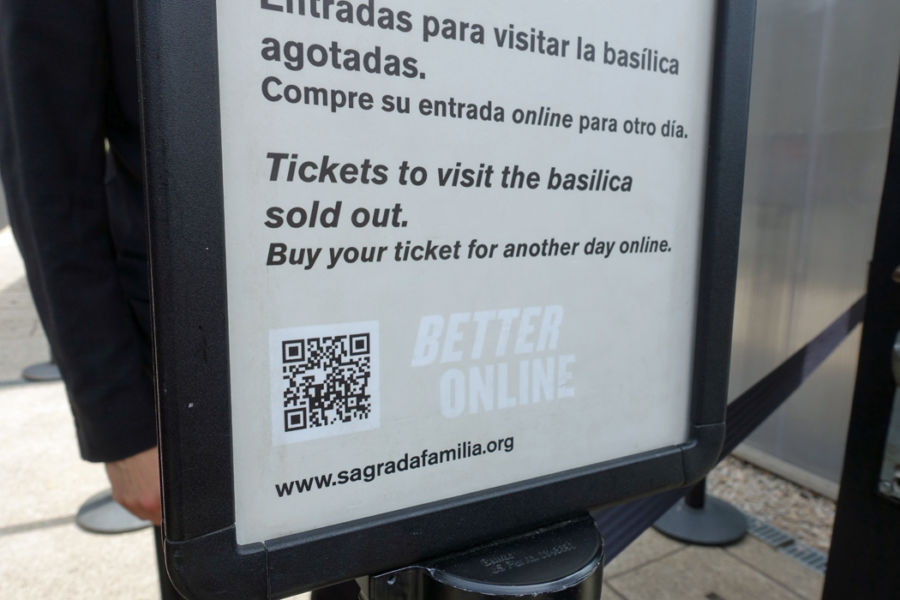
This is a new theme in my guidebook research: When a place is generally sold out and recommends that visitors book online, in advance, for a timed entry — I cover it in my guidebooks as if that’s the only way to get a ticket. (The next day, I visited Gaudí’s wildly popular Sagrada Família church in Barcelona. The ticket office was totally closed, with a sign that said, simply, “Buy your ticket for another day online.”)
Do your homework: It’s easier than ever to go online and book sights that are generally sold out. And it’s a big mistake not to.
— Join our traveling community — connect with me on Facebook and Twitter.
Things are always changing in Europe — and that’s why I spend 100 days of every year over here, keeping theRick Steves guidebooks up-to-date. About a third of the way through my 2018 trip, I’ve already collected several snapshots that illustrate Europe’s constant evolution. —Rick
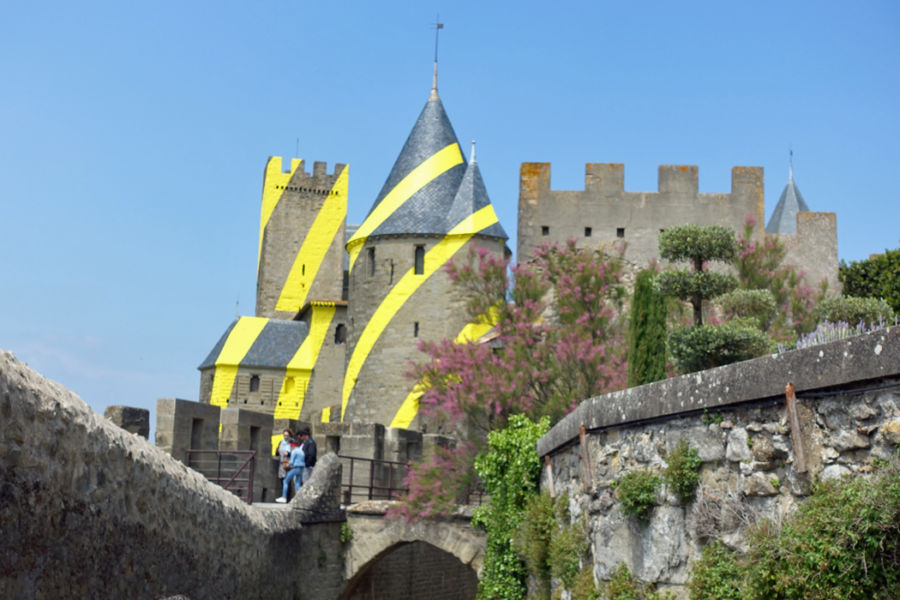
Modern art is becoming more fun. In the normally predictable and unchanging fortress city of Carcassonne, I noticed odd yellow slashes on the walls and turrets. When I reached the proper vantage point, the bull’s-eye came together.
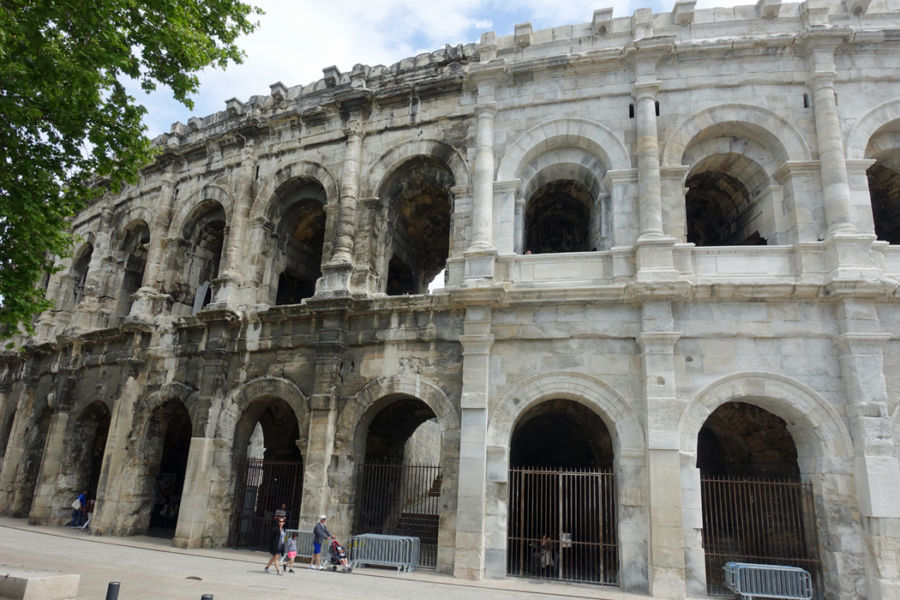
Europe’s cultural patrimony is always being spiffed up, and it is costly. It’s not unusual to see an ancient site half-cleaned. And when you see the contrast between old and newly cleaned, you better appreciate the value of peeling away all that soot.
The Arena of Nîmes
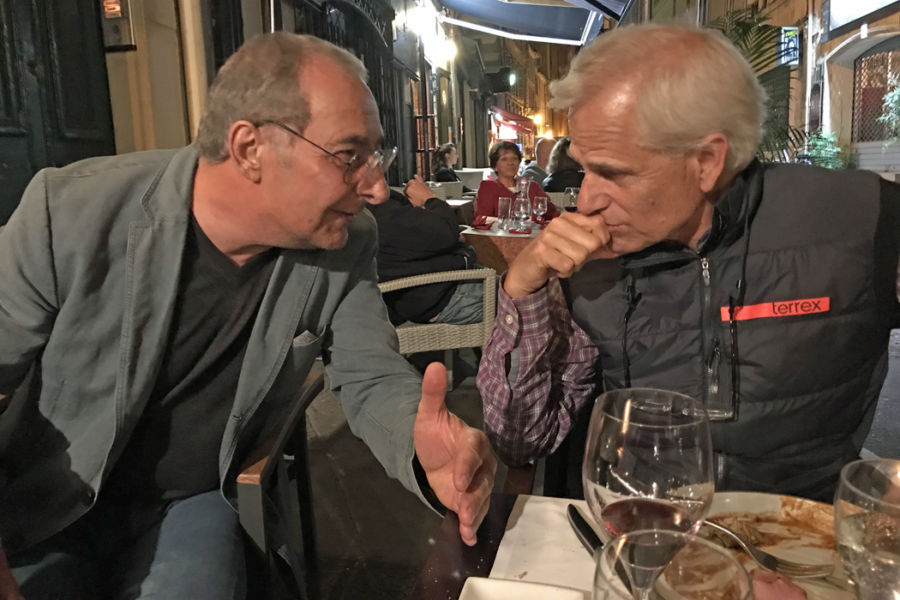
Routinely at restaurants in France, when the people eating at the next table learned we were Americans, we got into conversations about Trump. Europeans are confused about our politics and curious about our headline-hogging president. Talking politics is a new twist to the European travel experience.
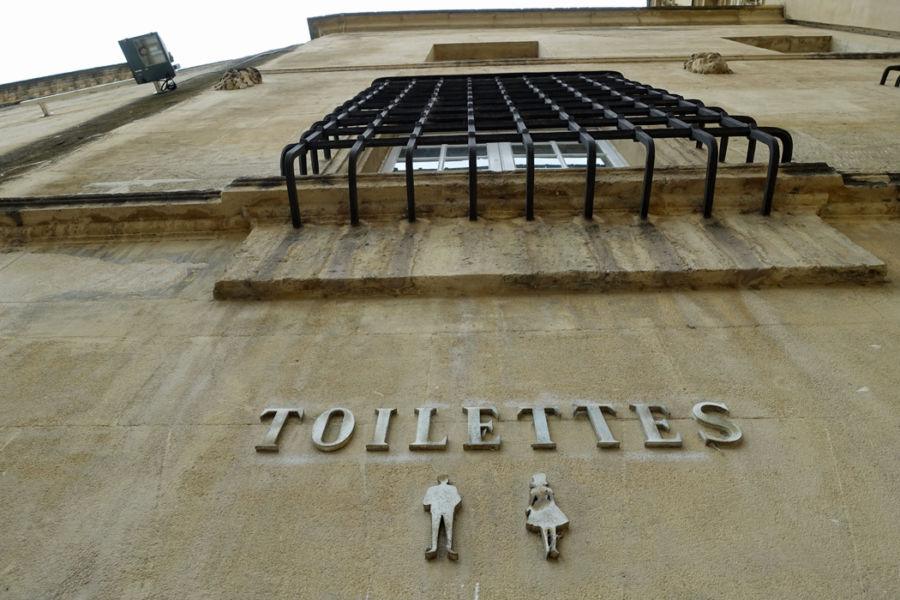
Things are so modern and comfortable in the new, affluent Europe. And that means you rarely see the old squat toilets.
Do you remember these?
On a related note, I learned that in the spirit of caring governance, you can always find a free and clean public toilet at France’s city halls.
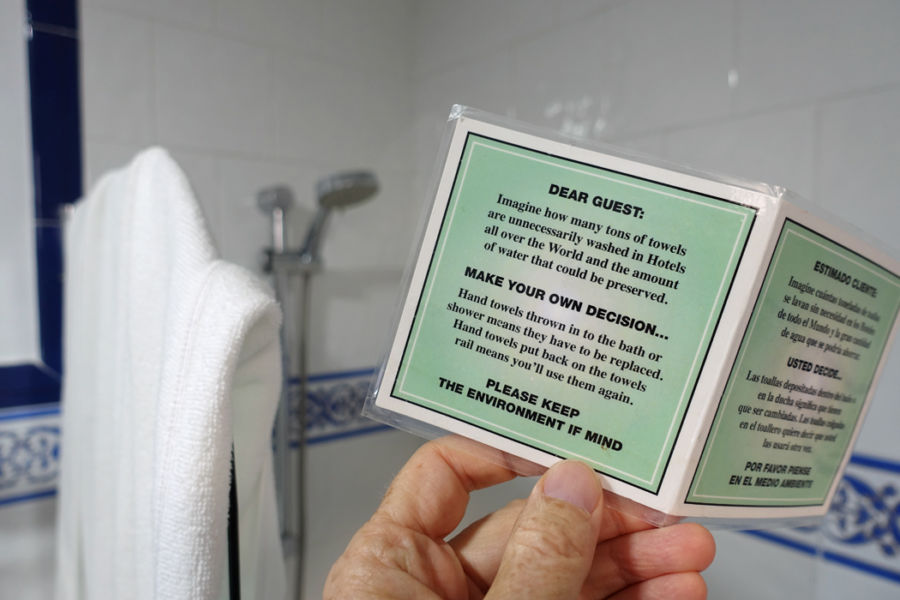
More and more Europeans are embracing ways to fight climate change. (But one of my pet peeves remains hotels that change towels I’ve hung up to dry — even when they have thoughtfully offered to help save the environment by only replacing towels that are tossed on the floor.)
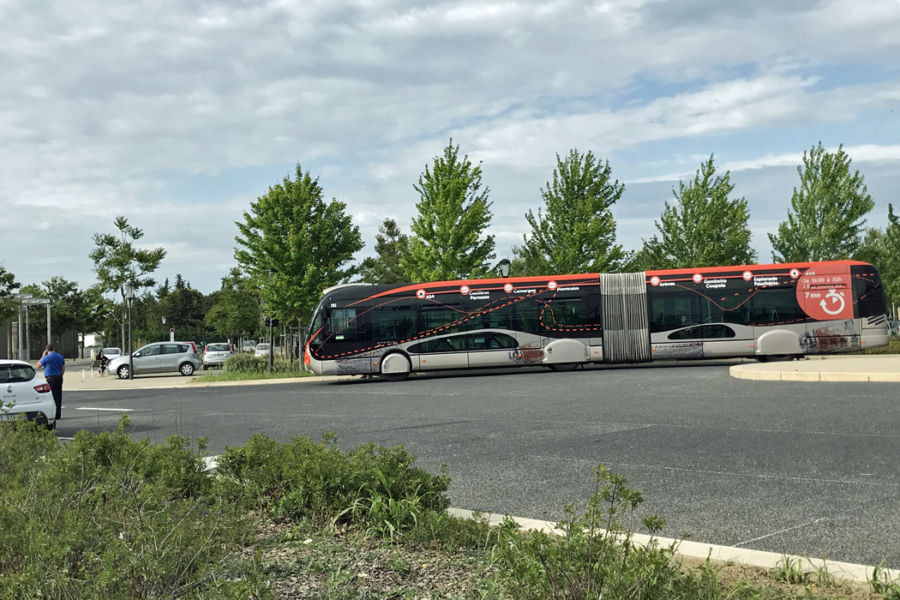
Parking in European cities is quite expensive, although it is getting easier with big underground garages. But there are free and efficient park-and-ride lots outside of many city centers. If you make a point to use these, you’ll save both time and money — and help European cities cut down on traffic congestion in their clogged city centers.
In Nîmes, a shuttle bus takes smart drivers into town effortlessly every couple of minutes from a big free lot, right at the freeway exit.
—
Join our traveling community — connect with me onFacebook andTwitter.
It’s Day 26 of my 100-day trip to Europe, and I’ve just wrapped up a productive week of guidebook research in France with my co-author, Steve Smith. We’ll be saying au revoir soon — but first, we’re driving into Spain together.
When we came upon an abandoned border station — covered in graffiti and smothered in old travel memories — we just had to stop, get out, and reminisce. Peeking into a window, I actually saw an old exchange board that listed pesetas and francs — a time warp from before 2002, when the euro replaced most local currencies in Europe.
I’m so glad borders and walls are out of fashion in Europe. The many proud nations of Europe don’t always get along, but they have learned to respect each other quite impressively — and they recognize that an after you attitude (rather than me first) makes it possible for diversity and peace to flourish. In fact, in my travels I find that using the phrase after you (nach Ihnen in German, après vous in French, dopo di lei in Italian, and so on) is a big part of happy travels.
—
I’d love to hear about your European border-crossing memories. Please share your stories with me in the comments below, onFacebook, or onTwitter.
I know, those little touristy choo-choo trains you see all over Europe are tacky. But they are cheap and easy: You can just hop on, pay the driver, enjoy a (skimpy) recorded narrative in English, and get to places you wouldn’t want to trek to on your own. Here in Collioure, in southern France, I hopped on one to get out of town and up to a little castle overlooking the coast. (You never know who you’ll be sitting next to on these little trains. Here in France…it just might be a little pooch.)
By the way, here, as in so many cases, you’ll be given cheap little disposable earbuds to hear the audio. If there’s a standard jack, you can get better sound (and a longer cord) by using your own earbuds instead. In museums, audio tours are more and more common and, rather than holding the “wand” to my ear for an hour, with my own buds I can be more comfortable and hear better. And if you have a splitter, you and your travel partner can share — cutting your costs by 50 percent.
Stow a set of buds (a pair that fits into a standard headphone jack — not the kind that plugs into an iPhone’s Lightning connector) and a splitter in your day bag. They’ll come in handy more than you imagine.
—
Join our traveling community — connect with me on Facebook and Twitter.