More Sex and Drugs in the Low Countries

On my research trip through the Low Countries, I discovered several examples of the bold Dutch and Belgian approach to challenging social issues.


Dutch Pot Smokers Are Pro-Choice
“Coffeeshops” throughout the Netherlands sell a variety of perfectly rolled marijuana joints. With their Dutch green thumbs and state-of-the-art greenhouse technology, the pot sellers no longer need to import their exotic strains. It may be called “Thai” and it may smoke like Thai… but it’s Dutch-grown, Dutch-taxed, and Dutch-smoked.

Needle Bridge Has Lost Its Edge
Amsterdam once had the grittiest, most disgusting, and most dangerous sailors’ quarter you could imagine: Zeedijk street, right where the city hits the harbor. I remember venturing in here in the 1970s, when shady characters seemed to support every streetlamp and where the police just kept their distance. It was sex and hard drugs and wandering lonely souls. The Dutch decided to do something about this problem to take back this potentially wonderful corner of their city. Forty years ago, they decided to decriminalize the sale of marijuana (in “coffeeshops”), and then clean out the hard drug trade. Reviewing the policy recently, the Dutch have found that pot smoking has not gone up, the population of hard drug users is smaller and aging, and street crime has diminished. Whenever reactionary forces push lawmakers to change this pragmatic approach to drug abuse and tighten up on pot laws, gangs and criminals reappear in the streets, violence and turf wars ensue, and recreational soft drug users need to do business with criminal hard drug pushers. Today, throughout the Zeedijk zone, restaurants flourish — and what was nicknamed “Needle Bridge” is a delightful place to stop for a photo.
Red Light Antwerp — Just a Trip to the Mall
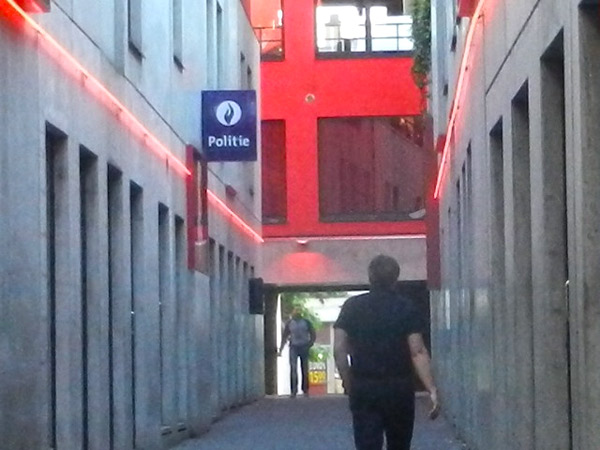
Many American tourists find Europe’s red light districts titillating. There was a time when ladies of the night were loitering around train stations and on the wrong side of the tracks in every sizable city. With stricter law enforcement, modern affluence, and the advent of easy access to porn on the Internet, the tourist rarely sees prostitutes on the street in Europe anymore. In many countries, brothels are allowed and limited to a certain zone. Amsterdam’s Red Light District is shrinking, as city officials are not renewing leases to red light landlords — or are giving them to other, more preferred businesses. Ports (like Hamburg and Amsterdam) are known for their red lights. The most impressive I’ve seen is in Antwerp. About four city blocks are pedestrianized and feel almost like a shopping mall. Here you can see the police station parked right in the middle of all that glowing red. I did notice that, while Antwerp has the biggest and slickest red light district, unlike other big cities, it has almost no sleaze elsewhere in town. In a sense, they cleaned the city up by sweeping it all into a small pile.
Brussels Observations

Here are a few tidbits from my recent research trip to Brussels, Belgium:

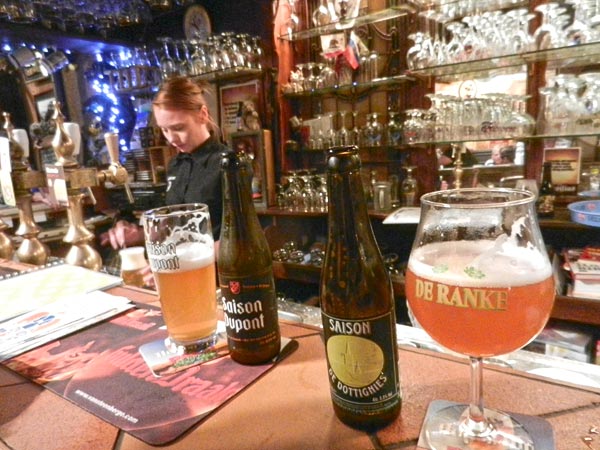
High-Maintenance Belgian Beer Drinkers - Belgians are exacting consumers when it comes to beer. They appreciate a pub that's not owned by a single brewery, freeing them up to serve a good selection of their country’s literally hundreds of microbrews. Many Belgian pubs brag about the number of beers they serve. To add complexity to the mix, most special local beers are served in a glass unique to that beer. Connoisseurs insist that each beer’s character comes out best in the proper glass. If there’s a run on a particular beer and the pub runs out of that beer’s glasses, they ask the drinker whether they’d accept a close match for a glass, or if they’d prefer to change their beer order. Many will switch beers rather than drink one from the wrong glass.
The Glassy EU Headquarters in Brussels - The European Union headquarters — by bringing in tens of thousands of diplomats, bureaucrats, lobbyists, and so on — is literally changing the demographic make-up of Brussels. As the EU tries to accommodate its 23 official languages (and they do, in some ways), the practical language of governance has become English. The EU has had such an impact on Brussels that some say in a generation, English will become the city’s first language. The EU headquarters complex has long welcomed visitors with a pretty simple info desk and shop. But now it’s opened up a big and high-tech “Parlamentarium,” giving those who visit something much more substantive to experience and enjoy. That, coupled with the hourly free tour of the parliament building itself, makes for a much better visit now than in past years.
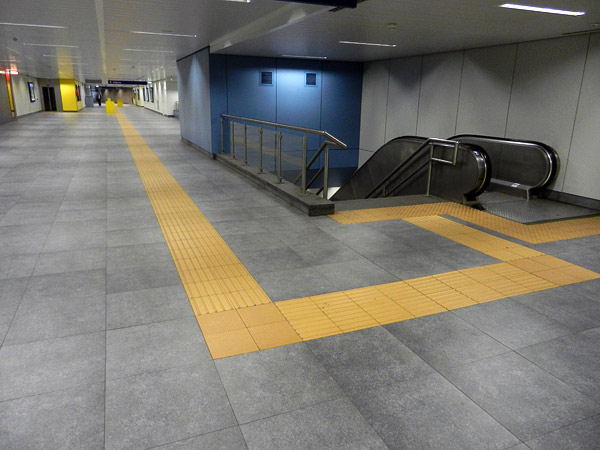
Feelin’ Groovy but Misguided Compassion? Early in the morning, the groovy sidewalks designed for blind people with white canes add an extra dimension to station designs all over Europe. These are expensive and well-intentioned, but I've never actually seen one used for its intended purpose. In fact, in many places, I've seen these grooves blocked by kiosks, flowerboxes, and bike racks. And yet, it seems that no one at the city council has the nerve to say no to a nice (but apparently impractical) idea for blind people.

Inspired to Find Your Niche

As I’ve been traveling through Belgium, I’ve been thinking about how rare and special it is when someone finds his or her niche. Here are three examples.

The Chocolate Lady
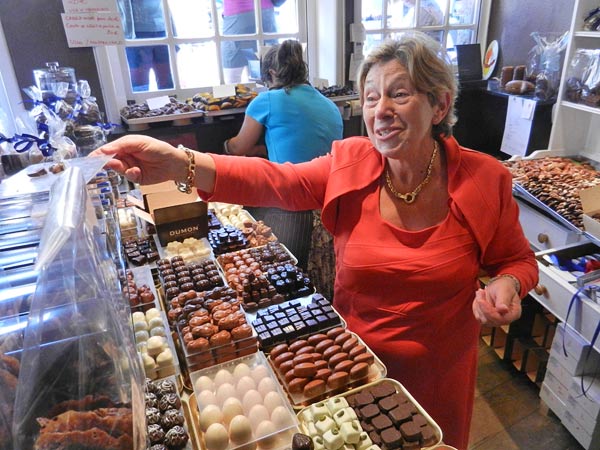
It’s so clear: A fundamental part of the joy of travel is to simply be in the presence of people who’ve found their niche. We only live once on this beautiful planet, and we have the personal challenge of doing with our lives what God intended — of finding our niche. I think that when you’re blessed enough to find a livelihood that fits your spirit, it gives you energy — and you, in turn, give the world a positive radiance. In Bruges, Belgium, Madame Dumon makes and sells chocolate. Keeping her little brown world cool in a heat wave, she makes sure everyone who enters gets a rich and creamy sample of their choice.

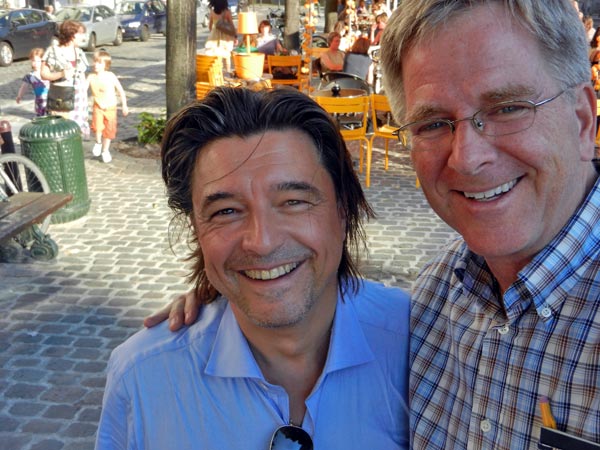
Michael Smeester runs my favorite hotel in Brussels. When you see his smile and feel his personal energy, you are not surprised by the name he chose: Hotel Welcome. With every visit to Brussels, I have a tradition of teaming up with Meester Smeester to blitz the city’s restaurants and be sure I’ve got the very best in my guidebook. The new edition will be much-improved as — with Michael’s help — I once again saw why locals brag, "Belgian cuisine...we eat as hearty as the Germans and as well as the French.”

Reflecting on My Coffin in Antwerp
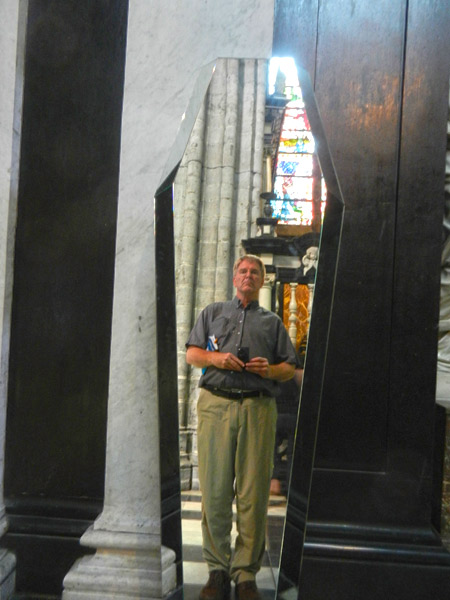
Reflecting on My Coffin in Antwerp - I generally travel alone. It’s just me and my mortality. Travel often has me thinking about life, and, now that I’m at the age where I look at the obituaries more than I used to, I’m also aware that the years do go by. For centuries, churches have contributed to that awareness in different and creative ways. Here in Antwerp’s cathedral, a glass coffin seemed to fit this vagabond’s body as if tailor-made.

Bruges: Callused Pinkies, Wobbly Fries, and a High-Calorie Passion for Good Living

Enlarge photo

To commemorate the Smithsonian Presents Travels with Rick Steves magazine — now on sale online, and at newsstands nationwide — Rick is blogging about the 20 top destinations featured in that issue. One of those destinations is Bruges, Belgium.

Chocolate, beer, canalside bike rides, French fries, carillon concerts…Bruges is an amazing little tourist town. While you might get discouraged as you shuffle through its sights along with hordes of tourists, it’s worth it. The town entertains with a unique knack for excellence and an infectious passion for good living.

Locals swear by their personal favorite chocolatier. They know that when the weather’s too hot, the chocolate-makers close down. The people of Bruges buy their chocolate with a concern for freshness like a muffin-eater does in the USA. Yesterday’s chocolate just won’t do.

Pubs are not just pubs. They are destinations…as the annual visits of many American beer aficionados attest. Pubs in the ye olde center — places you’d think would be overrun by tourists — are the proud domain of locals, who find the fact that monasteries have historically brewed the finest Belgian beers perfectly in line with their personal theology.

French fries (called Vlaamse frites, or “Flemish fries,” for the region of Flanders, in which Bruges lies) are another guilty local pleasure. One time a Bruges chef took me into the kitchen to witness the double-deep-frying process required to make a fry up to Flemish standards. His nervous, giggly reveal reminded me of the kid who showed me my first dirty magazine at the Y back when I was a grade-schooler. He’d pick up a single fat fry, ready for its second hot-oil bath. Holding it at the bottom, he made it wobble, as if playfully sharing a centerfold.

Bruges offers the best carillon concert I’ve found in Europe (normally June-Sept Mon, Wed, and Sat at 21:00; Oct-May Wed and Sun at 14:15). The city puts out benches in the courtyard below the City Hall bell tower. You can hear the tunes ringing out from the tower’s bells anywhere in the town center. But to sit in that courtyard, looking up at the rustic brick tower and hearing the performance, is a ritual for locals…and it just seems right.

Seated there one evening, I gaze up at the lofty tower. Like a kid checks in with his mom and dad before going down a long slide at the playground, the carillonneur pops his head out a window and waves. Then he disappears and begins hammering — literally hammering, as a carillon keyboard looks like the keyboard foot pedals of a big organ, yet are played by the little-finger sides of clenched fists.

After the concert, we clap, and he appears again — tiny head popping out the little window to happily catch our applause. The crowd dissipates. I wait at the base of the tower to personally thank the carillonneur. A few minutes later, he’s at street level, in his overcoat, looking like any passerby. I shake his hand and find myself gripping a freakishly wide little finger. A lifetime of pounding the carillon has left him with a callus that more then doubled the width of his pinky. Just one more artist in the city of Bruges.

Europeans Share Their Healthcare Experience, Part 4: Switzerland and Belgium

To bring some diverse experience into the discussion on health care reform here in the USA, I’ve asked my friends in Europe to share how health care works in their lives. In this final of four entries, here are comments from my friends in Switzerland and Belgium:

From Fritz in Switzerland:

In Switzerland, everyone has health insurance provided either through an employer (by payroll deduction) or by paying privately to a health insurance company. A family with two children has an annual premium of about 8,000 CHF (about $7,300). For every doctor’s bill, the insured person pays 10 percent. If a person becomes unemployed, then the goverment pays the premium based upon 80 percent of the average wage earned by that person over the past five years. The health insurance company reimburses the insured person, who then pays the doctor or hospital. There is talk of reforming this system because it has been misused.

Switzerland can no longer afford the luxury we’ve had in the past. We have over 1,000 hospitals — that’s too many for Switzerland. All the hospitals want the newest technology, scanners, MRIs, etc. Health care lobbying, corrupt politicians, an aging population, and billions in revenue makes changing the system almost impossible. So I pay and pay, this year 15 percent more than last year!

We have the system you are dreaming about, but our wishes and demands are so high that it gets unaffordable. Careless socialist politicians denied the missuse of our social security insurance and allowed hugh deficits. Now we have to stop and turn things around. When it comes to health care, no society can afford everything, top quality, any time, for everybody. Switzerland will now deal with that reality.

From Christian and Danielle in Belgium:

In Belgium we pay €20 (about $28) to see a general practitioner at his or her office. We are reimbursed 85 percent of this amount. Surgery is paid directly between the hospital and the social security system. A visit to the dentist is free once a year. Glasses are almost all at our expense.

One of the disadvantages of our system is a lack of responsibility. Patients have the right to change doctors without any reason given and then have the same exams done over. Doctors tend to charge for examinations which they did not do, or to do operations which are not needed. Retirement pensions are getting strained, because we live longer.

It seems that people in Belgium get their prescriptions almost always when their company is restructuring. That can be a problem. Half of the prescription is paid by your company and half by the state.

But as a whole, it is a good system, as we also pay for those who have no money at all.