Here you can browse through my blog posts prior to February 2022. Currently I'm sharing my travel experiences, candid opinions, and what's on my mind solely on my Facebook page. — Rick
Enjoying the sultry sunset…stones of the Alhambra glowing red…romance all around…and Gypsy flamenco erupting at the San Nicolás viewpoint in Granada. It’s a sultry moment indeed.
While you can pay for a flamenco show, the street-music scene in Granada (here each evening as reliably as the sunset) simply can’t be beaten. Put that on your list when visiting Andalucía’s Granada.
What’s your favorite street-music scene?
—
Join our traveling community — connect with me onFacebook andTwitter.
“Cheap beer. Great tapas. And what happens in Granada, stays in Granada.” That’s what my friend told me when I asked why there are so many hen and stag parties in this town. Surrounded by vitality and frolic, I had to grab a quick impromptu video. Take three minutes and walk with me for a dose of your basic love-of-life in Granada, here in the south of Spain. It’s conviviality gone wild: ham hocks hanging like bovine ballerinas from the ceiling, free tapas with your drink…and it’s so easy for a tourist to get swept away in all the fun.
Once again, I’m struck by how many of the best moments in travel are absolutely free.
— Join our traveling community — connect with me on Facebook and Twitter.
I’ve gained a renewed appreciation for two easygoing and easy-to-enjoy beach towns that stand like sister cities, each just a few miles from the France-Spain border. Both Collioure, in France, and Cadaqués, in Spain, are off the mainstream when it comes to Riviera holiday spots. And each has a delightful ambience — with welcoming beaches and fun restaurants.
Collioure, FranceCadaqués, Spain
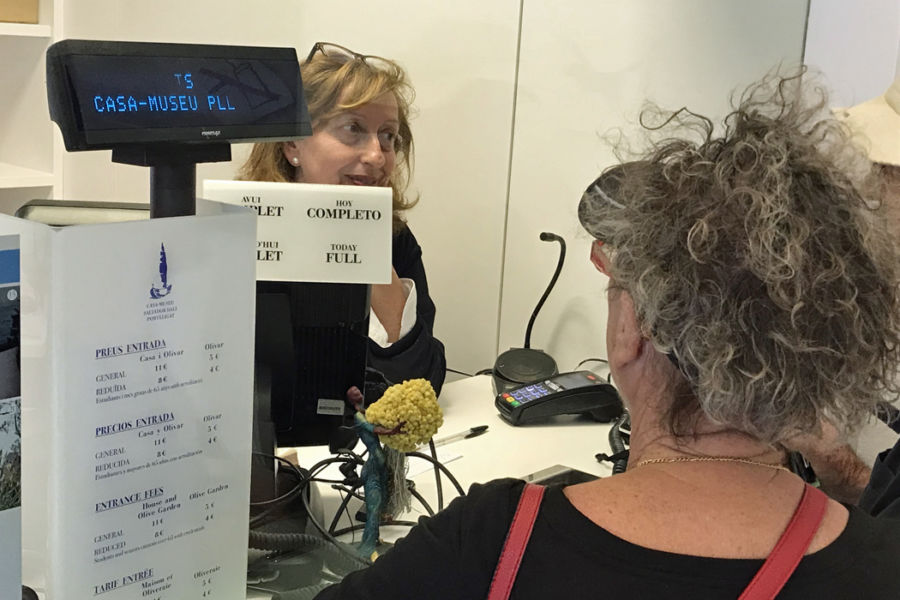
A warning: Most travelers in Cadaqués are there to see the home of Salvador Dalí — which I consider the most interesting home of a dead person in all of Europe. As it’s really popular and only lets in eight visitors at a time for escorted tours, you must get reservations online in advance.
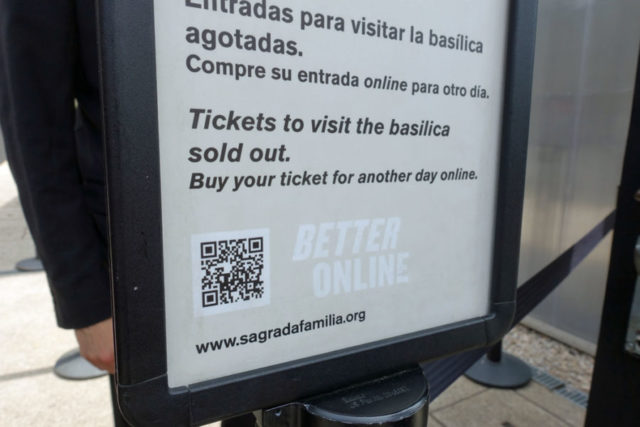
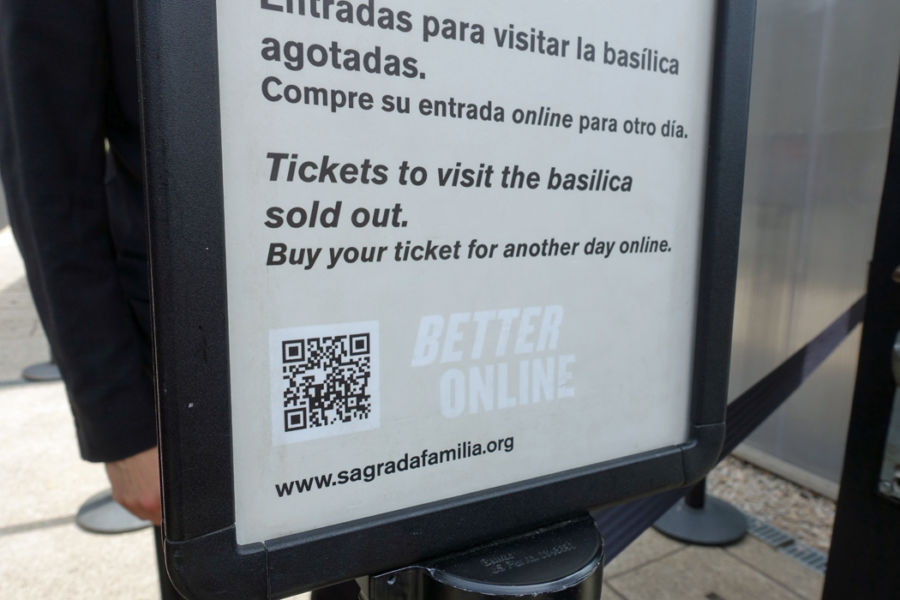
This is a new theme in my guidebook research: When a place is generally sold out and recommends that visitors book online, in advance, for a timed entry — I cover it in my guidebooks as if that’s the only way to get a ticket. (The next day, I visited Gaudí’s wildly popular Sagrada Família church in Barcelona. The ticket office was totally closed, with a sign that said, simply, “Buy your ticket for another day online.”)
Do your homework: It’s easier than ever to go online and book sights that are generally sold out. And it’s a big mistake not to.
— Join our traveling community — connect with me on Facebook and Twitter.
Things are always changing in Europe — and that’s why I spend 100 days of every year over here, keeping theRick Steves guidebooks up-to-date. About a third of the way through my 2018 trip, I’ve already collected several snapshots that illustrate Europe’s constant evolution. —Rick
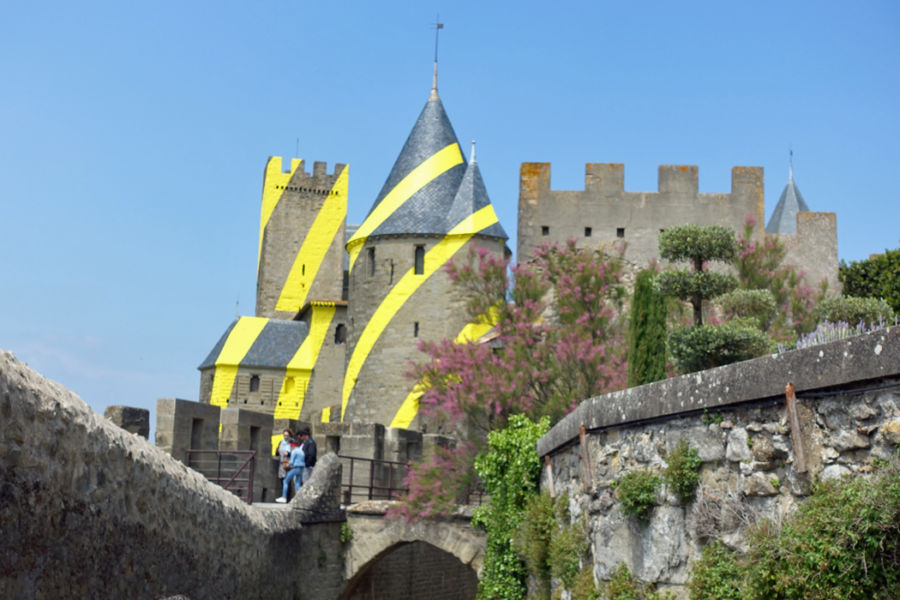
Modern art is becoming more fun. In the normally predictable and unchanging fortress city of Carcassonne, I noticed odd yellow slashes on the walls and turrets. When I reached the proper vantage point, the bull’s-eye came together.
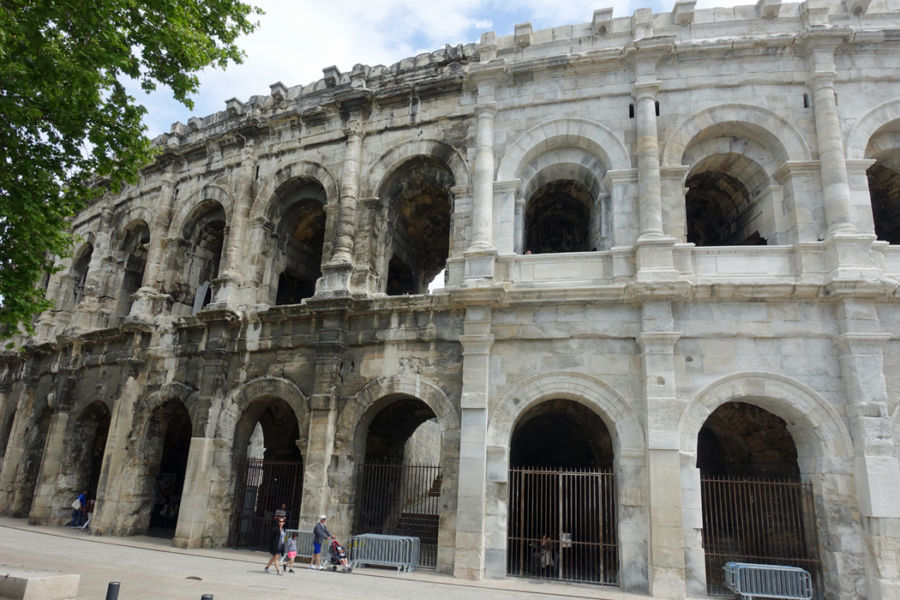
Europe’s cultural patrimony is always being spiffed up, and it is costly. It’s not unusual to see an ancient site half-cleaned. And when you see the contrast between old and newly cleaned, you better appreciate the value of peeling away all that soot.
The Arena of Nîmes
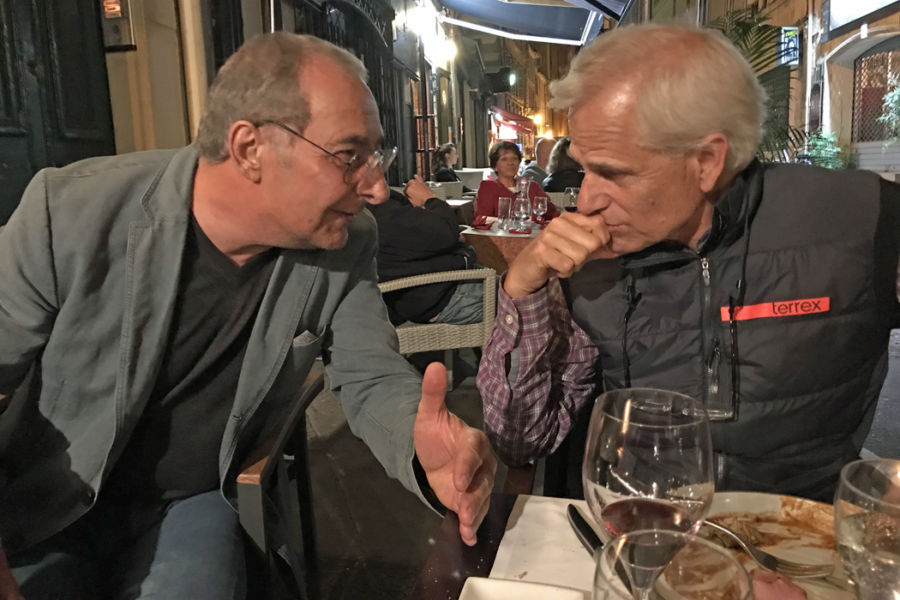
Routinely at restaurants in France, when the people eating at the next table learned we were Americans, we got into conversations about Trump. Europeans are confused about our politics and curious about our headline-hogging president. Talking politics is a new twist to the European travel experience.
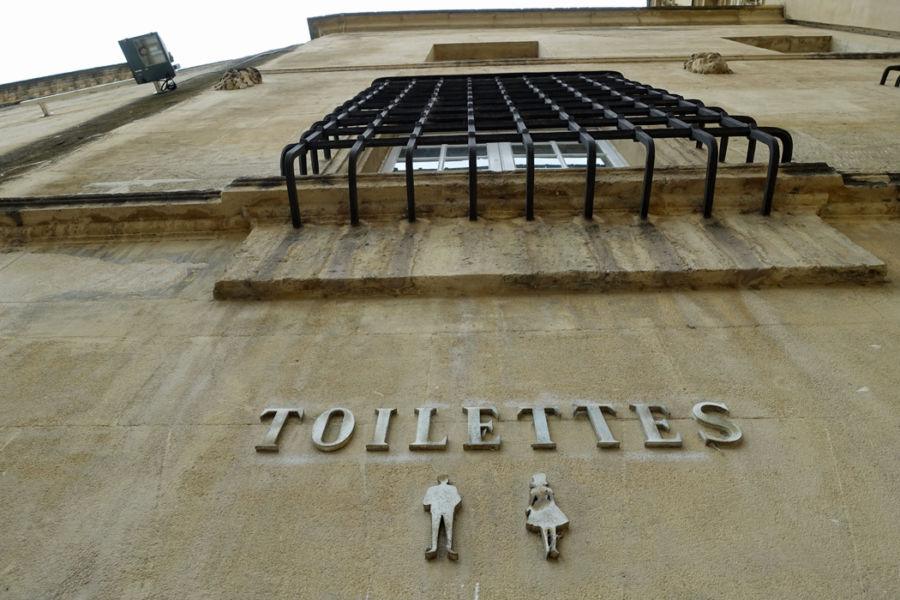
Things are so modern and comfortable in the new, affluent Europe. And that means you rarely see the old squat toilets.
Do you remember these?
On a related note, I learned that in the spirit of caring governance, you can always find a free and clean public toilet at France’s city halls.
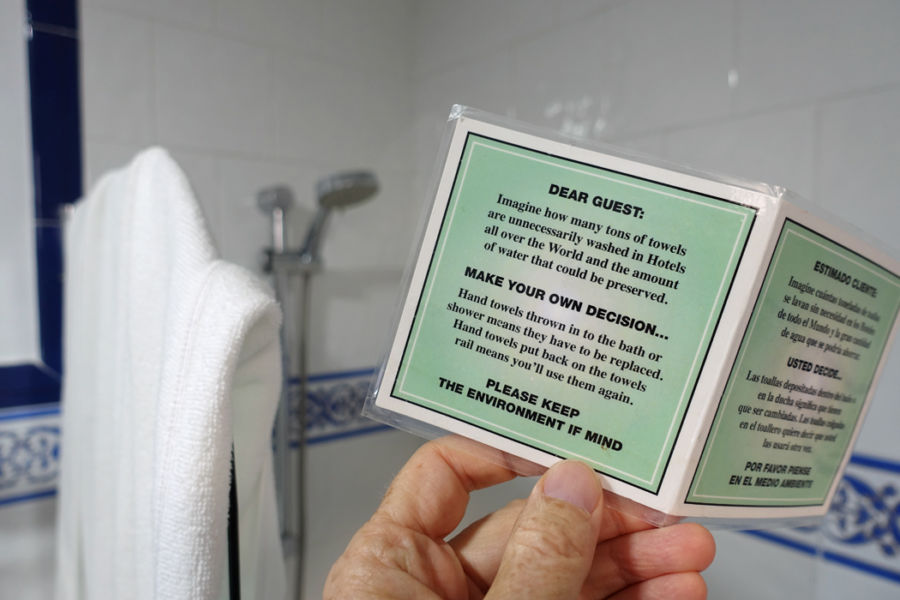
More and more Europeans are embracing ways to fight climate change. (But one of my pet peeves remains hotels that change towels I’ve hung up to dry — even when they have thoughtfully offered to help save the environment by only replacing towels that are tossed on the floor.)
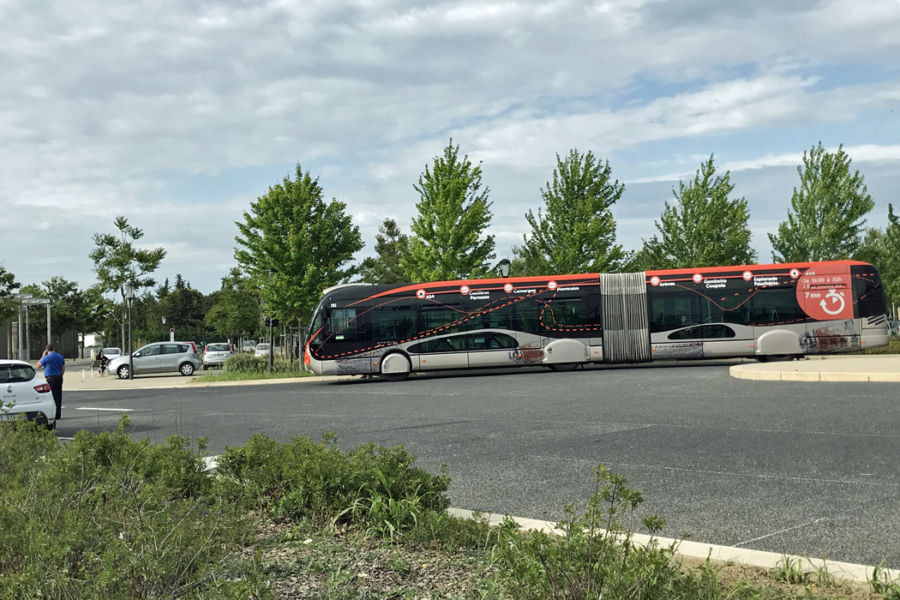
Parking in European cities is quite expensive, although it is getting easier with big underground garages. But there are free and efficient park-and-ride lots outside of many city centers. If you make a point to use these, you’ll save both time and money — and help European cities cut down on traffic congestion in their clogged city centers.
In Nîmes, a shuttle bus takes smart drivers into town effortlessly every couple of minutes from a big free lot, right at the freeway exit.
—
Join our traveling community — connect with me onFacebook andTwitter.
There’s a routine to travel: Every couple of days, I pack up, check out, travel to another destination, check in, and organize my time for maximum experience and fun. I work to get it right, celebrate my mistakes by learning from them, and then share those lessons in my teaching. My goal: to make each chapter in my guidebooks so accurate and well-designed that my travelers can travel as smoothly as possible.
It’s Day 30 of my 100-day trip to Europe, and I’m struck by how, when you’re empowered by good information (equipped with a good guidebook and taking full advantage of it), European travel can be amazingly efficient. Join me in this clip as I check out of my Barcelona hotel and head for the airport to fly to Granada.
Join our traveling community — connect with me on Facebook and Twitter.