Here you can browse through my blog posts prior to February 2022. Currently I'm sharing my travel experiences, candid opinions, and what's on my mind solely on my Facebook page. — Rick

Best of Blog: From 9/11/01 to 9/11/11

As a gesture of post-9/11 solidarity, we were proudly shown these stars and stripes while filming at Burgundy’s Château de Rochepot — a keepsake from France’s liberation in 1944

Dear Traveler,

As our nation remembers the horrible events of 9/11 on its 10th anniversary, along with commemorating the victims and how so many people suffered on that tragic day, many of us are sorting through our thoughts with the perspective that comes with a little time. Growing from personal tragedy by thoughtful reflection can be a way to honor those who died or suffered.

I was in Italy’s Cinque Terre on 9/11, filming a TV show. I figure that the first plane hit the North Tower just when we were filming the romantic Via dell’Amore, the “Pathway of Love,” which is a lovers’ meeting point between the towns of Riomaggiore and Manarola. I’ve walked it on five or six trips since, and for me, the Via dell’Amore is no longer the “Pathway of Love”… it’s the “Pathway of 9/11.”

Hiking with our TV gear into the next village, we found a tiny bar packed with people as if it were a makeshift theater. Everyone was staring, jaws dropped, at the TV. I saw the smoldering tower and thought it was some kind of a disaster movie. Then people told me the news. My crew and I gathered outside and decided the only thing we could do was to keep on working.

We had a Rick Steves tour group in Vernazza at the time. That evening, all the Americans were huddling together, wondering what would happen next. There was a line at the town’s one public phone booth. There were two distinct camps of travelers: those who thought, “It’s tragic, but there’s nothing we can do, so keep on traveling”; and those who, psychologically, couldn’t continue with their vacation — but also couldn’t get back home.

My enduring memory was of solidarity — Americans caring for each other and locals caring for Americans. All the people of the Cinque Terre were Americans with us; they did what they could to help us out during that disturbing time, when no one knew what was coming next. My Italian friend reminded me of how, a few years earlier, he had taken me to his village war memorial and told me that America had never really experienced a war like Italy had. Shaking his head sadly, he said, “Now, in a way, you have.” (On my website, you can read a compilation of what I wrote back then, along with a poignant collection of emails travelers sent us in the days after 9/11.)

I played out many scenarios in my mind about what would follow. Might this horrible event be a bridge that connected us with a world that already well-understood suffering and national grief on the scale of 9/11? Might it give us empathy? Or would we seek revenge? Would we respond to this despicable act as a crime or as an act of war? And, if an act of war, whom would we fight?

Looking back over the last decade, it seems that by reacting with such fervor to a tragedy Bin Laden had engineered precisely to get that reaction, we as a society richly rewarded his actions. Bin Laden was unable to radicalize Islam himself, but he knew the USA could do it for him. And, from my perspective, we did. In the interest of “national security,” we would compromise the values so fundamental to what makes us Americans. Instead of aspiring to be the gentle giant who responded to overseas crises swiftly and with compassion, or who patiently stood up to the oppressive communist ideology through a Cold War that spanned generations, we became a reactionary, vengeful country that threw out the rulebook — unilaterally going to war, employing torture techniques, and holding suspected terrorists without trial for years on end. And with each step away from our bedrock morals, we unwittingly demonstrated to the Arab world that America was to be feared and hated. Looking back, I don’t think Bin Laden — whose deputy has said, “More than half of this battle is taking place in the battlefield of the media” — could have hoped for a better result. Could it be that the USA is a different place today not because of 9/11, but because of our extreme reaction to 9/11?

In the travel industry, people stopped buying tours for a while. Many on my staff wondered if we’d be able to survive. For the first time in my career, simply making our payroll was a challenge. I gathered my co-workers and told them, “We’ll be giddy flagships of confidence — for the good of our business and even more important, for the good of our nation.” I knew that in order for Americans to understand things from a broader perspective — and there would be lots to try to understand in the coming years — travel was now more important than ever. While some considered those of us who tried to “take 9/11 in stride” unpatriotic, I had a strong sense that for our very national security it was more important than ever that the USA find ways to be a part of the family of nations. We made a huge effort to keep people traveling.

In the months after 9/11, I remember giving my travel talks to large groups. There was some question whether it was even appropriate to encourage travel and vacationing while our nation was in mourning. But the organizations who invited me to talk soldiered on. The Society of American Travel Writers asked me to be their keynote speaker in Las Vegas, and the AARP hired me to come to Houston to give a big talk at their convention. In my first big speaking gigs after 9/11, talking about packing light and catching the train seemed silly considering the trauma our nation was going through. My message morphed into a political one, encouraging Americans to travel because we need to better understand our world with firsthand, people-to-people experiences. It was a scary experience from a speaking point of view. But, in a nation that seemed determined — in lockstep — to shrink back from the world, I felt driven to advocate the opposite response, to embrace the world. By standing in front of a group and saying, “Get a grip, America,” it seemed people needed permission to move on. People found it cathartic. The SATW and AARP talks were perhaps the most exhilarating of my career. This was the year I came to see the role of a travel writer as being like the medieval jester — to go out, learn what’s happening outside the castle, come home, and tell the king the truth.

In the long run, the impact of 9/11 on our business has been both expected and surprising. Predictably, our tour sales took a big dip in 2002, and we no longer sell Swiss Army knives (because you can’t carry them onto an airplane). Just as predictably, after a couple of years of post-9/11 jitters, demand for travel surged once again. But 9/11 also inspired me to speak out more boldly about the politics of travel. I now routinely give talks about the value of travel as a force for peace all over the country. And that talk spawned a new book that was named the travel book of the year in 2010 by the SATW — Travel as a Political Act.

I noticed that the US State Department has issued a travel advisory for the 10th anniversary of 9/11. In our post-9/11 world, considering the importance of building bridges rather than walls, I’d like to issue an advisory against not traveling. In fact, on 9/11/11, I’ll be in Europe myself…traveling on and immersing myself in our beautiful world, just as I have been for the last decade.

Happy Travels,

Rick Steves

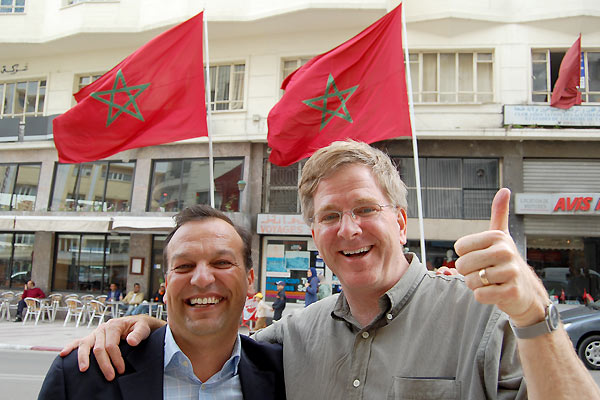
Best of Blog: The New Tangier Is No Tijuana

I love Morocco. But I’ve always called Tangier the Tijuana of Africa. That has changed. Tangier was a neglected hellhole for a generation. It was an international city — favored by the West and therefore disdained by Morocco’s last king. He made a point to divert all national investment away from his country’s fourth city.

The new king, who took the throne in 1999, believes Tangier should be a great city again. The first city he visited after his coronation was Tangier. The difference — as I just learned — is breathtaking. The place is still exotic…but likeably exotic.

Checking into Hotel Continental, flamboyant Jimmy, who runs the shop, met me. Six or seven years ago, I told him I was from Seattle. He said, “206.” Now I test him again, saying I’m from Seattle. He says, “206, 360, 425…new area codes.” He knows every telephone area code in the USA.

Hotel Continental has you looking for the English Patient. Gramophones gather dust on dressers under mangy chandeliers. A serene woman paints a figure eight in the loose tiles with her mop, day after day, surrounded by dilapidation that never goes away. As I updated the information in my guidebook, I found a rare and nonchalant incompetence. My guidebook listed the hotel’s phone and email data more accurately than their own printed material. It’s a 70-room hotel with not a sheet of paper in its office.

Roosters and the Muslim call to prayer work together to wake me and the rest of that world. When the sun is high enough to send a rainbow plunging into the harbor amid ferries busily coming and going, I stand on my balcony and survey Tangier kicking into gear. Women in colorful, flowing robes walk to sweat shops adjacent the port, happy to earn $8 a day sewing for big-name European clothing lines. Cabbies jostle at the pier for the chance to rip off arriving tourists.

It’s an exciting time in Morocco. The king is modernizing. His queen was a commoner. Moroccans say she’s the first to be seen in public. They have never seen the king’s mother. They actually don’t know what she even looks like. Walking the streets, you see a modest new affluence, lots of vision and energy, and no compromise with being Arabic.

They don’t emulate or even seem to care about the USA. Al Jazeera blares on teahouse TVs — with stirring images of American atrocities inflicted on fellow Muslims. But people seem numb to the propaganda. I felt not a hint of animosity to me as an American, something I was concerned about. There was no political edge to any graffiti or posters.

My guide, Aziz, explained to me the fundamental difference between Islamic and Islamist, and then said Morocco is Islamic.

Wandering — especially after dark —  is entertaining. It’s a rare place where signs are in three languages, and English doesn’t make the cut (it’s Arabic, French and Spanish). Aziz said when he wanted someone’s attention he says, “Hey, Mohammad” (or “Hey, Fatima” for a woman). It’s like our “hey, bub”…but very respectful.

The market scene is a wonderland — of everything but pork. Mountains of brilliant olives, a full palette of spices, children with knives happy to perform for my camera. Each animal is slaughtered in accordance with Halal: in the name of Allah, with a sharp knife, head to Mecca, drained of its blood.

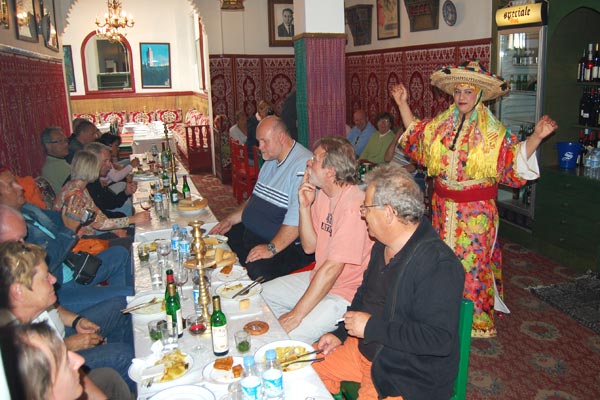
Until now, I’ve recommended that day-trippers from Spain just hold their nose and take the organized tour (with all the groups from Spain’s Costa del Sol). A Tangier guide meets you at the ferry (after the hour-long ride from Spain). They take you on a bus tour of the city, a walk through the old town, lead you to a few staged Kodak moments (camel ride, snake charmer, Atlas mountain tribal musicians) and then you go to a clichéd restaurant where you eat clichéd food with a live band and a belly dancer (which has nothing to do with Moroccan culture, but tourists don’t seem to care). Then you visit a shop.

They must make a healthy commission, because the round-trip ferry ride with the tour cost essentially the same as the round-trip ferry ride without the tour.

During my stay, I met gracious Moroccans eager to talk and share. About the only time I saw other Western tourists was when I crossed paths with one of the many day-tripping tour groups. Those finishing up their tour walk in a tight, single-file formation, clutching their purses and day bags nervously to their bellies like paranoid kangaroos as they bundle past one last spanking line of street merchants, and make it safely back onto the ferry.

I was so comfortable and they were so nervous and embattled. The pathetic scene reminded me of some kind of self-inflicted hostage crisis.

Best of Blog: My Five Most Spiritual Places in Europe

In June, U.S. Catholic magazine published an interview with me on how to travel not as a political act, but as a spiritual one. The entire Q&A is now available online.

As a Christian, I enjoy being open to spiritual experiences while on the road, and there’s no more spiritual experience than traveling to the developing world. To be with the world’s struggling and downtrodden is to be with Christ. My expertise as a writer and guide, however, is traveling through Europe, which also offers plenty of opportunities to get close to God. Here’s my guide to five places in Europe that stoke my spirit.


As I walk high on a ridge in Switzerland, the Alps strike me as the greatest cathedral in Europe. Ride the rack-railway train from Wilderswil (near Interlaken) up to Schynige Platte, then hike along a ridge to Faulhorn, with its famous mountaintop hotel, and on to the perch called First. As you tightrope along the ridge, lakes stretch all the way to Germany on your left, and on your right is a row of cut-glass peaks — the Eiger, Mönch, and Jungfrau. The long, legato tones of an alphorn announce that the helicopter-stocked mountain hut is open, it’s just around the corner…and the coffee-schnapps is on. It’s enough to have even a staid Lutheran raising his hands in praise.
 

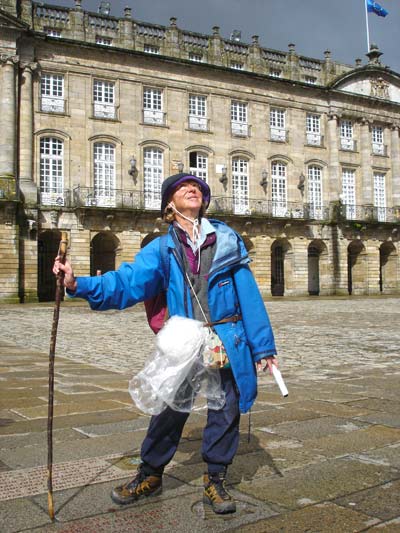
There’s a reason pilgrims have hiked from France to the distant northwest of Spain for more than a thousand years. Trekking with people of all spiritual stripes — or none at all — across the vast expanses of Spain, it’s easy to be one with nature and get caught up in a private talk with your maker. Everyone’s heading for the same point: the Cathedral of St. James in the city of Santiago de Compostela. And to be there as well-worn and sunburned pilgrims step on the scallop-shell pavement stone in front of the towering cathedral, overwhelmed with jubilation to have reached their personal goal and succeeded in their quest, is a joy in itself.
 

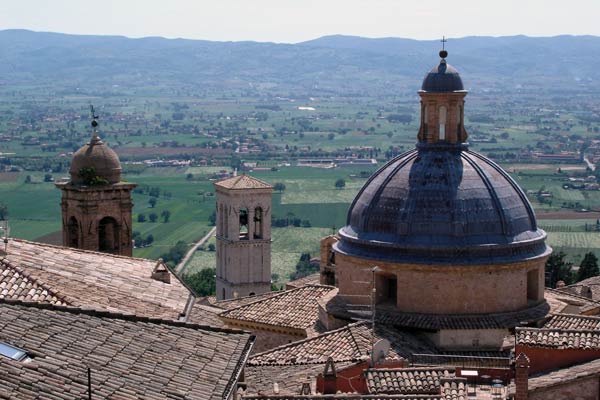
I have a personal ritual of sitting quietly on the rampart of a ruined castle high above Assisi, the town of St. Francis. I look down at the basilica dedicated to the saint, then into the valley — where a church stands strong in the hazy Italian plain that marks the place where Francis and his “Jugglers of God” started the Franciscan order, bringing the word of God to people in terms all could embrace. Hearing the same birdsong that inspired Francis, and tasting the same simple bread, cheese, and wine of Umbria that sustained him, I calm my 21st-century soul and ponder the message of a saint who made the spirit of God so accessible.
 

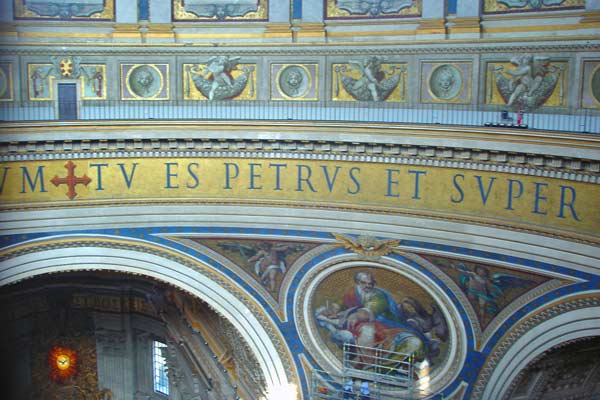
Worshiping upon the tomb of St. Peter under the towering dome of Michelangelo in the vast expanse of the greatest church in Christendom — where incense gives earthly substance to ethereal sunrays — I ponder the centuries of devotion and tradition that have gone into building both this magnificent church and the Catholic faith. Throwing out my Lutheran cynicism, I appreciate it all as a humble and noble quest by countless people through the ages to better understand and get close to our heavenly Father.
 

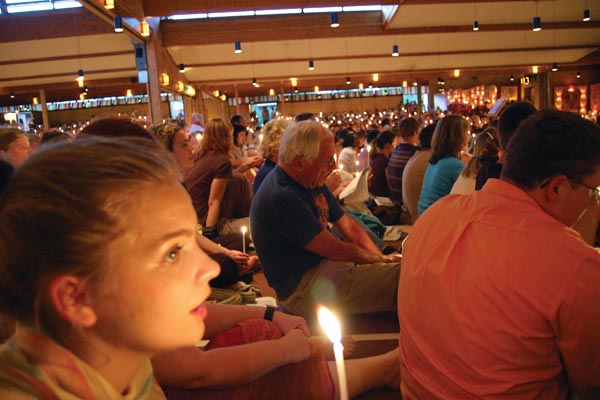
In the wine country of Burgundy, just down the road from Cluny (where the greatest monastic order of the Middle Ages was born), a rough lane leads to the ecumenical monastic community of Taizé. It welcomes all to gather with no regard to culture, language, or denomination. With a perfectly ecumenical embrace, people come together at Taizé to celebrate diversity, tune in to God’s great creation and the family of humankind, and become comfortable with silence, praise, meditation, singing, and simple living. Taizé gets you close to God.


Best of Blog: Swept Away in Rome

In celebration of this blog being awarded “Best Travel Blog” by the Society of American Travel Writers, this week I’m taking some of my (and your) favorite blog entries out for a victory lap. I hope you enjoy this walk down memory lane.

Today’s entry was originally posted on April 11, 2011.

I spent the afternoon in my hotel room, splicing all the little changes and discoveries into what will be the 2012 edition of my Rick Steves’ Rome guidebook. Stepping out for just a quick little break is dangerous. There’s a mean current here and, turning the corner from my hotel, I got swept out into the Roman sea — so filled with colorful and fragrant distractions. I didn’t get back for hours. It really was like swimming in a current.

Tiny black cobbles slope downhill to the ancient street level at the Pantheon’s portico. From there, I look up at a symphony of images: designer shades and flowing hair glinting and backlit in the magic-hour sun; a flute section of ice-cream-lickers sitting on their marble bench in the spritz of the fountain under the obelisk exclamation point; strolling Romanian accordion players who refuse to follow the conductor; and the stains of a golden arch on a wall marking where a McDonald’s once sold fast food, as if to celebrate its demise. The entire scene is corralled by pastel walls — providing the visual equivalent of good acoustics.

As I let go of the Pantheon’s Egyptian columns, the current sweeps me past siren cafés, past the TV news crew covering something big in front of the parliament building, and out into Via Cavour. This is the deep end, which hosts the rough crowd from the suburbs who come in to the center for some cityscape elegance and concrete-people friendliness. They’ve gooped on a little extra grease and are wearing their best leggings, heels, and T-shirts.

Veering away from the busy pedestrian boulevard, I come upon Fausto, a mad artist standing proudly amid his installation of absurdities. While crazy, he always seems strangely sane in this world. And this year, with the opening of the giant and trying-too-hard MAXXI modern art gallery (11 years and 150 million euros for very little), Fausto seems downright brilliant. He’s the only street artist I’ve met who personally greets viewers. After surveying his tiny gallery of hand-scrawled and thought-provoking tidbits lined along a curb, I ask for a card. Giving me a handmade piece of wallet-sized art, he reminds me his “secretary” is at the end of the curb — a plastic piggy bank for tips.

Fausto of the Beach is just part of the sea of Rome.

The Campo de’ Fiori, which creates its own current, feels like a punished child. Just last week, after a Roman teenager drank herself into a coma, the police forbade drinking outside of bars and restaurants — and now it’s like someone turned on the lights at a party before midnight. Farther down the street, the fun is replaced by an uptight vibe. It’s Prime Minister Silvio Berlusconi’s headquarters, with military police poised as if expecting an attack. There’s a sourness among locals on the street here. This marks the point of what used to be a very helpful and popular bus stop that was replaced with police vans to provide security for Italy’s bombastic leader. Locals gossip that he wears a bulletproof vest and shows his teenage girlfriend videos of him with president Bush at Camp David for foreplay. To some Italians, Berlusconi is everything they wish they could be, exaggerated. Some marvel at how he stays in office. Others understand that when a politician owns his own media empire and has 24/7 news networks at his service, even a Berlusconi can hoodwink an electorate.

I pass a homeless man, tattered but respectfully dressed, leaning against a wall savoring a cigar and a bottle of wine while studying Rome’s flow as if it had a plot. I chat with twins from Kentucky, giddy about their Roman days as they celebrate their fortieth birthday. Their Doublemint smiles on high energy make their very presence on the streets of Rome an ad for embracing the good life.

On Piazza del Popolo (no one can figure out whether it’s named for the poplar trees that framed it, or the people who fill it), a very good Michael Jackson, with shifty shoulders and transformer ankles, moonwalks — sending a huge crowd into orbit. Moving on, I slip into a church just as the ushers close the doors for the 6:30 Mass. Inside, the white noise of Roman streets becomes the incense-d hummm of a big church with a determined priest and not enough people. I slip down the side aisle, hands folded as if here to worship, to catch a glimpse of a Caravaggio, that thriller of the 17th century.

Stepping back outside, I’m at the north entrance of the city. Piazza del Popolo was a big deal before the age of trains and planes. The 16th-century pope pulled out all the stops to welcome pilgrim Europe (anyone arriving from the north). Twin domed churches create a trident of straight boulevards emanating from an obelisk, taking pilgrims lacking maps or guidebooks to whatever they hiked here for: the Vatican to the right, the ancient city directly ahead, and the other big pilgrimage churches (St. John Lateran and Santa Maria Maggiore) to the left. Three churches on this square, each dedicated to Mary, set the religious tone for any pilgrim’s visit to the Mecca of Christendom.

Determined to swim back to my hotel to get back into my data-entry task at hand, I pass the same well-dressed bum with the cigar and the buzz, still intently caught up in the plot of the city. I imagine being in his pickled head for just a moment.

The twilight sky is just right for sales now, as guys from Somalia launch their plastic florescent whirlybirds high into the sky while their friends slam plastic doll heads into boards so hard they become spilled goop, and then creepily reconstitute themselves, ready for another brutal slam. These street trinkets that somehow keep illegal African immigrants from starving make me wish I had bought all the goofy things people have sold on the streets of Rome over the years — from the flaming Manneken-Pis lighters to the five-foot-tall inflatable bouncing cigars to the twin magnets that jitter like crickets when you play with them just so — and made a museum.

Finally I swim with a struggling stroke back to the safety of my hotel, where none of that Roman current is allowed in. The problem: While taking a break from inputting all I’ve learned, I come home with even more to input. In Rome, one thing leads to another, and, if you’re trying to get on top of your notes, it can be dangerous to go out.

This Blog Won the “Oscar” of Travel Blogs

I have some very exciting news: This week I was honored with the “Oscar” of travel writing – the Society of American Travel Writers’ Travel Writer of the Year Award. In addition to this grand prize, my on-the-road blog posts won the gold medal for Best Travel Blog. Since I have so much fun sharing my travels with you – and the judges singled out your thoughtful comments as one of the strengths of this blog – this award means a great deal to me.

In celebration, I’d like to take some of my favorite posts out for a victory lap. Beginning Monday, I will run a “Best of Blog” series for one week. Over the weekend, please use the comments section below to nominate your favorite entry to be included in the lineup. Which of my blog entries have stirred your wanderlust, or caused you to think differently about travel and the world? I’ll try to add one or two of your suggestions to next week’s series.

Thank you, Society of American Travel Writers, for these great honors. And thank you, my readers, for being my virtual travel partners!

How does somebody do the inglorious legwork it takes to become such a “distinguished” travel writer? This clip will give you a sense of my daily routine while I’m updating guidebooks in Europe.

If you can’t see the video below, watch it on YouTube.