Here you can browse through my blog posts prior to February 2022. Currently I'm sharing my travel experiences, candid opinions, and what's on my mind solely on my Facebook page. — Rick

Day 2: Eastern Washington to Boise—Freakishly Friendly

Two days into this adventure, I’m already immersed in what promises to be a lifelong travel treasure. The “Inland Empire” of Eastern Washington and Idaho is corralled by mountains — the Cascades in the west, and the Rockies in the east. Monster mountains sprawl on the horizon as Highway 84 follows lonely train tracks across idyllic Western scenes. A glint of sun races along the shining brown rail, seeming to lead us — like the fake bunny at a greyhound track — through a brown wasteland across the northeast corner of Oregon and into the mountains of Idaho.

The color is thought-provoking. I sense that it has been, and will again be, green. But now, at the end of winter, plant life is the color of dirt and shows little promise of life. A dusty-beige 20th-century trailer park seems populated by ancestors of 19th-century pioneers who pulled their wagons into a circle. The only color is the flag — supersized for the setting. And, amid the browns and greys, that red, white, and blue really pops. Later, a giant pussy willow-gray cement factory provides a similar dreary visual context for the red, white, and blue of its big and furiously flying flag.  Immersed here, in what to this big-city guy from the coast feels like the heart of this great land, you become part of its grandness — engulfed in and embraced by the vastness of it all. The flag invigorates the scene. As it provides color to the setting, we provide life. Here, even more than on the coast, the flag represents you. You appreciate it.

Crossing the Snake River, we enter Idaho and stop at the tourist welcome center. A monument reminds me I’m driving the “Blue Star Memorial Highway: Dedicated to the Armed Forces who have defended America.” In the men’s room, a religious flier, propped on the sink as if waiting for me, asks the important question: “Where will you spend eternity?”

The road, cleaned by the local Mennonite Youth Group, is really clean, and we get to Boise before we know it. As I hoped to throughout this road trip, my host for the evening’s event (tonight it’s Megan from Idaho Public Television) picks me up at the hotel for a little personal tour of the town.

Boise is famously livable and, as a friend of Megan noted after settling here, “freakishly friendly.” Locals say “boy-see,” giving the town a touch of French and recalling the origin of the name, when French pioneers marveled at les bois — the woods. (You wouldn’t be particularly impressed by the trees today…but they were likely hallucinating on rotten meat.)

You can’t help but think Boise is a great place to raise a family. There are so many active things to do here, from skiing to river rafting. The city has a strong Mormon influence. In fact, locals nickname the place “Salt Lake City North.” A new law prohibits taking alcohol on the river, so anyone envisioning a floating raft party needs to sneak their booze in 7-Up bottles.

My afternoon in Boise was a delight. We didn’t know whether the people lounging on the stately steps under the capitol building dome were occupiers or just soaking up some rays. I enjoyed a peek at the Boise State stadium, with its famous blue turf. Idyllic as a Seurat painting, Boise’s parks were filled with scenes of children hula-hooping and families tossing around the football. While the edge of town — like any town these days — has fallen victim to “the saming of America,” old Boise comes with a parade of classic old weather-beaten signs advertising funky diners, hamburger joints, and motels bragging that rooms come with TVs. Low-key street corners with dueling cafés had front porches filled with Idahoans enjoying a warm afternoon — with a low-in-the-sky sun that seemed to promise spring was on its way. Here on the western edge of the time zone, there’s later light, which is much savored.

Then it was time to work. After hosting a pledge event on Idaho Public Television, I was taken to the iconic Egyptian Theater, where 700 people gathered. The station charged more than I thought was wise for admission ($30 to $50 each), but they called it right — they filled the place with supporters who understand the value of public television.

Tonight’s talk was the straight “Travel as a Political Act” talk, which I’m excited to bring into our country’s heartland. Standing on a venerable stage in a theater filled with leading citizens of a town like Boise and talking about empire (96% of humanity looks at America and sees one), terrorism (overrated), military spending (we, 4% of the planet, spend as much on our military as everyone else in the world combined), and so on, is exhilarating. From the stage I watch, measure, and feel the response. With stern, questioning faces looking at me as I weave my case, it’s a fascinating and thrilling challenge. As long as I acknowledge that Europeans are thankful for the valor and heroism of America when we freed them from the Nazi terror and stood up to and ultimately defeated the USSR, and I assert that I’d never want to run my business in Europe and that I’m thankful to be an entrepreneur in the USA, people seem happy to hear the European perspective I share. When approached reasonably and respectfully, people’s long-held perceptions are open to the crowbar of travel experience. I pulled out all the stops — talking for about two hours. Then, after a 15-minute break (to let Barnes & Noble sell a few books), I welcomed people to sit back down for an extended Q&A session and enjoyed half an hour of back-and-forth. I went home thinking, “Wow…these people are freakishly friendly.”
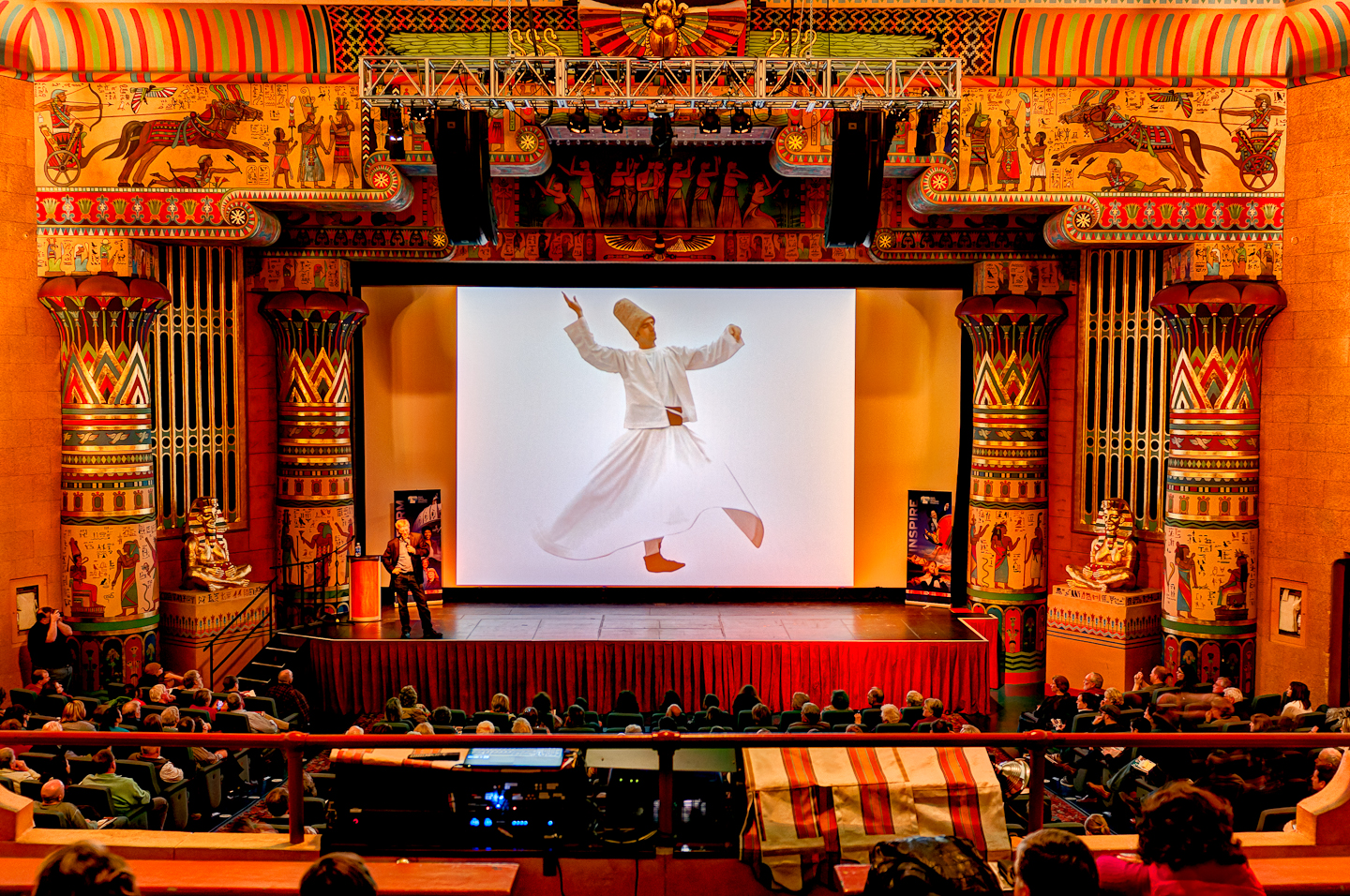
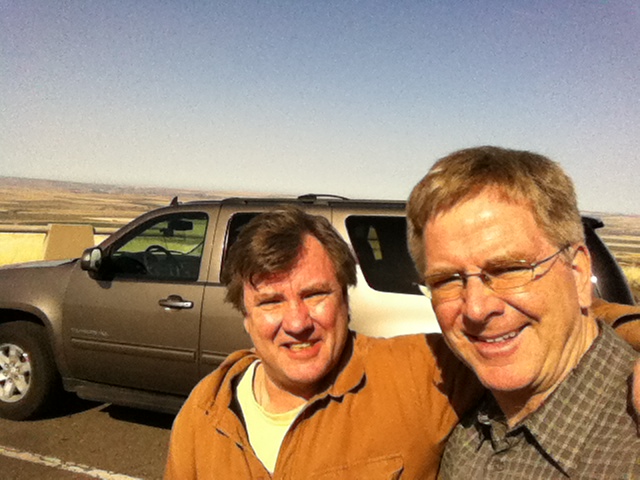
Photo Credit: Tim Tower

Day 1: Seattle to Richland—Maple Bars and Tumbleweeds

It’s odd to be packing for a 20-day “business road trip.” I’m taking way too much…but who cares? Behind the wheel of a big, safe, American car (a GMC Yukon), my driver Keith pulls into my driveway Saturday morning. Keith, an ace tour salesperson and tour guide from my office, will be my roadie and represent ETBD at each event along the way, handing out our newsletter and so on.

At precisely 9:11 a.m., we set the odometer to zero and pull out. Taking a left at the Space Needle, we head southeast—direction Florida. Within an hour, we are in the cloud-shrouded, snow-blanketed Cascade Mountains.

Popping out of the clouds on the other side reminds me of my childhood—long before I ever fingered Europe on a globe. Each weekend my parents would pick up my sisters and me at school on Friday afternoon, and we’d head out. In sunny weather we headed north to go boating in the San Juan Islands. In rainy weather it was “east of the mountains.” In our family “east of the mountains” was like a cry for liberty. Regardless of the weather in rainy Seattle, “east of the mountains” promised brilliant sunshine and lots of camping and boating fun.

Busting out of the mountains, I’m greeted by Washington’s “Inland Empire” and the sleepy town of Cle Elum. Our first stop: the century-old Cle Elum Bakery with minutes-old treats just out of its oven. I order a maple bar—the choice of my childhood. With that first bite it occurs to me that I haven’t tasted a maple bar for 30 years. What’s with that?! Was I trying to establish I’m not a child any more? Maple bars…I’m back. Keith gets an apple fritter, and we both promise—with great insincerity—to be sure to exercise during our road trip. Chatting with locals and enjoying historic photos, I endure a coffee that made me ache for Starbucks—but I’m trying to stick to local, independent, small businesses.

Two hours into our 20-day road trip, I look down on the Yakima River determinedly cutting its S-shaped, mini-Grand Canyon into the foothills of the Cascades, and I find myself thinking, “Why don’t I get out more?!” This is absolutely great. I want to go river rafting. Getting off the highway, we pass through small towns with log cabins housing their chambers of commerce.  

As the mountains pass, the sky gets big. How big is your sky? In Switzerland, valley people enjoy only half the sky Inland-Empire people do. The cabin of our Yukon SUV is huge too…a different world from my little Acura. If you don’t get out, you don’t know the options.

I love our car. With my office set up in the back seat, I have all the latest gear to charge batteries and be online as we drive. Since I’ve got my noise-reduction headphones and a friendly cooler at my side, time will pass wonderfully to the clicking sounds of my laptop keyboard.

I’ve got a little library filling a plastic bin: Jamie Jensen’s “Road Trip USA” published by Avalon (my publisher), “1000 Places to See Before You Die in the USA,” “Road Food” by Jane and Michael Stern (who I’ve enjoyed interviewing several times on my radio show) and their other book (which complements nicely the “before you die” book) “500 Things to Eat Before It’s Too Late.”

While Keith runs our GPS, I’m learning that Google on the road is a real blessing. For instance, coming into Yakima, I learn that Gary Puckett—a singer I hated in the 1970s—was a famous resident, and the neighboring town is what gave him a name for his horrible band: The Union Gap. With all the road-trip distractions, it’s becoming clear: I won’t be getting as much writing done as I hoped. 

The city of Ellensburg is marked by towering piles of wooden boxes—apple crates. The capital of apple-orchard country, it has enough crates to build a rampart completely around the town. Surrounding the town, orchards of apple trees, naked and taking the winter off, are trimmed like some vast topiary garden—each tree just the right height…crouching and poised as if awaiting the starting gun of spring to begin producing fruit.

Heading out of Ellensburg, a tumbleweed tumbles across the highway as my phone rings. My girlfriend, Trish, calls from Anchorage in tears. My sister Jan had just pranced happily by her, mushing 14 frisky dogs as the Iditarod race had begun. As years of training and hard work were coming to a head, Jan was setting off to reach her dream. On the very day I was setting off for sunny Florida in a big comfy SUV, my little sister was heading through the wilderness for Nome. And even to witness the race’s start had enough punch to get anyone overcome with happy emotion. Trish is reporting on the action through Jan’s blog. Don’t miss it!

While Washington is two states on the Weather Channel, it’s also two states politically…divided by “the Cascade Curtain.” Like so many states (and our country in general) the urban “coast” tends to be more progressive, and the rugged, sparsely populated, agricultural interior tends to be more conservative.

For me, the fun challenge for this trip is to better understand the rural and interior perspective while thoughtfully sharing the world view my travels have given me. I’m kicking this 20-day, 20-city tour off with a stop in probably the most conservative corner of my state: the Tri-Cities. With the huge government investment to create a nuclear bomb during World War II and then to stoke our nuclear power industry, three sleepy towns called Richland, Pasco, and Kennewick grew into one urban zone with a quarter of a million people called the Tri-Cities.

Even thought the nuclear industry has shifted into the “what-to-do-with-contaminated-garbage” phase, the Tri Cities thrives to this day with government money and world-class scientists finding ways to safely deep-store lots of nuclear waste.  With its classic 1950s-era buses that once shuttled legions of workers to the Hanford nuclear site, “Wonder Years” lanes of government-funded efficiency housing, and a high school football team still called the Richland Bombers, the Tri-Cities has a kind of nuclear nostalgia. Meanwhile, lots of great minds and federal dollars still come together here with a new agenda: to develop technology to safely “vitrify” (turn into glass) nuclear waste. The vibe these days is that these great scientists and the heritage of the local industry will put the Tri-Cities on the map as a booming center for developing smart energy for the future.

After a quick visit to the tiny Northwest Public Television station for a local affairs show interview and to tape some promos, I try unsuccessfully to piece together an appealing dinner from the VIP Meet & Greet Buffet. Then, at 7 p.m., with 420 people packing the Red Lion Hotel’s ballroom room, I give my talk. Billed as my political talk, I couldn’t bear not to give my European travel talk too. So I tell people they’re getting a double-header: first the political talk, then, after a break, travel. By 10:30 p.m. I am in my hotel room upstairs marveling at how exciting this first day was and wondering how I’ll hold up with this intensity for the next 20. Tomorrow: Boise.

Tallahassee or Bust! Kicking Off My 20-Cities-in-20-Days “Road Trip USA” Adventure

Road Trip Logo“Tallahassee: It’s Florida with a southern accent.” “Tallahassee: It’s Georgia with a Florida zip code.” These lines came out as I was giving an interview to promote my March 22 talk in Tallahassee — one of 20 talks I’ll be giving in 20 different cities as I drive from Seattle to Florida starting tomorrow. And it’s quirky little insights like these that I’ll be sopping up with the greasy road food all along the way. Starting tomorrow, I’ll be sharing 5,700 miles of thrills, spills, gut bombs, and eurekas daily via my blog.

I’ve got three or four different talks I’ll be giving, depending on the event. I’ve asked my hosts to give me quick little tours of their towns each day after checking into my hotel. Two tour guides from our office will be my drivers, roadies, and lobby travel consultants: Keith will drive from Seattle to Omaha, where Matt relieves him for the drive from Omaha to Florida.

I’ll be set up in the back seat of my big, gas-guzzling American car with an Internet connection to stay in touch with my office, where Ashley Sytsma, my talented publicist who set up the tour, is manning our command center for this complicated journey.

If I’m passing through your town, I hope we’ll meet — sign up for a talk. And even if I’m not, I’d love to have your company in spirit through this blog.

Happy American travels!


Get Ready: 16 New TV Shows Are on the Way

Thanks to everyone who overwhelmed our shipping department and cleaned out much of our supplies of Civita Day Packs. We sold over 4,500 on our Facebook blowout. I’m enjoying the havoc these monthly Facebook specials create!

It’s a busy week here at ETBD. We just picked up my car – a GMC Yukon – which will be my home for the next 20 days as we set out Saturday morning on our Rick Steves’ Road Trip USA. I’m getting really primed to do a lot of travel writing along the way, and I’ll be posting daily, so I hope you can settle in and be my travel partner for the next three weeks as it’s Florida or bust! (BTW, there are still seats for many of my lectures along the way. You can book through our hosts on line.) Also, while you’re logged on, my sister is strapping the booties onto her team and getting ready to set off on her Iditarod race in Alaska this weekend. I’ll be avidly following her reports daily, as many of you will too, on our website.

I just finished a sit-down with Simon, our TV producer, and we finalized the descriptions and titles of all the programs we are producing for public television this year. I thought you might enjoy a sneak peek. Here’s what we’re working on now and what will be released nationally this fall:

TV Show Descriptions: Rick Steves’ Europe VII (for September 2012 release)

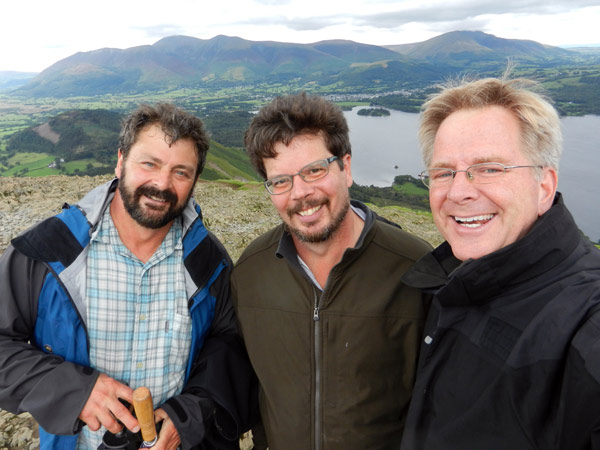
My TV crew at the Catbells in North England's Lake District

701 — Rome: Ancient Glory
Part one of three on the Eternal City, this episode resurrects the rubble and brings back to life the capital of the ancient world. Focusing on the grandeur of classical Rome, we marvel at the Colosseum, the Pantheon, and the empire’s exquisite art. Then we go offbeat by bicycle to see the Appian Way and marvels of Roman engineering.

702 — Rome: Baroque Brilliance
This second of three episodes on Rome reveals a city busy with life and bursting with Baroque. We ramble through the venerable heart of Rome, admire breathtaking Bernini statues, ponder sunbeams inside St. Peter’s Basilica at the Vatican, and mix and mingle with the Romans during an early-evening stroll. Following an exquisite Roman dinner, we join locals after dark, lacing together the Eternal City’s most romantic nightspots.

703 — Rome: Back-Street Riches
In this third of three episodes on the Eternal City, we explore this grand metropolis—so rich in art and culture—on a more intimate scale, delving into its back lanes and unheralded corners. Venturing through the crusty Trastevere district, visiting the historic Jewish Ghetto, and enjoying art treasures in a string of rarely visited churches, we uncover charms of hidden Rome that compete with its marquee sights.

704 — Florence: Heart of the Renaissance
Fifteenth-century Florence was the home of the Renaissance and the birthplace of our modern world. In this first of two episodes, we gaze into the self-assured eyes of Michelangelo’s David, enjoy Botticelli’s Birth of Venus, delve into the 3-D wonders of Ghiberti’s Gates of Paradise, appreciate Fra Angelico’s serene beauty, and climb the dome that kicked off the Renaissance. Then we cross the Arno to where Florentine artisans live, work, and eat…very well.

705 — Florentine Delights and Tuscan Side Trips
In this second of a two episodes on Florence, we enjoy more of the exquisite artistic treasures of the city that propelled Europe out of the Middle Ages. Then we side-trip to a couple of rival cities and cultural capitals in their own right, Pisa and Lucca, where we’ll marvel at a tipsy tower, circle a city on its ramparts, and enjoy some Puccini in his hometown.

706 — Paris: Regal and Intimate
In Paris, amidst all of its grandeur, the little joys of life are still embraced. In this first of two episodes on Paris, we cruise the Seine River, visit Napoleon’s tomb, and take in the Louvre. Then we feel the pulse of Paris—shopping in village-like neighborhoods, attending church in a grand pipe organ loft, and celebrating the mother of all revolutions with a big, patriotic Bastille Day bang.

707 — Paris: Embracing Life and Art
In this second of two episodes on Europe’s “City of Light,” we ride a unicorn into the Middle Ages at the Cluny Museum, take a midnight Paris joyride in a classic car, get an extremely close-up look at heavenly stained glass in Sainte-Chapelle, go on a tombstone pilgrimage at Père Lachaise Cemetery, and savor the Parisian café scene. Few cites are so confident in their expertise in good living—and as travelers, we get to share in that uniquely Parisian joie de vivre.

708 — London: Historic and Dynamic
In many-faceted London, we ponder royal tombs in Westminster Abbey, learn how to triple the calories of an English scone at teatime, discover treasures in the British Library, enjoy the vibrant evening scene in Soho, uncover Churchill’s secret WWII headquarters, join the 9-to-5 crowd in the new London, shop where the Queen shops, and straddle the Prime Meridian at Greenwich.

709 — North England’s Lake District and Durham
Hiking through the Cumbrian Lake District—England’s green and pristine mountain playground—we admire idyllic lakes, discover misty waterfalls, tour a slate mine, and conquer stony summits. And we’ll meet the locals—and their beloved dogs and sheep—everywhere. Then we play a little cricket, hike Hadrian’s Wall, and are dazzled by Durham’s Norman cathedral.

710 — Venice: City of Dreams
After sorting through the monuments of Venice’s powerful past, we trace its decline from Europe’s most powerful city to its most hedonistic one. We cruise the Grand Canal, luxuriate in a venerable café, and savor fresh fish canalside with Venetian friends. Becoming as anonymous as possible in this city of masks, we’ll be dazzled by masterpieces of the Venetian Renaissance and get intimate with the city of Casanova…on a gondola under the moonlight.

711 — Venice and its Lagoon
Venice, more than any other European city, has an endlessly seductive charm. For centuries, it was nicknamed La Serenissima, “The Most Serenely Beautiful One”—and for good reason. Along with sampling the sumptuous art treasures of Venice and exploring its back-street wonders, we cruise its lagoon, stopping in fiery Murano for glass, pastel Burano for lace, and murky Torcello for a sense of where Venice was born.

712, 713, 714 — European Travel Skills, Parts I, II & III (3 episodes)
These three episodes distill Rick Steves’ 30 years of travel experience into 90 minutes of practical advice on how to have a fun, affordable, and culturally broadening trip to Europe. Shot on location in Amsterdam, Germany’s Rhineland, Venice, Siena, the Italian Riviera, the Swiss Alps, Paris, and London, these episodes cover Rick’s favorite 3,000-mile European loop while providing viewers with essential travel skills. We cover tips on planning an itinerary, hurdling the language barrier, driving and catching the train, avoiding scams, eating well, sleeping smart, staying safe, and everything you need to enjoy the best possible experience.

One-Hour Special — Rick Steves’ Rome: Eternally Engaging (October, 2012)
Rome is, in many ways, the capital of our Western Civilization. In this hour-long special, Rick Steves resurrects the rubble while tracing the rise and fall of ancient Rome, celebrates the highlights of Bernini’s Baroque Rome, and makes a pilgrimage to the Vatican. Then, after delving into crusty neighborhoods where the character and energy of the Eternal City is most intimately felt, we join Rick for a Roman feast and an after-dark stroll lacing together the city’s romantic nightspots.

Rick Steves’ Europe: A Symphonic Journey (October, 2012)
Rick Steves teams up with the Cascade Symphony Orchestra and maestro Michael Miropolsky for an hour-long musical tour that starts in the USA, then touches down in seven different European countries. As your musical tour guide, Steves sets the context, then mixes evocative video images from each country with Romantic 19th-century anthems to celebrate how music stirs the patriotic soul of freedom lovers in every land. The musical itinerary for this symphonic journey: Grieg in Norway, Smetana in the Czech Republic, Strauss in Austria, Berlioz in France, Elgar in England, Wagner in Germany, and Verdi in Italy.

The Rome special is a 60-minute distillation of the three, new, half-hour episodes on Rome. Many of these programs will retire old shows we shot 10 years ago. And in the case of Rome, Florence, Venice, and Paris, we are replacing one show with two or two shows with three. In other words, we are covering our favorite destinations with much more depth – a luxury I am thoroughly enjoying. The shows promise to be the best we’ve ever produced. I can hardly wait for you to see them.

The Iditarod: My Sister, Jan Steves, Mushes with the Best Dog Racers in the World

Jan StevesBecause my parents imported pianos from Germany, our family traveled there when I was a kid. They took me — the eldest son — to Europe first. The next year, it was my younger sister Jan’s turn. But she opted to go to music camp instead. So I got to go to Europe for the second time in a row. I ended up going overseas every year since, and Jan, who had other passions, never did much international travel.

I never realized just how adventurous Jan is until a couple of years ago, when we discovered that she was, on the sly (thinking no one would take her seriously), setting her sights on actually competing in one of the world’s ultimate races: the Iditarod. Over the last several winters, she’s spent countless long Arctic nights mushing through the Alaskan wilds in subzero weather, running her beloved dog team down trails lit only by the moon and her headlamp. And now, the race of Jan’s life is upon her.

This Saturday, Jan Steves sets out to become the oldest woman from Washington State to ever finish the Iditarod. Starting today at ricksteves.com (look for the “Jan Steves’ Iditarod” link on the right side of the page), we’ll be running her blog, sharing an intimate, insider’s account of her personal quest. (For the fascinating back story, you can also browse through several months’ worth of Jan’s blog entries.)

The Iditarod is a thousand-mile race from Anchorage to Nome, which begins the first Saturday in March. Teams of 12 to 16 dogs take 10 to 14 days to complete the race (the fastest time is 9 days). The Iditarod was inspired by the original “serum run” in 1925. In that year, a diphtheria epidemic was sweeping Alaska, and Eskimo children, who had no immunity to this “white man’s disease,” were at great risk. A heroic relay of dog teams rushed a vial of life-saving serum to Nome, rescuing the children.Jan and her team

Each year since 1973, dog teams and mushers have set out from Anchorage to re-enact that first run — braving brutal temperatures, white-outs, wild-animal attacks, and gale-force winds. Mushers sleep with their teams under the Arctic stars, while the moose, the dogs, and the wind all howl. Competing with well-funded, beautifully equipped professional teams, Jan and her team are, you could say, the ultimate underdogs.

Trish Feaster will be there representing our family, friends, and staff to see Jan off. She’ll be reporting with articles and photographs until Jan and her dogs disappear into the Alaskan wilderness. From there on, Jan will be calling in reports nearly daily (mobile phone access permitting). These communiqués will be transcribed and posted on her blog. For Jan, just finishing this epic and grueling — not to mention dangerous — race will be a personal victory.

If you’d like to follow along and root for Jan and her team, be sure to check in, as her blog will be featured at ricksteves.com for the next two weeks.

Go, Jan, go!