Here you can browse through my blog posts prior to February 2022. Currently I'm sharing my travel experiences, candid opinions, and what's on my mind solely on my Facebook page. — Rick

What’s New in Germany, Hungary, and Austria for 2013

As we’re about the only travel guidebook publisher that endeavors to visit every place in person every year when we update our annual editions, we catch lots of important little changes from year to year. We collect these in a series of articles for our travelers. This past week, we’ve been sharing the latest in Italy, France and Great Britain. I hope these country-specific travel news flashes are of help in turning your travel dreams into smooth, efficient and affordable reality. For our last “What’s New” review, here’s Germany, Hungary, and Austria:

Three countries with a rich heritage–Germany, Hungary, and Austria–each have a constantly evolving sightseeing scene. Here’s the latest:

Getting into the Reichstag, Berlin’s parliament building (with its striking 155-foot-tall glass cupola), has been difficult over the last few years due to changing security and entrance procedures. Things have finally settled down and the process is clear: To visit the dome, it’s best to make a free reservation online several days in advance at www.bundestag.de. Once you have a reservation, simply report to the visitors center at the appointed time.
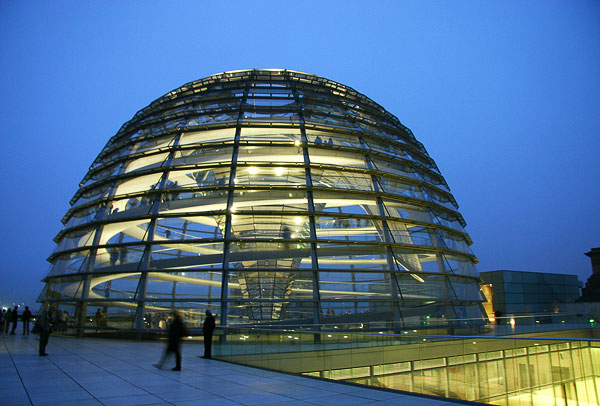
In Berlin, a convenient online ticketing system is making it easier to visit the Reichstag’s roof terrace and dome. (photo credit: Laura VanDeventer)

In Munich, sights are closing and opening. In the Residenz, the downtown palace of the Bavarian kings, the mythological scenes decorating the Halls of the Nibelungen are not on view, undergoing restoration at least through 2014. Reopening in Munich is the Lenbachhaus, home to the world’s largest collection of early Modernist Blaue Reiter paintings. The refurbished galleries now also host a first-rate collection of international contemporary art.

In Bavaria, the new Museum of the Bavarian Kings occupies a grand former hotel on the shore of the Alpsee, adjacent to the fairy-tale Hohenschwangau and Neuschwanstein castles. If you have free time between your castle tours and a higher-than-average curiosity about arcane Teutonic dynasties, this might be worth a stop. For most visitors, though, the highlight is the view of the lovely lake from the museum’s top floor.

St. Kilian’s Cathedral–the main church in Wurzburg, and the fourth-largest Romanesque cathedral in Germany–has reopened following a 3.2 million-euro renovation. The ornate stucco decoration inside has been spiffed up and the cathedral’s two organs restored.

Hamburg’s city center is taking on a new look, thanks to the urban renewal project called HafenCity. Built on 400 acres reclaimed from disused docklands right along the Elbe River, this roughly 15-block area in the city center is filling up with “starchitect”-designed buildings and waterside cafés. The anchor is the gigantic, architecturally striking Elbphilharmonie complex, home to a concert hall, hotel, apartments, and shopping center (due for completion in 2015).

Towns in Germany are already preparing for 2017 and the 500th anniversary of the Reformation, the movement started by Martin Luther that led to the establishment of the Protestant Church. In Wittenberg, where Luther began his challenge to papal authority, the Luther Garden is a leafy statement of cooperation between Protestant, Catholic, and Orthodox faiths. Hundreds of trees from as many Christian communities from around the world have been planted here, and each has a sister tree growing in its community of origin. Erfurt, Luther’s spiritual home, is welcoming visitors with Wednesday evening organ concerts at the Preachers’ Church and open-air opera performances on the steps of the cathedral in summer.

Little Hungary can’t compete in size with Germany, but its capital, Budapest, has its fair share of changes. Riverboats operated by the transit authority now connect strategic locations throughout the city. Although not as quick or convenient as Budapest’s subway or trams, the boats are a romantic, cheap alternative to pricey riverboat cruises on the Danube. Up on Castle Hill, the Royal Wine House has closed (at least temporarily), but the nearby House of Hungarian Wines has reopened, offering a survey of Hungary’s wine-growing regions. But the best place to sample local wines is in the company of locals–try any of the trendy wine bars opening up around town (such as DiVino, in front of St. Istvan’s Basilica, on the Pest side of the Danube).

The news from Austria is all about Vienna. At St. Stephen’s Cathedral, visitors can ride an elevator up to the newly opened Cathedral Treasury. The substantial treasures of the cathedral had been ignored in the nearby (and outmoded) cathedral museum, so they’ve been moved into the church, filling a space high above the nave on the west portal wall.
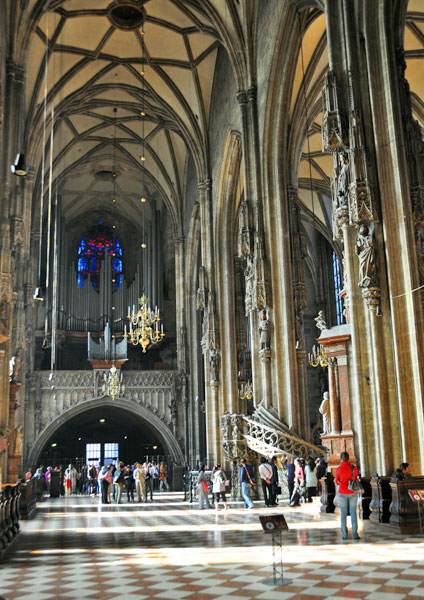
A new display tucked into a loft in the oldest part of Vienna’s St. Stephen’s Cathedral showcases church treasures. (photo credit: Cameron Hewitt)

The Kunsthistorisches Museum in Vienna is reopening its Kunstkammer (Cabinet of Wonders) exhibit to show off the lavish curiosities the Habsburg emperors gathered to impress their friends and enemies. Meanwhile, in the upstairs gallery known as the Gemaldegalerie, curators have been busily rearranging the paintings.

Vienna’s most impressive and crowded palace, Schonbrunn, now has an online ticketing system. It’s possible to avoid the admission lines there by reserving a timed-entry ticket at the palace’s website in advance (www.schoenbrunn.at).

Vienna’s train stations will be in disarray for the next few years, as the city rebuilds its central station and remodels several others. The wonderful Westbahnhof (West Station) has already been beautifully renovated–with the 1950s shell now filled with a modern mall of services, shops, and eateries. It’s all part of Europe’s steady investment in its infrastructure, a commitment that will benefit all travelers to Germany, Hungary, and Austria in 2013.

What’s New in Great Britain in 2013

As we’re about the only travel guidebook publisher that endeavors to visit every place in person every year when we update our annual editions, we catch lots of important little changes from year to year. We collect these in a series of articles for our travelers. This week, we’re sharing all the latest in Italy, France, Britain and Germany. I hope these country-specific travel news flashes are of help in turning your travel dreams into smooth, efficient and affordable reality. Up today: Great Britain.

Great Britain will likely be taking a deep breath (and perhaps a sigh of relief) this year as it recovers from a busy summer, when it hosted both the Olympics and Queen Elizabeth’s Diamond Jubilee.

Despite the flurry of investment that swept Britain in the lead-up to the Olympics, austerity measures have taken their toll on Britain’s tourist information services. I’ve long been disappointed in Britain’s inability to see that tourist information is an investment in an important industry that brings in business. Rather, Britain views tourist-info offices as businesses in their own right, having to scramble to stay afloat like the countless attractions they’re supposedly designed to serve. As a result, tourist offices across the country are either closing or morphing into shops peddling tourist activities, information, and knickknacks for a profit. The biggest hit is in London, where the Britain and London Visitors Centre near Piccadilly Circus has closed. Now the only publicly funded (and therefore impartial) tourist office is the City of London Information Centre, across from St. Paul’s Cathedral.

Even with these issues, London remains a dynamic destination. One of the biggest changes is to its skyline, which now boasts Europe’s tallest building, designed by Renzo Piano, the co-architect of Paris’ Pompidou Center. Rocketing 1,020 feet above the south end of London Bridge, the Shard (www.the-shard.com) shimmers in the sun and glows like the city’s nightlight after dark. The tip houses a 15-story stack of observation platforms enclosed in glass which opened to the public in February.

London’s newest skyscraper, the Shard--shown here nearly completed--is visible from virtually anywhere along the Thames. (photo credit: Cameron Hewitt)

Visitors hoping to capture some of the Olympic afterglow can soon visit the new Queen Elizabeth Olympic Park. The northern part, opening this summer, will feature footpaths, playgrounds, and picnic-friendly greens. The southern half, highlighted by the twisty red Orbit, is slated to open in spring of 2014. Visitors will also be able to swim in the pool where Michael Phelps won his 18th gold medal, as construction is underway to open up the Aquatics Centre for public leisure (pronounced LEH-zhoor in Britain).

Travelers interested in royalty will delight in the newly refurbished Kensington Palace, (www.hrp.org.uk/KensingtonPalace) which now hosts a worthwhile series of exhibits on its most notable past residents, including William and Mary, and the Hanovers (the “Georges”). The highlight is the exhibit on Queen Victoria, who was born and raised in this palace.

The new Kensington Palace has been immaculately restored, with engaging and creatively presented exhibits. (photo credit: Cameron Hewitt)

The wizarding world is abuzz over the opening of the “Making of Harry Potter” studio tour in Leavesden, a 20-minute train ride from London. The attraction lets Potter-philes see the actual sets and props used in the films, along with exhibits about how the special effects were created. Visitors must book a time slot in advance–and in 2013, it’s smart to do so as far ahead as possible (www.wbstudiotour.co.uk).
In Bath, a 90-minute train ride west of London, visitors to the Roman and Medieval Bath can now avoid lines–worst on Saturdays and any day in summer–by buying advance tickets online (www.romanbaths.co.uk).

Near Bath, visitors can explore Avebury Manor and Garden, the subject of The Manor Reborn, a four-hour BBC documentary on the refurbishment of the 500-year-old estate by a team of historians and craftspeople. Nine rooms decorated in five different styles show the progression of design trends from Tudor to Queen Anne to early 20th-century. A limited number of timed tickets are sold each day.

Along England’s southern coast, the Portsmouth Historic Dockyard complex will soon welcome a new museum displaying the 16th-century warship Mary Rose (Henry VIII’s favorite ship) and numerous Tudor-era items found inside the wreck.

In the charming city of York, in northeast England, the noble Kit Kat, Aero bars, and Chocolate Oranges are now featured in a fun attraction dubbed “Chocolate: York’s Sweet Story” (all three confections were famously born in York). Visits start with a film and guided tour before flowing into a virtual chocolate factory.

Renovations continue at the stately York Minster. While the Great East Window remains behind scaffolding, several examples of the window’s stained glass can be viewed up close in the Orb, a space-age-looking vessel located inside the Minster.

Two relatively new museums in Liverpool and Glasgow celebrate the heritage of these proud and scrappy port cities. The Museum of Liverpool is packed with interactive displays covering everything from the city’s music and sports background to housing and health issues. Glasgow’s Riverside Museum of Transport and Travel sports high-tech displays, a re-creation of a 20th-century street, and plenty of recollecting Glaswegian seniors. Its vast collection includes stagecoaches, locomotives, the world’s oldest bicycle, and the Glenlee, one of Glasgow’s five remaining tall ships (docked outside the museum).

After a momentous year, 2013 should mark a return to normalcy in Great Britain. For many residents and travelers, that’s a welcome change.

What’s New in France in 2013

As we’re about the only travel guidebook publisher that endeavors to visit every place in person every year when we update our annual editions, we catch lots of important little changes from year to year. We collect these in a series of articles for our travelers. This week, we’re sharing all the latest in Italy, France, Britain, and Germany. I hope these country-specific travel news flashes are of help in turning your travel dreams into smooth, efficient and affordable reality. Next up: France.

Travelers to France find a rich and constantly changing palette of cultural and historic sights. Here’s a review of what’s new or different in la belle France for 2013:

Increasingly, attractions in Paris and beyond are adding online ticketing, which lets visitors print a receipt that serves as an entry pass. Smart sightseers can now book ahead and avoid lines at destinations such as the Eiffel Tower, the Musée d’Orsay, and Monet’s gardens at Giverny, as well as for activities such as Seine river cruises and church concerts.

As always, there’s news at the Louvre. Videoguides on portable consoles (€5 rental) provide commentary on about 700 masterpieces. The new Islamic art section–with its eye-catching glass roof–is installed in the Cour de Visconti courtyard of the Denon wing.

Other Paris museum openings and closings include the recently refurbished Impressionist galleries of the Musée d’Orsay. After a bit of a shakeout, paintings have settled into permanent locations, offering a fresh view of this rich trove of masterworks. The long-closed Picasso Museum should finally reopen in summer 2013. Meanwhile, the Rodin Museum is undergoing a major renovation until 2014. While statues will be moved around and some rooms will close altogether, the museum’s lovely gardens will remain open.

There are several intriguing new tour options in Paris. Classic Walks offers new Easy Pass tours that allow you to skip the lines at major sights such as the Louvre and the Eiffel Tower (www.easypasstours.com). TripUp’s pedicab tours, helmed by hard-pedaling drivers, are a charming way to experience Paris at a snail’s pace (www.tripup.fr). If rumbling around Paris in a funky old Citroën 2CV convertible à la Inspector Clouseau sounds like your kind of fun, check out Paris Authentic (www.parisauthentic.com) or 4 Roues Sous 1 Parapluie (www.4roues-sous-1parapluie.com).

The city’s Velib bike program is now more accessible to visitors, who can buy a one- or seven-day subscription online (http://en.velib.paris.fr). This is a fun way to tootle between sights–the first 30 minutes of any trip are included with your subscription; after that there’s a small fee for each additional 30 minutes.

Paris’s bike-sharing program has more than 20,000 bikes stationed around the city. (photo credit: Dominic Bonuccelli)

Along the Seine, the French are following a kitschy and annoying “tradition” that’s popping up in other parts of Europe: latching padlocks on the handrails of bridges. Locals and tourists alike honor loved ones by writing a brief message on a padlock and attaching it to a railing. The locks (called un cadenas, €5) are sold at bookseller’s stalls along the river.

At Versailles–the number one side-trip from Paris, just a half-hour away–some rooms of the Queen’s Wing of the main palace may be closed for renovation in 2013. A new shuttle bus is whisking visitors from the Versailles train station to the Trianon Palaces and the Domaine de Marie-Antoinette, on the far side of the palace’s vast grounds (www.phebus.tm.fr).

At Mont St-Michel, the causeway that’s long brought tourists to the dramatic island abbey was closed to car traffic in 2012 (and will eventually be replaced by a new bridge). Instead of parking along the causeway, drivers now leave their cars on the mainland and either walk, ride a free shuttle, or hop a horse-drawn wagon to the island.

Down south, in Provence, the Ancient History Museum in Arles is showing off a recently discovered Roman barge and much of its cargo (exhibit opening in late 2013). This almost 100-foot-long vessel and more than 3,000 ceramic jugs and artifacts were pulled from the Rhône River in 2010. Along the Riviera, the big news in Nice is the reopening of its 100-year-old onion-domed Russian Cathedral, claimed by many to be the finest Orthodox church outside Russia.

The historic Russian Cathedral in Nice, built during the reign of Tsar Nicolas II, is celebrating its 100th anniversary. (photo credit: Michaelanne Jerome)

Through 2014, you won’t be able to cross the Alps from France to Italy by cable car, as the lift from Helbronner Point (near Mont Blanc) down to the Italian valley station of La Palud is closing for renovation. (You can still side-trip to Italy by bus from Chamonix to Aosta.) Gondolas will continue operating on the Mont Blanc lift up from Chamonix to the Aiguille du Midi and over to Helbronner–but only in summer and, even then, only in good weather.

The Alsace’s top art sight, Colmar’s famed Unterlinden Museum, is scheduled for renovation sometime in 2013. When that happens, the jewel of the museum, Grunewald’s gripping Isenheim Altarpiece, will likely move to the nearby Dominican Church, where it should remain on display while the museum is under construction.

With all this renovating and reorganizing, there’s one thing that won’t change in France: The owners of family-run hotels will still run from bakeries through the streets at the crack of dawn, lovingly bringing fresh-baked croissants back to their breakfast rooms so their guests can get a proper start to their sightseeing days.

What’s New in Italy for 2013

As we’re about the only travel guidebook publisher that endeavors to visit every place in person every year when we update our annual editions, we catch lots of important little changes from year to year. We collect these in a series of articles for our travelers. In the next week, we’ll share all the latest in Italy, France, Germany, and Britain. I hope these country-specific travel news flashes are of help in turning your travel dreams into smooth, efficient and affordable reality. First up: Italy.

Italy has more of Europe’s cultural heritage than any other country — and the Italians are doing a fine job of sharing it with their visitors. Here is the latest, gleaned from my guidebook research for 2013:

Rome has made visiting the Vatican Museum easier. You can often buy same-day, skip-the-line tickets from the tourist-information office in St. Peter’s Square; it’ll cost the same price you’d pay if you had reserved online (€15 ticket plus €4 reservation fee).

Rome's St. Peter's Square is eternal — but can change to accommodate the needs of busy tourists. The square's tourist-information office now offers same-day tickets to the Vatican Museum. (photo credit: Dominic Bonuccelli)

Massive crowds line up to see Florence’s cathedral — the Duomo — which is free to enter. Here’s how to skip the line: If you’re already planning to visit the cathedral-related sights — the Duomo Museum, Baptistery, and Campanile — that require a combo-ticket to see, buy your ticket first at the less-crowded museum. You can use it to enter through the cathedral’s exit, bypassing the lines at the front door.

Florence’s Uffizi Gallery is still undergoing a massive, years-long renovation that bodes well for travelers. Although a few rooms are off-limits, many more rooms have been opened to the public, such as the Caravaggio Rooms and the new “Foreign Painters Section,” featuring mostly Dutch/Flemish painters (including Rembrandt) with some Spanish and French artists.

Also in Florence, Lorenzo Ghiberti’s Renaissance-era Baptistery doors — featuring the original 10 bronze panels from the “Gates of Paradise” (1425-1452) — have been newly restored and are now back on display at the Duomo Museum.

From April through September, Florence’s best late-hours sightseeing is at the Palazzo Vecchio, the fortified palace where the Medicis ruled. The sight generally stays open until midnight. Also, the Palazzo Vecchio’s tower has reopened to visitors, providing a great cityscape view.

Florence’s Galileo Science Museum, which was recently renovated, has rearranged and dramatically updated its exhibits. Engaging video screens (in English) have been added to many rooms to help illustrate inventions and scientific principles.

In Venice, the Accademia, which is known for its great collection of Venetian Renaissance art, is open but still in a constant state of disarray, with a major expansion and renovation dragging on for years. The locations of paintings isn’t yet set. The upside is that crowds have died down, so there’s no longer a need to reserve a ticket in advance.

To make the most of cruising Venice’s Grand Canal on a public vaporetto (water bus), catch the boat at Piazzale Roma (just before the crowded train-station stop), where you’ll have your choice of seats. A few boats have seats in the bow with great views; make a beeline for these.

Formerly presented every other year, the Venice Biennale — a world-class, contemporary fair — is now an annual event. It alternates between visual art in odd years and architecture in even years. The exhibition spreads over the Arsenale and Giardini park, and usually runs from June through November.

In Naples, it’s no longer necessary to make an appointment to see the Archaeological Museum’s Secret Room, with its assortment of erotic frescoes, well-hung pottery, and perky statues that once decorated bedrooms and brothels at Pompeii and Herculaneum.

The Cinque Terre, Italy’s picturesque Riviera, is back to normal after two of its towns were badly damaged in a flood in the fall of 2011. The towns and nearly all the trails of the region are once again ready for prime time. A handy (but pricey) new parking garage has opened at nearby La Spezia’s train station, making it easier and safer for day-trippers to leave their cars and hop the train to the Cinque Terre.

In fashion-forward Milan, travelers can now visit the high-end concept store called Excelsior in the Galleria del Corso, which feels more like a design museum than a retail store. A conveyor belt carries shoppers from level to colorful level to the beat of pulsing music, passing electronic art installations on the way. Even if you can’t afford the $1,000 shirts, you might enjoy the basement food hall with its good food at reasonable prices.

To generate funds during a time of economic uncertainty, more and more cities — such as Venice, Florence, Padua, and Rome — are levying a tax on hotel rooms. Tourists must pay the tax in cash at checkout. It varies from €1 to €5 per person, per night, and is based on how many stars the hotel has under the government rating system.

While the Italian economy remains unpredictable, you’re guaranteed to have a memorable trip in 2013. The Italian zest for life is as timeless as its ancient monuments. Go with an eye open to both the Italy of the past and the Italy of the present.

To see Florence's iconic cathedral (the Duomo), buy a combo-ticket to related sights at the nearby Duomo Museum and use that ticket to skip the cathedral's lines. (photo credit: Dominic Bonuccelli)

Evergreen: A Documentary in Need of Green and a Plea for Help

I’ll always remember 2012 as the year I jumped into the political trenches and helped our state legalize marijuana (by passing Initiative 502 in November). It was a fascinating story that caught the nation’s attention. While in Washington DC for the inauguration last month, my senator got me into a high-society party to proudly introduce me to other senators as a key player in our state’s legislative triumph.

But just a few months ago, legalization was far from a sure thing. All along the road, two scrappy documentary filmmakers were there with their cameras rolling. Riley Morton and Nils Cowan sensed history in the making and committed months of hard work to producing Evergreen, a one-hour documentary telling the story of how marijuana became legal in Washington State (the Evergreen State, by the way). If we lost the election, their work would have been wasted. But we won, and they alone were there from the start to show how it happened. (And it wasn’t a smooth ride!)

They have an impressive trailer (see below) and are now in the final stretch of their mission. But film production is expensive, and they need to raise $36,000 to make it happen. Watch their trailer for a sense of the film. And, if so inspired, I’d encourage you to visit their press release and help them out.

Among drug policy reformers, the entire country (and even Europe) is looking at Washington State and Colorado for a smart example on moving forward out of our war on pot. And this movie will help… but only if Riley and Nils can complete it. Thanks.

If you can’t see the video below, watch it on YouTube.