Here you can browse through my blog posts prior to February 2022. Currently I'm sharing my travel experiences, candid opinions, and what's on my mind solely on my Facebook page. — Rick

The Roots of Christmas: From Sun Worship to Son Worship


christmas-wheat-wreathAs I’m reflecting on the making of my Rick Steves’ European Christmas television special, CD, and companion book, I wanted to share this book excerpt, which outlines how much of our contemporary notion of celebrating Christmas actually has prehistoric and pagan roots:

For as long as people have shivered in the winter, they’ve celebrated the beginning of its end. For ancient people of Europe, midwinter was known as the Yuletide, meaning the “turning of the sun.”

Imagine you’re living in the cold of northern Europe before the birth of Christ. Your gods are the mysterious forces of nature:  the sun, rain, and wind. In summer, it’s warm, plants grow, and food is plentiful. Then it gets cold and dark, and the earth becomes frozen and bleak.

Just when everything looks darkest — around December 21st, the winter solstice, the longest night of the year — what do you do? You throw a party! And, slowly but surely, the cycle turns. Your sun god, who’d been weak and sick, is now on the mend, spring is coming, and once again life is returning to your world.

For the prehistoric people of Europe, late December — though dreary and dark — was the perfect time to celebrate. Why? Because they had fresh meat and good grog to celebrate with: In December, villagers often slaughtered the cattle they couldn’t afford to feed through the winter, so this was the only time of year when many of them had fresh meat. Also, wine and beer made earlier in the year had finally fermented and were ready to drink. Time to party!

The pagan Romans conquered the pagan Celtic people around 50 B.C. The Romans called their solstice festival Saturnalia, and it was marked by feasting and good-natured goofiness. Then, as Christianity slowly spread through Rome — becoming the empire’s chief religion by the fourth century A.D . — the midwinter celebration got a new twist.

In the first few centuries of Christianity, Easter was the primary holiday — Jesus’ birthday wasn’t even celebrated. The Bible doesn’t say exactly when Jesus was born, and what it does say — that “shepherds were herding their flocks” — suggests spring rather than winter. But in the year 350, Pope Julius I decided to make the birth of Jesus a holiday, choosing December 25th. Politically, it was a clever choice, because the young religion (legal for less than a century) could then adopt and absorb the traditions of the immensely popular Saturnalia. The fun-loving spirit of the pagan festival dovetailed nicely with the joyous welcome given to the Christ child. By the mid-fifth century, the Feast of the Nativity — as Christmas was first called — was celebrated from Egypt to England.

By the Middle Ages, Christianity had largely replaced pagan religions. But the hedonistic partying of pre-Christian religions was inextricably woven into Christian celebrations. On Christmas, believers attended church, and then got wild and crazy.

Though church leaders would have preferred to celebrate with more reverence than revelry, pagan customs survived: People still sang in roving bands, shared bowls of wassail (spiced wine), performed farcical plays, and exchanged gifts at New Year. Most medieval lords provided a Christmas feast for their tenants and made the 12 days of Christmas a holiday from work, so for many people, Christmas was as much about feeding the body as feeding the soul. From these festive rituals — long celebrated around the winter Christian holy days — many sacred observances emerged that are still beloved by the faithful as integral parts of their Christmas celebrations.

Top Ten Things to Do in Paris at Christmas

You probably won’t be able to jet over to Paris for Christmas. But if you could, here are ten fun things to do (excerpted from the Rick Steves’ European Christmas book). Read these and imagine a Joyeux Noël in the City of Light:

Manèges de Noël: Christmas Carousels  These seasonal merry-go-rounds pop up in every neighborhood in Paris. The biggies are at Hôtel de Ville and the Eiffel Tower, but more fun are the charming manèges in less touristy neighborhoods.
Manèges de Noël: Christmas Carousels
These seasonal merry-go-rounds pop up in every neighborhood in Paris. The biggies are at Hôtel de Ville and the Eiffel Tower, but more fun are the charming manèges in less touristy neighborhoods.
Lick a Window The French phrase for "window shopping" is lèche-vitrine — literally, “window licking.” Big department stores compete with one another for the most fabulous window displays of animation and whimsy. French parents dress up their kids and come from all over the country to compare the windows of the three great Parisian department stores: Galeries Lafayette, Printemps, and Bon Marché. Thoughtfully, the stores provide wooden steps at the windows so that even the tiniest tot can get a good view.
Lick a Window
The French phrase for “window shopping” is lèche-vitrine — literally, “window licking.” Big department stores compete with one another for the most fabulous window displays of animation and whimsy. French parents dress up their kids and come from all over the country to compare the windows of the three great Parisian department stores: Galeries Lafayette, Printemps, and Bon Marché. Thoughtfully, the stores provide wooden steps at the windows so that even the tiniest tot can get a good view.
Slurp an Oyster in the Marais To eat an oyster in public: Make sure to cut under the oyster so that it is completely separated from the shell. Then tip the shell toward your mouth, causing the oyster to slide forward and down into your mouth — but whatever you do, don’t let any stray oyster juice run down your chin. Slurp!
Slurp an Oyster in the Marais
To eat an oyster in public: Make sure to cut under the oyster so that it is completely separated from the shell. Then tip the shell toward your mouth, causing the oyster to slide forward and down into your mouth — but whatever you do, don’t let any stray oyster juice run down your chin. Slurp!
Pony Rides Take the little people to Luxembourg Garden to ride the ponies or (sometimes at Christmas) donkeys. If you’re lucky enough to be there when the donkeys are, tell the kids about pregnant Mary and Joseph riding the donkey to Bethlehem.
Pony Rides
Take the little people to Luxembourg Garden to ride the ponies or (sometimes at Christmas) donkeys. If you’re lucky enough to be there when the donkeys are, tell the kids about pregnant Mary and Joseph riding the donkey to Bethlehem.
Chocolate Shopping Buy your best friend a box of chocolates from one of  La Maison du Chocolat boutiques, run by Robert Linxe, the high priest of Paris chocolate. Specialties include jewel-like bonbons with lemon, mint, and ginger-infused fillings. The lines go out the door at Christmastime, so allow plenty of time for your visit. La Maison du Chocolat has seven boutiques in Paris.
Chocolate Shopping
Buy your best friend a box of chocolates from one of La Maison du Chocolat boutiques, run by Robert Linxe, the high priest of Paris chocolate. Specialties include jewel-like bonbons with lemon, mint, and ginger-infused fillings. The lines go out the door at Christmastime, so allow plenty of time for your visit. La Maison du Chocolat has seven boutiques in Paris.
Avante-Garde Trees Visit the annual exhibition of Christmas trees created by top couturiers and designers at the Centre Pompidou. The “trees” don’t look much like your standard evergreen; they’re Christmas concoctions with something vaguely tree-like about them. Creations are by turns wickedly funny, seductive, political, lovely, and just plain weird. It’s a fun exhibit, and your entrance fee goes to a French charity that assists orphaned children.
Avante-Garde Trees
Visit the annual exhibition of Christmas trees created by top couturiers and designers at the Centre Pompidou. The “trees” don’t look much like your standard evergreen; they’re Christmas concoctions with something vaguely tree-like about them. Creations are by turns wickedly funny, seductive, political, lovely, and just plain weird. It’s a fun exhibit, and your entrance fee goes to a French charity that assists orphaned children.
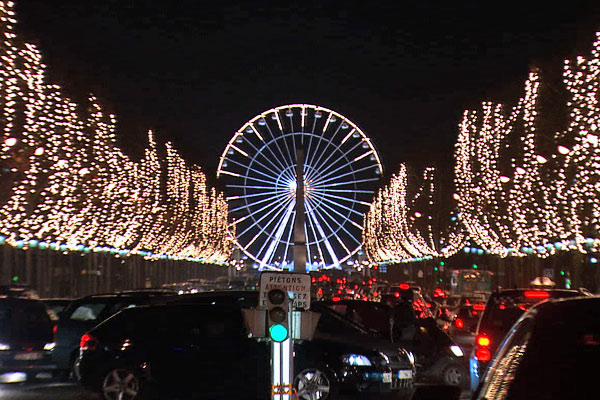
The Champs-Elysées and the Eiffel Tower Bundle up, wander over to the Champs-Elysées, and walk the length of the boulevard, with its fairy forest of twinkling trees. Time it so that you can walk (or take the Métro) over to Trocadéro square in time to see the lights on the Eiffel Tower shimmer — on the hour for five minutes every night until midnight.
The Champs-Elysées and the Eiffel Tower
Bundle up, wander over to the Champs-Elysées, and walk the length of the boulevard, with its fairy forest of twinkling trees. Time it so that you can walk (or take the Métro) over to Trocadéro square in time to see the lights on the Eiffel Tower shimmer — on the hour for five minutes every night until midnight.
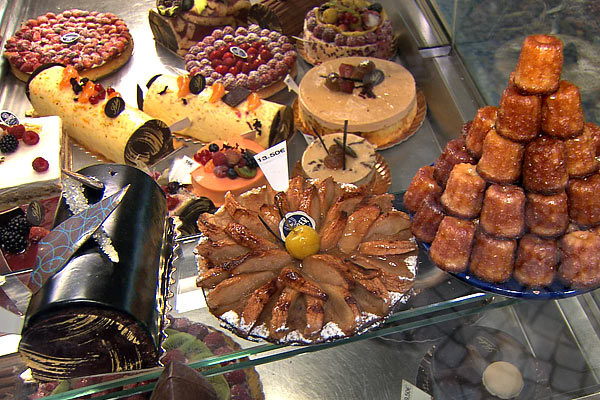
Pastries, Pastries, Pastries Indulge yourself with a bûche de Noël (yule log) from the oldest pâtisserie in Paris. One day in 1730, Queen Marie Leszczyńska, daughter of the king of Poland, stopped in Strasbourg on her way to Versailles to marry Louis XV and met a pastry chef named Störher. She fell in love — not with the chef, but with his famous puits d’amour (“wells of love,” chocolate cups filled with a rich, creamy custard). The Queen offered him a job, and Störher packed up, opened up a pâtisserie in Paris, and became famous. Even the Queen of England couldn’t resist a stop at Ströher’s on her last trip to Paris. (It’s at 51 rue Montorgueil.)
Pastries, Pastries, Pastries
Indulge yourself with a bûche de Noël (yule log) from the oldest pâtisserie in Paris. One day in 1730, Queen Marie Leszczyńska, daughter of the king of Poland, stopped in Strasbourg on her way to Versailles to marry Louis XV and met a pastry chef named Störher. She fell in love — not with the chef, but with his famous puits d’amour (“wells of love,” chocolate cups filled with a rich, creamy custard). The Queen offered him a job, and Störher packed up, opened up a pâtisserie in Paris, and became famous. Even the Queen of England couldn’t resist a stop at Ströher’s on her last trip to Paris. (It’s at 51 rue Montorgueil.)
The City of Light’s Lights  Walk up and down the Boulevard Haussmann admiring the fabulous lights at Printemps and Galeries Lafayette. Try to guess how many bulbs it took to create Galeries Lafayette’s illuminated canvas. (Hint: Last year, it was 150,000.)
The City of Light’s Lights
Walk up and down the Boulevard Haussmann admiring the fabulous lights at Printemps and Galeries Lafayette. Try to guess how many bulbs it took to create Galeries Lafayette’s illuminated canvas. (Hint: Last year, it was 150,000.)
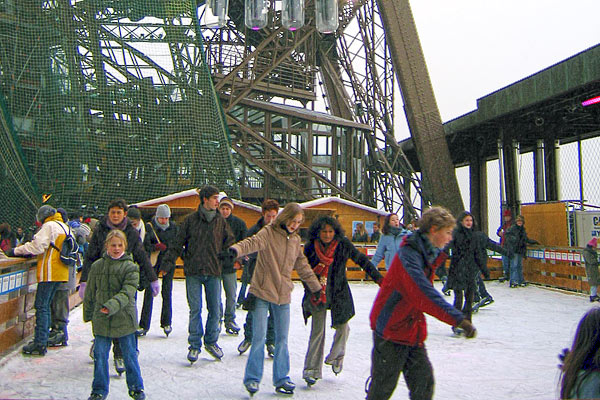
Ice Skating at 200 Feet Put on something chic and cozy. Then ride the elevator to the first level of the Eiffel Tower to glide on Paris’ highest ice-skating rink and gaze at the city’s domes, towers, and rooftops — the City of Light illuminated for the holiday season.
Ice Skating at 200 Feet
Put on something chic and cozy. Then ride the elevator to the first level of the Eiffel Tower to glide on Paris’ highest ice-skating rink and gaze at the city’s domes, towers, and rooftops — the City of Light illuminated for the holiday season.

The 12 Days of European Christmas: Filming (and Celebrating) Christmas All Across Europe

ROnce upon a time, for the 12 days of Christmas, we had two busy television crews a-filming: 12 carol concerts, 11 mugs of Glühwein, 10 living mangers, 9 happy families, 8 Christmas feasts, 7 Euro-cultures, 6 mistletoe kisses, 5 alternative Santas, 4 pounds of weight gain, 3 midnight Masses, 2 exhausted cameramen, and a festive hour of great new public television. (Go ahead, sing it.)

During the 2005 holiday season, my crew and I enjoyed producing a one-hour public television special we hoped would be around for many Christmases to come. As it turns out, stations all over the country air this to audiences who have come to think of watching the show as part of their holiday tradition. For a little holiday cheer here on Facebook, I’m kicking off a “12 Days of Christmas” series of video clips from our experience there.

From England to Norway, Burgundy to Bavaria, and Rome to the top of the Swiss Alps, our mission was to get you a seat at the family feast, save you a pew up in the lofts with the finest choirs, and hand you a rolling pin in Grandma’s kitchen as she labored over her best-kept holiday secrets. We joined Romans cooking up female eels, Parisians slurping oysters, Tuscans tossing fruit cakes, and Norwegian kids winning marzipan pigs. Exploring the rich and fascinating mix of traditions — Christian, pagan, commercial, and edible — we learned lots about the holiday festivities we know and love today and packed it into this special program.

Rather than feature a bunch of shopping malls and Christmas markets, our goal was to get an inside look at sacred, traditional, intimate family Christmas celebrations. We wanted to feature diverse cultures whose colorful yuletide traditions would be appreciated by American families whose ancestors emigrated from those places. Our goal: to give our viewers a look at European Christmas through the eyes of a child, a parent, and a pilgrim. This was not a “happy holidays” sales gimmick, but a true celebration of Christmas. As the increasing commercialization of the holiday season has driven me abroad for several recent Christmases, I was happy to take our crew to a continent where people aren’t counting the shopping days left until Christmas.

So, get ready. Starting tomorrow, for the next couple of weeks, we’ll enjoy a daily dose of European Christmas right here.

The Most Famous Author of All Time from Washington State?

DSomething amazing just happened. In Business Insider’s “The Most Famous Author from Every State” article, I was their pick for Washington State.

Our state has produced some great and serious authors (most notably Sherman Alexie and Richard Brautigan), and some very popular, mass-market writers (including romance novelist Debbie Macomber, Dune author Frank Herbert, and rabble rouser Glenn Beck). But they chose a guy who writes guidebooks. I suppose if it was based on titles in print (67) or ongoing sales (about a million a year), it might make sense to pick me…but certainly not for “literature.” Still, I will willingly join the ranks of other states’ most famous writers, from Herman Melville (New York) to Mark Twain (Missouri).

In my defense, I believe that, out of the 51 writers named, I’m the only one who’s designed a series of phrase books, assessed the flamenco options in Sevilla, laid out a pub crawl in Venice, collected a listing of coffeshops where older travelers might enjoy a joint in Amsterdam, discussed the morality of stealing lunch from your guesthouse’s breakfast buffet, or explained how to enjoy the Vienna Boys Choir without buying a ticket.

Take a look at Business Insider’s list, and see if you agree with the writer who made the cut for your state. (And, to whoever at Business Insider chose me: Thanks, and happy travels!)


Happy Thanksgiving

It’s so nice to be home for Thanksgiving. One thing great about foreign travel: When you get back home…you’re really thankful. I hope you enjoy this little clip from my hometown — which I’m savoring with friends and family this holiday. (I’ve spent so much time in Europe, I get flamenco and flamingo mixed up!)

Speaking of Thanksgiving: Thanks to the more than 800 fans who have already responded to our Bread for the World Christmas Fundraiser Challenge (donating $100 to BFTW in return for three gifts from us and a promise that we’ll match their donation). But that means we still need 200 more people to help us make our goal of raising $100,000. With my matching donation — and if we hit this goal — a total of $200,000 will go to fighting hunger. Help us by donating to Bread for the World. What a great way to counter all the Black Friday frenzy with an initiative true to the meaning of the season. Thanks for joining us! And Happy Thanksgiving.

If you can’t see the video below, watch it on YouTube.