Here you can browse through my blog posts prior to February 2022. Currently I'm sharing my travel experiences, candid opinions, and what's on my mind solely on my Facebook page. — Rick

Daily Dose of Europe: After Hours at a German Stammtisch

In Europe’s tourist towns, the best social moments combust after a long day of work, and after the guests say good night.

With so many of us stuck at home for the foreseeable future, I believe a daily dose of travel dreaming can actually be good medicine. Here’s another one of my favorite travel memories — a reminder of what’s waiting for you in Europe at the other end of this crisis.

After hours in an Irish pub in Galway, the door is locked and the musicians play on. On the Italian Riviera, the dishes are washed, the anchovies are eaten, and the guitars come out. And in small-town German hotels, the family and the hired help stow their workplace hierarchy with their aprons and take out a special bottle of wine.

During many visits to Rothenburg, Germany’s ultimate medieval town, I’ve sat down hurriedly at the Golden Rose restaurant to update my guidebook listing, then dashed away. Tonight, I’ve decided to sit down and simply relax with the Favetta family. We gather around the Stammtisch: the table you’ll find in most German bars and restaurants reserved for family, staff, and regulars. (An invitation to the Stammtisch is a good life goal.) Except for our candlelit table, the once noisy restaurant is empty and dark.

Well into our second glass of wine, we indulge in the sport many in the tourist business enjoy: cultural puzzles. The daughter, Henni, asks me, “Why can’t Americans eat with a knife? You cut things with your fork.”

I confess I know nothing about holding silverware. And just to hit a Yankee when he’s down, she adds, “And you people love to drink plain water — we call this water the American Champagne. But you never eat liver or blood sausage. The Japanese love those.”

I ask Henni if it’s not dangerous to generalize about other cultures.

She says, “Even deaf people generalize.”

When I ask how, she explains with the help of her hands. “In international sign language, ‘Germany’ is my finger pointing up from my head,” she says, making a fist-and-finger Prussian helmet. ‘France’ is this wavy little mustache,” she continues, wiggling a finger across her upper lip. “And ‘Russia’ is the Cossack dancer.” Henni bounces on her chair and hooks her thumbs at her waist, while her index fingers do a jaunty little cancan dance.

“And what’s the sign for America?” I ask.

“The fat cat,” she says, propping up an imaginary big belly with her arms.

Her father, Rino, whose English is worse than my German, struggles to follow the animated discussion. Whenever the conversation reaches a spirited tempo, he jumps in, brings it to a screeching halt, and sends it in a completely new direction.

Pretending to add to Henni’s thoughts, he leans over to me. As if a magician sharing a secret, he holds his hand palm down in front of my face. Stretching his thumb high and out, he forms a small bay in the top of his hand. Peppering in a little snuff tobacco, he announces, “Snoof tobak.” With Henni’s help, Rino clarifies. Struggling with the word, he says, “anatomical snuffbox,” and snorts. With a quick sniff, I try it, and it works.

As noses wiggle, I ask Henni if living in a tourist fantasy-town gets old.

“I will live and die in Rothenburg,” she answers. “Teenagers here dream of leaving Rothenburg. One by one they try the big city — Munich or Nürnberg — and they come home. Summer is action time. Winter is quiet. The tourists, they come like a big once-a-year flood. We Rothenburgers sit and wait for you to float by.”

“Like barnacles,” I add cheerfully, even though I figure that word is not in Henni’s English vocabulary.

Henni looks at me like I just burped. “People who live here have magic vision,” she says. “If we want to, we can see no tourists and only local people. Rothenburg is a village. We know everyone.”

The impromptu party continues as I learn that, even in the most touristy town in Germany, you can still make a genuine, cross-cultural connection. Sitting at the Stammtisch after hours, this conversation becomes my treasured souvenir.

(This story is excerpted from my upcoming book, For the Love of Europe — collecting 100 of my favorite memories from a lifetime of European travel. It’s coming out in July, and available for pre-order. And you can also watch a video clip related to this story: Just visit  Rick Steves Classroom Europe  and search for Germany.)

Daily Dose of Europe: Vernazza — Lorenzo’s View

I miss hiking through the vineyards up to the scenic cemeteries high above the Cinque Terre — looking down over Italy’s heavenly, traffic-free Riviera.

With so many of us stuck at home for the foreseeable future, I believe a daily dose of travel dreaming can actually be good medicine. Here’s another one of my favorite travel memories — a reminder of what’s waiting for you in Europe at the other end of this crisis.

Vernazza’s strollable breakwater creates a little harbor, rare on this rugged Riviera coastline. Grabbing a comfortable hollow in a boulder on the tip, I study the arrangement man and nature have carved out here over the last thousand years. Crumpled hills come with topographical lines: a terraced, green bouquet of cactus, grapevines, and olive trees.

With a closer look, I notice that the hills silently seethe with activity. Locals tend their vines and hikers work up a thirst for the white wine these hills produce. The single silver rail line runs perpendicular to the terraces, scaling the hillside like a rock climber’s rope. It’s autumn, and the grape pickers’ tiny train — the trenino — is busy ferrying grapes down into town from the highest terraces.

Below my rocky perch, a fisherman cleans his nets. The cool mist that follows each crashing wave reminds me how easily this breakwater is conquered during winter storms. High above the breakwater, at the base of the castle, is a restaurant called Il Castello. This pricey place was my private little splurge back when I stretched my money by choosing popsicles over gelato.

Vernazza feels populated by descendants of the pirates who plundered this coast. But Lorenzo, who ran Il Castello, was a rare Vernazzan who didn’t take advantage of tourists held captive by his town’s beauty. He’d sit me down under an umbrella with the most commanding view in town. And with the love of a small-town priest, he’d put a cookie next to my glass of cool, sweet sciacchetrà wine, and say, “Rest here. The view is nice.”

Cancer took Lorenzo quickly one winter. Now he’s king of the Vernazza mountain. He’s resting and enjoying the best view of all from a different kind of hotel, booked out by locals for years…the hilltop cemetery.

Leaving the harborfront, I climb the steep, stony staircase up to Il Castello. Monica, Lorenzo’s daughter who runs the place now with her husband Massimo, greets me warmly. Her black hair backlit by the sun, she seems to have an aura. Her penetrating eyes seem to really see me. She has Barbra Streisand lips and a bony nose. In her caring face I see Lorenzo, as if he were still standing there with a nice bottle of sciacchetrà.

I tell Monica that I’ve been thinking about her father and she suggests we visit the cemetery. Hiking through narrow back alleys that smell of damp cats, we reach the lane that leads uphill to the cemetery. After a funeral Mass, the entire village spills out of the church and trudges darkly up this same route.

At the top of the lane, a black iron gate is open. Inside, the cemetery is fragrant with fresh flowers. Quiet pathways separate marble walls of niches, stacked five high. Walking down a lane closest to the sea, Monica explains that coffins are not put into the ground but slid into a loculo. Squinting at a wall of niches, reflecting bright white in the late-afternoon sun, I review names and dates carved into the marble. Each niche is wired with a minuscule light and comes with a built-in vase. And next to each vase is an inset oval window filled with a black-and-white portrait.

Stepping around a rolling ladder — left out for loved ones with flowers for those resting on the top row — Monica arrives at her father’s loculo. She leaves me long enough to cross herself. Then, turning toward the sea, Monica sits on a flat rock just big enough for two. Patting the other half of her perch, she invites me to sit down. She doesn’t know it, but it’s as if to say, “Rest here. The view is nice.”

We ignore the red tiles, flapping laundry, and tourists lounging on the breakwater below. From here, enjoying what we call “Lorenzo’s view,” the world is peaceful green and reassuring blue, blending the sea and sky. To the left and right, I pick out each of the Cinque Terre towns along the coast. Each is alone in the world — seemingly oblivious to the march of time. I wonder what could possibly improve the setting. Then the church bells ring.

(This story is excerpted from my upcoming book, For the Love of Europe — collecting 100 of my favorite memories from a lifetime of European travel. It’s coming out in July, and available for pre-order. And you can also watch a video clip related to this story: Just visit  Rick Steves Classroom Europe  and search for “Cinque Terre.”)

Daily Dose of Europe: Charming, Challenging Oslo 

Through this pandemic, it’s been fascinating to observe how different countries are handling the crisis. I’ve been impressed by Norway’s approach, which shouldn’t surprise me. Oslo has always had its act together.

With so many of us stuck at home for the foreseeable future, I believe a daily dose of travel dreaming can actually be good medicine. Here’s another one of my favorite travel memories — a reminder of what’s waiting for you in Europe at the other end of this crisis.

I’ve been visiting Oslo since I was a kid, thinking about it as both the home of my forefathers and as a model modern city that I wish could inspire my hometown.

I’m at the harborfront dock, where my old haunt, a Hurtigruten steamer, was once moored. In its prime, the romantic old postal boat linked Oslo with remote communities along the fjords and islands all the way north to the Arctic. Later it became a hotel. My favorite room was its “writer’s cabin,” the only room on that old ship that lacked plumbing and was, therefore, affordable to me. This same dock also marks the spot where my grandparents embarked for the US. They traded the old country for a new one, hoping to swap a dead-end economy for a land of promise.

Standing here today, I survey the modern, people-friendly promenade and think about how life has changed. I can now afford a room with a shower, but the ship is gone. And the relatives who stayed behind in Norway are now living better than many of the ones who left.

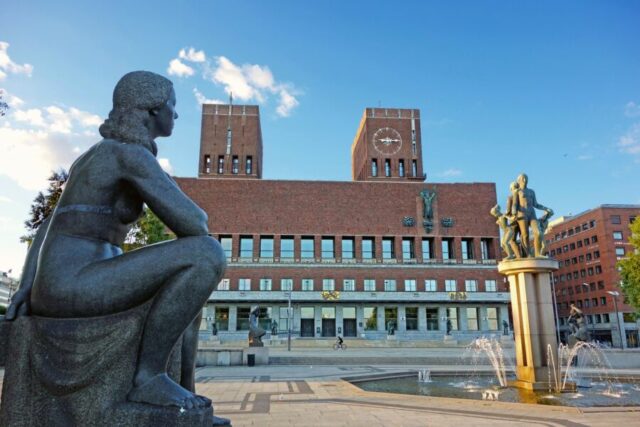
I’m surrounded by the white noise of pedestrian bliss. I can hear people talking and laughing, the birds, the breeze — but no cars. A popular “congestion fee” keeps most cars from the center of town. An efficient tunnel diverts nearly all the traffic under the city. The old train station facing the fjord boat dock has become the Nobel Peace Prize Center, thanks to a visionary man who dedicated the wealth he earned inventing dynamite to celebrate peacemakers. And towering high above the harbor action is Oslo’s stately brick City Hall — where Nobel’s prize is awarded. It stands like a cathedral to good civic values, decorated inside and out with statues and murals featuring stoic Norwegians who seem more than willing to pay their steep taxes.

Every time I come to Norway, I’m fascinated by the way they’ve chosen to organize their society. And then, when I get home, I routinely challenge my fellow Americans by telling tales of a land where the desired alternative to big, bad government is not small, good government — but big, good government. While I certainly wouldn’t want to run my business in heavily regulated Europe, I’m challenged and inspired by the Norwegian way of organizing their society.

Discussions with relatives and new friends alike often lead to comparisons of our two very affluent but very different societies. For example, even though North Sea oil is plentiful and a big part of Norway’s economy, the government understands that the world is warming and knows it’s only ethical to have policies to help counteract climate change. To encourage clean electric cars, the government underwrites car charging, parking, tolls, and taxes — making even a luxury Tesla an affordable ride. As Norway steadily reduces its use of gasoline-powered cars, it has become Tesla’s second-biggest market.

Norway is expensive for tourists — and also for Norwegians. The society is designed in a way that encourages people to consume less, to chew more slowly, and to sip rather than gulp. A glass of beer costs $12. A cup of coffee can cost $8 — and free refills are unheard of. I think Norwegians know they could make more money if they embraced the “big gulp” and started supersizing. But the collective decision is not based purely on what would be good for the economy. A big-box economy would just not be Norwegian.

In Scandinavia, tourists are sometimes put off by the many young beer-drinking revelers they see out on the streets, canalside, and littering the parks. But alcohol consumption is no greater here than it is farther south. It’s just that while pubs in Britain and beer halls in Germany are affordable, Scandinavia’s bars come with extremely high alcohol taxes. So people start their evening with a drink at home or a friend’s house before hitting a bar. Or they just B.Y.O.B. — buying cheap beers at a convenience store, then finding a pleasant perch outside for an impromptu gathering. For young Norwegians, “going out” means literally “going outside.” Norwegians cope with the high cost of dining out by using “one-time grills.” On balmy evenings, the city is perfumed with the smell of these disposable foil grills being fired up for dinners in the parks.

Walking through a light mist along the new harborfront development, I stop by a shrimp boat to buy a small bag of shrimp, pulled out of the fjord by a weather-beaten fisherman just hours ago. It’s been my happy ritual at this very spot since my mom first brought me to this little boat when I was a kid.

The commotion of a festive celebration draws me farther along the harborfront. A hundred Norwegians are swing-dancing on the sturdy boardwalk, which glistens as if pleased to be the city’s dance floor. Sometimes, good-looking, self-assured Norwegians annoy me with their perfection. But these strike me as extremely normal people — a little overweight, a little wrinkled, dancing in content twosomes in front of yacht club bars and restaurants most of them likely can’t afford. It’s mostly American-style two-step to recorded oldies — familiar tunes with unfamiliar Norwegian lyrics — like a line dance without cowboy hats or much of a line. Girls look up at their tall guys with big smiles.

Walking back to where my “writer’s cabin” used to be, I get nostalgic for the long-ago joy of settling into my humble stateroom, gathering the experiences of the day, and weaving them into an article — hoping to share new insights into this capital city — a city that still charms and challenges me all at once.

(This story is excerpted from my upcoming book, For the Love of Europe — collecting 100 of my favorite memories from a lifetime of European travel. It’s coming out in July, and available for pre-order. And you can also watch a video clip related to this story: Just visit  Rick Steves Classroom Europe  and search for “Oslo Norway.”)

Daily Dose of Europe: Déjà Vu in Istanbul

Today, I was supposed to be landing in Istanbul — kicking off a weeks-long guidebook research trip through Europe. Instead, I’m home, doing my part to slow the spread of the coronavirus…and dreaming of my next trip to one of Europe’s greatest cities. Here’s a story from a previous trip to Istanbul, a few years ago. I imagine that when I get back there, it’ll be all the same, all over again.

With so many of us stuck at home for the foreseeable future, I believe a daily dose of travel dreaming can actually be good medicine. Here’s another one of my favorite travel memories — a reminder of what’s waiting for you in Europe at the other end of this crisis.

When I was in my twenties, I ended eight European trips in a row in Turkey. I didn’t plan it that way — but it became the natural finale, the subconscious cherry on top of each year’s travel adventures. Realizing I haven’t set foot in Istanbul for nearly a decade, I have decided to return to the city where East meets West. Comparing today’s Istanbul with the city that lives in my memories, will I find comforting similarities or jarring differences?

The moment I step off the plane, I remember how much I enjoy this country. Marveling at the efficiency of Istanbul’s Atatürk Airport, I pop onto the street and into a yellow taksi. Seeing the welcoming grin of the unshaven driver, who greets me with a toothy “Merhaba,” I blurt out, “Çok güzel!” I’m surprised I remember the phrase. It just comes out of me — like a baby shouts for joy. I am back in Turkey, and it is “very beautiful” indeed.

As the taksi turns off the highway and into the tangled lanes of the tourist zone — just below the Blue Mosque — all the tourist-friendly businesses still line up, providing a backdrop for their chorus line of barkers shouting, “Yes, Mister!”

I look at the scruffy kids in the streets and remember a rougher time, when kids like these would earn small change by hanging out the passenger door of ramshackle minibuses. The name for these vehicles — a wild cross between a taxi and a bus — is dolmuş, literally and appropriately translated as “stuffed.” The boys would yell out the name of the destination in a scramble to stuff in more passengers. I can still hear my favorite call, for the train-station neighborhood: “Sirkeci, Sirkeci, Sirkeci” (SEER-kay-jee). While Turkey’s new affluence has nearly killed the dolmuş, the echoes of the boys hollering from the vans bounce happily in my memory: “Topkapi, Topkapi, Topkapi…Sultanahmet, Sultanahmet, Sultanahmet.”

I pay my taksi driver and step out into the Sultanahmet neighborhood, stopping for a cup of tea to get my bearings. From my teahouse perch, I watch old men shuffle by, carrying nothing, but walking as if still bent under the towering loads they had carried all of their human-beast-of-burden lives. Istanbul, now with a population of more than 15 million, is thriving. The city is poignantly littered with both remnants of grand empires and living, breathing reminders of the harsh reality of life in the developing world.

And yet, this ancient city is striding into the future. Everyone is buzzing about the new tunnel under the Bosphorus, which gives a million commuters in the Asian suburbs of Istanbul an easy train link to their places of work in Europe. This tunnel is emblematic of modern Turkey’s commitment to connecting East and West, just as Istanbul bridges Asia and Europe. I also see it as a concrete example of how parts of the developing world are emerging as economic dynamos.

Walking down to the Golden Horn inlet and Istanbul’s churning waterfront, I cross the new Galata Bridge, which makes me wistful for the old bridge — now dismantled — which was crusty with life’s struggles. I think of how all societies morph with the push and pull of the times. While the beloved old bridge is gone, the new one has been engulfed in the same vibrant street life — boys casting their lines, old men sucking on water pipes, and steaming sesame-seed bread rings fogging up the panes of their glass-windowed carts. It reminds me how stubborn cultural inertia can be.

On the sloppy harborfront, the venerable “fish and bread boats” are still rocking in the constant chop of the busy harbor. In a humbler day, they were 20-foot-long open dinghies — rough boats with battered car tires for fenders — with open fires for grilling fish…fish that’s literally fresh off the boat. For a few coins, the fishermen would bury a big white fillet in a hunk of fluffy bread, wrap it in newsprint, and send me on my way. In recent years, the fish and bread boats were shut down because they had no license. After a popular uproar, they’ve returned — a bit more hygienic, no longer using newspaper for wrapping, but still rocking in the waves and slamming out fresh fish.

As the sun sets and evening prayer time approaches, I hike through teeming streets to the iconic Blue Mosque. The outer courtyard is crowded with families — worshipful parents and kids looking for entertainment. Two schoolboys high-five me and try out their only English phrase: “What is your name?” I answer, “Seven o’clock” and enjoy their quizzical look. I’m struggling to understand their society; they can deal with a little confusion as well.

Wandering under stiletto minarets, I listen as a hardworking loudspeaker — lashed to the minaret as if to a religious crow’s nest — belts out a call to prayer. Noticing the twinkling lights strung up in honor of the holy month of Ramadan, I think, “Charming — they’ve draped Christmas lights between the minarets.” (A Turk might come to my house and say, “Charming — he’s draped Ramadan lights on his Christmas tree.”)

The Blue Mosque offers a warm welcome. Stepping out of my shoes, I enter the vast space — more turquoise than blue — hoping for déjà vu that never comes. Something’s missing. Gone is the smell of countless sweaty socks, knees, palms, and foreheads that had soaked into the ancient carpet from worshippers’ energetic, physical prayer workouts. Sure enough, the Blue Mosque has a fresh new carpet — with a subtle design that keeps worshippers organized in the same way that lined notepaper tames written letters.

As the prayer service lets out, I’m caught up in a sea of Turks that surges toward the door. This is the kind of connecting-with-humanity moment that I seek out. It’s the closest I’ll ever come to experiencing the exhilaration of bodysurfing above a mosh pit. As I surf the flow of worshippers through the gate and out into the street, the only way to get any personal space is to look up into the sky. Doing that, I enjoy another prized memory…another Istanbul déjà vu: Hard-pumping seagulls flap their wings through the humid air in the dark sky before surging into the light, crossing and then circling the floodlit minarets.

The Hippodrome — a long, oblong plaza shaped like a chariot racecourse, as was its purpose 18 centuries ago — is invigorated by the multi­generational conviviality of the Ramadan crowds emptying out of the mosque. While the crowd seems to be gaining energy, I’m running out of steam. But before heading back to my hotel, I look for a teahouse to follow my end-of-day ritual.

I established this ritual in visits to Turkey as a backpacking student and I return to it now. I cap my day with a bowl of sütlaç: rice pudding with a sprinkle of cinnamon. It’s still served in a square steel bowl with a small matching spoon. Another part of the ritual: I don’t let a Turkish day go by without enjoying a teahouse game of backgammon with a stranger. Looking at the board tonight, I notice that it’s cheap and mass-produced, almost disposable. Today’s dice — plastic and factory-perfect — make me miss the tiny handmade “bones” of the 20th century, with their disobedient dots. But some things never change. To test a fun cultural quirk, I toss my dice and pause. As I knew would happen, a bystander moves for me. When it comes to backgammon, there’s one right way…and everybody knows it. And in Turkey, perhaps as a result of its ruthless history, when starting a new game, the winner of the last game goes first.

With each backgammon game, I think of one of my most precious possessions back home: an old-time, hand-hewn, inlaid backgammon board, with rusty little hinges held in place by hasty tacks, and soft, white wood worn deeper than the harder, dark wood. Twenty years after taking that backgammon board home, I open it and still smell the tobacco, tea, and soul of a traditional Turkish teahouse.

There’s almost nothing in my world that is worn or has been enjoyed long enough to absorb the smells of my life and community. It’s a reminder to me of the cost of modernity. At home, the feel and smell of my old backgammon board takes me back to Turkey. And when it does, I’m reminded how, in the face of all that modernity, the endangered though resilient charm of traditional cultures — anywhere in our world — is something to value.

Today in Turkey, the people — like those dots on the modern dice — line up better. The weave of a mosque carpet brings order. There’s a seat for everyone on the dolmuş, which is no longer so stuffed. Fez sales to tourists are way down, but the use of scarves worn by local women (a symbol of traditional Muslim identity) is way up. As I get caught up in moments of déjà vu, I realize that Turkish society is experiencing something similar: confronting powerful forces of change and progress while also wanting to stay the same.

(This story is excerpted from my upcoming book, For the Love of Europe — collecting 100 of my favorite memories from a lifetime of European travel. It’s coming out in July, and available for pre-order. And you can also watch a video clip related to this story: Just visit  Rick Steves Classroom Europe  and search for “Istanbul layers.”)

Coronavirus Reports from Our Guides in Europe — Week 4

With home-quarantine and self-isolation efforts ramping up on both sides of the Atlantic, we continue to hear from many of our European guides. Here are a few highlights from this week:

Everyone’s trying to stay positive and cheer each other up. David Tordi, who we heard from a few weeks ago, did a live concert with his neighbor for his entire neighborhood in Orvieto, and live-streamed it on Facebook:

https://www.facebook.com/davidtordi/videos/10157264020656569


And we’re all getting creative. One guide described how he discovered two baguettes he’d intended to freeze, which had already gone stale. So he sliced them up, stuck them in the oven, and made toasts. Another guide shared a video of her daughter making homemade bath bombs. And another has been using one of those freebie eye masks they give out on overnight flights as a makeshift mask to cover her nose and mouth for trips to the store.

We also received some beautiful “slice-of-life” reports:

In Northern Italy — so hard-hit by the virus — Patti Fanon writes:

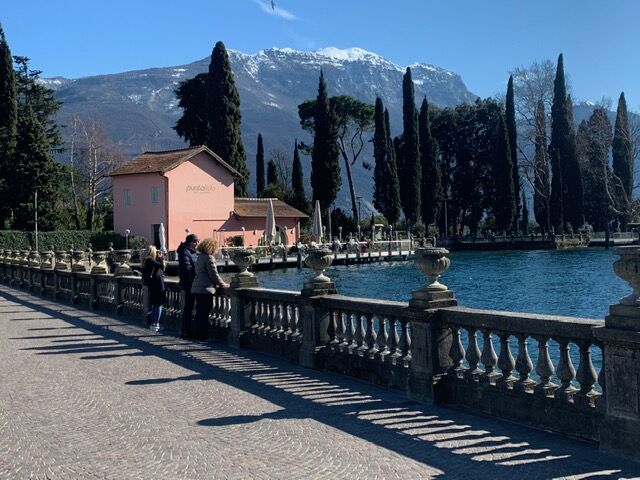
“Greetings from my home town of Riva del Garda, where lockdown keeps the streets practically empty.

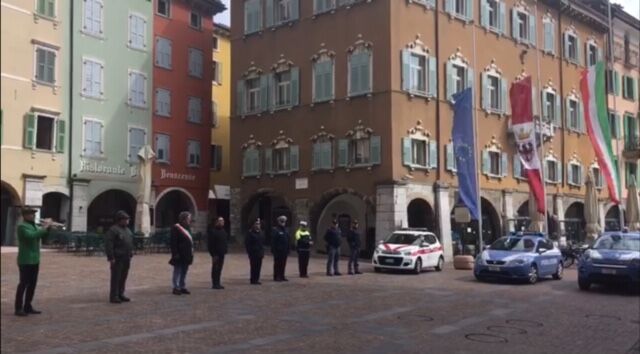
“The exception was a moving ceremony this week to honor Italy’s virus victims. It was on my way to the communal garbage bins — a trip I am allowed to make — so I stopped and listened to the haunting bugle lament which could be heard all over my deserted town.

“I am busy organizing my 12-year-old son’s home schooling. He’s a willing online learner of the saxophone and often plays to amuse me, bless him!

“I also volunteer for anything needed by my elderly neighbors who have to stay completely indoors because of their medical vulnerability. That includes the 200-meter household rubbish run to the communal bins at the top of the lake where the big boats normally ply their trade.

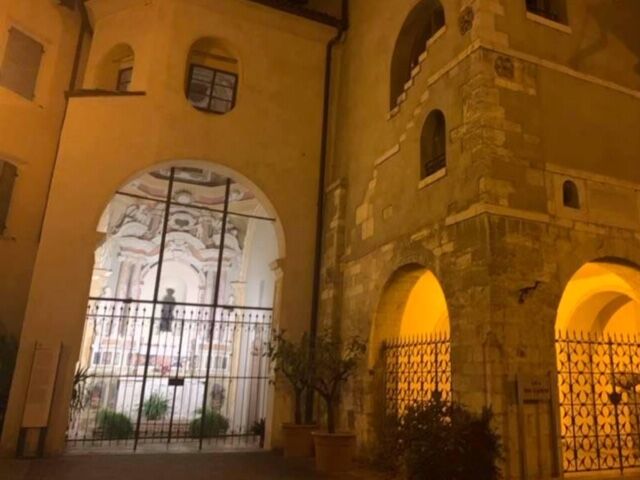
“To be honest, it’s the highlight of my day, not just because it’s a rare chance to get out and about, or because of the stunning views of which I never tire, but also because it takes me past the beautiful Chapel of San Rocco. Believe it or not, this holy man is the patron saint of Contagious Diseases, so I stop every time to have a little word with him.

“I think we all need him to hear my prayer!!!🙏🙏🙏”

In Prague, Jana Kratka wrote to explain how the pandemic is affecting her family’s Easter celebrations:

“This is our 5th week that we’re locked down in Prague. We’re in a rather small apartment, so it’s not easy. But we spend a lot of time home schooling. We also cook, bake, exercise, play table games, and watch movies. My kids love to watch your Classroom Europe videos! I already recommended it to several of my friends, so their kids can practice English and history at the same time. So I‘m sending a huge THANK YOU from all of us!

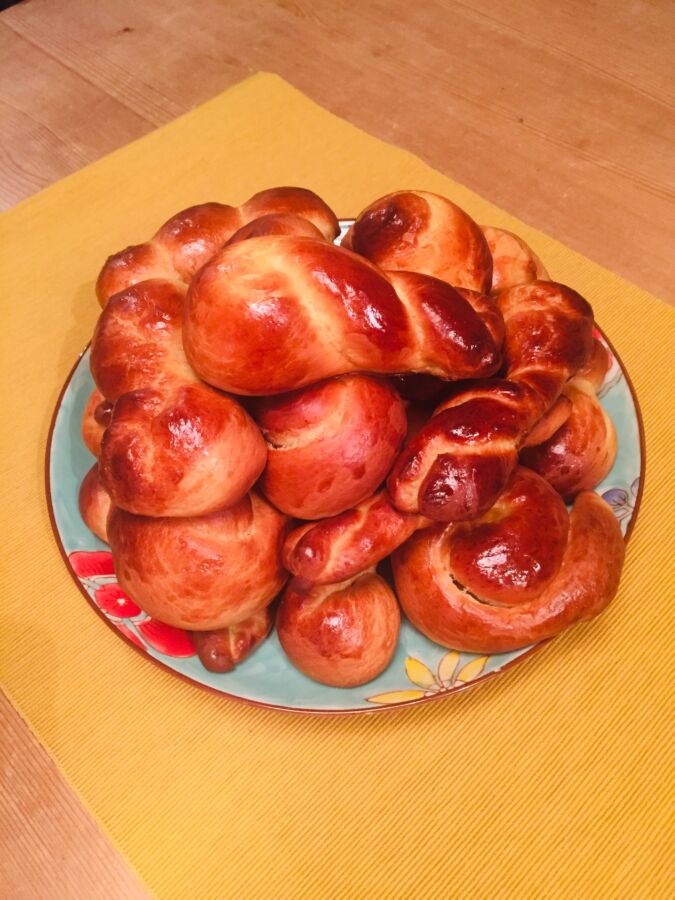
“We’re getting ready for Easter even though it’s going to be very different this year. We’ll miss being with our larger family, being outdoors, and breathing the fresh air. We’ll miss all the traditions. We baked a special Easter sweet with my kids yesterday – it’s called jidáše in Czech, or “Judas buns” in English. This is a special sweet baked on Holy Thursday named after Judas Iscariot. It’s made from a special dough that is shaped and baked as a knot. It’s supposed to symbolize Judas’s betrayal. And it’s yummy.

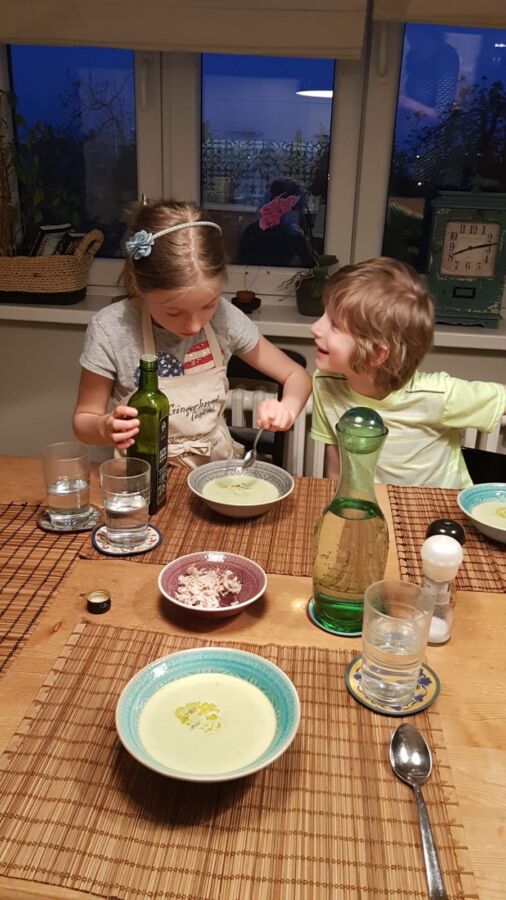
“There’s another Czech tradition related to Holy Thursday, or Green Thursday as we call it in the Czech Republic. Everyone is supposed to eat something green that day. My daughter Nela made a pea cream soup with smoked mackerel last night for us. It was delicious and it made her day, as well as ours!

“I miss my job so much, I miss the tours and our tour members. I can’t wait for the day my next RS tour will start!! I believe that after this – people will keep on travelin´!!”

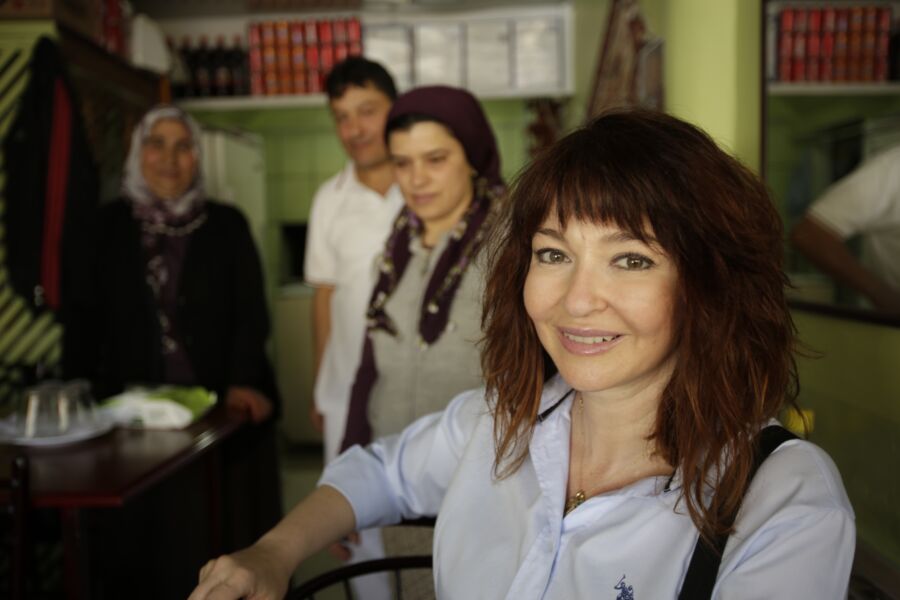
Finally, Lale Sürmen Aran, tour guide and co-author of our Rick Steves Istanbul guidebook, explains how the pandemic has caused a surprising shortage in Turkey:

“There has been a shopping craze in each country after COVID-19 started spreading. It has been interesting to see what people buy in different countries: toilet paper, hand sanitizer, canned goods, flour and baking supplies, and so on.

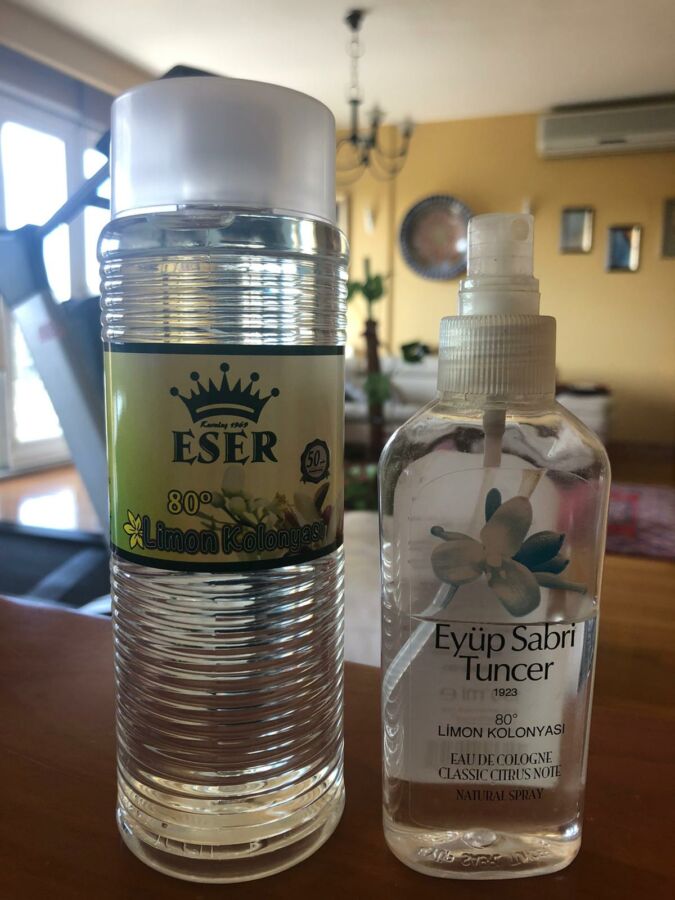
“Here in Turkey, we all rushed to pharmacies, markets, and medical suppliers to buy…cologne! This is not because we want to smell good, but because cologne is a staple in our lives that we use as a disinfectant.

“Variations are sold as perfume worldwide and called ‘Eau de Cologne.’ But in Turkey, it is simply called kolonya (kohl-ahn-yuuh). The simplified name points out the everyday use and affordable price. It costs about $6-10 per liter if bought in plastic containers, as most of us buy it.

“Turkish kolonya includes at least 80% germ-killing ethanol, distilled water, and fruit fragrance, mostly lemon.  As little as 3 grams would suffice to disinfect both hands. So a liter goes a long way.

“Culturally, kolonya is mostly perceived as a refresher that replaced rose water after it arrived in the Ottoman Empire in the 19th century. With COVID-19, all of a sudden we realized it is also a very strong disinfectant.

“You can’t think of a Turkish home without kolonya. It is always the first thing a guest is offered upon arrival; it refreshes and helps get rid of germs.

“Every barbershop carries it. The barbers would bathe clients’ faces with it after a shave. It is also offered on intercity bus trips, in restaurants, and in public bathrooms. It is some sort of a cleansing ritual for us.

“On the other hand, like a one-size-fits-all product, kolonya is also used to treat dizziness, fainting, and headaches.

“As a result, at the end of the week schools closed due to the coronavirus, there was a dire shortage of kolonya. Outside the branded retail shops, lines were longer than 100 yards to buy directly from the producer.

“Due to huge demand and public grumbling about the shortage, the government decided to temporarily stop requiring ethanol in gasoline to help boost disinfectant production. The nation praised the move, and it seems we are settling in for a long period of heavy kolonya use.”

Thanks to all of our guides for keeping us up-to-date on the situation in their home countries. Hopefully we can all be reunited, in person, soon.