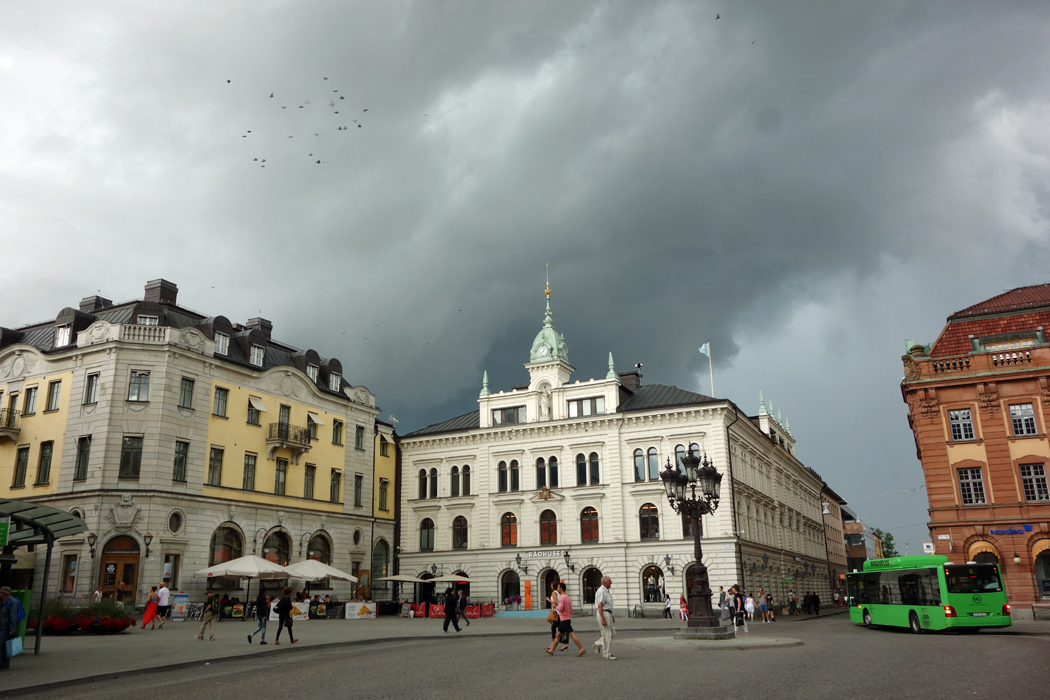
Oslo is a classic old Norwegian city. But in recent visits, I’m amazed at some of the dramatic changes going on here. The new Oslo is both architecturally fascinating and extremely livable. These photos illustrate some of the ways that Oslo just keeps chugging into the future.
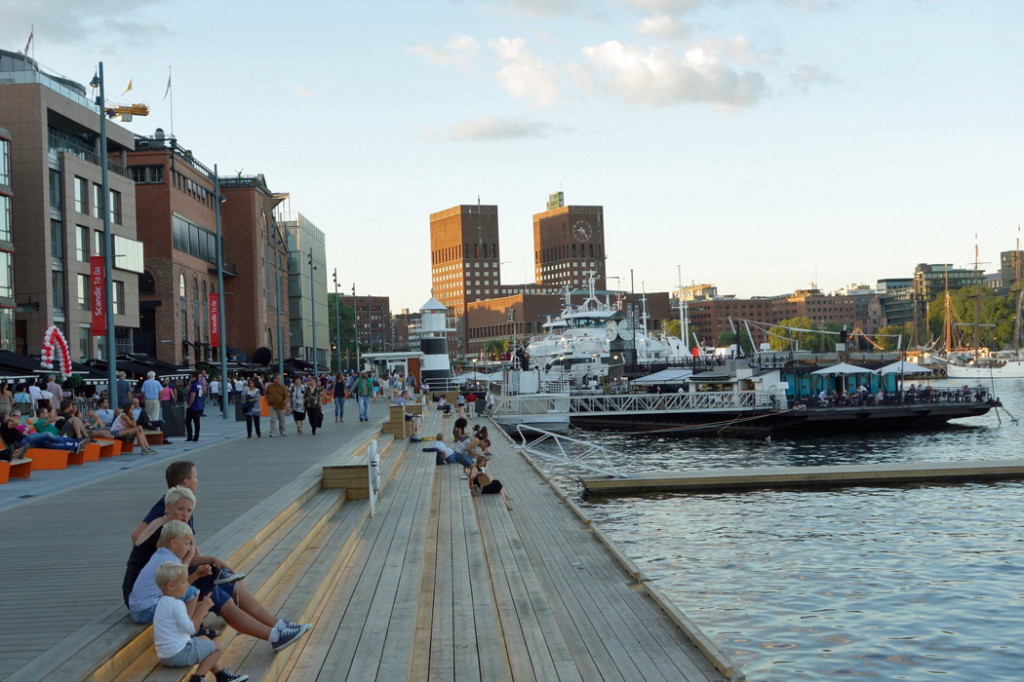 Oslo’s Aker Brygge development has made its harbor a people-friendly promenade. Each night it’s a Nordic paseo. Just a few years ago, this stretch of harbor was an industrial wasteland. Today it’s part of a huge project pushing out the industry to make room for the people of Oslo. And since my last visit, the development has doubled in size with the construction of a brand-new housing development called Tjuvholmen — a futuristic mix of condos, shops, offices, galleries, and a little beach facing the open fjord.
 I enjoyed a delightful, quiet moment watching seagulls and ferries come and go as the setting sun shone on the old fortress in Oslo’s harbor. Oslo’s fancy yacht club-style stretch of harborfront is a trendy restaurant row. But I didn’t feel like a fancy dinner — just a simple picnic picked up from a grocery store a block inland. Fortunately, the harborfront also comes with lots of picnic tables, comfy wooden lounges for two, and places where its citizens who can’t afford pricey waterfront restaurants can enjoy these same delightful views.
 All over Europe, little Manhattans are springing up. You can read in the newspapers about slow economies, but when you actually travel around, it seems that northern Europe is on a building binge. This new strip of towering office complexes — nicknamed “the Bar Code District” — finally gives Oslo the modern skyline it never had.