Here you can browse through my blog posts prior to February 2022. Currently I'm sharing my travel experiences, candid opinions, and what's on my mind solely on my Facebook page. — Rick

Interview by Chuck Robinson of Bellingham’s Village Books

I was recently interviewed by Chuck Robinson, who runs the delightful Village Books independent bookstore in Bellingham, Washington (an hour up the road from my hometown). I thought you may find our conversation interesting.


Q: You’ve been traveling in Europe for more than thirty years.  What are you most excited about seeing each time you go back?

A: I spend four months a year in Europe with a pretty scattered itinerary, ranging from the deep south to the far north. My goal: to update books, scout TV scripts (a happy byproduct of guidebook research), and produce our TV shows (about 7 a year, 6 days per show). I’m most excited each year to enjoy — to personally experience — new Continent-wide trends. This year, I enjoyed walking the harborfronts of former industrial wastelands that are now people-friendly parks, and grazing through Industrial Age glass-and-steel market halls that are now trendy food courts.


Q: There have been amazing changes, both social and technological, all over the world, including in some remote parts of Europe.  What do you find has not changed, or has changed the least?

A: When you’ve traveled annually to the same place for 40 years as I have, you can’t help but think back and marvel at how things have changed. What strikes me most about what has not changed is the cultural diversity within Europe. As borders have fallen, fast food and hotel chains have proliferated and permeated everything, and everyone is looking at the same little screens. And yet, somehow, the unique cultural passions survive. Basque men still gather in their gastronomic cooking clubs to chop their mushrooms in a place where wives are not permitted. A new generation of Greeks are clicking their worry beads. The French still consider lunch a sacred break in their work day. And Finns still prefer an office with a sauna on the rooftop.


Q: We know it’s a little bit like asking which of your two children you love best, but is there a place in Europe that consistently tugs you back?

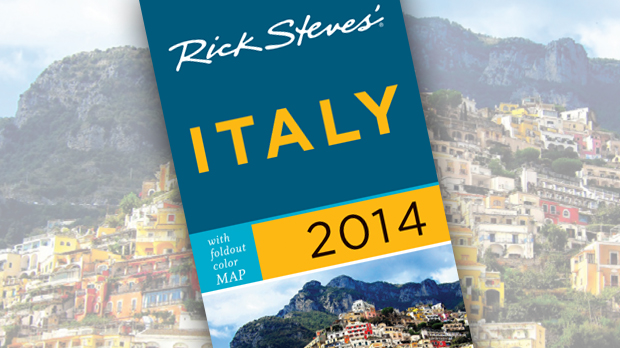
A: I’ve been working on my guidebooks all over Europe since the first edition of my first book (Europe Through the Back Door) in 1980. And over that time, for some reason, I have many, many more friends in Italy. I can research my guidebook (which has been out and selling great for 20 years) to Denmark or Spain or Vienna, and it’s all pretty businesslike. But when I go to Italy, it’s like old home week — I’ve got friends everywhere I turn. Part of that, I’m sure, is Italy’s expertise in cronyism (I bring them a lot of business). But I love the social scene in Italy, where it’s routine to hang out with the chef long after the dessert plates are swapped out for the firewater beakers. That’s one of many reasons why Italy is my favorite corner of Europe.
cms-rr-bk-rs-ita

Q: What do you think is the biggest mistake most people make in planning a trip to Europe?

A: People focus on saving money while forgetting that their time is an equally valuable and limited resource. If ever time was money, it’s when you’re trying to get the most out of traveling abroad. Hop in a taxi — even if it costs you and your travel partner $5 more than two bus tickets. You’ll save 20 minutes. That’s a great budget tip. But the most important tip — if I may plug the notion of buying a guidebook — is that people try to save money by economizing on information. Guidebooks are $20 tools for $4,000 experiences. A guidebook justifies its expense (assuming it’s any good and you use it) on the ride into your first hotel from the airport.


Q: Is there a place in the world, where you’ve never been, that you really long to see?

A: I long to see the South Pacific in a dreamy, idyllic way. I’d also like to motorcycle across the Sahara, ride the Trans-Siberian Railway, go to “the new Thailands” of Southeast Asia (Vietnam, Cambodia, Laos, and Burma), and relive the dreamy afternoons I enjoyed at “Pie and Chai” in Katmandu. Oh…and bodysurfing in Sri Lanka. But I can only get away for four months a year. And I spend that doing the work I love — in Europe.


Q: Ask yourself a question you’ve never been asked, but wish you had (and answer it, please).

A: Your name is a brand now, but it’s not a very good name for a travel writer. Why?

My dad wanted to name me “Robert Louis Steves,” but my mom nixed that. My dad was originally Romstad, but his birth father was a pretty rough, heavy-drinking, Norwegian ski jumper whom my grandmother eventually divorced. She changed my dad’s name to his step-father’s name — Steves. Consequently, I’m a Norwegian travel writer who would have liked to be named Rick Romstad, but who is forever Rick Steves. I’ll live with it.


____

I’ll be at a Village Books event at Bellingham High School on Nov. 19 for presentations on budget travel in Europe & my new public television special, “The Holy Land: Israelis and Palestinians Today.” Call the bookstore at 1-800-392-BOOK for more information.

Thank you for joining NORML

Thank you to the hundreds of you who joined NORML in the past week. Your free DVD copy of Evergreen” is on its way to you now. (Evergreen is an exciting new documentary that tells the story about how my friends and I helped legalize, tax, and regulate marijuana in Washington State.)

My state finally considers responsible, adult recreational use of marijuana to be a civil liberty. And now, we are working to legalize marijuana in Alaska and Oregon. If you’d like to get involved, you’re still welcome to contribute $50 to NORML and get your DVD copy of Evergreen. Click here to find out more.

Again, this is not “pro pot.” This drug policy reform work is “anti-prohibition” and I consider it good citizenship. Our country’s insistence on criminalizing marijuana is an expensive and racist disaster and, one by one, states are opting out. I’m so proud of the work we’re doing and the support from caring citizens who understand that we can take crime out of the equation and treat marijuana abuse as a health and education issue – and recognize its mature adult use as a civil liberty.

We have momentum. And there is a lot more to do. That’s why I’m donating these DVDs to NORML for this campaign. And that’s why I’m spending this week in Oregon on a ten-city, seven-day, barn-storming tour.

(By the way, if you’d rather just stream Evergreen online, you can find it on iTunes and on Netflix.)

The Lonely Hebron Walk

All this week, I am sharing a behind-the-scenes look at the production of my new public television special, “The Holy Land: Israelis and Palestinians Today.” Here’s a little clip I took on a no-man’s-land street….until a soldier told me not to shoot there.

Hebron is a thriving city in the West Bank or Palestine. With the Tomb of Abraham — so revered by both Jews and Muslims — it’s the place where I felt the most tension in the West Bank. Jews expect access, as do Muslims, and, with a history of massacres on both sides, trust is fragile there. Palestinians can do little but annoy the huge number of soldiers stationed there. Talking with soldiers who seemed to have little empathy for the people they were controlling, I thought of the troubling fact that in World War I, the French and Germans were so willing and able to slaughter each other on the Western Front because the vast majority of them had never broken bread with someone from the other side. The society in Hebron seems purposefully structured to prevent people from knowing each other. (I asked a Jew why, in a lifetime of living there, he had never shared a meal with a neighboring Muslim, and he blamed the dietary restrictions of their religions.) Seemingly likeable young soldiers were fun to chat with. Then, when it was time to go, one of them happily told me, “Time to bust down a door.”

The Holy Land” has already aired to great success on stations in several locations. Many other stations, such as WTTW 11 in Chicago and KCTS 9 in Seattle, are excited to air it soon. Call your local public television station to find out when you can see it too.


A Holy Land Miracle

All this week, I am sharing a behind-the-scenes look at the production of my new public television special, “The Holy Land: Israelis and Palestinians Today.” In this clip, you’ll see how our work was made much easier by the car and driver provided to us by the Palestinian Ministry of Tourism. It was a long, hot hike down to the Monastery of St. George. Coming up, we were pleasantly surprised by our driver, who managed to drive his car down to a crevice in the mountain, cutting our hike by half.

We worked for 14 long days to film “The Holy Land: Israelis and Palestinians Today.” One great thing about the shoot: the weather was reliably sunny.

“The Holy Land” has already aired to great success on stations in several locations. Many other stations, such as WTTW 11 in Chicago and KCTS 9 in Seattle, are excited to air it soon. Call your local public television station to find out when you can see it too.

Sitting on the Curb in a Refugee Camp

All this week, I am sharing a behind-the-scenes look at the production of my new public television special, “The Holy Land: Israelis and Palestinians Today.” In this clip, I was sitting on a curb working on my script when a series of cute kids stopped by to see who had dropped into the neighborhood. You’ll see a little of that interaction. It ends with a big brother coming in to shut me down. (I don’t blame him to be wary of some stranger filming little kids on the street.)

By the way, there’s a common image of Palestinian kids with toy guns shooting imaginary Jews. I saw lots of that, and it was a bit disturbing to me. But then, in the Jewish West Bank settlements, I also saw Jewish kids with plastic guns gunning down imaginary terrorists. And it occurred to me that, if we’re being honest, what American man today didn’t grow up with a toy gun happily shooting Indians or Soviets in their imagination? Whether it’s cowboys and Indians, Commies and Capitalists, or Jews and Palestinians, little boys throughout the world are raised with a toy gun in their hands to shoot their parents’ bad guys. That’s what I love about actually traveling in places like Palestine—you see things with a broader perspective than you would if you just stayed home. And that’s the mission with our TV special.

The Holy Land” has already aired to great success on stations in several locations. Many other stations, such as WTTW 11 in Chicago and KCTS 9 in Seattle, are excited to air it soon. Call your local public television station to find out when you can see it too.