Here you can browse through my blog posts prior to February 2022. Currently I'm sharing my travel experiences, candid opinions, and what's on my mind solely on my Facebook page. — Rick

Firsthand Accounts Make History Spring to Life

When traveling, having a guide (or a friend who functions as a guide) who actually lived through the local history heightens the experience.

When I was just 14 years old in a dusty village on the border of Austria and Hungary, a family friend showed me the excitement of history by introducing me to a sage old man. As he spread lard on my bread, he shared his eyewitness account of the assassination of Archduke Franz Ferdinand in 1914 (which sparked the beginning of World War I). That encounter instilled in me a life-long interest in history.

young Rick Steves and tour guide

14-year-old me (far right) poses with an eyewitness to the 1914 assassination of Archduke Ferdinand (far left). Between us are my mother and a family friend.

In Prague, I walked the path that my Czech friend Honza walked night after night in 1989 with 100,000 of his compatriots as they demanded, and finally won, freedom from their Soviet overlords. The walk culminated in front of a grand building where Honza said, “Night after night, we assembled here, pulled out our keychains, and all jingled them at the President’s window — saying, ‘It’s time to go home now.’ Then one night we gathered…and he was gone. We had won our freedom.” Hearing Honza tell that story as we walked that same route drilled into me the jubilation of a small country winning its liberty from a big one.

In Ireland, I had a guide determined to make his country’s struggles vivid. He introduced me to Belfast’s Felons’ Club — where membership is limited to those who’ve spent at least a year and a day in a British prison for political crimes. Hearing heroic stories of Irish resistance while sharing a Guinness with a celebrity felon with the gift of gab gives you an affinity for their struggles. The next day I walked through the green-trimmed gravesites of his prison-mates who starved themselves to death for the cause of Irish independence.

El Salvador’s history is so recent, tragic, and fascinating that anyone you talk to becomes a tour guide. My Salvadoran guides with the greatest impact were the “Mothers of the Disappeared.” They told me their story while leafing through humble scrapbooks with photographs of their son’s bodies — mutilated and decapitated. Learning of a cruel government’s actions with those sad mothers left me with a lifetime souvenir: empathy for underdogs courageously standing up to their governments.

My Norwegian uncle, Thor, lived through the Nazi occupation of his country. For him to take me into Oslo’s grand City Hall and appreciate the huge “Mural of the Occupation” offered him a chance to share those dark days with the support of powerful art. Walking slowly, as if the mural corresponded to his experience, he told the story in a present tense whisper: The German blitzkrieg overwhelms the country. Men head for the mountains to organize a resistance movement. Women huddle around the water well — traditionally where news is passed — while traitors listen in. While Germans bomb and occupy Norway, a family gathers in their living room. As a boy clenches his fist and a child holds our beloved Norwegian flag, the Gestapo steps in. Columns lie on the ground, symbolizing how Germans shut down our culture by closing newspapers and the university. Finally, prisoners are freed, the war is over, and Norway celebrates its happiest day: May 17, 1945 — the first Constitution Day after five years under Nazi control. Thor then finished by waving his arm wide and saying, “And today, each December, the Nobel Peace Prize is awarded in this grand hall.”

Germany had hardship under Hitler, too. In Bacharach, a small town on the Rhine River, the long-retired schoolmaster loves taking visitors on a town walk, recounting the difficult days during the war when there were no fathers left, when the sky was filled with bombers, and when he was the class expert in identifying planes. When a plane would be shot out of the sky, he and his buddies would mount their bikes and pedal to the scene of the crash. One day he approached what he thought were the wings of a downed Allied plane. Upon arrival at the sight, he saw it was just the tail section of a massive new American airplane and, even as a little kid, he realized Germany would ultimately lose this war. His postwar memories: hunger relieved only by sporadic care packages from Americans. Those memories power his love of showing American visitors around to this day.

Tourists can go to Prague, Ireland, Central America, or the Rhineland and learn nothing of a people’s struggles. Or, if traveling to broaden their worldviews, they can seek out opportunities to connect with people who can share perspective-changing stories.

“Foodie” Doesn’t Have to Mean Expensive: Cameron’s €25 Day in Ljubljana

As I like to do every couple of weeks, today I’m sharing a post from Cameron Hewitt (co-author of many of my Europe guidebooks). Cameron’s current blog series illustrates why Slovenia (of all places!) is his favorite country. And this post explains how a foodie may find that Slovenia’s surprisingly hip food scene may help the country find its way into your heart through your traveling tummy. If you like this insightful look at an underestimated corner of Europe, be sure to “like” Cameron’s Facebook page. Enjoy:

“Foodie” Doesn’t Have to Mean Expensive: Cameron’s €25 Day in Ljubljana
By Cameron Hewitt

“Foodie-ism” comes with a generation gap — just like the Charleston or the Beatles. And when I mention Foodie-ism to Baby Boomers, many seem to think “foodie” means “expensive.” But it doesn’t have to: It’s about the quality of the ingredients, the care of the preparation, and a knack for merging innovation with a healthy respect for tradition.

Slovenia — for my money, the most underrated country in Europe — embraces tradition and lives close to nature, but also has an un-snooty sense of style and sophistication. That’s an ideal mix for foodies on a budget. On my September trip to the Slovenian capital, Ljubljana, I had one of my best “eating days” of the year. I’d categorize each place I went as “foodie.” And I spent a grand total of €25.

cameron-slovenia-ljubljana-town-hall-2

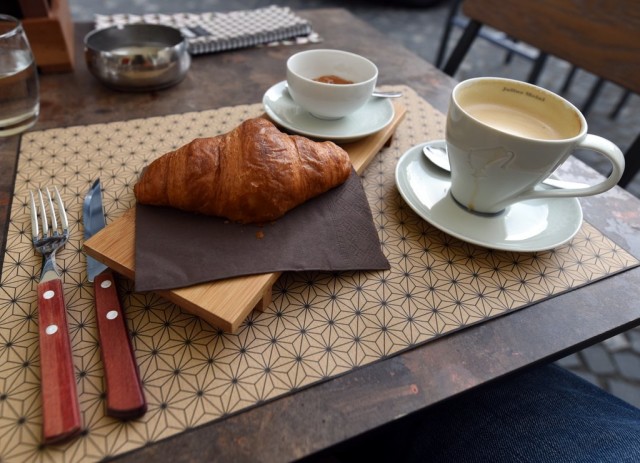
I was staying at a perfectly located rental apartment (Meščanka, overlooking the most colorful stretch of Ljubljana’s riverfront), so I was on my own for breakfast. They steered me to a fine little café in the mellow pedestrian zone under the town hall’s bell tower. I ordered a bela kava (like a latte), a glass of fresh-squeezed orange juice, and a crispy croissant. Total cost for breakfast: €6.
cameron-slovenia-ljubljana-breakfast

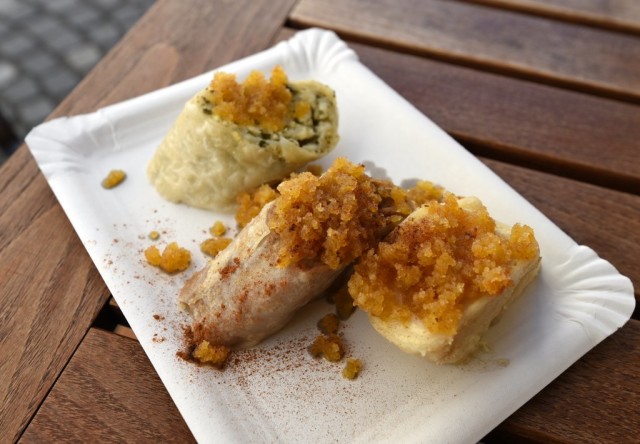
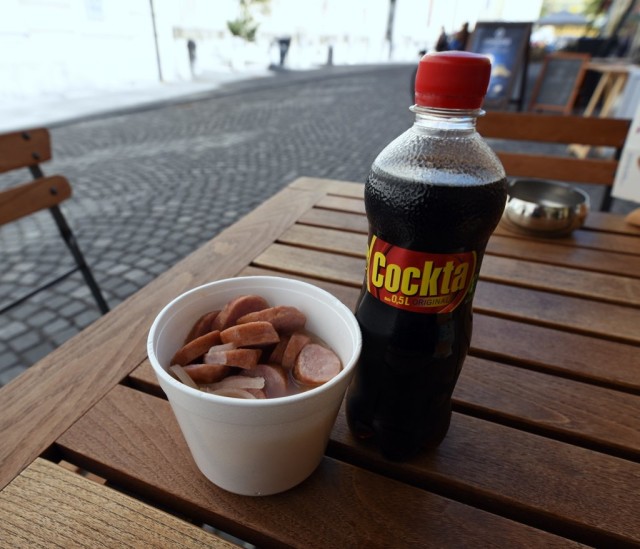
For lunch, I stopped by a hole-in-the-wall called Klobasarna. They specialize in doing one thing, and doing it very well: rustic sausages from the region of Cariniola. I got mine cut up into a bowl of jota — a traditional Slovenian soup made with marinated turnip. (Last summer, I got some heat on my blog for saying “cassoulet” must be French for “bowl of farts.” My hunch is that jota carries the same meaning in Slovene.) Klobasarna recently added one more traditional Slovenian item to the menu: štruklji, boiled dumplings stuffed with various fillings. One had tarragon, another had cottage cheese, and the last one — essentially a dessert — had walnuts and cinnamon. Sprinkled with coarse, buttery, sauteed breadcrumbs to complement the smoothness of the dough, they were both flavorful and a textural treat.
cameron-slovenia-ljubljana-struklji

I washed the meal down with Cockta, one of those soft drinks that’s fiercely beloved in its homeland but utterly unknown everywhere else. (Cockta comes with its own epic origin story — how it was originally called “Cockta-Cockta,” and designed as an ersatz Coca-Cola during the austere Yugoslav period — but you’ll have to pick up my Rick Steves’ Croatia & Slovenia guidebook for that.) I took my order out to a tipsy table on the cobblestones, in the heart of one of Ljubljana’s most delightful pedestrian zones. Watching the tour groups follow their guides and the bikes whiz past, I had a delicious and filling meal. Grand total for sausages, jota, štruklji, and Cockta: €8.
cameron-slovenia-ljubljana-sausage

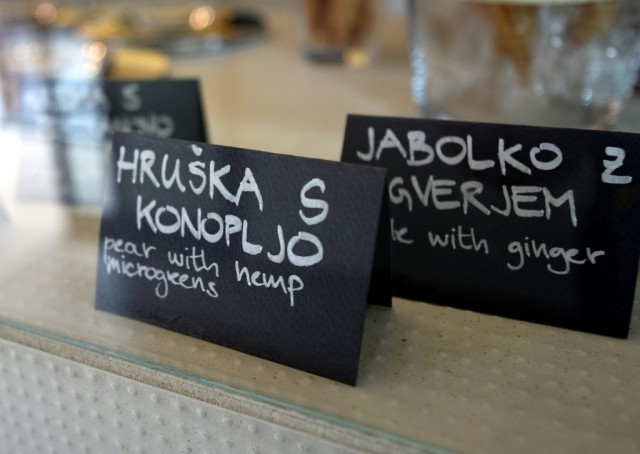
For a midafternoon snack, I stopped by a buzzy new gelateria called Romantica. Behind the glass counter, tidy silver-lidded containers held an array of deliriously creative flavors: chocolate-rosemary, pear with hemp microgreens, melon-arugula, line-basil, and so on. They also had some distinctly Slovenian flavors: pumpkin oil (a local favorite for salad dressings) and the national dessert, potica — a hearty nut layer cake with cinnamon and a drizzle of chocolate. Because Romantica doesn’t use artificial colors, everything’s white (except the chocolate). The clerk told me that he was in the middle of making that afternoon’s batch. He showed me a tub of fresh nectarines, just sliced and ready to toss into the blender. He was also preparing their chocolate and chili flavor, and explained that they’ve been experimenting to find just the right kind of chili powder to finish a pop of chocolate with that satisfying back-of-throat tingle. Total for ice cream: €2.
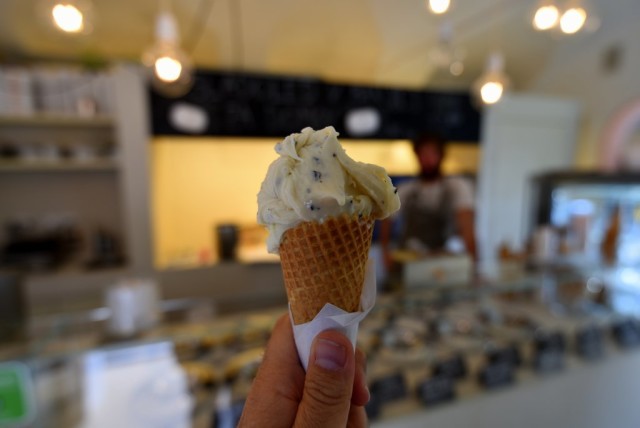
cameron-slovenia-ljubljana-ice-cream-2

cameron-slovenia-ljubljana-ice-cream-1

For dinner, some local friends took me to one of the hot new places in town, which prides itself on putting substance over style: Hood Burger. Taking “unpretentious” to extremes, it’s a glassed-in kiosk on the grassy fringe of the parking lot of the Interspar supermarket.

cameron-slovenia-ljubljana-hood-burger-kiosk

I’m skeptical of burgers in Europe, where they usually taste…off. The wrong mix of meat. The wrong spices. But the owners of Hood Burger, Til Pleterski and Klemen Ptičak, did their homework. Every bit up to speed with the hipster foodies in Portland or Brooklyn, Til and Klemen pride themselves on using locally sourced ingredients (“100% Slovenian beef!”), and cultivate a personal relationship with their producers. And the results speak for themselves: the best burger I’ve had in Europe. Hood Burger also has three house microbrews on tap. And on each table is a bottle of Čili Pipp sauce, the award-winning local answer to Tabasco started by a Slovene who simply enjoyed planting chilies in his backyard. Total cost for burger, fries, and mint lemonade: €9.
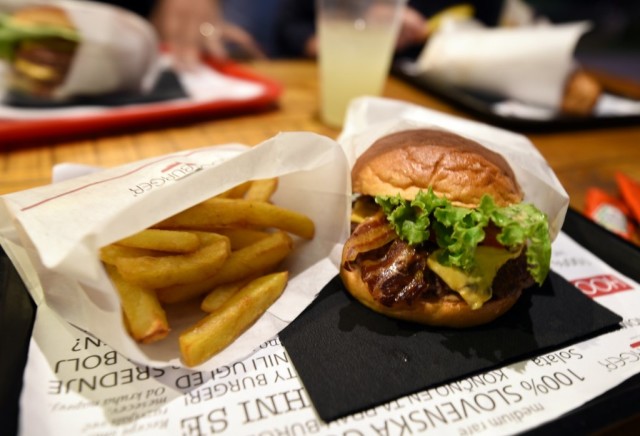
cameron-slovenia-ljubljana-hood-burger

Slovenia — and Ljubljana in particular — is an ideal place for an affordable foodie experience. Sure, you could splurge on an upscale feast here. But sometimes the best meals are eaten outside, with plastic utensils.

Your 2015 Christmas Gift Just Keeps on Giving

Last Christmas 2,500 of you joined me in supporting the work of Bread for the World. You gave $100 each and I matched it. Together we raised over $500,000 to empower Bread’s work for hungry people.

Bread for the World

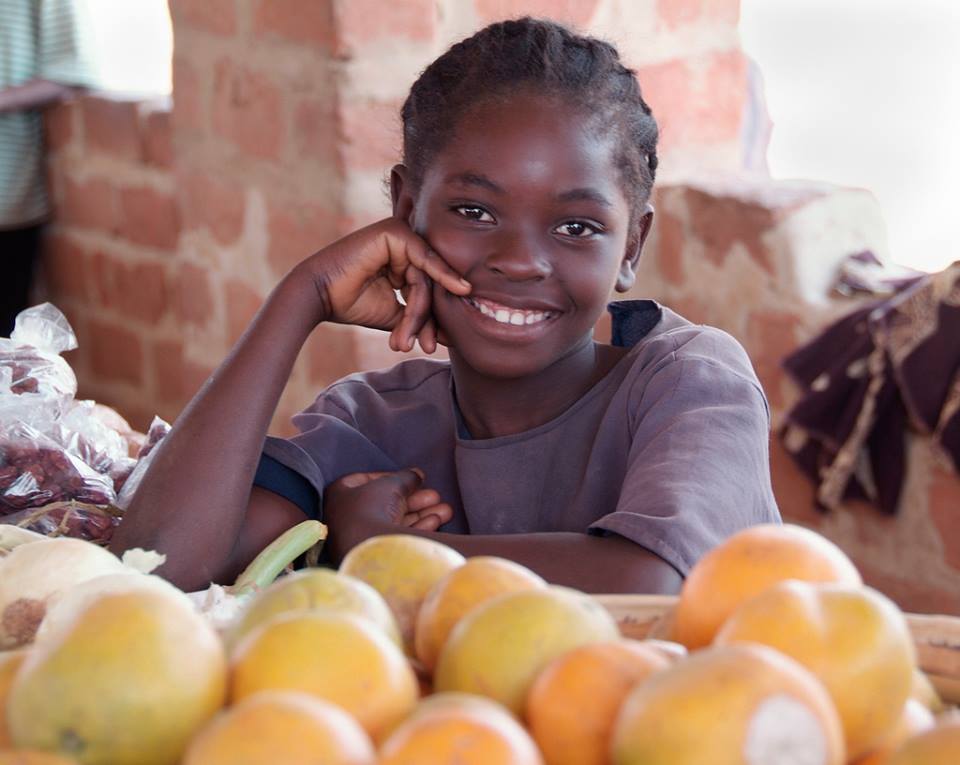
Photo: Margaret Nea for Bread for the World

We didn’t directly give any food or material aid…didn’t directly feed a single hungry mouth. So why bother? Because, together, we empowered the most effective advocacy organization in Washington DC that speaks up for hungry people. They lobbied Congress and the results are real.

Rather than just say thank you for your support, I asked Bread for the World to review a few of the legislative triumphs they’ve won in Congress and a few of their upcoming challenges. Here’s a list of government policies you helped make a little more compassionate in 2016:

Low-income working families in the United States will benefit from tax credits. Families driven from their homes in Syria will receive life-saving food aid. With your support, Bread helped win aid for countries in Central America to help give peace and stability to that region – so its people will decide not to become refugees and head north but to stay at home.

And you help lay the foundation for more progress in in 2016. In the weeks ahead, Congress will be making some decisions that will be matters of life and death for many people.

One decision will be the amount of funding for nutrition programs for mothers and children in developing countries. (Because malnutrition is the leading cause of death for children under five, Bread for the World is urging Congress to increase funding for maternal and child nutrition from $115 million to $230 million.)

Congress will also be considering the Global Food Security Act.  Bread has been working to line up a bipartisan group of Senators and Members of Congress to cosponsor this bill.  It will provide long-term solutions for small farmers so that they will be able to feed their families and communities.

Finally, Bread will be advocating for child nutrition programs in the USA –including school meals and summer feeding programs. Every five years Congress reauthorizes these programs. Without vigilant advocacy, too many American kids will go without school breakfasts and food during the summer when school is out.

I know we all have our economic challenges. And I also know half of humanity is trying to live on $2 a day. Even here, in the richest corner of our world, millions of children go to bed hungry or don’t get the nutrition they need to lead productive lives.

Your generous gift last year is empowering Bread for the World to provide hope and opportunity to the most vulnerable people — at home and abroad. It’s compassionate, it’s right, and — as a nation — we can certainly afford it. Thank you!


A Little Travel Fun with Samantha Brown

Each year, Samantha Brown and I join a few other travel celebs at travel shows around the country. We were just at the Bay Area Travel & Adventure Show in California, where thousands packed in to visit booths, hear us give our talks, and then line up after to share travel stories and get an autograph. I always enjoy seeing Samantha at these shows. And the Bay Area show was so exhilarating, we momentarily forgot who was who.