Here you can browse through my blog posts prior to February 2022. Currently I'm sharing my travel experiences, candid opinions, and what's on my mind solely on my Facebook page. — Rick

Top 7 Travel Mistakes — and How to Avoid Them

Once, while riding the train into Dresden, Germany, I got off where most other passengers did — at Dresden Neustadt. After 20 minutes of walking in a confused fog, my denial that I had gotten off at the wrong station slowly faded. Embarrassed by my mistake, I hopped on the next train. Five minutes later, I got off at Dresden Mitte. As I stepped outside the station, it slowly sunk in: I just made the same mistake again. Another train came. I got on and finally made it to Dresden Hauptbahnhof — a block from my hotel.

Even after countless trips to Europe, I still make my share of blunders — I get lost, miss train connections, and get shortchanged by taxi drivers. But with each slip-up, I learn something. Now I make it a point to tell people: “Many towns have more than one train station. Be sure you get off at the right one.”

dangerous slide.JPGThis is one travel mistake you definitely want to avoid!

Here are some of the biggest mistakes I see travelers make these days.

1. Saving Money at the Expense of Time. People focus on saving money while forgetting that their time is an equally valuable and limited resource. It’s worth paying for museum admission rather than going on a free day, when you’ll suffer through slow lines and crowds. If a taxi costs you and your partner $5 more than two bus tickets, it’s worth the 20 minutes saved. If ever time were money, it’s when you’re trying to get the most out of traveling abroad.

2. Traveling with Outdated Information. I may be biased, but I believe an up-to-date guidebook is a $20 tool for a $4,000 experience — and justifies its expense on the first ride to your hotel from the airport. A guidebook can head off both costly mistakes (getting fined for not validating your train ticket) and simple faux pas (ordering cappuccino with your pasta in Italy). A good guidebook can also save time, keeping you from visiting a museum that’s closed for renovation, waiting for a bus that no longer runs, and…

3. Needlessly Waiting in Line. I’ve said it before, and I’ll say it again. There are two IQs for travelers: those who queue and those who don’t. Crowds are unavoidable at big attractions, like the Eiffel Tower or Anne Frank’s House in Amsterdam — but what is avoidable is standing in line for hours to buy tickets. These days, most popular sights sell advance tickets that guarantee admission at a certain time (often with a small booking fee that’s well worth it). While hundreds of tourists are sweating in long lines, those who’ve booked ahead can show up at their reserved time and breeze right in.

4. Not Being Alert to Scams and Thieves. You’re not going to get knifed or mugged in Europe. But if you’re not on the ball, you could get conned, whether it’s a cabbie padding your fare, a waiter offering a special with a “special” increased price, or a beggar with beautiful eyes, beautiful children, and sad stories asking for a euro — while stealing your wallet. Be cautious, and be alert. And watch for thieves, who work the lines at crowded sights and on the bus lines handiest for tourists. Store your passport, credit cards, and cash securely, in a money belt.

5. Never Leaving the Tourist Zone. Many people jockey themselves into the most crowded spot of the most crowded city in the most crowded month (Old Town Square, Prague, July) — and then complain about the crowds. Likewise, they eat dinner on the most touristy street at the most high-profile restaurant with the most aggressive sales pitch, then are upset by the big bill and disappointing food. You’ll enrich your trip by wandering the back streets, away from the main tourist area. Old Town Square may be a mob scene, but six blocks away you’ll find fewer tourists, lower prices, and convivial pubs filled with happy Czechs.

6. Never Leaving Your Comfort Zone. A fundamental goal in my travels is to have meaningful contact with local people. At a pub anywhere in England, don’t sit at a table. Sit at the bar, where people hang out to talk. At lunchtime in Coimbra, Portugal, leave the quaint Old Town and head to the local university’s cafeteria to eat and practice Portuguese with students and professors. Connecting with people is what enlivens your travel experience. And for many of us, that means getting out of our comfort zones.

7. Letting Mistakes Ruin Your Trip. Many tourists get indignant when they make a mistake or get ripped off. When something happens, it’s best to get over it. The joy of travel is not the sights and not necessarily doing it right — it’s having fun with the process, being wonderstruck with a wider world, laughing through the mistakes and learning from them, and making friends along the way.
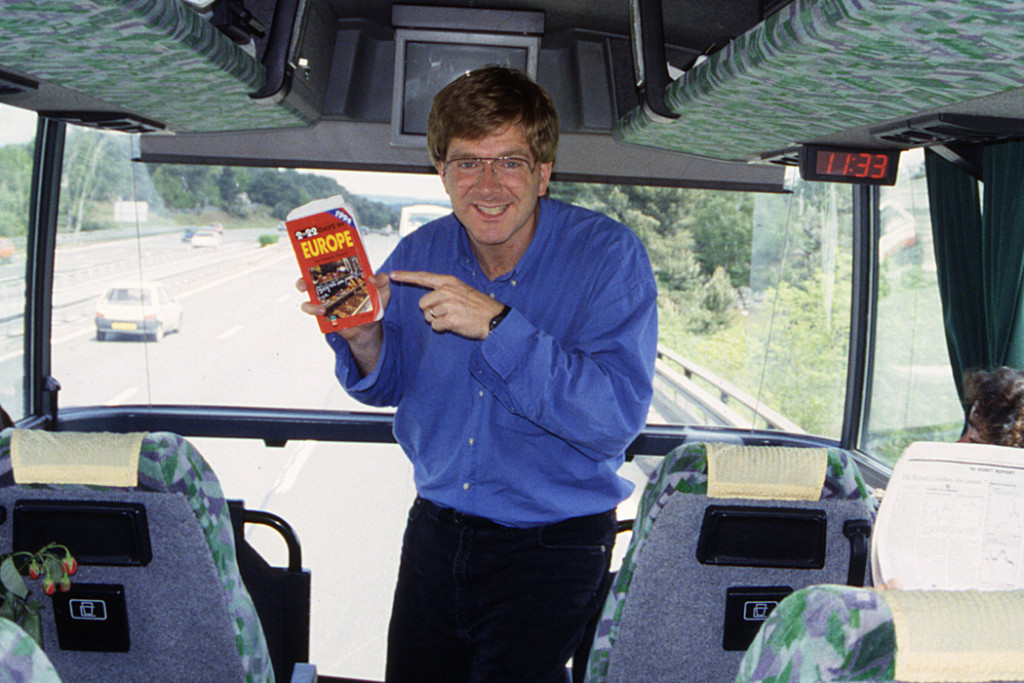
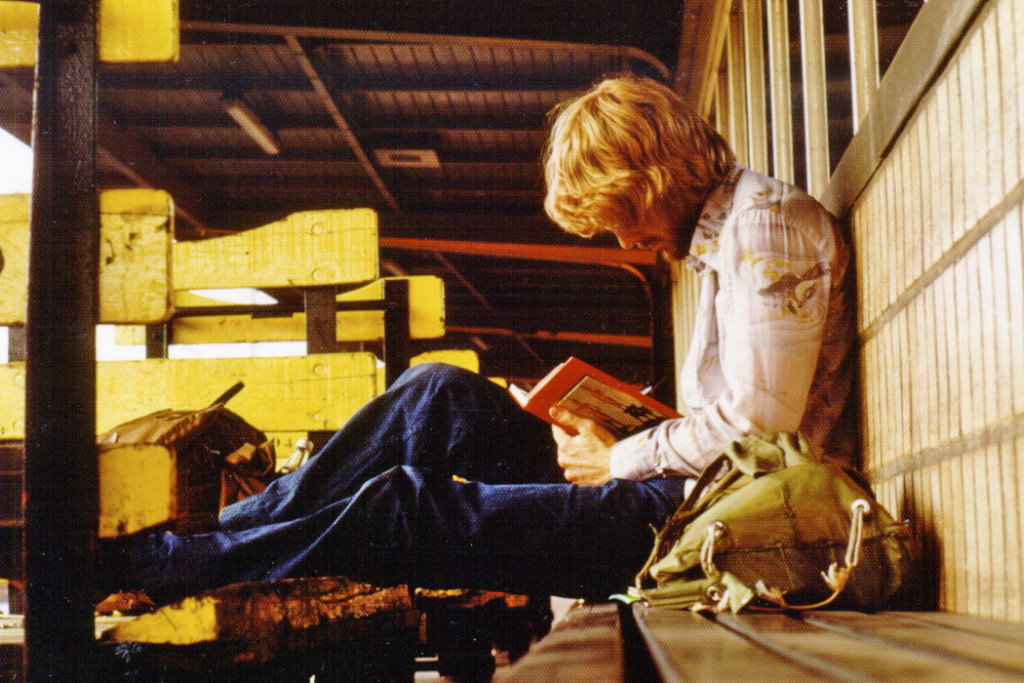
Will I Be Your Tour Guide This Year?

Rick Steves in 1980s

As always, I’m excited about this year’s European travels. Sure, it’s a lot of the same: four months of guidebook research and making new TV shows. But this year, there’s one big difference: I’m personally guiding my favorite of our many Rick Steves Europe Tours — our Best of Europe in 21 Days tour in September. Like I did 30 years ago, I’ll be running a punctual and unforgettably experiential tour. We just announced the actual date to our e-list, and bam! — the tour filled up with 25 eager travel buddies.

Of course, I love to keep my blog friends in the loop on what I’m doing. But those on our e-list also get our free monthly travel newsletter and lots of communiques that just don’t make it to my blog…including announcements about which actual tour dates I’ll be leading (and I hope to do more!). If you’re not already on our e-list, it’s free, it’s easy…and it just might result in some great European travels. Sign up here.

The Art and Value of Journaling as You Travel

Travel can make you a poet. Travel can be spiritual. You meet people on the road you’d never meet otherwise. Traveling rearranges your cultural furniture and challenges truths you assumed were self-evident and God-given. By traveling, you learn not only about the people and places you visit — you learn about yourself. You risk coming home filled with ideas that might challenge your neighbors and loved ones. And you get a strange joy out of sharing them.

But without capturing your thoughts on paper, the lessons of travel are like shooting stars you just missed…and butterflies you thought you saw. Collecting intimate details on the road, and then distilling them into your journal, sharpens your ability to observe and creates a souvenir you’ll always cherish.

rick steves journaling

Choose your travel journal carefully. I prefer a minimalist journal: light, yet with stiff enough covers to protect the pages and to give me something solid to write on (since I often write on the fly without a convenient table). I like invitingly empty pages — not pages decorated with extra literary frills and verbose doodads. It’s my journal, not someone else’s chance to decorate my observations with cute quotes, clever tips, and handy reminders. I use black ink or a mechanical pencil. Nothing should compete with the simple words. Avoid spiral notebooks — they fall apart quickly. A bound book will become a classic on your bookshelf.

The key to good journaling is being both observant and disciplined…to take the time to notice what you’re noticing, and then to jot down your thoughts. I use a tiny, pocket-sized notepad to capture the moment right there. Then, when I have time, I pull out my actual journal, sort through those notes, and organize them into something vivid and fun to read.

Thinking back, it seems I’ve always had a desire to capture my discoveries and eureka moments in a journal. On my first trip (as a 14-year-old), I collected and logged my experiences in a file of a hundred postcards, each numbered and packed with my notes.

Every trip I took inspired my passion for filling up an “empty book,” even back when I was simply a footloose, fancy-free vagabond with no intention of being a travel writer. The flight over came with a ritual personal inventory of where I was at psychologically as I began the trip, and the flight home came with a similar introspective wrap-up. And each night in between, I wouldn’t drift off to sleep without collecting my day’s experiences, discoveries, and thoughts into that book. The book, which started empty, always came home full.

Hiking deep into a misty English moor as a teenage traveler, I wrote, “Long-haired goats and sheep seem to gnaw on grass in their sleep. We were lost in a world of green, wind, white rocks, and birds — birds singing, but unseen. Then we found the stones. Standing in a circle as if for endless centuries — not moving — waiting for us to come. And in stillness, they entertained. After being alone with our private stone circle, Stonehenge — with its barbed wire, tour buses, and port-a-loos — won’t quite make it.” It was on the boat to France the next day that I worked on those rough notes, and realized that finding hidden bits of Europe and bringing them home through my writing was what I wanted to do for a living.

Now, three decades later, I still snare those happenings as they flutter by, eager to see what I can build with all that fun raw material. On my last trip to Helsinki, I was so flustered by the language barrier in an extremely local sauna that I didn’t know how to get a dry towel. Sitting in the corner to air dry, I decided to pass the time observing and jotting down ideas for my journal:

“People look more timeless and ethnic when naked with hair wet and stringy. The entire steamy scene was three colors: gray concrete, dark wood, and ruddy flesh. Surrounded by naked locals (each with a tin bucket between his legs — used to splash cool water on his face), there was absolutely no indication of what century I was in. But from the faces, it was perfectly clear: this was Finland.”

With those notes, I can stoke those memories and revisit that sauna for the rest of my life. Enjoy the physical act of putting pen to paper, and gathering new experiences, lessons, thoughts, and feelings while they are fresh and vibrant.

If your life is a canvas, travels bring new color. And journaling is like being a painter who stands back every once in a while to both understand and enjoy the art as it unfolds.

High in the Himalayas, a Tiny, Shiny Black Leech Sucked My Blood

Just minding my own business in a Nepali jungle — high in the Himalayas — I was marveling at how tasty yet ugly a little banana was, even though it was giving me a bad case of chalky mouth. Then, a tiny, shiny, black leech decided to suck my blood. Determinedly, he came at me — head over heels like an evil slinky. He was oh so slow…but he just wouldn’t stop. I kept blaming my paranoia, but I was very scared nevertheless.

I have a lot of people interviewing me about drug policy reform lately. I thought this interview, by James McClure of Civilized, was particularly well done — and it includes stories I’ve never told of Himalayan travels. If you’d like a 20-minute primer on what’s happening with marijuana legalization lately, and my take on the related challenges for elections in 2016, you might find this interview worth listening to.

rick steves eating biscuit

When there are monkeys around in Kathmandu, hold your biscuits close.

rick steves and tailor

When traveling, whether in South Asia as a backpacker or in Europe decades later, your travels go better when you go local.

Rick steves on farm

In South Asia as a backpacker, I’d connect with locals at any cost  even if it meant doing a little yard work.