Here you can browse through my blog posts prior to February 2022. Currently I'm sharing my travel experiences, candid opinions, and what's on my mind solely on my Facebook page. — Rick

Video: Happy Travels at the International Drug Policy Reform Conference

I’ve been working pretty intensely on Europe projects for five months nonstop. Now that I’m home, I’ve given myself a little two-day holiday. So where do I go for a break? To a convention about something not directly related to European travel! This little trip to Georgia is a vacation for a professional traveler.

I’m at the International Drug Policy Reform Conference in Atlanta, freshening up my tired mind with a different kind of stimulus. In this clip, I’m being drummed into the big hall with an amazing variety of people.

A few minutes after I recorded this clip, I was front row for Michelle Alexander’s keynote address. Michelle is the darling of the drug reform movement for her groundbreaking book The New Jim Crow, which explains how the drug war is, in a way, the slavery of our day. She gave a powerful and insightful speech about how the war on drugs, mass incarceration, and racism are intertwined…and not accidentally. This was the highlight of the conference for me.
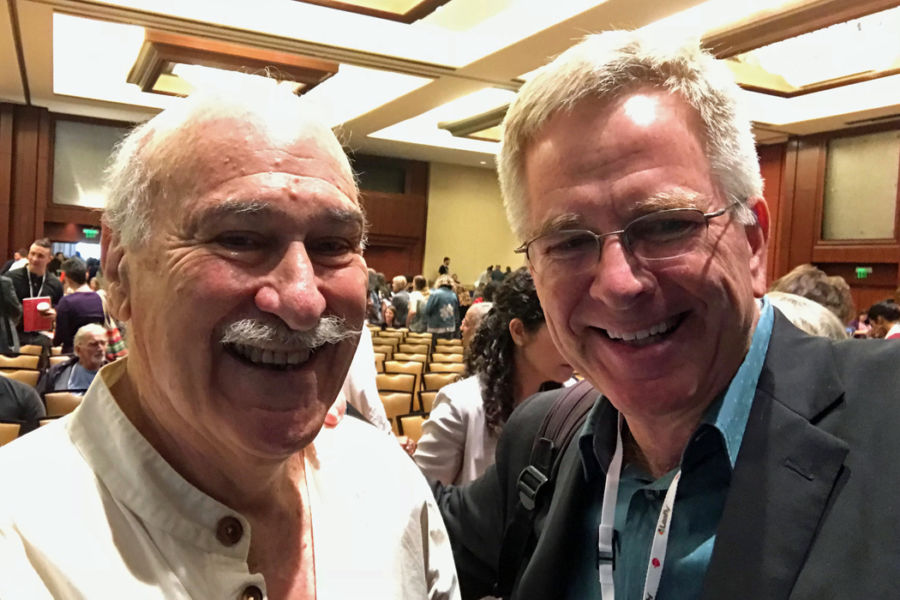
Ira Glasser and Rick Steves

At conventions like these, I get to reconnect with inspirational leaders like Ira Glasser (Executive Director of the ACLU from 1978 to 2001).

There’s an intangible value in being with a group of people who care. So many people complain about this or that. But there are ways to actually mobilize and make a difference in our society, and conventions like these are a good springboard. My point: While you may not get an invitation in the mail, groups like this one are eager to enroll newbies. For a couple hundred bucks, you can have your official nametag, your schedule binder, and a chance to connect with the leading movers and shakers in whatever cause arouses the activist in you. Along with this convention, I’ve enjoyed an affordable housing convention in Portland, a big agriculture and world hunger convention in Des Moines, a pharmaceutical industry gathering about medical marijuana in Everett, and others. Each one had an impact on my outlook, and each one was wide open to anyone who was interested.

If you care about good citizenship, I consider conventions like this one to be very good travel.
Video: A Night of Oktoberfest Fun Before a Happy Homecoming

On my last night in Europe this year, I enjoyed the mother of all keggers: Oktoberfest in Munich. In this clip, I take a break from my pork knuckle (with fresh horseradish sprinkled on top and sitting on a delicious bed of mashed potatoes and sauerkraut) to stand up and savor the fun all around me.

My crew and I walked home that evening marveling at the joy we had just experienced. I’d been so focused on the ugly and tragic story of fascism in 20th-century Europe (we just filmed a TV special about it), that I actually wished I could have made Adolf Hitler walk with me there, that evening, and seen his reaction to the scene: Bavarian culture high and low (lederhosen pulled up high and dirndl blouses plunging enticingly low) coexisting with a happy racial kaleidoscope of humanity — right there in the city where, just under a hundred years ago, his evil movement first mobilized fear and hatred to hijack Germany’s heart.

Under that big, big tent (one of a dozen that each hosted thousands of happy partiers), people from around the world were one — celebrating Germany, celebrating great beer, and (while many of them likely didn’t realize it) celebrating peace and freedom too. Prost!

A Sobering Glimpse at Nazi Propaganda

In producing our upcoming one-hour special, “Rick Steves’ The Story of Fascism in Europe,” I was impressed at how effectively 80 million Germans were led astray by their own government’s very clever propaganda.

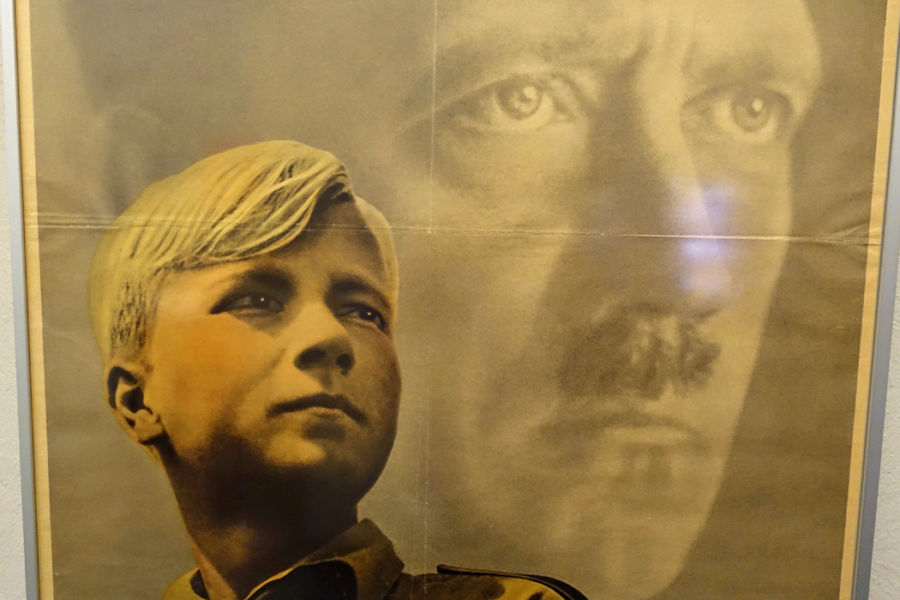
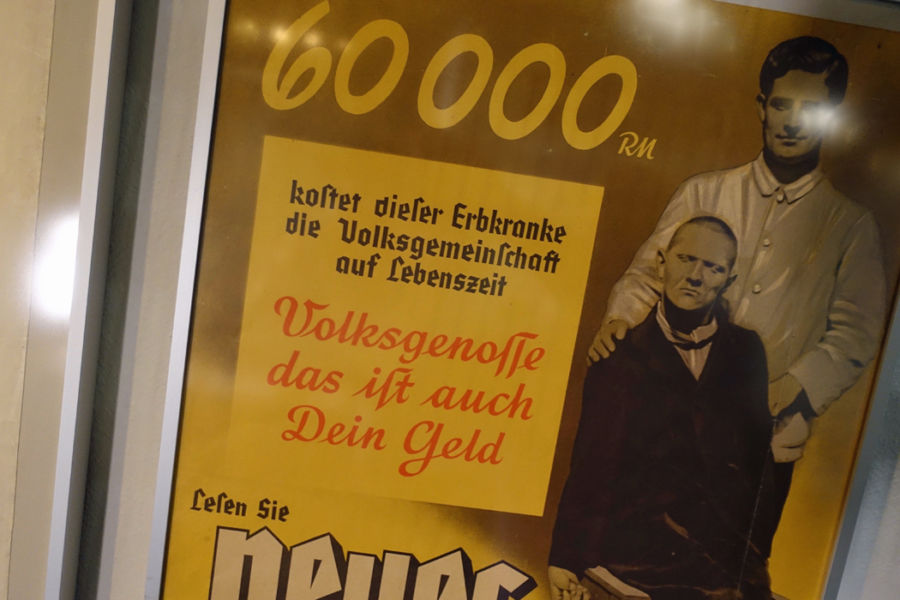
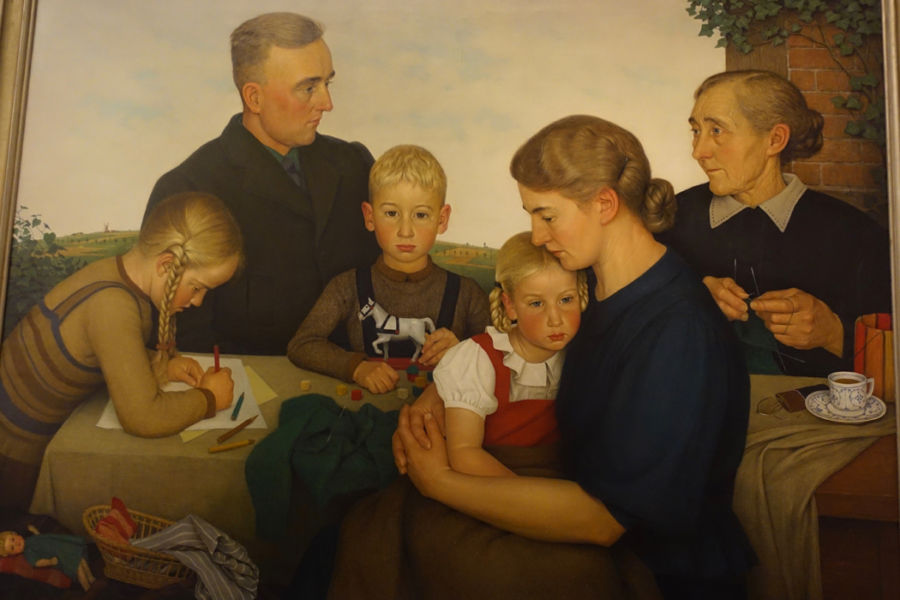
These photos give a glimpse of Germany in the 1930s. A painting shows a Norman Rockwell-style look at the ideal family — a fascist ideal hiding a harsh, racist agenda. A poster features a little boy, inspired and mesmerized by a messianic political rock star whose title was simply “the Leader.” Another poster basically asks a society, “Do you really want to pay 60,000 marks to let this retarded man live? Doesn’t our state have better things to do with our money?”

"Farm Family from Kalenberg" painting by Adolf Wissel

“Farm Family from Kalenberg,” Adolf Wissel


Nazi propaganda poster

A Nazi propaganda poster


Nazi propaganda poster

This poster exclaims, “60000 RM. This is what this person suffering from hereditary defects costs the Community of Germans during his lifetime. Fellow Citizen, that is your money, too.”


Germany’s Chilling Fascist Memorabilia

At the end, people did what they could to destroy any evidence that they were part of the Third Reich. A lot was just squirreled away and forgotten. In the last decade, as old Nazis have died, their children — exploring old boxes hidden away in attics — have found lots of memorabilia from those times. They donate it to the big state museums, which then store it away. I asked the curator at the great German History Museum in Berlin why there was so little of the excessive pomp and grandeur of the Nazi regime on display. He said that they keep the vast majority of artifacts that might inspire neo-Nazi groups warehoused and out of sight.

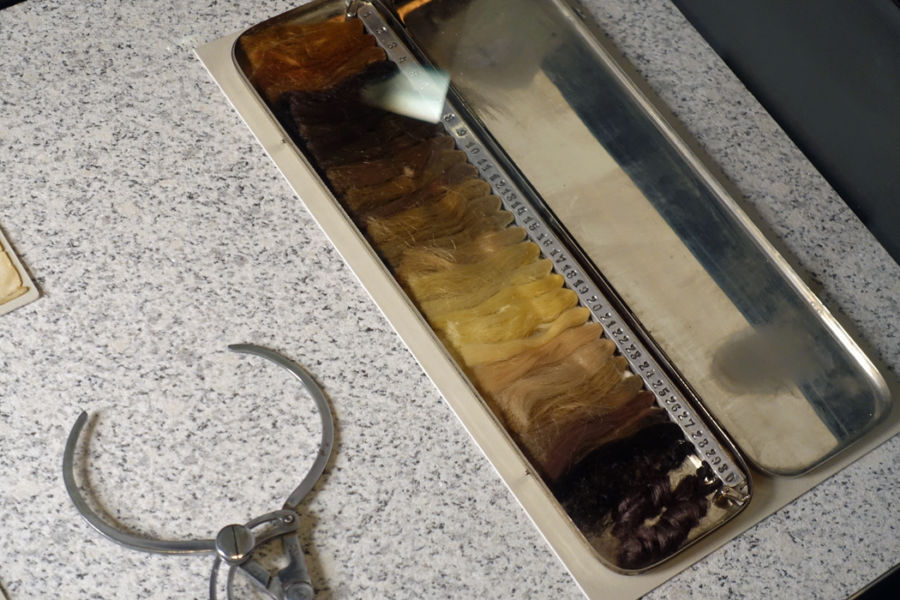
Museum visitors can, however, get a glimpse of Germany in the 1930s through exhibits which display the darkest side of the Nazi regime. A poster shows the facial features of people who were part of what was considered “the master race” (and those that didn’t belong). Calipers and hair samples help government officials determine who was of the proper racial stock to be a German citizen. And a huge hall with a dome that would house 180,000 people was envisioned to celebrate a world where the individual is sacrificed for the greatness of the state.

Master Race poster

Nazi hair chart and caliper

Volkshalle model

It’s all chilling…and with angry, populist, nativist political movements on the rise in many countries — and with images like those from the deadly white-supremacist rally in Charlottesville in our own country — it’s even more chilling.

Germany on Edge as Far-Right Rises in Europe

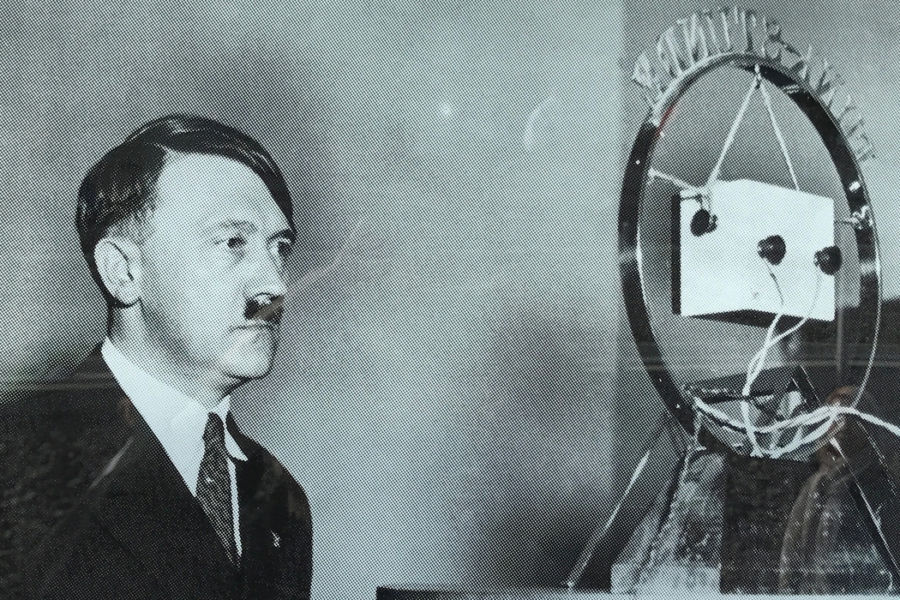
Hitler with microphone

Hitler ready to give his first major radio address — a medium he would go on to use very effectively to rule his nation.

Germany is a bit on edge these days, with the rise of white-supremacist groups, neo-Nazi groups, and right wing political parties around Europe, which seem to sanitize the tactics Hitler used to come to power in the early 1930s. In Poland, the nationalist, anti-refugee government has actually taken control of the new WWII museum in Gdańsk because it gives the “wrong” spin to that history (a spin not friendly to its right-wing ideology). And in Hungary and Poland, the electorate is so fiercely split, it’s reminding people of the tense two-political-camps feeling during the 1930s when oftentimes families couldn’t even talk to each other.

My German friends explain that conventional conservative political powers supported Hitler in the early 1930s because they thought he would mobilize a certain political base, but then could be tamed or controlled once in power. They believed many Germans voted for Hitler because they didn’t take his promises seriously and just thought he’d shake things up.

Hitler and his government

Today in Berlin, there is a small but powerful monument remembering how, after the last free vote in the German parliament, the members of parliament who voted against Hitler were arrested and sent to concentration camps, where they died.

Memorial to Politicians Who Opposed Hitler

The Memorial to the Politicians Who Opposed Hitler (Mahnmal für die ermordeten Reichstagsabgeordneten)

When asked what Germany is doing to protect its democracy, my friend explained, “Today in Germany, the media always agrees on the facts. Truth still rules. From these facts, people with different politics can then editorialize and debate. This makes it difficult for populist factions to spread their message. Right-wing populist movements in Germany have to get and share their ‘news’ on Facebook because the media doesn’t give them a platform.”