Ruggedly Beautiful Cornwall

The rugged beauty of the Cornwall Coast was unforgettable. We’ve shot many shows filled with gorgeous natural images, but this show will be one of the most beautiful.
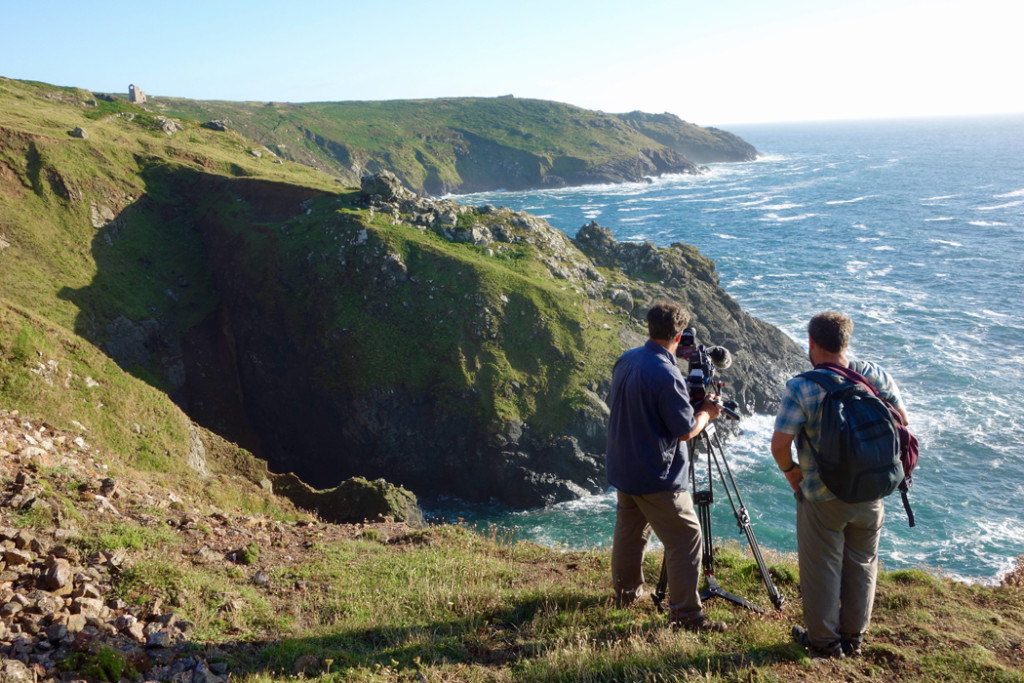
camera crew at penwith peninsula

Nearly our entire Cornwall script was dedicated to the southwest extreme of this county — the Penwith Peninsula.
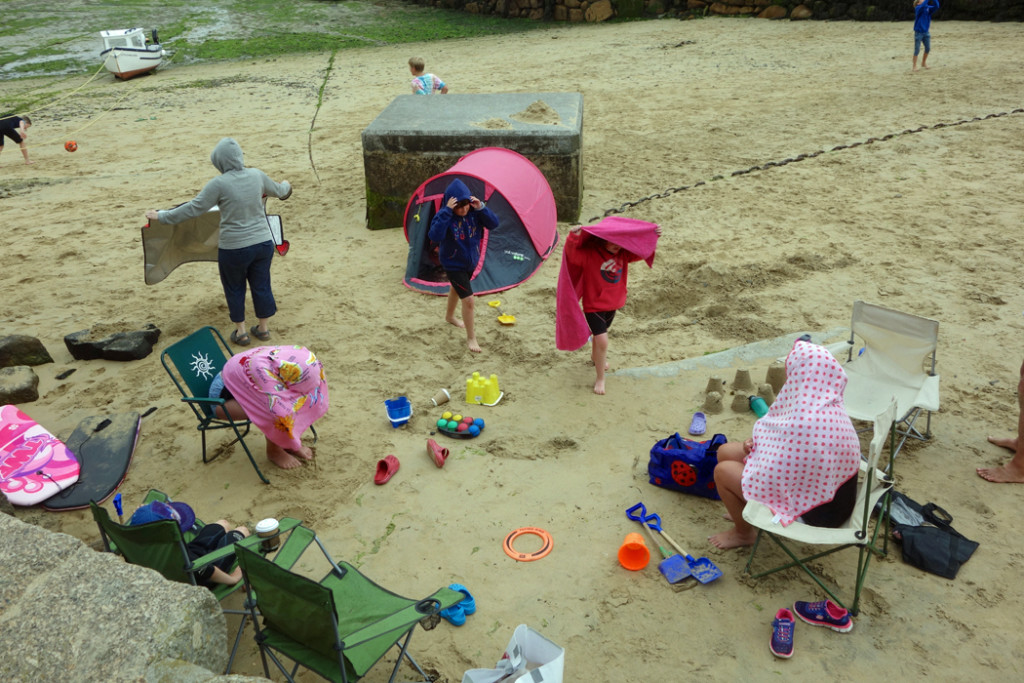
beachgoers with umbrellas

While we were blessed with generally good weather, I planned to have parts of three days in nearly every region (over the 18 days of our shoot) to be able to dance around the rain. The plan worked very well. But vacationers didn’t have that flexibility. I call British beachgoers “armadillo tourists” — their determination to enjoy the beach perseveres through almost any weather. If you wait long enough, it seems the steady wind blows away the clouds. (And then it blows away the blue sky, too.)
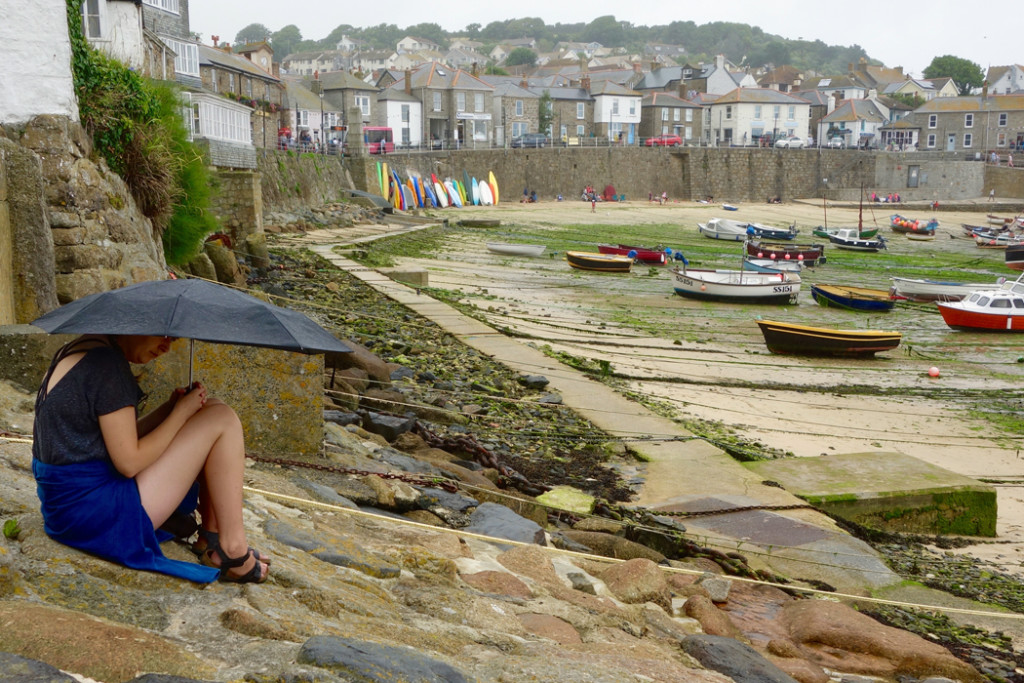
tourist with umbrella on beach

Armadillo tourist with umbrella gazing at Mousehole harbor.
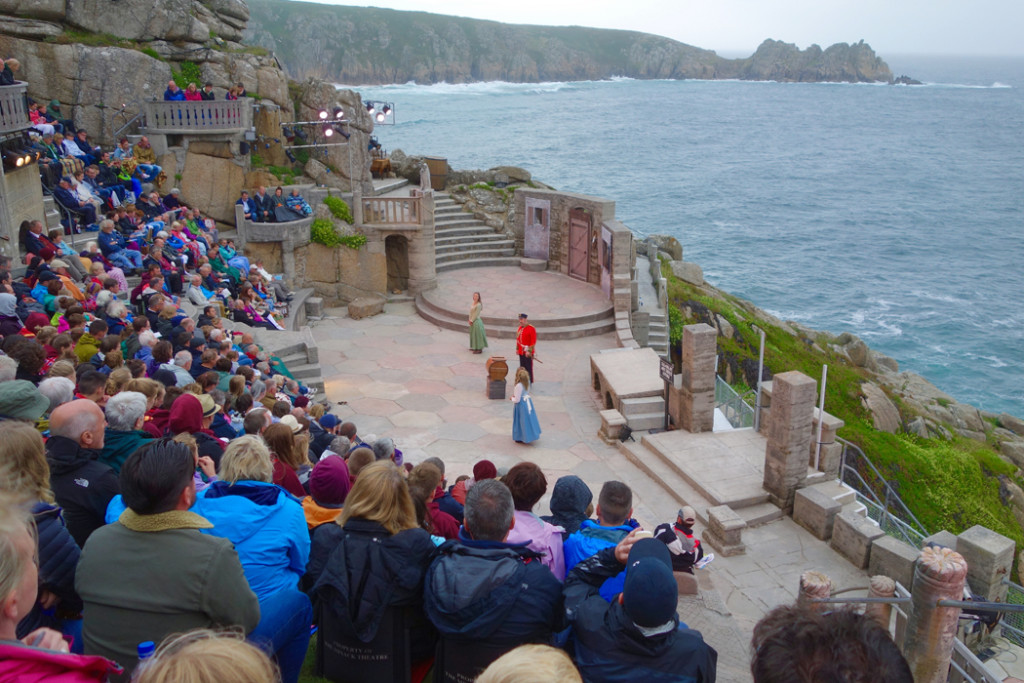
minack theatre

Southwest England is dotted with interesting sights — like the Minack Theatre, which is carved out of the rocks and offers every attendee a first-class view.
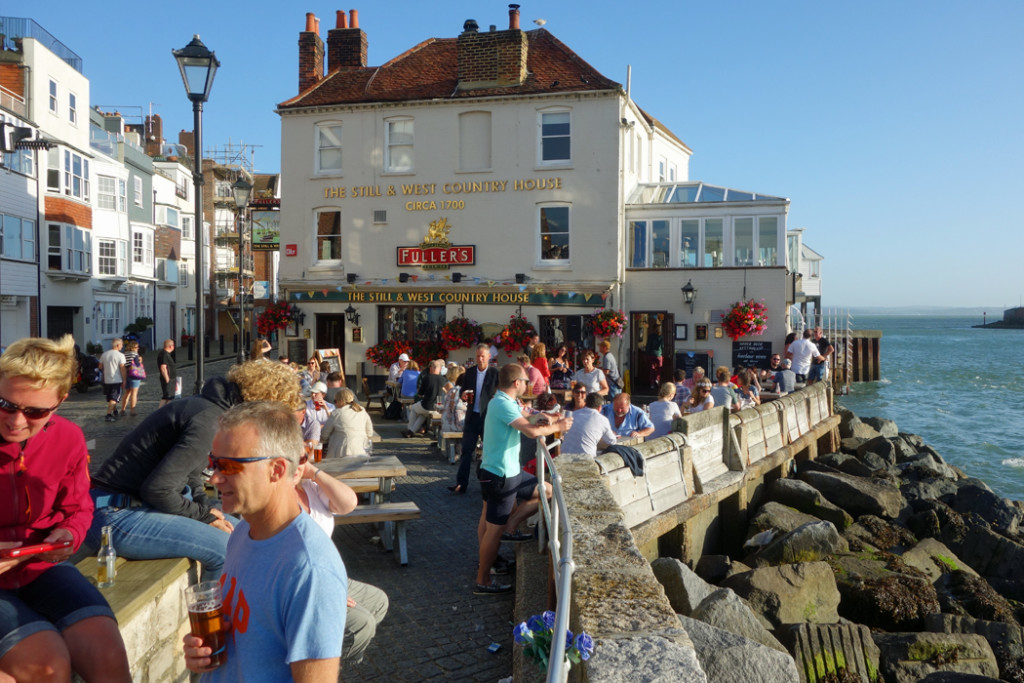
pub patio

This scene — with diners and drinkers spilling out of a pub and filling its seafront terrace (which happens to be in Old Portsmouth, the major port town of southern England) — captures the vitality I felt throughout England. People seem to be working hard…and playing hard, too. Families are loving their little children. Seniors are out and about, sharing their golden years with loved ones. And the young-adult crowd is diligently keeping Britain’s brewers as profitable as ever.


This is Day 88 of my 100 Days in Europe series. As I research my guidebooks and make new TV shows, I’m reporting on my experiences and lessons learned in Vienna, the Alps, the Low Countries, England, Siena, and beyond. Find more right here on my travel blog.

Cornwall’s Geevor Tin Mine

The PBS series Poldark shows the heyday of Cornwall‘s tin-mining industry. But in the late 20th century, that industry collapsed. And today, the last mine to close is now open to visitors — dedicated to telling the miners’ story.

The Geevor Mine, which closed in 1990, represents the last hurrah not only of Cornish tin mining, but, in a sense, of Britain’s Industrial Age. Exploring it, I gained a better appreciation for the simple yet noble lives of miners. And my visit nudged me to consider more thoughtfully the plight of miners in the USA.

Causing you to see things differently — whether you tend to be liberal or conservative — is a powerful value of travel. If you travel and don’t find yourself reconsidering things you thought you understood in at least a little different light, perhaps the value of your experience is being needlessly blunted by a closed mind.

What are some ways that your travel experience has shaken your strongly held ways of seeing things?


This is Day 79 of my 100 Days in Europe series. As I research my guidebooks and make new TV shows, I’m reporting on my experiences and lessons learned in Vienna, the Alps, the Low Countries, England, and beyond. Find more right here on my travel blog.

The Dramatic Cornwall Coast

I just finished filming a TV show about Cornwall, in the far southwest of England. And when the sun is shining (as it does off and on most days in the summer here), it’s hard to imagine a more dramatically beautiful place in the British Isles. The constant wind made the scenes even more strikingly beautiful, as the entire coastline came with a lacy border of crashing waves.

In filming this clip, I’m quite exhilarated because I had just sat on the edge of a cliff, looked into the camera, and opened our show by saying, “Set on a rocky peninsula, Cornwall is a fascinating land. It’s a pirate’s punch of Celtic culture, legends of smugglers, and mining heritage. It has a rugged appeal that makes it a favorite among English holiday-goers.”

Tin mining was long the dominant Cornwall industry. This evocative coast is dotted with 19th-century Industrial Age ruins. The two desolate engine houses you see in this clip once pumped water out so they could mine a half-mile down — and then, under the sea bed, far out to sea. Below me, the ground is honeycombed with mine tunnels. At its peak, there were hundreds of tin mines in this part of Cornwall. (The PBS series Poldark is filmed right here and features the tin-mining culture of Cornwall.)


This is Day 78 of my 100 Days in Europe series. As I research my guidebooks and make new TV shows, I’m reporting on my experiences and lessons learned in Vienna, the Alps, the Low Countries, England, and beyond. Find more right here on my travel blog.

Cornwall’s Dramatic Minack Theatre

Filming our Cornwall episode in southwest England, we enjoyed a play at the amazing Minack Theatre. Here’s how our script describes it:

The big draw here is the Minack Theatre, carved out of rock high above the surf. This open-air theater — with 700 seats — is gorgeously landscaped and set in a rocky cliff with a terrace stage perched hundreds of feet over the sea. A visit by day lets you marvel at the garden-like setting and the story of Rowena Cade, the visionary theater lover who created it.

If the weather’s fine and you’re here at lunch or dinnertime, get a Cornish pasty and a bottle of elderflower pressé (a local herbal drink) and grab a grassy seat at the high end of the theater for a memorable picnic. Watch the gannet birds dive for a fresh fish lunch. They hit the water at 70 miles per hour. (Sadly, many of their children follow their parent’s lead and dive for a fish before they understand how to do it safely…and later wash up on the shore with broken necks.)


This is Day 77 of my 100 Days in Europe series. As I research my guidebooks and make new TV shows, I’m reporting on my experiences and lessons learned in Vienna, the Alps, the Low Countries, England, and beyond. Find more right here on my travel blog.

Forty Years Ago, I Became a Travel Writer Here, in Southwest England

Rick Steves as a teenager and as an adult

Stumbling upon evocative and offbeat corners of Europe as a teenaged vagabond, I realized my niche in life: discovering, and then sharing, the best of Europe. And now, 40 years later, it’s fun to go back and revisit to some of these early oh-wow travel moments. It’s thought-provoking to consider how places — and I — both change and stay the same. Here, on a blustery rock just off the coast of Cornwall, is Tintagel Castle, the legendary birthplace of King Arthur. I’ve changed a lot more than the door and the view…but I still get the same charge out of the breathtaking setting.