Christmas Traditions: Why We Decorate a Tree

What’s on your tree? Some of my favorite ornaments are some little skates with paper-clip blades my grandmother knit before her last Christmas, an ancient string of popcorn I strung with a girlfriend back in high school, and a tiny carved cross I picked up one Christmas season in Nicaragua that reads “Paz con social justicia.”

I wrote about how our tradition of decorating Christmas trees came to be in my Rick Steves’ European Christmas book. Here’s an excerpt:

The Christmas tree’s roots run deep into the origins of the midwinter celebration. When winter’s gloom descended on ancient pre-Christians, they looked around and saw a few things that didn’t die: evergreens. This seemed to promise that the warmth and fertility of summer would return. After they decorated their huts with holly, ivy, or laurel, they likely took a deep whiff… and dreamed of spring.

The mysterious Druids, the priests of the ancient Celts, adorned their temples with evergreens as a symbol of everlasting life. The Vikings of Scandinavia considered evergreens the favored plant of their sun god. In many regions, people believed that evergreens, especially mistletoe (which was considered a sacred plant), would keep away witches, ghosts, evil spirits, and illness.

The custom continued in Christian times, but it wasn’t until about 500 years ago in Germany that the practice of decorating evergreen trees became a part of Christmas. These first trees were strewn with cookies, apples, nuts, and sugar sticks — which children eagerly raided. In the 1800s, when candles became affordable, the tree of lights arrived, and the tradition of the family gathering around the tree to exchange gifts was established.

Lutherans like to believe (wrongly, according to scholars) that Martin Luther, the 16th-century Protestant reformer, first added lighted candles to a tree. The story goes that when he was walking home one winter evening, composing a sermon, he was awed by the brilliance of stars twinkling amidst evergreens. To recapture the scene for his family, he erected a tree in the main room and wired its branches with lighted candles.

Christmas trees as we know them got a big boost in popularity in the mid-19th-century, after a London magazine showed Queen Victoria, Prince Albert, and their family gathered around a Christmas tree. Victoria was a favorite with her subjects, and what she did immediately became fashionable — not only in Britain, but in East Coast American society as well. In the early 1900s, during the Art Nouveau age, trees began to be draped in tinsel and ornamented with lovingly painted glass bulbs. The Christmas tree had arrived.

In Germany — the land of — Christmas trees became so popular that during World War I, thousands of them were actually mailed to soldiers on the Western Front. These tiny fake trees, made of feathers and paper, came in a kit, ready to be assembled right out of the postage box. (Next time you’re in Germany’s Rothenburg, you might enjoy the excellent little German Christmas Museum at the Käthe Wohlfahrt Christmas store.)

Merry Christmas and Happy Travels!

merry-christmas-and-happy-travels

Our friends at Avalon Travel (the folks who publish all our books) built this tree out of my guidebooks and I had to share it with each of you with a holiday wish. Looking at the “branches” on this happy tree of travel dreams, I see our mission of connecting people through travel. There are thousands of pages of hotel listings, restaurant tips, and the best sights. There are books on festivals, phrasebooks to make communication more fun, art appreciation books, and even my Travel as a Political Act book. While each of these serves a different purpose, they all build upon each other to eventually reach that shining star on top. And that star symbolizes the greatest souvenir any of us can bring home: a celebration of our shared humanity, an invigorated passion for peace and economic justice, and a mindset where we’re more inclined to build bridges and less inclined to build walls.

The year 2016 was a great one for our work at Rick Steves’ Europe. In 2017, the value of our mission — connecting people and bringing our world closer together — will become even more important. And, as that value surges, so will the value of your travels along with the meaning and gratification that comes from our labor.

Over the last few days in our office, it’s been pretty empty. Our staff is enjoying their families and a well-earned holiday break. And that makes me very happy. When we dive back in after the holidays, we’ll be hosting 100 of our European tour guides and a couple thousand of those who joined our tours last year for our annual guide workshop and tour reunion. We are revving up to put maximum sparkle into your 2017 travels.

At Rick Steves’ Europe, we’re thankful for our work and thankful for your support. Together, we wish all of our travelers a holiday season that is both serene and joyful, and filled with humanity, love, and promise.

Merry Christmas!

The Real Meaning of Christmas

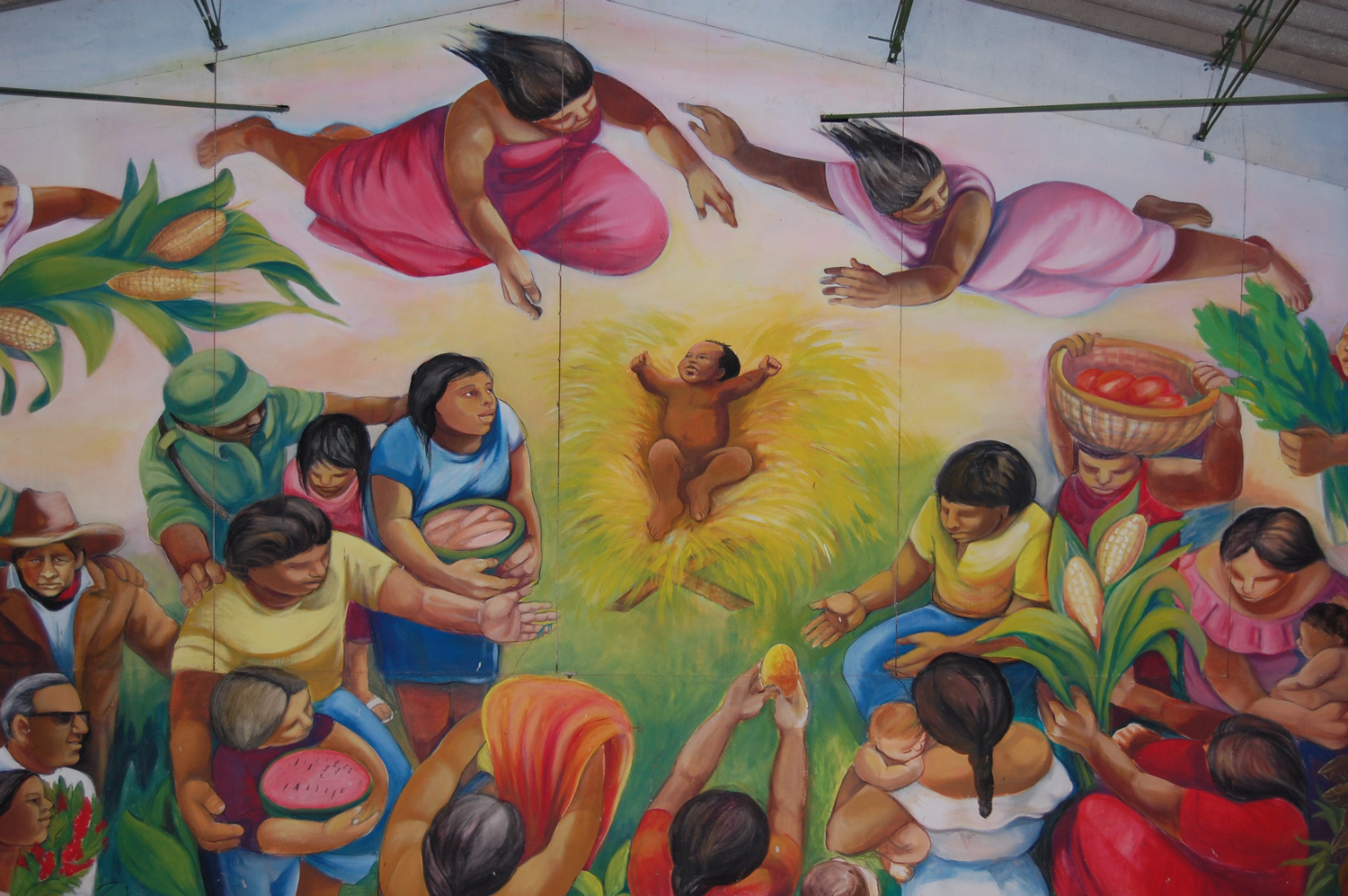
Community center in Managua

Dear traveling friends,

This mural reminds me how travel can help us be one with the world.

It can help us to see truths we’d never appreciate if we stayed home.

While, at first, these truths can sometimes rub us the wrong way,
once we get comfortable with them, we’re thankful for the broader perspective.

This humble yet poignant painting gracing a community center in Managua reminds me how people in places like Nicaragua and El Salvador can have an advantage when it comes to understanding the real meaning of Christmas.

It’s my Christmas wish that your travels give you a bounty of reasons to be thankful and celebrate all that is good in our world.

Rick Steves

P.S. How have your holiday travels enriched your understanding of the real meaning of Christmas? It would be a gift to hear your stories.

Flashing Back on a Decade of Holiday Beer Labels

For me, one of the delights of working at Rick Steves’ Europe is the way my staff mixes fun, creativity, talent, and hard work. Each year we brew a holiday beer as a staff event, and our art department comes up with our own beer bottle label. Here’s a review of a decade of Rick Steves’ Europe-produced beers. I wish you could taste them, but at least you can enjoy the creative talent of our art department.

“Mona Drinks” is a reference to our beloved Mona Winks guidebook, which was filled with self-guided tours of Europe’s top museums (now out of print, but resurrected as the audio tours in our free Rick Steves’ Audio Europe™ App):

00-mona-drinks


“Mona’s Back,” from 2002, was a statement in the year after 9/11 that we were traveling on:

02-monas-back


Eur-o-pean_pale


The “Immaculate Consumption” was built on sketchy archaeological evidence that there may have been beer at the manger on that first Christmas:


Stille-Nacht_Immaculate-Consumption


05-not-so-stille-nacht
“Ale 70 Shows” refers to our anthology of TV shows that has grown every two years — from 36, to 43, to 56, to 70, and so on. We’re at “over 100” now, but at the time, “All 70 Shows” seemed like quite a pinnacle”:

06-ale-70-shows

08-falling-buck

The “Eyjafjallajökull Steam Ale” from 2010 commemorated the Icelandic volcano commonly known as E-15 (for the number of letters that followed the first letter in its unpronounceable-to-most name):

10-eyjafjallajokull

10-holiday-ale


And 2013 saw the first appearance of Santa Steves:

13-no-stout

Anyway…here’s to a wonderful Christmas and happy holidays to all.

Stayin’ Alive at the Rick Steves’ Europe 2014 Christmas Party

Last weekend, we packed nearly our entire staff onto a party boat and sailed the Puget Sound for our annual Christmas party. The views were breathtaking…and so was the dancing. I just have to say, this holiday season, I’m thankful that I have a staff here at Rick Steves’ Europe that I enjoy taking out for a peaceful little dinner cruise (or even something a bit more upbeat). We’re letting our hair down here in the off-season, and ready for the best year ever for touring in 2015. Merry Christmas!