Alone with Giotto and the Bones of St. Francis

This morning, before Assisi’s Basilica of St. Francis was open to the public, we met Friar Daniel, who took us inside to be all alone with some of the greatest art of the late 13th century. It’s tough to distill the history and theology of St. Francis into a TV show — so while we filmed the walls, Friar Daniel thoughtfully reviewed my narration in the script. We clarified some points that confuse many American travelers: Franciscans are friars. To call St. Francis a monk is technically wrong. Monks are committed to a life of solitude (it’s just them and God) in a monastery. The word “friar” comes from the Latin word for “brother” — their calling is to be with the people as brothers. And they stay in a convent. Convents are not just for women, and monasteries are not just for men. Like the words “convene” and “monologue,” whose roots they share, they are all about if you are social or solitary. I got my script fine-tuned with our wonderful Franciscan friar’s help. And as I do every time I enjoy the guidance of Franciscan friars, I left inspired by their gentle and loving approach to life. In a hyphenated word…they are Christ-like.


This is Day 18 of my 100 Days in Europe series. As I research my guidebooks and make new TV shows, I’m reporting on my experiences and lessons learned in Portugal, Spain, Italy, France, Bulgaria, Romania, and beyond. Find more at blog.ricksteves.com.

Turkeys and Ancient Fluting in Assisi

Especially in a stony and historic town like Assisi (and especially in a light rain), I enjoy taking a solitary after-dinner stroll before heading back to the hotel. Here in this famous town, there’s history everywhere. Join me for a quick little walk and to celebrate the majestic fluting on an ancient Roman Temple.


This is Day 17 of my 100 Days in Europe series. As I research my guidebooks and make new TV shows, I’m reporting on my experiences and lessons learned in Portugal, Spain, Italy, France, Bulgaria, Romania, and beyond. Find more at blog.ricksteves.com.

Sunsets on the Road: My Top Ten

I love sunsets. They can be a vivid and romantic capper for a beautiful day on the road. Here are a few dramatic and memorable sunsets that come to mind:

1. On the Greek isle of Santorini, nursing a drink with a single flower in a vase on my table, as I sit on the lip of the crater high above the glittering Aegean Sea.

2. On the Nile, just across from Luxor, as the sun sets, the temperature drops, and villages come alive. As I’m poled along the shore in a classic felucca boat, children frolic, long-legged birds strike a pose, and I glide like a silent voyeur through the reeds.

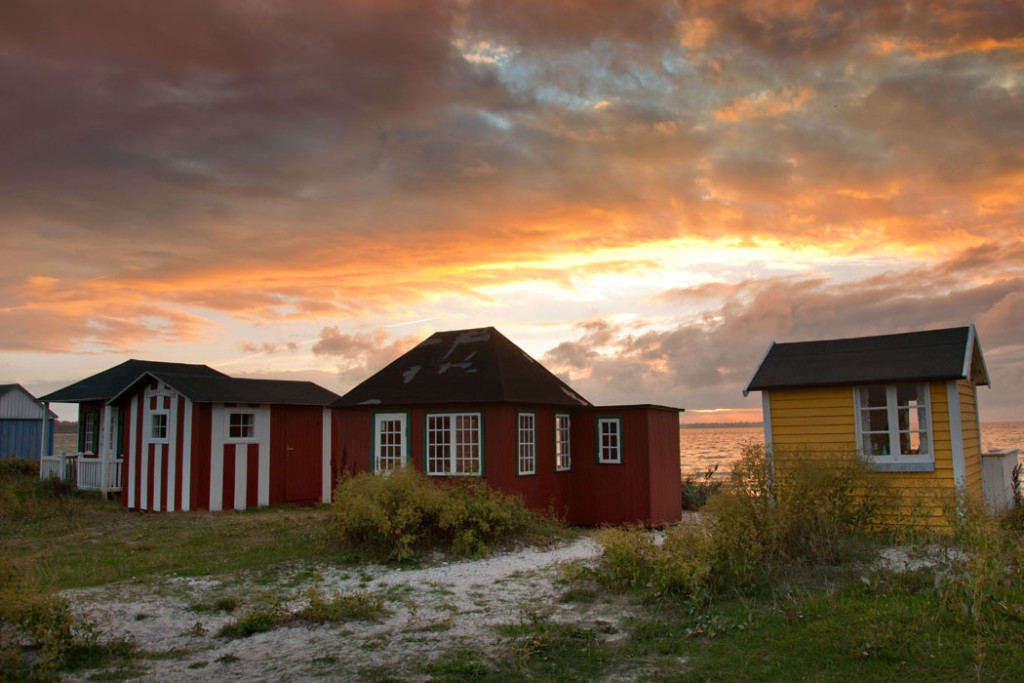
3. On Denmark’s Aerø Island, warming myself by a beach fire while children splash in the shallow waters of the bay, and parents sit peacefully on the porches of tiny beach cabins.

Ærøskøbing homes

The sun sets on Denmark’s Aerø Island. (Photo: Dominic Arizona Bonuccelli)

4. In Granada, Spain, joining the “Gypsies and hippies” at the St. Nicholas viewpoint as the setting sun makes the Alhambra glow red, evoking the tumult of its violent history.

5. On a ferry charging across the Greek sea, with dolphins — who seem to come out for the sunset — playfully loping ahead of the ship’s bow.

6. In England’s Cumbrian Lake District, sitting pensively on a stone at the Castlerigg Stone Circle just outside of Keswick, savoring a moment which inspires anyone to poetry…especially as sheep stir up the fragrance of the wild grass and the scent comes with a whiff of mystical druids, who once used these stones for their worship, dancing in the long shadows.

7. In Paris, sitting on the steps of the Sacré-Cœur atop Montmartre, surrounded by backpackers, buskers, and local lovers as Paris spreads out before me and slowly the sky grows dark and the City of Light is turned on.

8. On a Norwegian fjord, taking my dessert of ice cream and fresh berries out of my hotel’s dining room and sitting along at the end of the pier. The water is glassy and frightfully deep, black rock cliffs rocket into the sky above me, and the sun dips too early behind the peaks.

9. In Assisi, on the rampart of a ruined castle, with olive groves at my feet leading to a vast and lush Umbrian vista; imagining the age when each town was its own little state, and enjoying the same birdsong that inspired St. Francis.

10. And my favorite sunset: from my deck back home, on the Puget Sound just north of Seattle, as a golden path of sparkles leads across the bay to snowcapped Olympics. The sun settles behind the latest in a series of chosen peaks, and the ferries ply silently across as the water begins to glow like floating lanterns.

What is your favorite sunset far from home?

Talking Sports with My Taxi Driver

This taxi driver, who got me from the hill town of Assisi to its valley-floor train station with six minutes or so to spare for my train, is a huge Seattle Supersonics fan. I can’t bear to tell him that the Sonics were sold a long time ago.

If you can’t see the video below, watch it on YouTube.


Assisi: Flames, Forks, and Franciscan Frairs

Charging through dark and quiet Assisi — stony with history — I needed to visit two more restaurants before enjoying my reward for the day’s work: returning to my favorite place reviewed that night for a good meal…hopefully before the kitchen closed.

At 10:00, the pink marble streets of Assisi shine, lonely under the lamps. It seemed the only ones out were Franciscan monks in their rough brown robes and rope belts. All over Europe, I find monks hard to approach. But there’s something about “the jugglers of God,” as peasants have called the Franciscan friars for eight centuries, that this Lutheran finds wonderfully accessible. (Franciscans modeled themselves after French troubadours — or “jongleurs” — who roved the countryside singing and telling stories and jokes.) Franciscan brothers remind me of really smart dorm kids in the University of God…and tonight, it seemed, their studies were done for the evening.

Their warm “buona seras” and “ciaos” reminded me of my experience here filming a few years ago. While I like to say things with a creative edge, this can occasionally haunt me in my work. (Like the Norwegian mountain village I called “painfully in need of charm”…and then, during my next visit, the tourist office staff saw this printed in my guidebook and ran all over the building reading it with disbelief to everyone they could find. And like my little Vatican Museum rant posted on this blog last week. It was originally entitled “Vatican: practice what you preach” and had a harsher, more angry tone, until my Roman friends read it and made it clear that burning a Vatican bridge can haunt a tour organizer for years. The respect/fear they had for the Vatican was actually astonishing.)

But back to filming in Assisi: I had a 7 a.m. appointment to take my PBS TV crew into the grand Basilica of St. Francis, one of the spiritual and artistic highlights of Western Civilization and critical to our episode. At the crack of dawn, we waited — our letter of permission in folded hands — at the basilica-big door. Finally, three unusually officious-looking Franciscans appeared. In my most reverent tone I said, “buon giorno.”

They had reviewed our script, which made clear what we planned to film. This I expected. But before they opened the door, they said, “And…we’ve read your guidebook.” I immediately reviewed in my head the quirky descriptions I had used to tell the Francis story. (Passages such as “Holy relics — like the saints’ bones — were the ruby-red slippers of the Middle Ages. They gave you power, answered your prayers, won your wars…and ultimately got you home to your eternal Kansas.”) I was feeling sunk. Then the shortest of the monks looked at me and said, “We all read your guidebook…and we like it.”

We had the basilica — so adored by centuries of pilgrims and wallpapered by Giotto — all to ourselves. And the camera rolled.

Back in the present, I made it back to my favorite restaurant. It filled a brick-vaulted old cellar, or “buca.” Many restaurants are called “Buca” (even in the USA…as in, “di Beppo”). Since a buca or cellar traditionally paid cheap rent, it served cheap food. But now, with European Union regulations creeping into just about everything, there are no more restaurant licenses for cellars — bad ventilation, no secondary escapes in case of fire, and so on. And I’m seeing bucas with licenses grandfathered in really spiffed up and, while no longer cheap, great places to savor the local cuisine.

A local guide (Giuseppe) and his wife (Anna) joined me and we let the chef shower us with his best work. The wine (Sagrantino de Montefalco, Umbria’s answer to Brunello de Montalcino) was almost like marijuana, evoking flames and dancing girls. And the food both looked and tasted delightful. Anna greeted each plate with unbridled enthusiasm.

Suddenly, Giuseppe looked at me and said, “My wife’s a good fork.” Misunderstanding him, I blushed — amazed at what I thought he said. My face said, “Come again?” And Giuseppe clarified, saying, “una buona forchetta…a good fork…that’s what we call someone who loves to eat.”