Thoughts About My Immigrant Heritage

As a Norwegian American, Trump’s latest racist comments have got me thinking about my immigrant heritage. Sure, he would welcome Norwegians now — they’re about the whitest and richest people on the planet. But it wasn’t always that way. My great-grandparents immigrated to the USA from Norway back when it (except for the color of its people) was what our president would call a “shithole.”

My great-grandmother Amanda left Norway over a century ago because it was a miserable place to live…a land without promise. About the only thing I remember of Granny Amanda was that, because I had red hair like hers, she’d always put her arm around me and brag about me having “good stock,” and my other relatives would laugh.
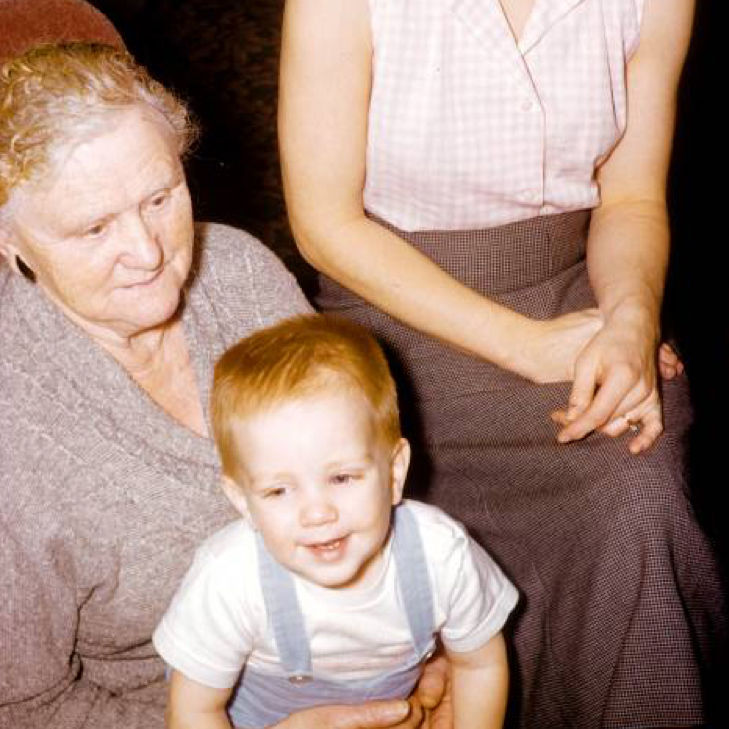
Baby Rick Steves

On a recent trip to New York City, I visited Ellis Island, where I was inspired by the stories of tired and huddled masses finding refuge in the United States. I looked up another of my Norwegian relatives in their database: According to a ship’s register, exactly a hundred years ago John Romstad landed with a buddy, bound for Duluth, with $20 in their pockets. Anyone considering Duluth the Promised Land (with a net worth of $20) must have come from a pretty hopeless place.

These Steves ancestors left their homeland to escape and came to America because they wanted to work hard and contribute in a land of opportunity and justice. They toiled long and hard, as immigrants do, and two generations later I am as American as can be.

I recently learned that, a century ago, immigration to our country was based on the concept of “good stock.” The racist term my great-grandmother used to describe me was the term used to describe those coming from an acceptable heritage. That law was changed in the 1960s and today — true to our ideals (sorry, Granny Amanda) — we no longer consider good and bad “stock” when it comes to immigration. (Our president didn’t get that memo.)

It takes gumption to pick up and immigrate to a new country. And, in America, it takes hard work and character to succeed and become established. As a society of immigrants, we can shape our future. It can be angry, fearful, and white — hunkered down behind tariffs and walls, squinting at globalization as if squinting at bad weather. Or it can be open, positive, celebrating diversity, and embracing (rather than fighting) the reality of a global, integrated, and interconnected world. Our future can be determined by bully bargains, zero-sum calculations, and “me first” policies. Or it can be about sharing, caring, and win-win solutions. If our national direction is inspired by our president, we’re heading in a sorry direction. Thankfully, I believe America is more American than that — and that we’re waking up.

Connect with me on Facebook and Twitter.

Trip Planning? Follow the Fun and Head to a Festival

It’s winter — my favorite time for travel dreaming!

Video: thetravelphile.com

If you’re still deciding on your next destination, here’s a tip: Find a great local festival and build your trip around that. Festivals are filled with rich tradition, great food, and lots of fun with the locals.

While it can be hard to get tickets for some festivals, most are widely accessible. For the Highland Games, Pamplona’s Running of the Bulls, Bastille Day in Paris, or Munich’s Oktoberfest, your biggest challenge is booking a hotel room well in advance.

I take you along to all of my favorite festivals in my new Rick Steves’ European Festivals book — and once you have your destination pinned down, be sure to grab a 2018 guidebook.

Happy travels!


Join our traveling community — connect with me on Facebook and Twitter.

Happy New Year of Travels!

Rick Steves 1978

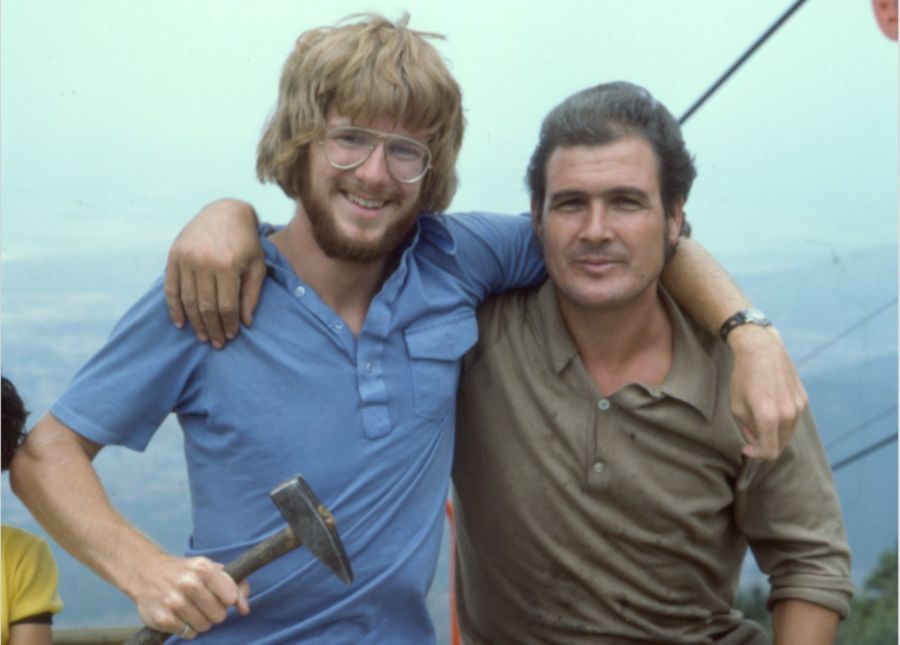
In 1978, I befriended a Communist worker in Yugoslavia, and the seed of an idea began to grow: “We’re all in this together.”


Some people clean house to start the New Year. I clean up old folders of photographs, taken over the years, that document my travels. Last night, doing just that, I got swallowed up in an amazing decade of trip memories — natural wonders, taste treats, artistic eurekas, faraway friends, and inspirations. I pondered what an integral part of my life these travel experiences are. I suppose other people — like an avid painter, a football star, or a beloved pastor — have similarly powerful life stories contributing to the weave of who they are. For me, it’s travel.

The tapestry of my life is made strong and colorful by the rich rewards of travel: The hikes — cut-glass peaks shouting their glory to the heavens; the taste treats — dipping the eagerly ripped bits of baguette into the garlic sauce for my “snail chaser”; the artistic triumphs — swizzled into a gravity-defying Russian/Jewish/child-of-God/French cocktail of life in a gallery full of Marc Chagall murals; the new friends — like my private whisky coach in the Edinburgh pub, who spent an entire evening showing me how a wee dram can be a very good friend; and the lessons learned — like how our world is filled with joy, love, and people…beautiful both inside and out, and eager to meet us.

If you traveled with Rick Steves’ Europe in any way in 2017, thanks so much. If you are blessed with the opportunity to travel in 2018, I hope we can be of some help. In so many ways, we’re all in this together…and I think that’ll be my theme in the New Year.

Best wishes, and Happy Travels in 2018!

The Ugly American (and How Not to Be One) in the Age of Trump

Girl with selfie stick

Let’s officially rename these crazy things “narcissi-sticks.”

 I’ve just completed a 40-year study of “Ugly Americans” in Europe. I’ve concluded two things: If you’re being treated like an Ugly American, it’s because you are one; and (thankfully) Ugly Americans are much rarer now than they used to be.

Ugly Americans are not bad people — just ethnocentric. And, being ethnocentric gets you into a vicious downward cycle in your travels: You complain when things aren’t what you think of as proper, so you see fewer smiles and worse service, and you complain even more. You end up going home in a bad mood.

Of course, with an ethnocentric, “me first” president who sees the world as a zero-sum game (and is scaling up the “lawyers, insults, and intimidation” approach he uses in his personal life into America’s approach to the family of nations), Americans dreaming of a European vacation might wonder if we’re not all going to be treated as Ugly. Happily, the answer is no. While Europeans are sad to see our suddenly less-gracious country no longer a moral leader and an inspiration around the globe, they still welcome us as individuals. (But if you have a MAGA hat, I’d recommend leaving it — and the attitude it symbolizes — home if you want to enjoy the same warm welcome other Americans receive.)

For those of you that want to be seen not as an Ugly American, but as a beautiful one, here are a few things to think about before your next trip.

How I’m Spending My Tax Cut

More money than many Americans make in their entire lifetime. That’s what Congressional Republicans are voting to give me as a tax break.

That’s right: If Republicans in Congress get their way, I just saved a couple million dollars on the change in the inheritance tax alone. What about you?

Our government already spends more than it takes in, and this tax giveaway will make it worse. But that plays right into Congressional Republicans’ strategy to shrink the government: First, they cut taxes by $1.5 trillion (mostly benefiting the rich). Then, to balance the budget, they’ll claim that the only solution is to gut programs (such as Social Security and Medicare) designed to protect America’s poor and working class.

I once asked my Swiss friend Olle, “How can you Swiss people be so docile about paying such high taxes?” Without missing a beat, he replied, “Well, what’s it worth to live in a country where there’s no hunger, no homelessness, and where everyone — regardless of the wealth of their parents — has access to quality healthcare and education?”

I believe a national budget is a moral document. It declares who we are as a nation. Decency requires compassion and help for our poor. Stability requires a healthy middle class. The Republican economic agenda both hurts the poor and further weakens our middle class — all to give wealthy people a windfall of cash they don’t need.

So what am I going to do with all of the tax revenue Congressional Republicans want to save me? I’m choosing to provide, as an individual, what European societies would provide collectively: housing for otherwise homeless single mothers and their kids, helping to build senior centers, and paying the rent of our local symphony orchestra. These are basic services — not extravagances.

While Republicans might argue that I’m proving their point — that charity from the wealthy will come to the rescue — I believe that such services should be paid for not by the odd millionaire who doesn’t have a taste for golf clubs and yachts, but collectively, through progressive taxation. While lowering my marginal tax rate from 39.6% to 37% will have no impact on my privileged standard of living, it will ultimately have a huge impact on millions of struggling people.

As a proud American and a student of Europe, I care deeply about the cost to the fabric of our society that this windfall for the wealthy will bring. If you believe you’re being represented by a Republican Congressperson who votes for this plan, you are mistaken. It costs them a lot of money to convince you to vote for them, and this tax bill is their way of paying off their major donors. And if I lived in your district, I’d raise bloody hell.

(By the way, our Christmas fundraiser for Bread for the World was a huge success this year, raising more money than ever. Thank you to the 2,376 who contributed, collectively raising $311,700. With my $250,000 match, together we raised $561,700 to empower Bread in its work — to speak up for those who don’t have private lobbyists driving our government to re-write laws in their favor.)