In These Times of Change, Let’s Celebrate the Trusty Rail Pass

In 2019, European rail passes are undergoing the most sweeping changes in a generation. Gone are “Select” passes, where you can mix and match countries as you like to suit your itinerary. Now, it’s all of Europe, or just one country.

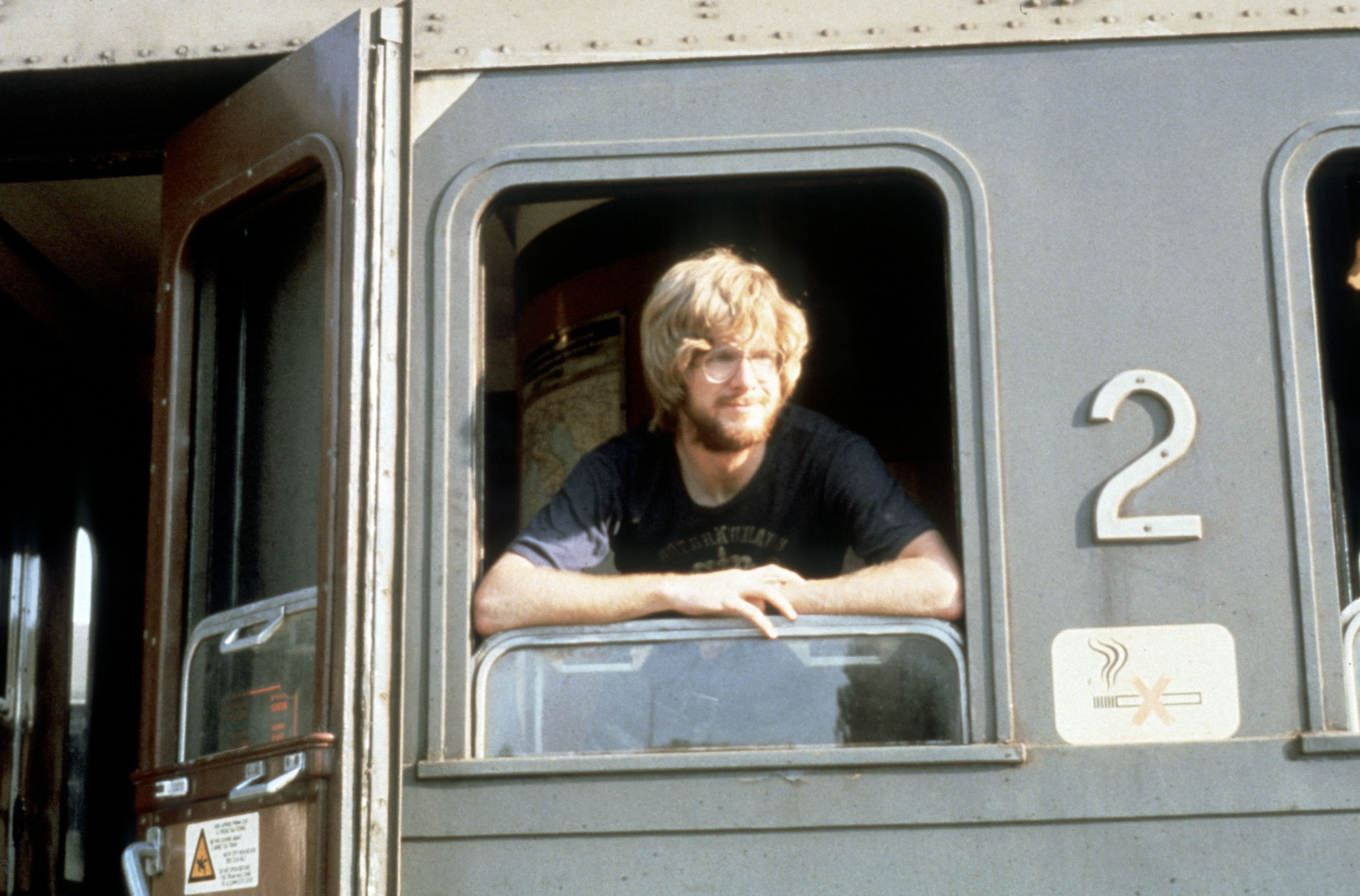
This time of change has me nostalgic for the glory days of rail passes. In my backpacker days, there were just two choices of Eurailpass: one month or two months, covering most of Western Europe, with a second-class option available only to people under 26.

Over the years, as rail passes became a must-have accessory for any trip, customization was in. The flexipass — valid only a certain number of days in a one- or two-month period — revolutionized the rail pass game. The Europass included just five core countries, rather than automatically including all of Europe; later, the Eurail Select pass let you choose exactly which countries you wanted. So, instead of paying for 30 straight days in 17 countries, you could save money by buying a pass for only five days (within a two-month period) in just France, Benelux, Germany, and Denmark. Gradually, even more spin-offs arrived: two- and three-country passes that seemed designed to suit any conceivable trip (and, frankly, some that were pretty inconceivable).

During their heyday, rail passes were a way of life for travelers in Europe. Savvy backpackers were rail policy wonks, and knew every trick in the book for stretching a pass. They knew that if you took a night train, it’d count only one flexi-day — the day of arrival — allowing you to sneak in some “free” onward travel the next day. (Now this has been flipped, counting the day of departure.) They knew that if you were going from Munich on a Germany rail pass, it’d take you as far as Salzburg — the first station over the Austrian border — but no farther. But if you were going from Munich to Venice on a pass that included only Germany and Italy, but not Austria, you’d have to pay separately for that Austrian segment. And yet somehow, it all worked — and provided travelers with fond memories of mastering the system.

Around this time, selling rail passes was a big part of my company’s mission. Travelers who did their homework could save plenty — but there were so many options, it was hard to know where to begin. We published an annual 64-page guide to European rail passes, along with an extensive rail website. We even produced a VHS tape about how to choose your rail pass, which we’d snail-mail to potential customers. And several experts on my staff — including our Rail Department Manager and train guru, Laura Terrenzio — advised travelers on their rail pass choices full-time.

With the arrival of budget airlines, things began to change. Premium, high-speed trains (like AVE in Spain and TGV in France) started requiring travelers to book ahead and pay a supplement. The loss of the ability to hop on pretty much any train, anytime, no questions asked, made the arithmetic required to choose the right rail pass even more complex. For the right traveler (and the right trip), a rail pass could still be a good choice…but it wasn’t an easy choice.

As of last week, Eurail has gone back to basics. Gone are the unwieldy combination tickets and the staggering array of à la carte passes. Now you can either get a single-country pass, or a Global Pass covering 31 countries. (I don’t think Europe even had 31 countries back when I bought my first rail pass.) While there’s been some loss of customization, I appreciate how the new approach is simplifying what had become a confusing selection process.

There are other changes, too. But a few things haven’t changed. There’s still a special magic to taking trains around Europe. We’re still selling rail passes, and helping travelers figure out which pass is best for their trip. And Laura Terrenzio is still the most knowledgeable person I know (and probably in the whole country) when it comes to rail passes. Anytime you visit the Rail section of our website, you can be confident Laura has everything up-to-date, like always.

What are your favorite memories of traveling with a rail pass?


Video: Christmas Eve in Europe

To celebrate the season, I’m sharing clips, extras, and behind-the-scenes notes from Rick Steves’ European Christmas.

My favorite feature of the show’s structure is how in each culture, we stop just before Christmas arrives. With this clip, Christmas Eve is finally here — and all across Europe, people are celebrating in their own unique ways. In England, families await the arrival of Father Christmas; in Norway, friends join hands in song; in Burgundy, a toast starts the celebration feast; at the Vatican, people pack St. Peter’s to attend a glorious Midnight Mass; and, as Christmas Day dawns, a joyful chorus heralds the birth of Jesus. Merry Christmas!

Thank You, Public Radio!

signed letters from Rick Steves and a santa hat


I’m so grateful for public broadcasting — and for all the hardworking people who make it happen. Thanks to them, we can all enjoy programming that assumes an attention span, respects our intellect, and is driven not by a passion for keeping advertisers happy, but by a passion for educating and inspiring us to embrace life and celebrate diversity.

My weekly public radio show, Travel with Rick Steves, is one of my favorite endeavors. I’ve been at it for 13 years now, and along with producers Tim Tattan and Isaac Kaplan-Woolner, I’ve created more than 500 hours of radio. Rather than being the guide, I get to be the curious traveler, acting as a conduit between experts and my listeners. We all have a lot of fun together — talking travel, learning, and dreaming.

As a small expression of my appreciation for the more than 400 stations that air Travel with Rick Steves every week, I just popped a little gift in the mail for each of them, along with a short note. It’s no small task to sign a stack of notes like this…but when you get in the zone, you can buzz right through it. Here’s a little peek at me doing just that.

https://www.facebook.com/ricksteves/videos/273244546699153


Thank you, public radio partners. Merry Christmas!


Lobbying for the Hungry: The Value of Advocacy

Yesterday, I shared some exciting news: Our community of travelers has now raised one million dollars to help empower Bread for the World, an advocacy organization that speaks up for hungry people in the halls of government.

https://www.facebook.com/ricksteves/photos/a.10151281817257745/10156610603762745/?type=3


Many of you understand the value of advocacy. But a few questioned why we would fundraise for “lobbyists in Washington D.C.” and not for groups that directly feed the poor. As one commenter, Rolf, said, “Man, I’m sure the Salvation Army would have done a whole lot more with that money.” Tim agreed, saying, “I would prefer that my donations go to organizations that actually feed people.” And Alan wrote, “This 1.078 Million can just be flushed into the riches of those unneedy while the truly wanting go unfulfilled.”

Then, just last night, I received a briefing from Bread for the World president David Beckmann about the impact of their advocacy (or “lobbying”). In his note, he explained vividly how huge the stakes are when it comes to US government budgeting decisions — and why the $1 million that we raised together will have a far more powerful impact than more traditional charity giving. Here is what he said:

This afternoon, Congress passed a Farm Bill with no cuts to SNAP (a.k.a. ‘food stamps’), and improvements to international food aid. Bread for the World has been a significant player on that issue. The House of Representatives had passed a version of the Farm Bill that would have taken $20 billion in groceries away from struggling American families. Thankfully, this version of the bill failed.

Bread for the World and its members have also done a lot of work on criminal justice reform and this year’s appropriations. A compromise criminal-justice reform bill seems likely to pass Congress during this lame-duck month.  The bill is not as good as we wanted, but it will definitely improve conditions in federal prisons and reduce sentences for some people who shouldn’t be in prison any longer and fund prison programs that prepare prisoners to make a living when they get out. The big appropriations package that we’re hoping will pass this month includes increased funding for international and domestic anti-poverty programs. (That’s being held up by President Trump’s demand for $5 billion for the border wall. No one knows how that stand-off will be resolved.)

It’s important to remember that with every dollar Bread for the World raises, it leverages $100 in terms of assistance and funding that is vital to hungry and poor people in our country and abroad. (That’s the great thing about advocacy — our government wants to do the right thing, when properly encouraged.) Assuming that ratio holds, our $1,000,000 donation will generate $100 million in life-giving, hope-instilling funding.

Together, we are giving struggling people a voice in Congress. Again, thank you for your generous partnership. I find it both loving and patriotic.

You can still elevate your holiday season by joining in with a $100 donation at www.ricksteves.com/bread. (And when you do, I’ll send you my European Christmas gift pack or my Complete Collection DVD Box Set as a thank you gift!)


Video: The Christmas Story

Christmas is almost here! Over the next two weeks, I’ll be sharing clips, extras, and behind-the-scenes notes from my one-hour special, Rick Steves’ European Christmas.

The tour guide in me was determined to cover the biblical story of Christmas in the special while also explaining related holidays and traditions and meeting the locals. We learn about Epiphany, Advent wreaths, the origin of St. Nicholas, the pagan roots of so many Christian traditions, and all those fascinating cultural differences. For example, German Christmas tree lots were just opening up on December 22, as most Germans don’t put up trees until Christmas Eve. We celebrate the holiday with Umbrian peasants, trendy Norwegians, Victorian English, dirndl-clad Tiroleans, and Burgundian monks, all of whom contribute to how their community celebrates Christmas.

In this clip, we begin where the Christmas story does: with the Annunciation of Mary and the birth of Christ. While each European country gives Christmas its own special twist, they all follow the same story of how the son of God was born on earth, as told in the Bible and illustrated over the centuries by great artists.