My Summer’s Grand Finale: Siena’s Palio Horse Race

rick-steves-roberto-becchi-karel-bauer-palio-siena
Hold on to your gnocchi — it’s 
Siena’s Palio. The finale of my summer trip is in Siena, where my crew and I spent several days filming the Palio horse race for our upcoming European Festivals TV special.

In this photo, cameraman Karel Bauer and I are with our Sienese guide, Roberto Bechi, who — as you can see — is excited about the race…as he has been, twice a year, for all his life. Roberto, whose enthusiasm is contagious, got us the best seats and made sure we understood the elaborate and confusing rituals as they unfolded.

Across Europe, festival traditions go back centuries, and are filled with time-honored pageantry and ritual. Entire communities hurl themselves with abandon into the craziness. There’s no better example than here at Siena’s Palio.

In this gorgeously preserved Tuscan hill town, the Middle Ages seem to survive in the architecture and in the civic spirit. The city is known both for its pride and for its independent attitude. And twice a year, that spirit shows itself in a crazy horse race, as it has for five centuries.

While the actual race lasts 90 seconds, the festivities consume the city for days. For the next week or so, I’ll be bringing you a behind-the-scenes look at Siena’s Palio.


This is Day 90 of my 100 Days in Europe series. As I research my guidebooks and make new TV shows, I’m reporting on my experiences and lessons learned in Vienna, the Alps, the Low Countries, England, Siena, and beyond. Find more right here on my travel blog.

English Breakfast Porn

As we wrap up our England shoot and head for Italy, here are a few more observations.

rick steves with defibrillator

Dial 1-800-DEFIBRILLATOR. Today’s England is not your grandmother’s England. Traditional red phone booths are rare, and many of those that survive have found new roles…like defibrillator stations. (My crew — producer Simon Griffith and cameraman Peter Rummel — are so excited to be working in England that I’m thinking it would be smart to know where the nearest one of these is at all times.)

rick steves at airth highland games scotland

We bookended our England shoot filming big events for our upcoming hour-long European Festivals special. We started in Scotland, with the Highland games. I was careful not to break anything as I failed to lift the “Smiddy Stone.” From England, we headed to Siena to film the Palio…and the world’s wildest horse race should be quite a spectacle for our public television viewers. Stay tuned.

full english breakfast

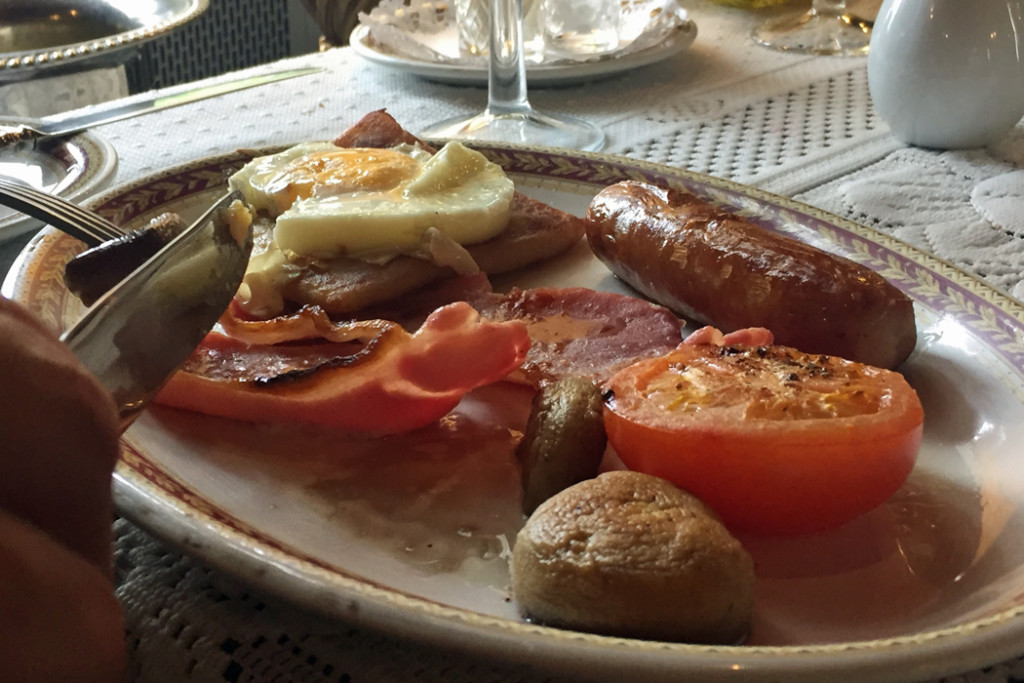
Mmmm… English breakfast food porn. This (or some variation on this plate of cardiac arrest) was my breakfast each day for 18 days:  fried egg on greasy fried bread, fried tomato, sausage, bacon, mushrooms, and often a big scoop of baked beans. (Maybe this explains the need for public defibrillators.) By the time I left England, I was ready for a lighter prima colazione in Italy — and that’s where I’m posting from next.


This is Day 89 of my 100 Days in Europe series. As I research my guidebooks and make new TV shows, I’m reporting on my experiences and lessons learned in Vienna, the Alps, the Low Countries, England, Siena, and beyond. Find more right here on my travel blog.
Ruggedly Beautiful Cornwall

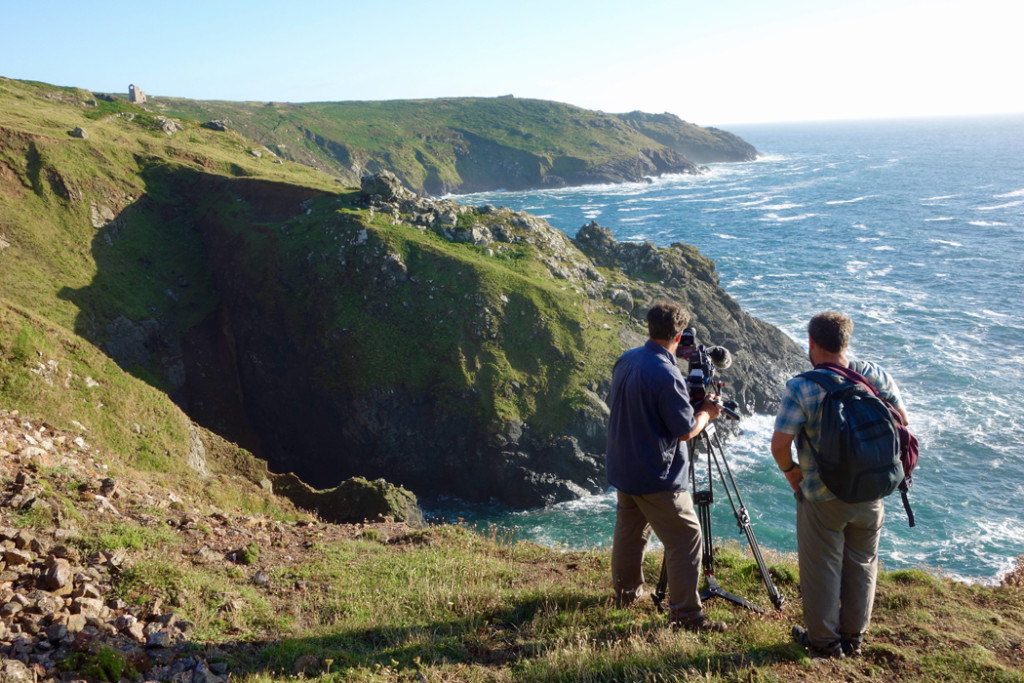
The rugged beauty of the Cornwall Coast was unforgettable. We’ve shot many shows filled with gorgeous natural images, but this show will be one of the most beautiful.

camera crew at penwith peninsula

Nearly our entire Cornwall script was dedicated to the southwest extreme of this county — the Penwith Peninsula.

beachgoers with umbrellas

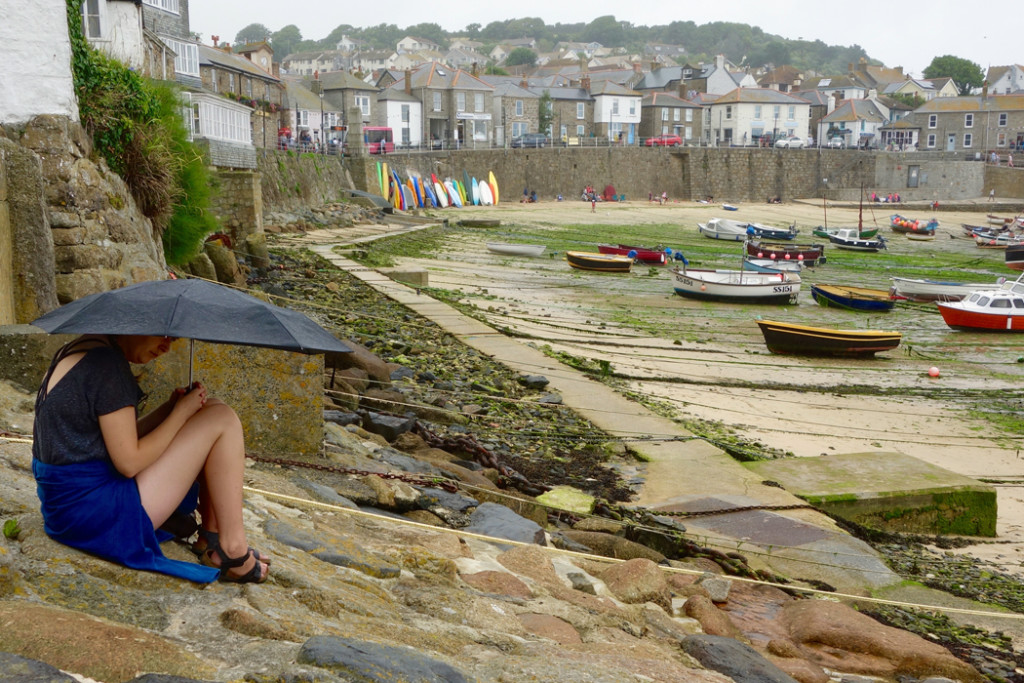
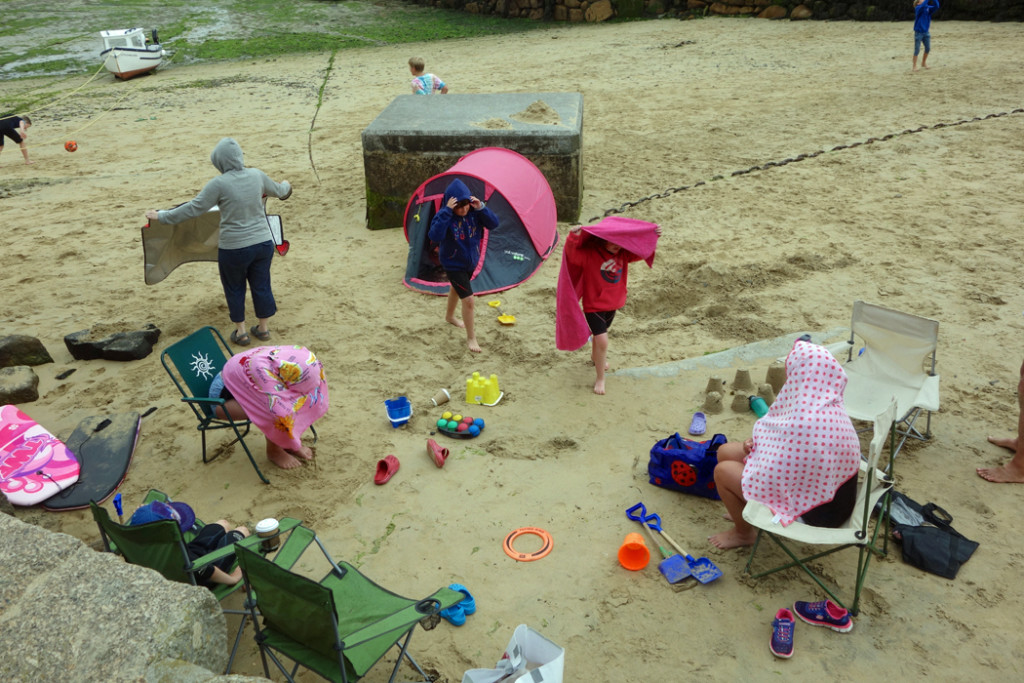
While we were blessed with generally good weather, I planned to have parts of three days in nearly every region (over the 18 days of our shoot) to be able to dance around the rain. The plan worked very well. But vacationers didn’t have that flexibility. I call British beachgoers “armadillo tourists” — their determination to enjoy the beach perseveres through almost any weather. If you wait long enough, it seems the steady wind blows away the clouds. (And then it blows away the blue sky, too.)

tourist with umbrella on beach

Armadillo tourist with umbrella gazing at Mousehole harbor.

minack theatre

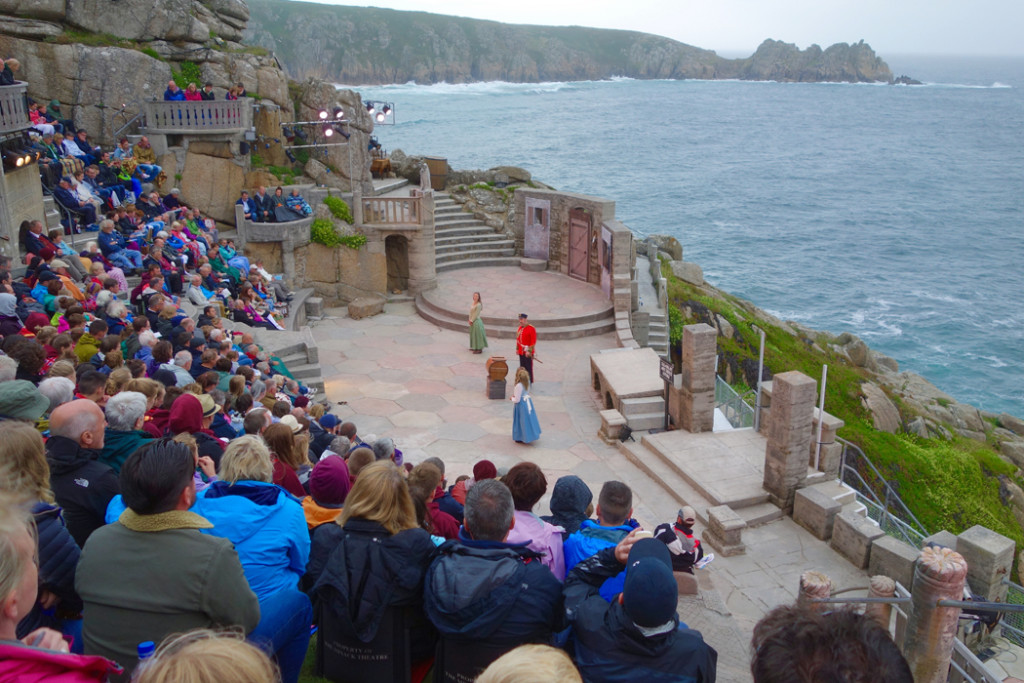
Southwest England is dotted with interesting sights — like the Minack Theatre, which is carved out of the rocks and offers every attendee a first-class view.

pub patio

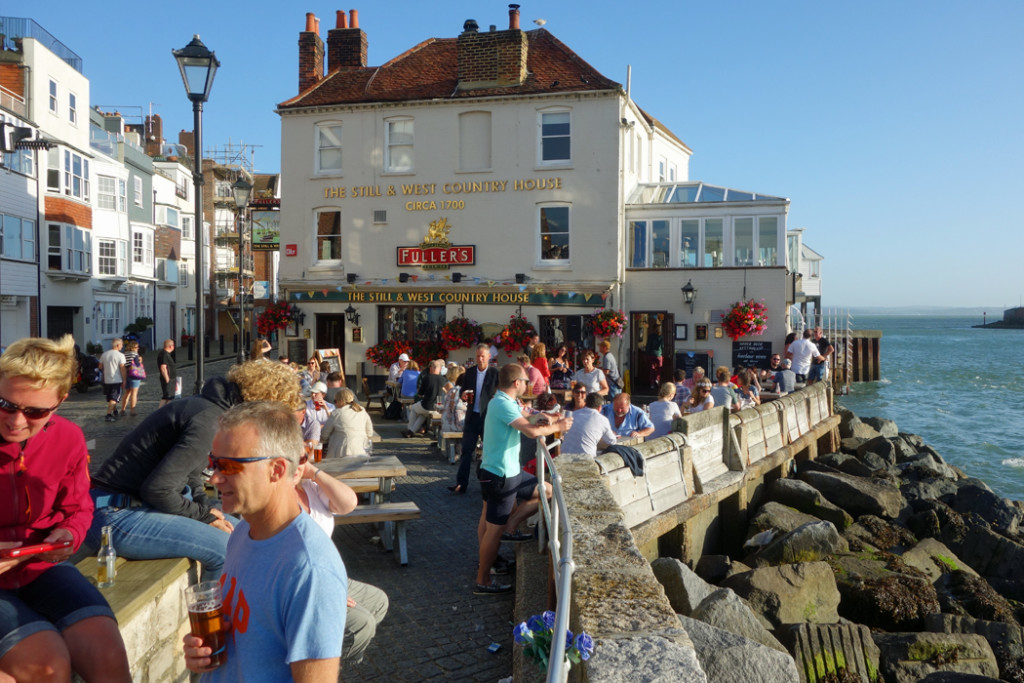
This scene — with diners and drinkers spilling out of a pub and filling its seafront terrace (which happens to be in Old Portsmouth, the major port town of southern England) — captures the vitality I felt throughout England. People seem to be working hard…and playing hard, too. Families are loving their little children. Seniors are out and about, sharing their golden years with loved ones. And the young-adult crowd is diligently keeping Britain’s brewers as profitable as ever.


This is Day 88 of my 100 Days in Europe series. As I research my guidebooks and make new TV shows, I’m reporting on my experiences and lessons learned in Vienna, the Alps, the Low Countries, England, Siena, and beyond. Find more right here on my travel blog.
Dartmoor: Lonely Stone Circles, Big Rocks, and Wild Ponies

Lonely stone circles, big rocks, and wild ponies: That’s Dartmoor. One of England’s most popular national parks, Dartmoor is one of the few truly wild places left in this densely populated country. A moor is characterized by its low and scrubby vegetation. England’s moors are vast medieval commons — rare places where all can pass, anyone can graze their sheep, and, in the case of Dartmoor, ponies run wild.

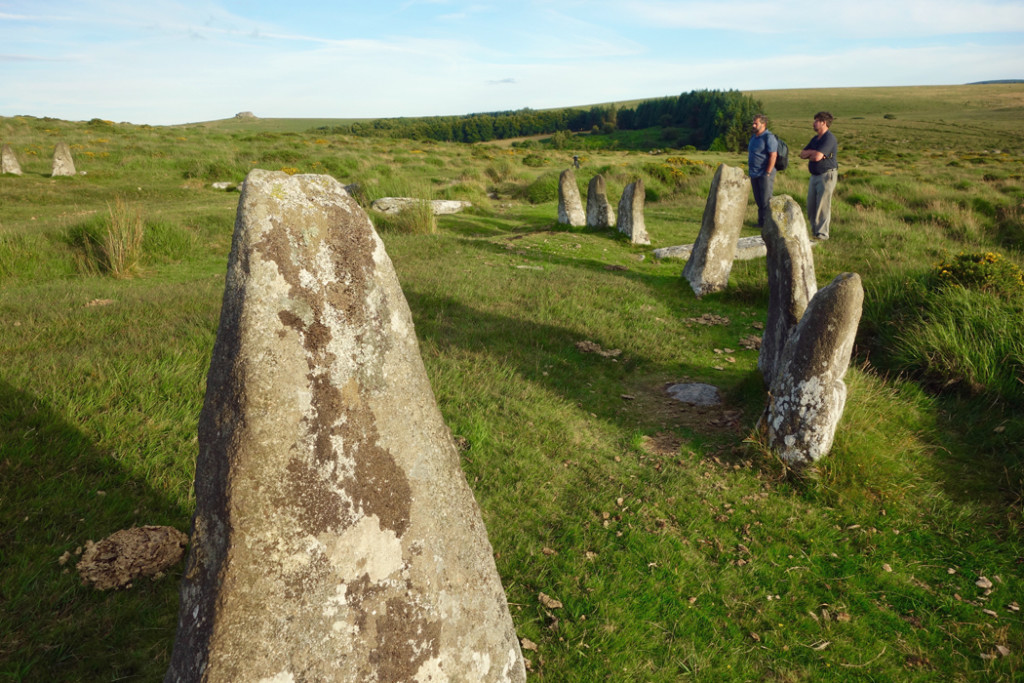
Of the hundreds of Neolithic ruins that dot the Dartmoor landscape, the Scorhill Stone Circle is my favorite. Tranquil and nearly forgotten — erected some 4,000 years ago by mysterious people for mysterious reasons — it’s yours alone… the way a stone circle should be.

scorhill stone circle

We finished our episode about the southwest of England as the sun set deep in Dartmoor. At the private stone circle, with wild ponies in my periphery and thoughts of druids dancing in my mind, I looked into the camera and said, “Ponder the 40 centuries of people who’ve made this enchanting landscape their home, and the wisdom of today’s English to protect it and keep it pristine. I hope you’ve enjoyed our swing through Cornwall and the southwest of England. I’m Rick Steves. Until next time, keep on travelin’.”

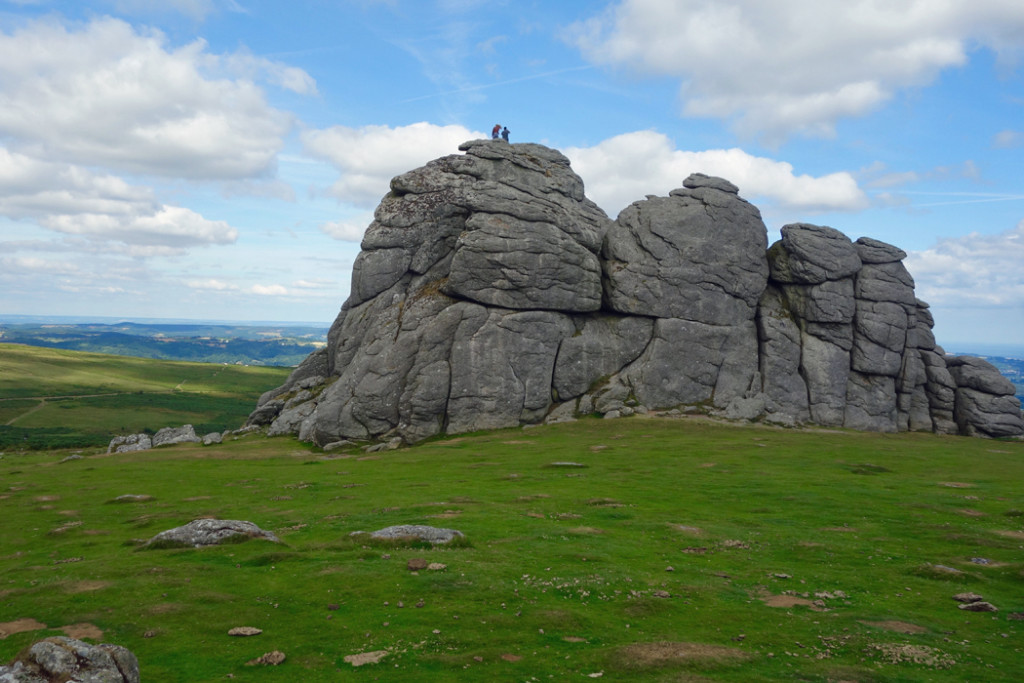
haytor dartmoor

Dartmoor sits upon a granite plateau, and occasionally bare granite “peaks” (called tors) break through the heather. Rising like lonesome watchtowers, these distinctive landmarks are the goal of popular walks. Haytor is the most famous of these rocks. Hiking to its summit offers unforgettable views and a rewarding king-of-the-mountain feeling.

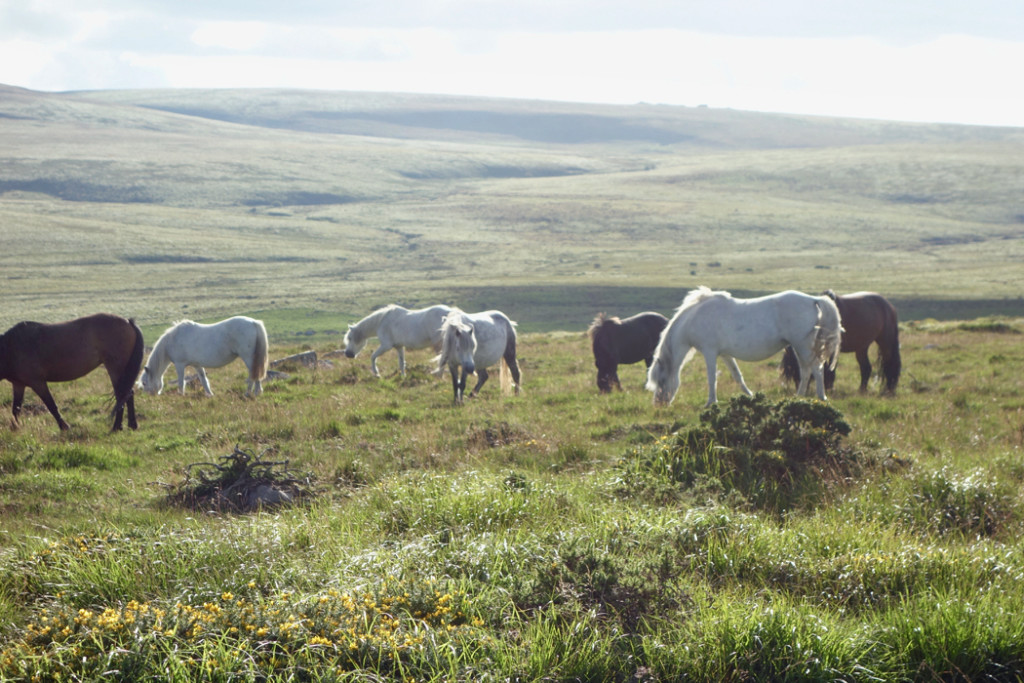
dartmoor wild horses

The iconic ponies of Dartmoor run wild. Their ancestors were the working horses of the local miners. Living in the harsh conditions of the moor, these ponies are a hearty breed, known for their stamina. Today they’re beloved among hikers for the romance they bring the otherwise stark terrain.


This is Day 87 of my 100 Days in Europe series. As I research my guidebooks and make new TV shows, I’m reporting on my experiences and lessons learned in Vienna, the Alps, the Low Countries, England, and beyond. Find more right here on my travel blog.
Mysterious England

Throughout England, the countryside hides an amazing history that goes back literally thousands of years…to prehistoric times. Glastonbury — a modest market town today — has long had a holy aura. It was a religious site back in the Bronze Age (that’s about 1500 BC). It’s also considered the birthplace of Christianity in England, and the burial site of the legendary King Arthur.

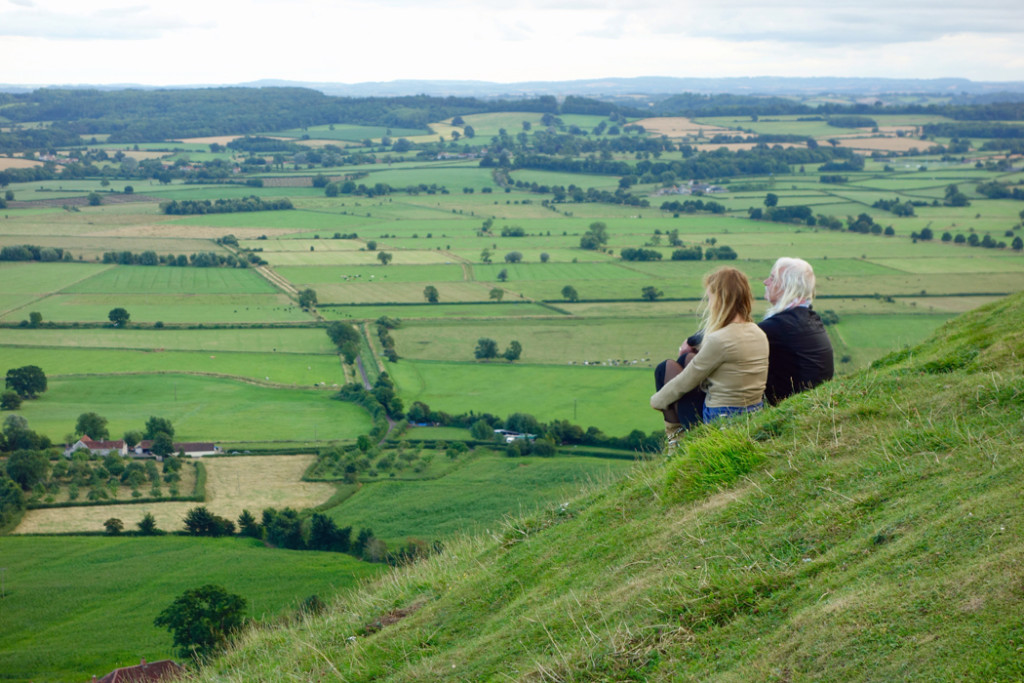
Centuries before Christ, a hill — called a tor — marked Glastonbury. Seen by many as a Mother Goddess symbol, the Glastonbury Tor has, for thousands of years, attracted a variety of travelers and seekers.

A highlight for me was to sit atop this hill, look into the camera, and explain the tor’s biblical connection: “For centuries, pilgrims have come here, to Glastonbury, on a quest for the legendary Holy Grail. You see, Joseph of Arimathea, who was an uncle of Christ, was a tin trader. And even back in biblical times, Britain was known as a rare place where tin could be mined. Considering that, Joseph could have sat right here — with the chalice that Jesus drank out of at the Last Supper in his satchel.”

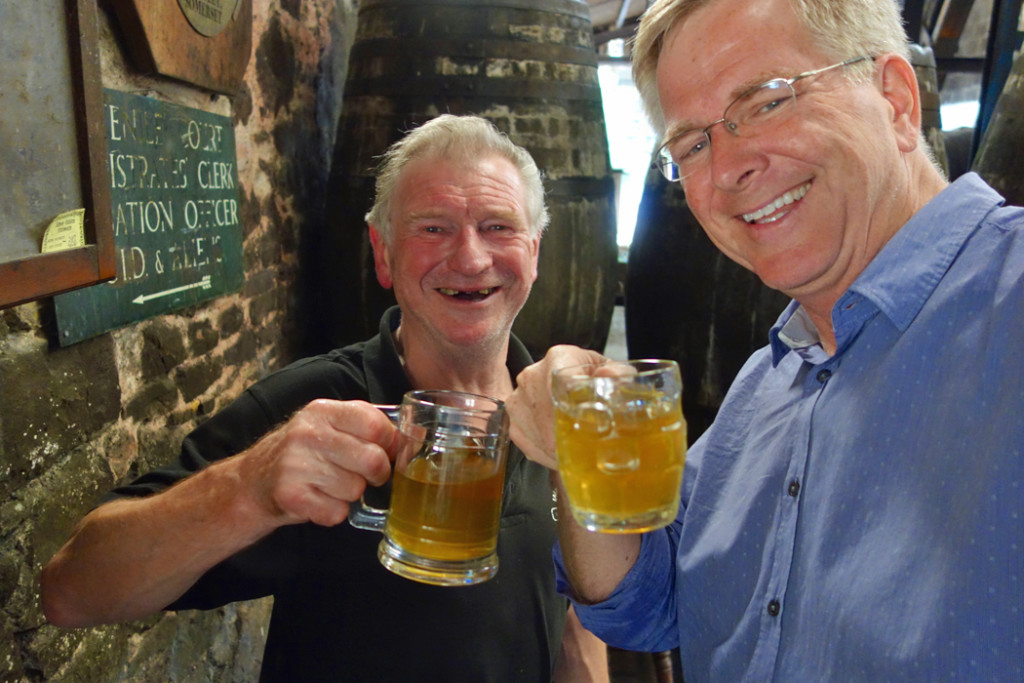
Glastonbury was just one part of a wonderful whirlwind day of filming in this corner of England. These four photos capture our day of mysteries:

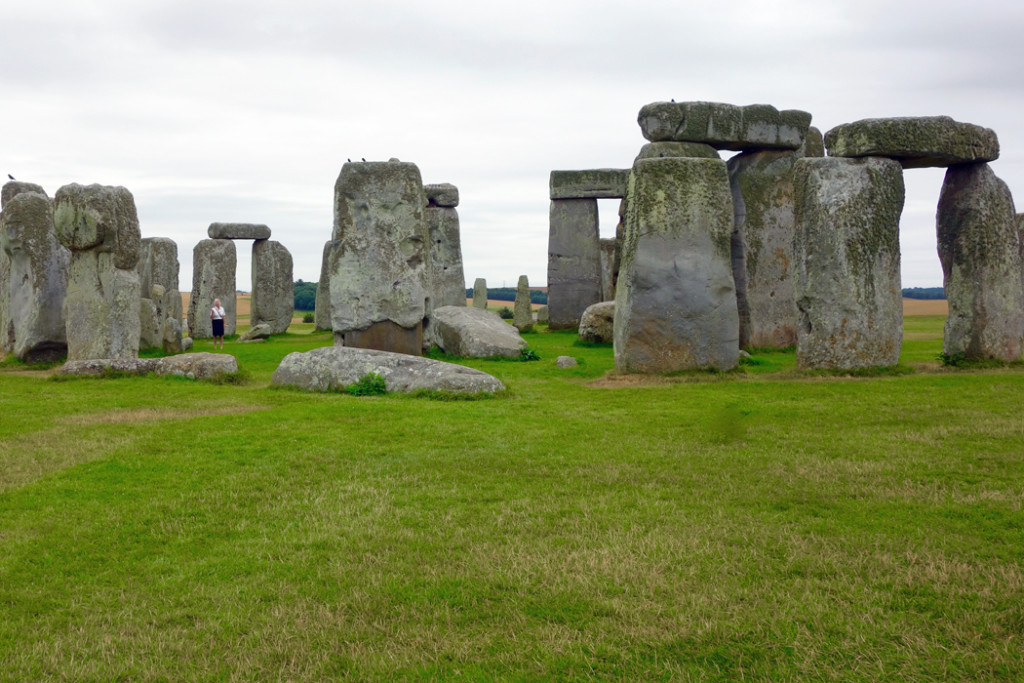
stonehenge

At Stonehenge, we kicked things off with some private time (as our filming permission required us to arrive very early). We were all alone in the stone circle before the masses hit.

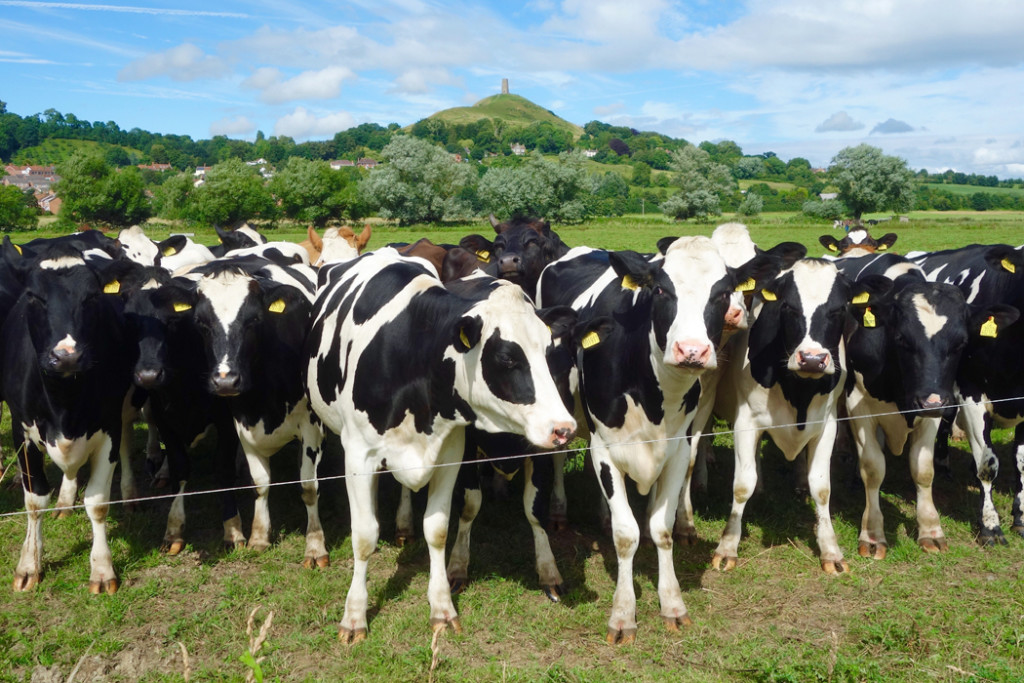
Cows

As we were filming the Glastonbury Tor from a distance, all of the cows in the fields photobombed us.

Glastonbury Tor

Climbing the tor, we found a community of people expert at finding their god within.

Rick Steves and Roger Wilkins

And we capped our day visiting a hard apple cider farm run by my old drinking buddy, Roger Wilkins.


This is Day 86 of my 100 Days in Europe series. As I research my guidebooks and make new TV shows, I’m reporting on my experiences and lessons learned in Vienna, the Alps, the Low Countries, England, and beyond. Find more right here on my travel blog.