My Best of Europe in 21 Days tour has left Austria and crossed through the Alps to Italy. Our first stop: Venice. During some of my free time, I’m taking the opportunity to spruce up my guidebooks. And organizing our travel information on Venice is one of my favorite challenges. Even after a lifetime of visits, this magical city of canals remains one of the great thrills of European travel.
It often seems that the city of Venice has abandoned itself to tourism. The resident population is shrinking, and those remaining have turned old buildings into various kinds of hotels — some slick and modern… others old and funky. A big part of my work is finding good-value hotels to recommend in my guidebooks. Here, from the top of a friendly little B&B, I can imagine calling this room home, stepping out onto my balcony, and enjoying the view of the back lanes and canals of this great city.Each year, as Venice sinks and the sea rises, floods are more common. The lowest part of the city — St. Mark’s Square — floods first. And tonight, it became a delightful reflecting pond.You know you’re eating in a characteristic place that’s a good value when you share a rustic table with gondoliers in their striped shirts. This is exactly the kind of eatery I seek out for my guidebooks.
Where we travel and how we travel shapes our travel experience — obviously. And who we travel with does, too. I’ve been traveling quite a bit lately with a remarkable woman, Trish Feaster. We’re different types of travelers — and I’ve been struck by how those differences broaden and enrich my travel experience.
Trish is a linguist, while I am a confirmed monoglot. Her love of language has given my recent travels a new dimension. She’s a foodie, while I’m an “intermediate eater.” Her ability to get the same joy out of a menu that I get out of an art gallery has broadened my cultural experience (and even — a little bit — my waistline). And her emphatic joie de vivre tempers my workaholism in a way that — ironically — makes me especially productive as a travel writer. I find that now I experience, and write about, things that I wouldn’t have made time for if I were on my own.
Trish is an avid photographer as well as an inspiring writer. Her blog, The Travelphile, provides a showcase for her work. (It also gives a more candid look at my non-European travels than you’ll get on my own blog, as we enjoy lots of travel fun that has nothing to do with Europe.) I think her insightful blog entries complement my own, and she deserves more readers. To give you a taste of Trish’s writing, she’ll be occasionally guest-blogging here in the coming weeks. I hope you’ll enjoy her take on traveling; if you do, please follow her blog. Thanks.
A Place That’s All Your Own
One of the most annoying things about travel/tourism is that if you’re going to someplace that’s popular, everyone else is too. That means crowds, lines that seem to have no end, pushing and shoving, and odors that you didn’t think were humanly possible. With all of that mass of humanity, patience and a good sense of humor seem to melt away quicker than ice under a scorching sun.
Although most people would prefer to travel in low or shoulder season to avoid crowds (and elevated prices), for many, that’s simply not possible. One way to get around that scene is to not be in it. Find a better way to enjoy your travels by being in a place when there are few people and make it a place that’s all your own — even at the busiest time of the travel season.
This summer, because I’ve been working as an assistant guide, I have been, by necessity, out and about when everyone else is. While being on a tour has its privileges (such as guided tours with incredibly talented and smart local guides or entrances to sites/activities without waiting in line), it’s still next to impossible to avoid the fact that everyone and their mother is at the same place you are everywhere you go.
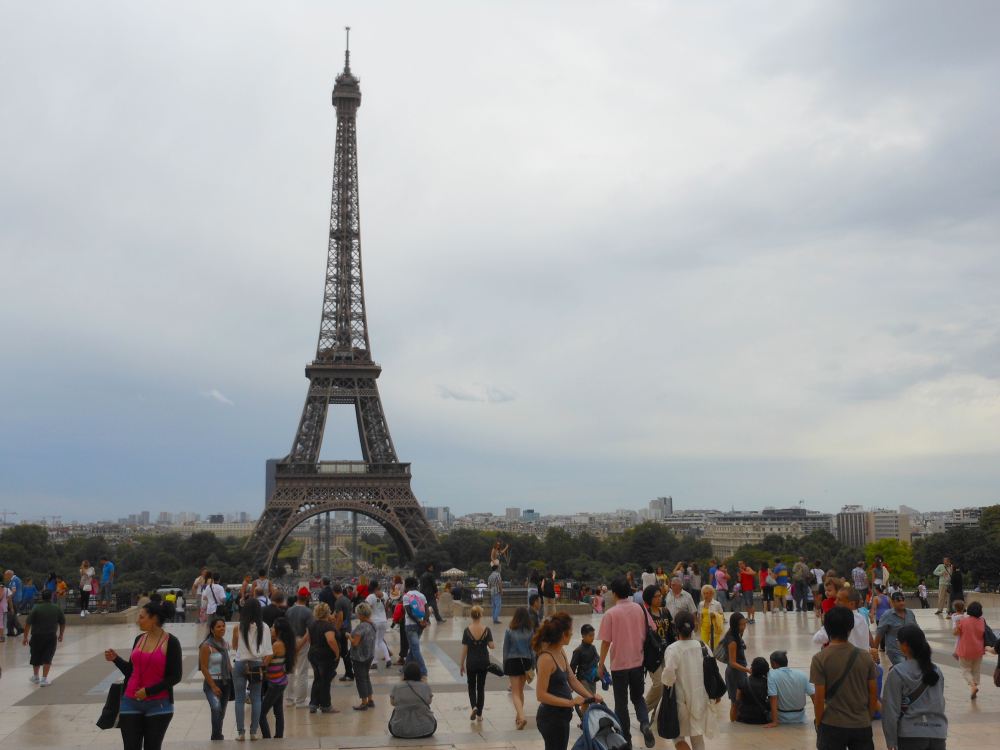
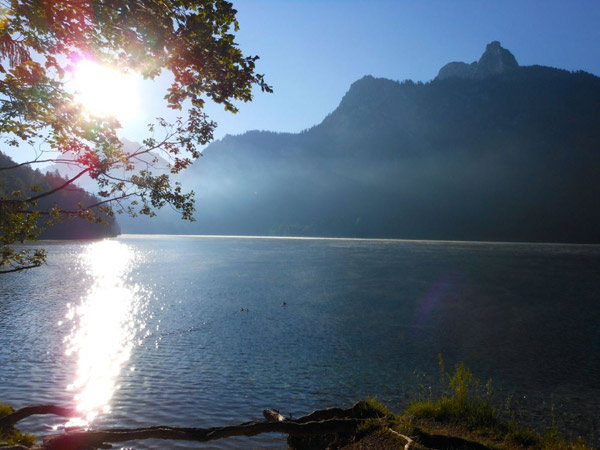
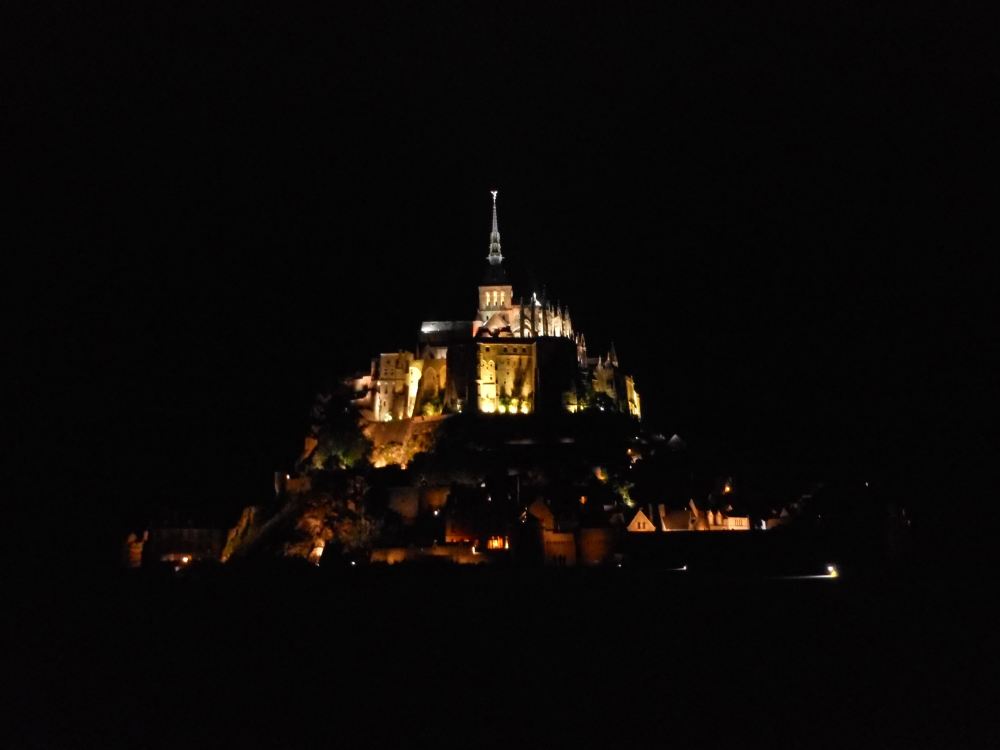
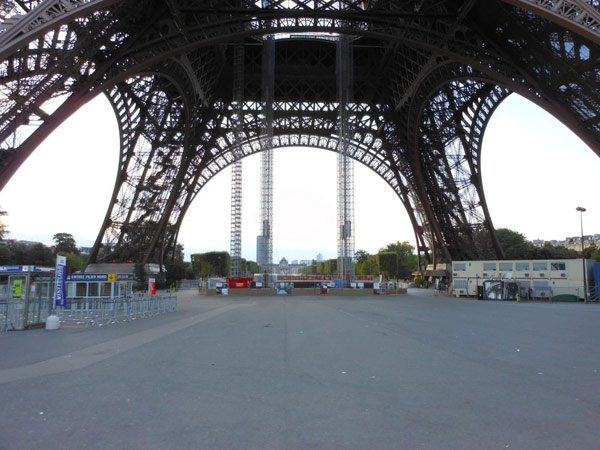
To have a more peaceful and intimate experience, I made a conscious effort to enjoy the places we visited either really early in the morning or really late at night. Now obviously I wasn’t getting into museums with an Early Admission Ticket like at Disneyland (Whoa, there’s a idea! Museums, get on that!), and I certainly didn’t do this every day. But, I did get to see places in ways that most travelers — or even locals for that matter — don’t. It takes effort and sometimes a little bit of planning (going to bed early so you can be up at 6 a.m., resting in the afternoon so you can be up until 1 a.m.), but it’s so worth it to watch the sunrise over a glassy lake, to be one of twelve people standing on the Mont Saint Michel causeway at midnight listening to the waves kiss the shores of the sandy bay, to dance like no one is watching in front of the Eiffel Tower, to smell the fresh cut hay just two miles away from the nearest castle, or to be the first person of the day to stroll through the main street of a town that is just on the verge of waking up. Even if you do it just to get a pristine photo without others blocking your view, you can have a really magical moment if you can find a way to enjoy a place all on your own.
Here are just some of the places where I took advantage of being out and about when the the crowds were getting their beauty sleep.
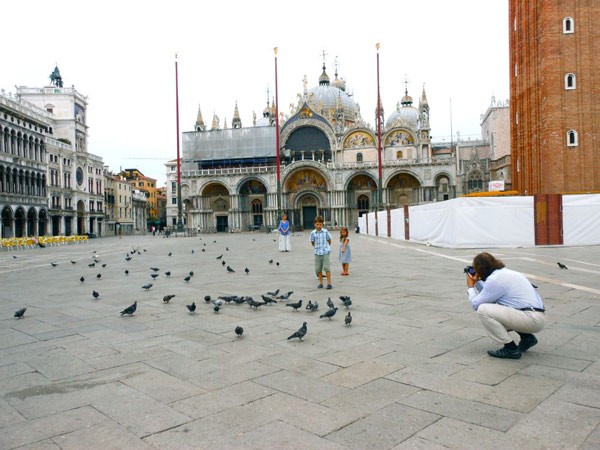
At 5:30 in the evening, what once was a empty square is peppered with a few too many people.
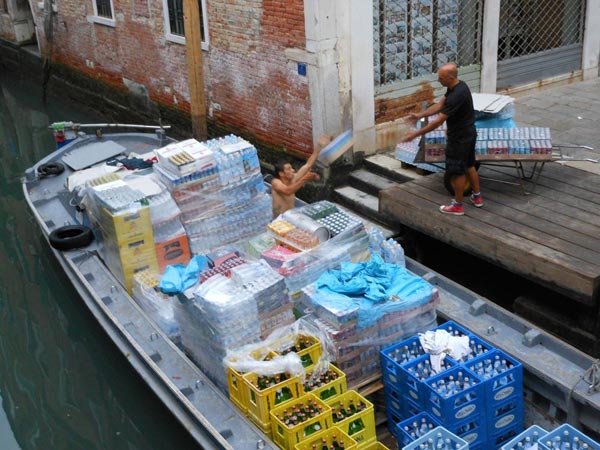
Early in the morning, boats haul their goods to merchants of Venice.
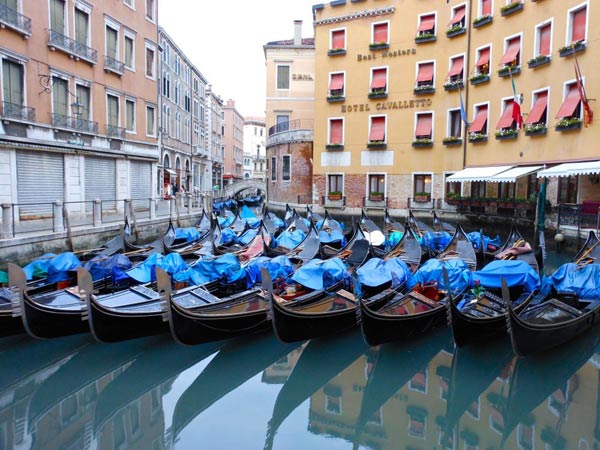
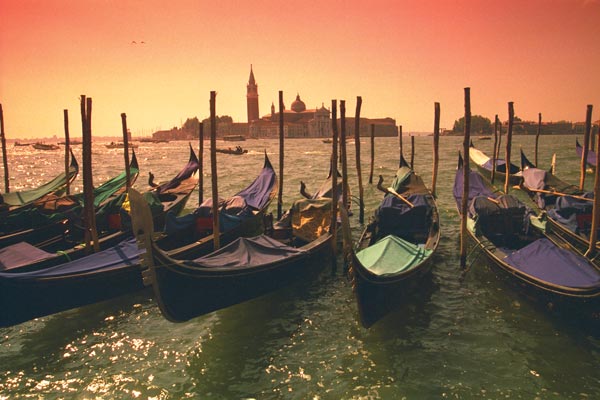
Gondolas nestle together in the cove of a canal in the early morning hours before the tourists arrive en masse.
This family and I had the same idea: get up early and have Venice all to yourself.
The peace and tranquility of Venice are best enjoyed early at morning or late in the evening.
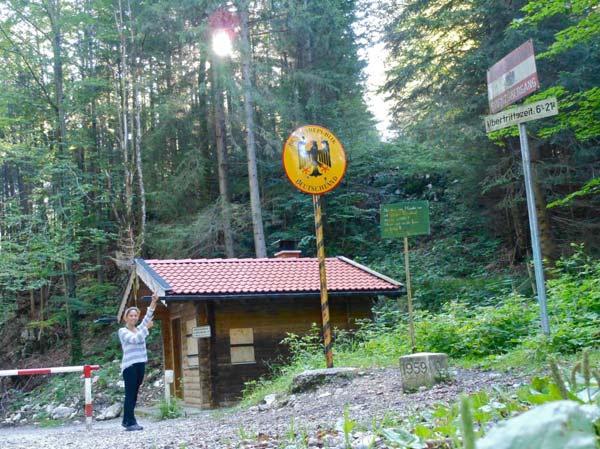
On this morning, I ran from Austria to Germany and was treated to a calming moment on a lake before joining the crowds later that day at Neuschwanstein Castle.
Even the Austria/Germany border guard wasn’t up and about at this early in the morning.
Le Mont-Saint-Michel has stood majestically as a beacon to pilgrims for centuries, and at night it is at its most striking and its most tranquil.
It’s hard to imagine that in only an hour from when I took this shot, this place was full of people standing practically shoulder-to-shoulder.
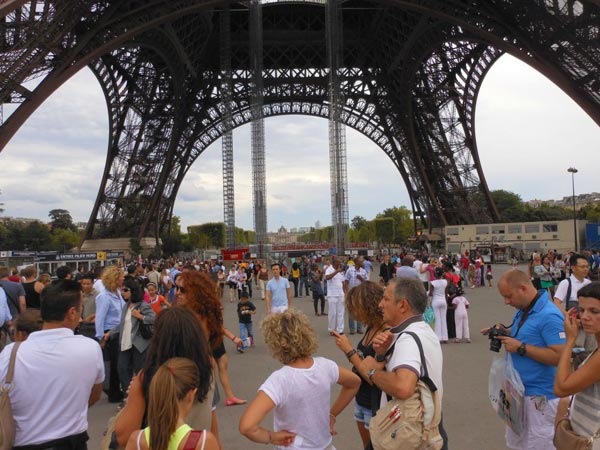
People were waiting for two hours just to buy their tickets so they could stand in line again to take the elevator up the Eiffel Tower.
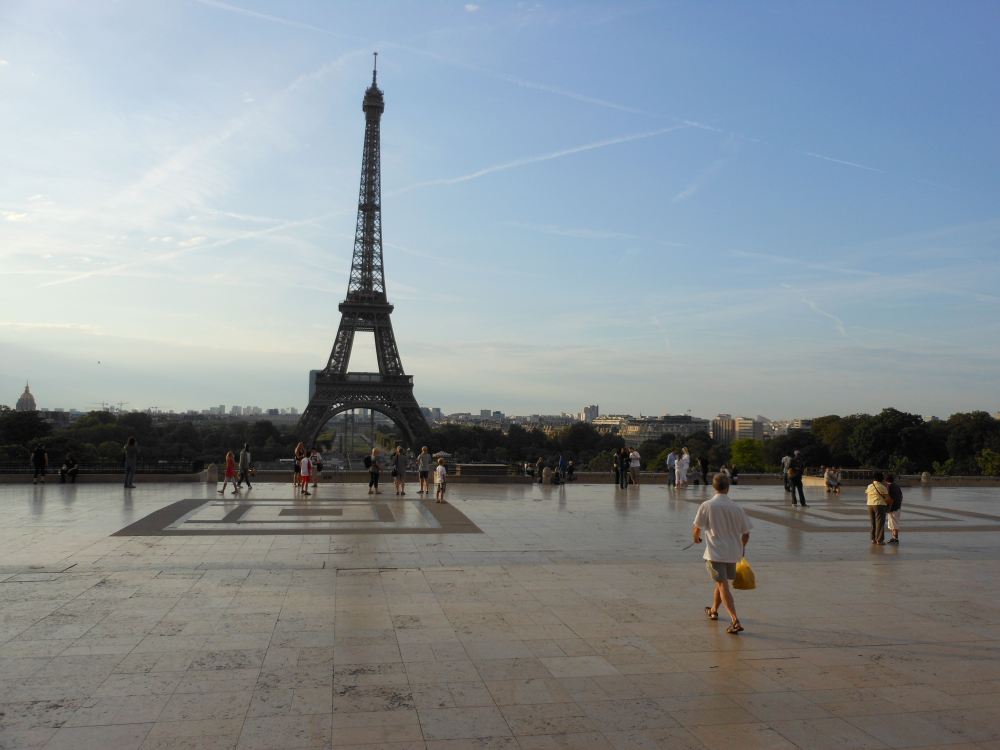
Early in the morning, you can get a nearly unobstructed view of the Eiffel Tower.
If you’re involved in European tourism and are close to a big body of water, cruising is part of your livelihood. Cruising — on the Mediterranean, in the North and Baltic Seas, and on rivers — is huge. And so are the ships, which becomes clear if you’re standing on Piazza San Marco in Venice. The towering broadside of a 14-story-tall cruise ship — with hundreds of its 3,000 passengers gathered on its top deck to enjoy one last look at the Doge’s Palace — is a spectacle in itself. If you’re not expecting it, this scene can seem like a clip from a disaster movie. Venice is one of the three or four main ports of embarkation for the entire Mediterranean, so there’s a very good chance you’ll start or end your cruise here. The scene in this video — which happens several times most evenings — is one you wouldn’t have seen a few years ago.
If you can’t see the video below, watch it on YouTube.
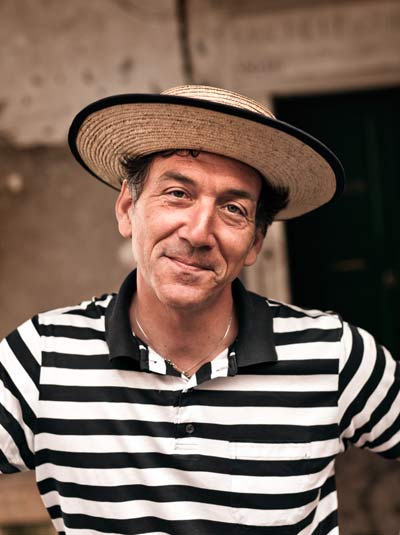
During the past dozen years, our friend Dominic Arizona Bonuccelli (no relation to the suave gondolier in this picture) has traveled all around Europe, taking amazing pictures for us. On three of these trips, he’s been lucky to cross paths with Europe’s most treasured city: Venice. Sit back and enjoy the beauty, the mystery, and the seductive powers of the city they call la Serenissima…
Dominic Bonuccelli photo
If there is an iconic image of Venice, this is it. You want to be standing on this dock, breathing in the morning air, listening to the softly rocking, splashing sounds of these boats. (Dominic Bonuccelli photo)
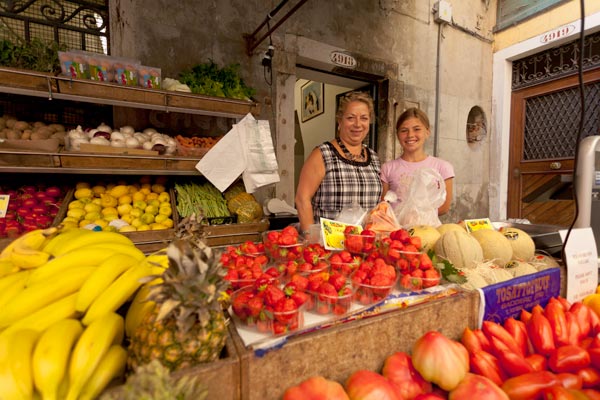
Smile, point and buy from real people. Rub elbows with the real Venice early in the morning. Get up and go picnic-wrangling at the Rialto market. (Dominic Bonuccelli photo)
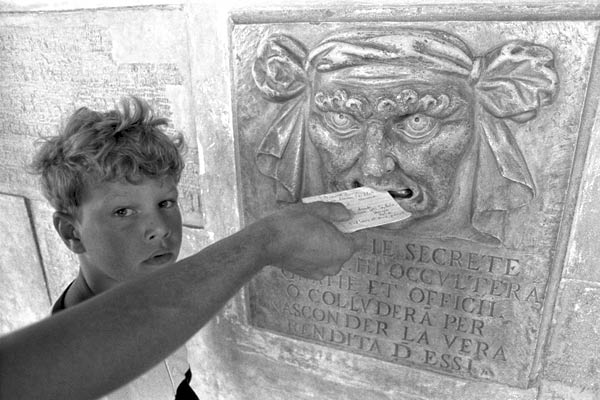
There's a reason he's nervous. This sinister-looking "mail slot" is where upstanding Venetians could slip an unsigned note, informing the authorities of their neighbors' misdeeds. (Dominic Bonuccelli photo)
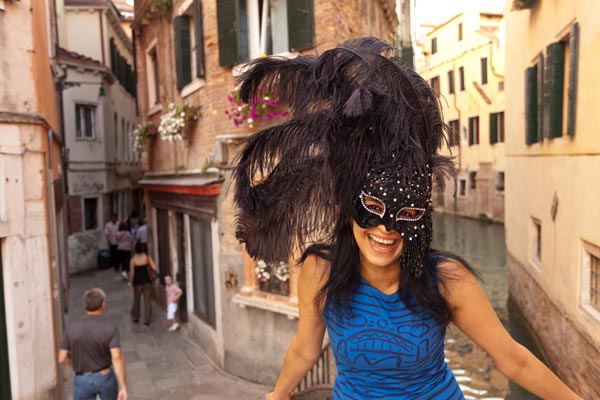
Headdress for success. In centuries past, masks made the pre-Lent Carnevale a little more naughty here. All Venetians became temporarily anonymous, and equal. (Dominic Bonuccelli photo)
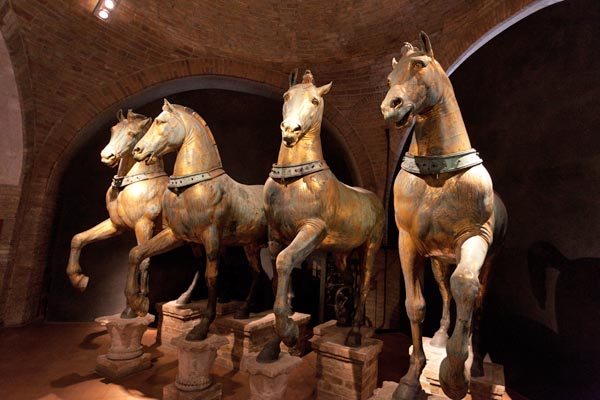
Well-traveled, bronze and beautiful. Cast in bronze more than 2,000 years ago, these life-size horses were hauled away from Constantinople by Venetians during the crusades, then whisked off to Paris by Napoleon, returning to St. Mark's in 1815.(Dominic Bonuccelli photo)
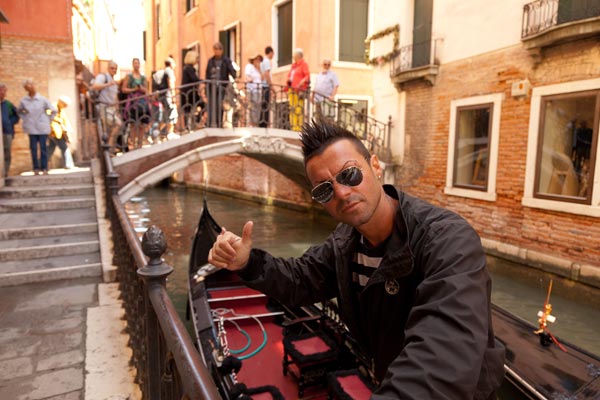
Casanova lived here. It explains a lot. The gondoliers of Venice understand romance from experience...each in his own unique way. Dominic Bonuccelli photo)
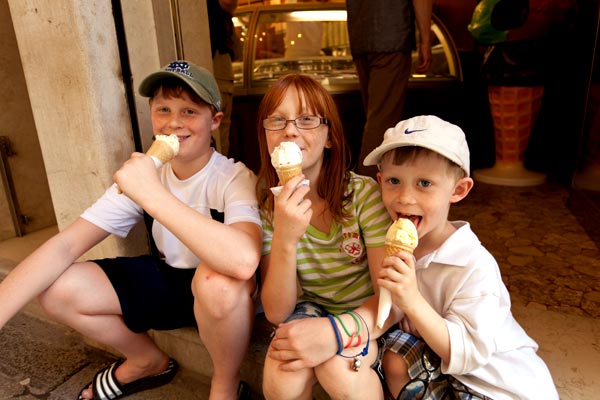
Get plenty of vitamin G. Venice is best explored with long, meandering walks, and nothing refuels the body and spirit like cones of gelato.(Dominic Bonuccelli photo)
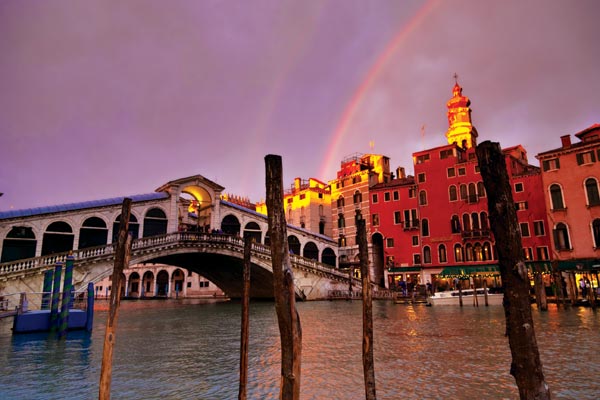
So it's pouring outside. Who cares? A rainbow over the Rialto is enough to make anyone forget about a few layers of damp clothes. (Dominic Bonuccelli photo)
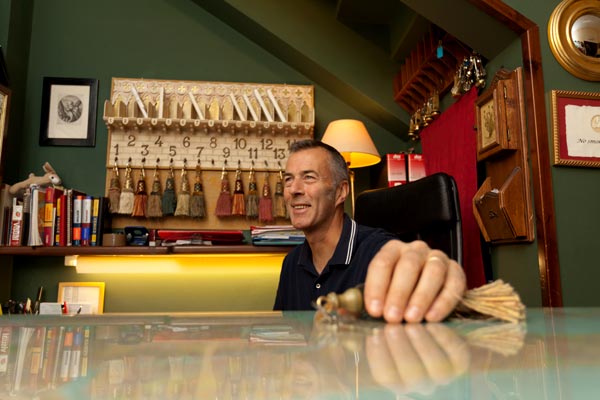
One big hand deserves another. The Pensione Guerrato's hard-working duo of Roberto (above) and Piero (out on his boat) have welcomed Rick Steves' readers and tour members to Venice for nearly 20 years. (Dominic Bonuccelli photo)
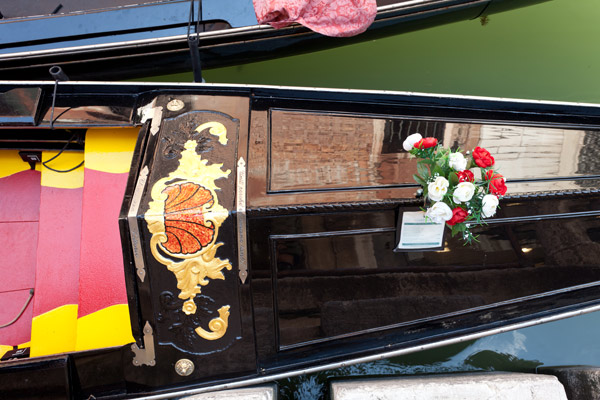
Built in Venice with pride. Six coats of lacquer give gondolas a glasslike finish, reflecting well on the city. (Dominic Bonuccelli photo)
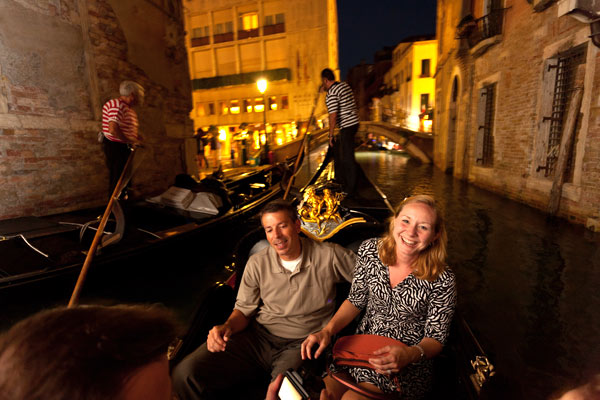
Some enchanted evening. An evening gondola glide through the canals is a must-do in Venice. It just about defines romantic, and you see details of the city that mere pedestrians miss. (Dominic Bonuccelli photo)
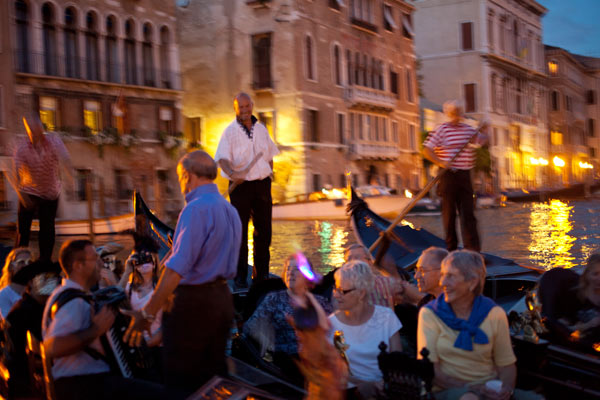
Then the moon hits your eye like a big pizza pie. Gondoliers gather their boats around another equipped with a singer. That's amore. (Dominic Bonuccelli photo)
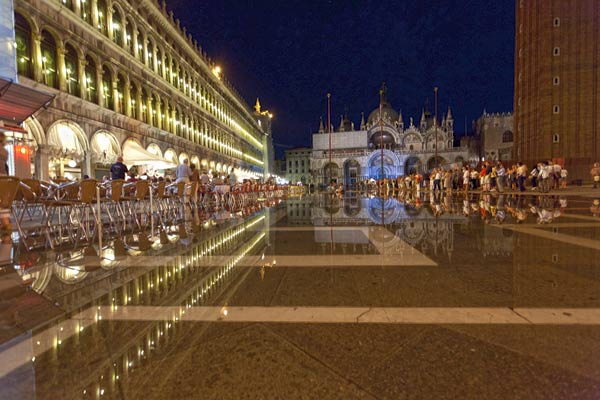
So it's flooding. Who cares? The arrival of aqua alta (high water) steadily nudges the audience away from the orchestra, and creates an array of reflections on St. Mark's Square. (Dominic Bonuccelli photo)
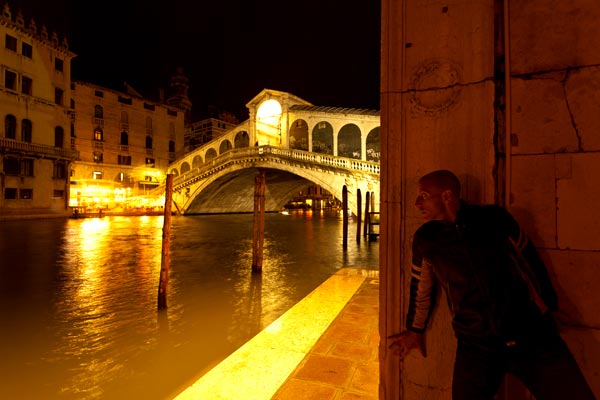
Midnight mischief. Our photographer tries to sneak a peek at the Rialto, and is captured by his own camera. Somebody must have slipped a note... (Dominic Bonuccelli photo)
Wrapping up my spring trip, I found a few stay observations and lessons gleaned from my time in Spain and Italy. When I’m researching my guidebooks, I pick up lots of fun bits, but they don’t all make it into the books. As I never know what will find a niche in a book until I work over the chapter, I tuck every thought that flutters by into my satchel. Here are a few fun fragments from the cutting-room floor:
Chatting with the owner of a thriving new eatery in Madrid, I commented on the speed at which the restaurant scene can change here. He noted, “Before the Internet, it took five years for a restaurant to get off the ground. Now, you can kick-start it with an Internet promotion, and it’ll be full in a month.”
Discussing the difficult aftermath of the Spanish dictator Franco and marveling at how everyone wasn’t against his fascist policies when it came to personal liberties, I asked my friend, “Who wouldn’t want freedom when Spain was evolving from fascism to democracy in the late 1970s?” The answer was brilliantly simple: “Only those who didn’t want others to have freedom.”
Flying from Madrid to Barcelona on Iberia Air, for the first time in my life, I was really mad at an airline. They had configured the seats so tight that I literally couldn’t fit my knees into my space. The experience reminded me of an evening I once spent alone with a wrench on a tour bus. I was meeting a tour group the next morning, and the bus I hired came with too many seats jammed into it. The seats slide on runners tightened into place by bolts. I spent several hours loosening each seat, taking out two sets, and rearranging the positions of the remaining seats. We did that tour with half our storage area under the bus filled with bus seats — but plenty of legroom for all on board.
Stepping off that too-tight Iberia plane in Barcelona, I realized I hadn’t even considered taking the Madrid-Barcelona train, which is now a nonstop bullet connection of less than three hours. In this case, the train would have saved me time, if not money, and given me plenty of stretch-out room…not to mention a delightful look at the countryside.
Even if I'm "full as an egg," there's always room for peppers in a Spanish tapas bar.
A good indication that a bar is a colorful local hangout is that it has the local football (soccer) team poster on the wall — a way for the staff to let customers know who they root for.
In towns with lots of foreign-study programs, you can see American teenagers poaching Internet signals on the sidewalk in front of American chains like Starbucks, KFC, and McDonalds. (These are more likely than European chains to offer free Wi-Fi for customers.) Students, who collect and share passwords and tips, are expert Wi-Fi poachers.
Riding out to the airport in Barcelona, my cabbie was pulled over and fined €50 on the spot for being slow to stop for an ambulance siren. He explained that, with the economic crisis, cops are coming down hard and fast on drivers in Spain.
I enjoy picking up little bits of folk wisdom in my travels. A local guide in Barcelona marveled at the low caliber of leadership in his country, saying, “En el país de los ciegos, el tuerto es el rey.” (In the land of the blind, the one-eyed man is king.) Talking about pain-pleasure ratios between cultures, another friend said, “He who gets up early is helped by God.” His wife countered, “No, getting up early doesn’t speed up the sun.” Later, in Italy, when a restaurateur wanted to give me more and more food, I said I was stuffed. He told me that in Italy, you say, “Sono pieno come un uovo” (I’m full like an egg).
After one of my researchers commented on how people were not that friendly in the Cinque Terre, I asked some locals about it. They talked about their experience in restaurants, saying, “Friendly is not the currency here. Waiters don’t want to know your name. They’re working hard. They’re grumpy to all. I just want them to get my food right.” The humor here is flavored with sarcasm, which can come off mean-spirited.
One year later, the cover of my Venice guidebook is still accurate — but there are plenty of changes inside.
I enjoyed more time than ever in Venice. And it occurred to me that you could pause anywhere in Venice, observe, and, from that single viewpoint, write an article. Leaning against a church’s leaning bell tower as a flock of birds flew just in front of my face, I jotted down a few notes: A group of Russians wandered by — rich men with their platinum-blonde trophies. They were silent but hooked up to their guide with ear buds and a “whisper system.” The crowd in the restaurant looked intentionally disinterested in the music as a roving Romanian accordionist pumped away while sussing out the potential of getting any tips. A solitary local waved his hands while pacing back and forth across a bridge and talking on his cell phone. Next to me, litter was growing out the top of a garbage can like a bum with a bushy head of hair.
As far as I can tell, there are no porn stars on Venetian gondolas. In fact, there are not even lovers on gondolas. Everyone is too busy reading their iPhones or looking into their cameras. Desperate to get someone kissing on a gondola for our TV show, I walked briskly along a canal to get ahead of what I thought was a potentially romantic couple. I got their attention, and motioned to our cameraman and did a charade of kissing as if to clearly ask them to give each other a little kiss as they approached. The man, pointing to the woman next to him, mouthed with silent yet exaggerated motions, “She’s my daughter.”

![Each year, as Venice sinks and the sea rises, floods are more common. [Flooded St Mark moors]The lowest part of the city — St. Mark's Square — floods first. And tonight, it became a delightful reflecting pond.](https://blog.ricksteves.com/wp-content/uploads/2014/05/flooded-st-marks-basilica-venice.jpg)