Hospital of the Innocents: The First Renaissance Building in Florence

I just wrapped up a research trip through Rome and Venice — and now I’m in Florence, working on my Rick Steves Florence & Tuscany guidebook. And just like in Rome and Venice, the tourists here are crammed into the two or three most famous sights, leaving other museums and galleries — which would be big hits in a lesser city — essentially empty.  

Today, I visited the Hospital of the Innocents, where a museum tells the story of the abandoned children who, beginning in 1445, were cared for here. This beautiful building, filled with amazing art, was almost empty — I was only sharing it with a group of adorable second graders, attentively learning about the traditional Italian practice of wrapping babies in swaddling cloths. Drop in with me now for a quick video visit. 

Here’s how the museum will appear in the next edition of the Rick Steves Florence & Tuscany guidebook:

Museum of the Innocents, facing the Piazza S.S. Annunziata 13, fills a former hospital that was famously located behind the first Renaissance façade to grace Florence. For over five centuries, since the first baby was abandoned here in 1445, this “institute of the innocents” has cared for unwanted babies. Today, a fine and earnestly explained exhibit tells the story, in English, of these nursed and swaddled infants with artifacts (such as a huge chest of drawers, each holding half a piece of jewelry that was possessed by a child, used to help identify split families) and fine art, including several iconic glazed terra-cotta medallions by the della Robbia family (€10, tel. 055-203-7308, daily 10:00-19:00). 
Teaching in Europe

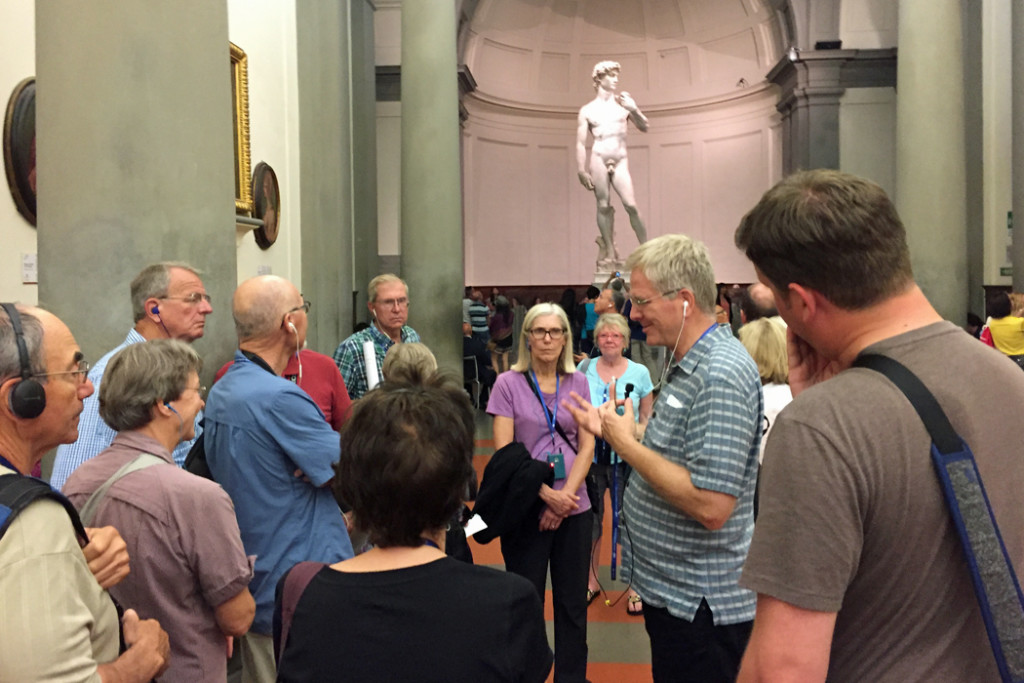
Rick Steves and tour group in front of David sculpture

Photo: thetravelphile.com / facebook.com/thetravelphile

I enjoy many aspects of my work. But perhaps the most gratifying is to stand before a great piece of art and explain it in a way that helps travelers fully appreciate it. And that’s what I got to do in Florence, in the inspirational presence of Michelangelo’s David, as I guided our Best of Europe in 21 Days tour.

(If you can’t physically be with me or one of our guides at David’s beautiful feet, you can still have my voice in your ear. Just download the free Rick Steves Audio Europe app and search for the “Accademia & Michelangelo’s David” audio tour.)

A Tight and Happy Group

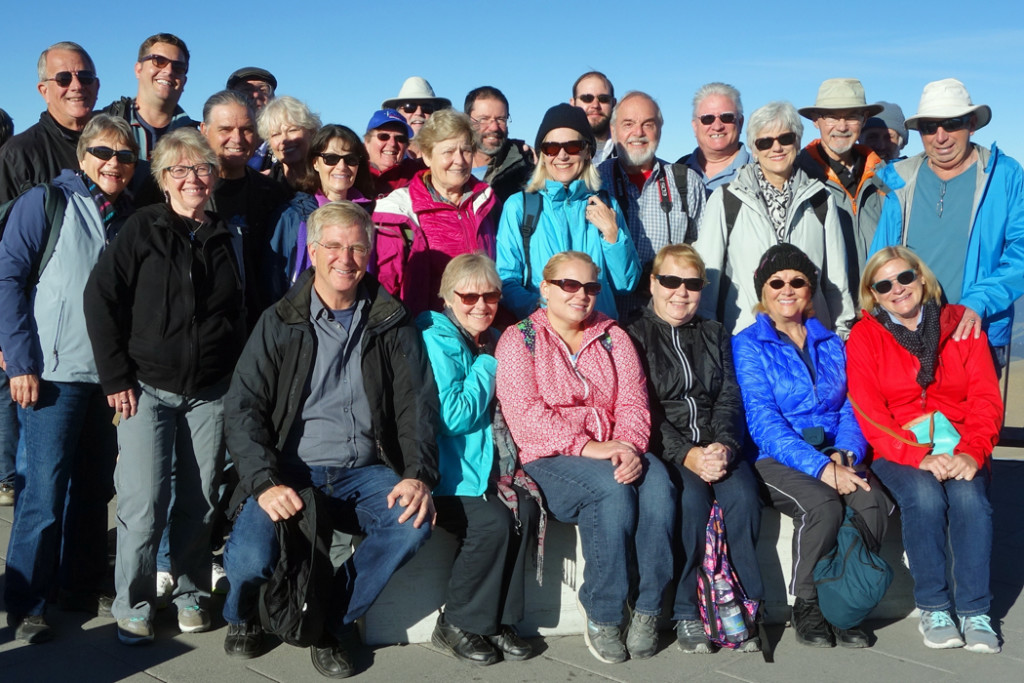
One of the great things about taking a tour is the people you get to travel with (assuming you join a tour that markets itself in a way that attracts enjoyable travel partners). With our “no grumps” policy, our “carry-your-own bags” policy, and our unapologetically “characteristic” hotels, we do our best to scare away the high-maintenance travelers. I love looking at the happy faces of a group like the one I was fortunate enough to guide — especially after two weeks together.

tour group

Here’s the group, giddy to be with each other (or maybe it was just the thin air — at 10,000 feet above sea level, high atop the Schilthorn in Switzerland’s Berner Oberland).

Rick Steves with group in elevator

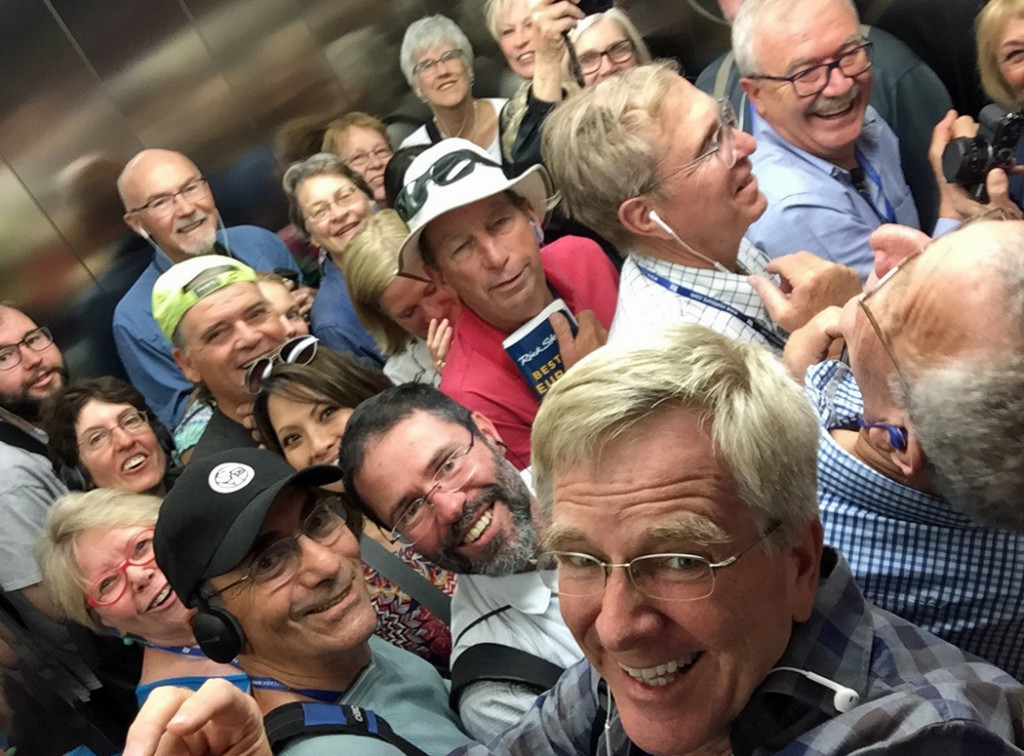
While touring the newly renovated and wonderful Museo del Duomo in Florence, we stayed until the very last minute. The museum guards, eager to call it a day, made sure we all packed onto the huge elevator at closing time and headed for the exit. Ciao!

Rick Steves on crowded bus

Photo: thetravelphile.com / facebook.com/thetravelphile

Part of the fun of leading a group through Europe is introducing them to public transportation — whether subway or bus. In Rome, our bus #280 from St. Peter’s Square to Trastevere for dinner was running late, meaning that when it finally arrived, it was jam-packed. With 28 of us on board, let’s just say it was a very local experience. Our “whisper system” headsets allowed our local guide to be in communication with each tour member…no matter whose armpit they were staring into.

Rick Steves and group on traghetto

Photo: thetravelphile.com / facebook.com/thetravelphile

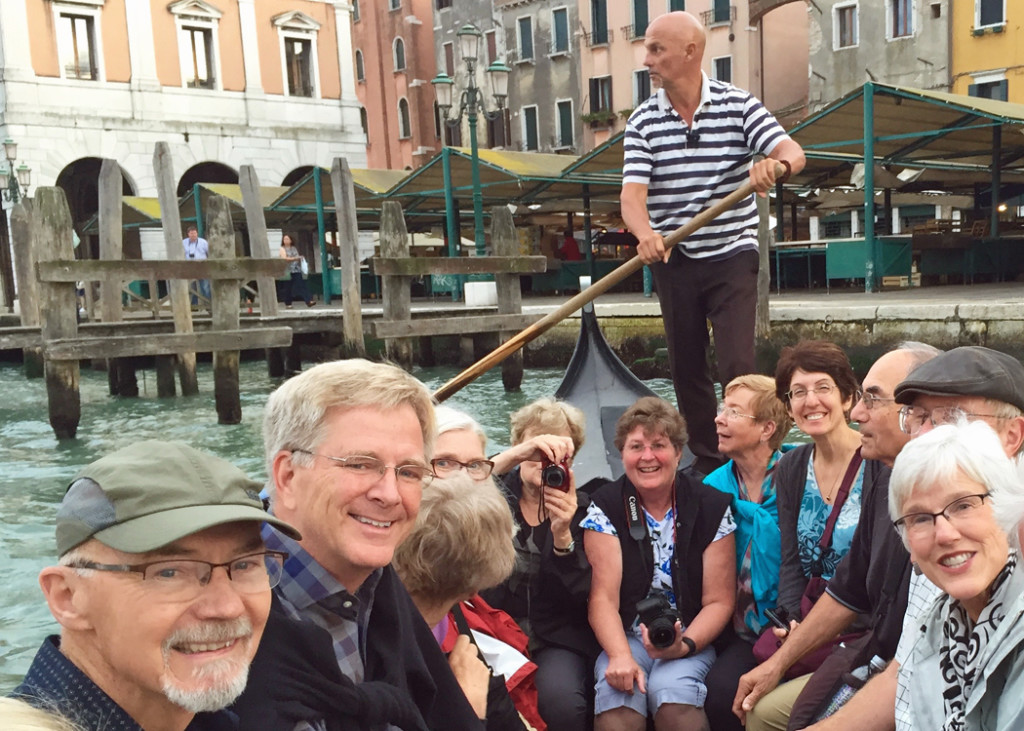
As a guide, it’s fun to grab spontaneous experiences when they present themselves. There are always two considerations: Can 28 people actually do it efficiently? And is it a budget-killer? On my orientation walk through Venice before dinner, we were running a bit late. I came upon the traditional traghetto (gondola ferry) that crosses the Grand Canal where there’s no bridge, and I thought, “Wonderful — that’ll get us to dinner on time, and be memorable, as well.” The maximum capacity is 14 per boat, and they go every 3 or 4 minutes for €2 per person — so two boatloads got the entire group across quickly for less than €60…and we all enjoyed an experience we’ll never forget.

(Thanks for following along here on my blog and on Facebook as I guide our Best of Europe in 21 Days tour.)

Video: Italian Experiences and the Joy of Guiding

On a Best of Europe in 21 Days tour, we are admittedly getting just a quick introduction to the greatest sights in Europe. But this route (with eight days in Italy) is clearly the best of the best, and we get the most travel thrills out of every mile and minute.

Here’s a montage of the types of experiences we wrangle for our groups as we enjoy Venice, Florence, and Rome. As you watch, imagine the joy of being a guide who is connecting a wonderful gang of travelers with all this travel fun.

You’ll see: me dutifully holding up the Venice map as our local guide Elisabetta tells us the story of her city; an artisan sharing the Venetian tradition of mask making; how we cap our day with a convoy of gondolas gathering on the Grand Canal for a serenade at the Rialto Bridge; our Florence guide bringing meaning to Renaissance art in the Museum of the Cathedral; images of our night walk through Rome and an unforgettable dinner in Trastevere; a rare chance to actually enter the Colosseum through the “gladiators’ gate”; and finally, orienting our group to the quintessential Italian hill town, Orvieto. This montage shows how going on a Rick Steves’ Europe tour is as much fun for the guides as it is for our tour members. Italy!

Video: thetravelphile.com / facebook.com/thetravelphile

(Thanks for following along here on my blog and on Facebook as I guide our Best of Europe in 21 Days tour.)

The Best of What’s New in Europe

Europe is a work in progress. And a big part of my work is discovering what’s new. Here are a couple of my favorite new items in Europe. What’s your vote for the best new sight, museum, or experience in Europe?

Duomo museum

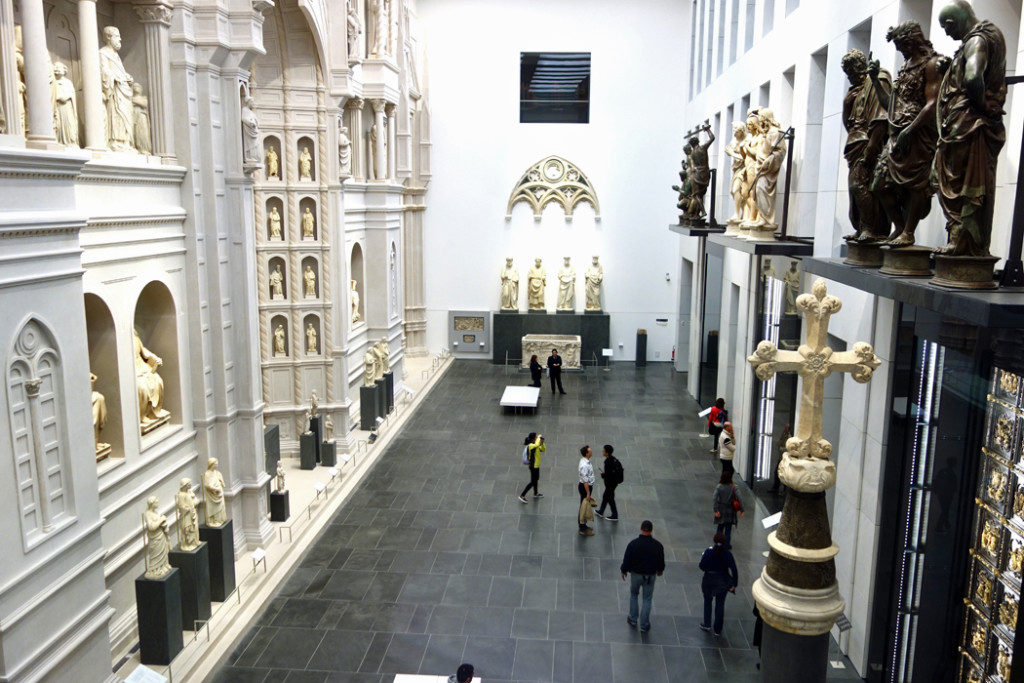
My favorite new sight is the entirely revamped Museum of the Cathedral (Museo del Duomo) in Florence. It recreates the dreamy, almost ethereal space between the cathedral’s west facade and the baptistery across the square. And all of the original statues and bronze panels are placed in their correct locations — and all safely out of the elements.

Paris ferris wheel

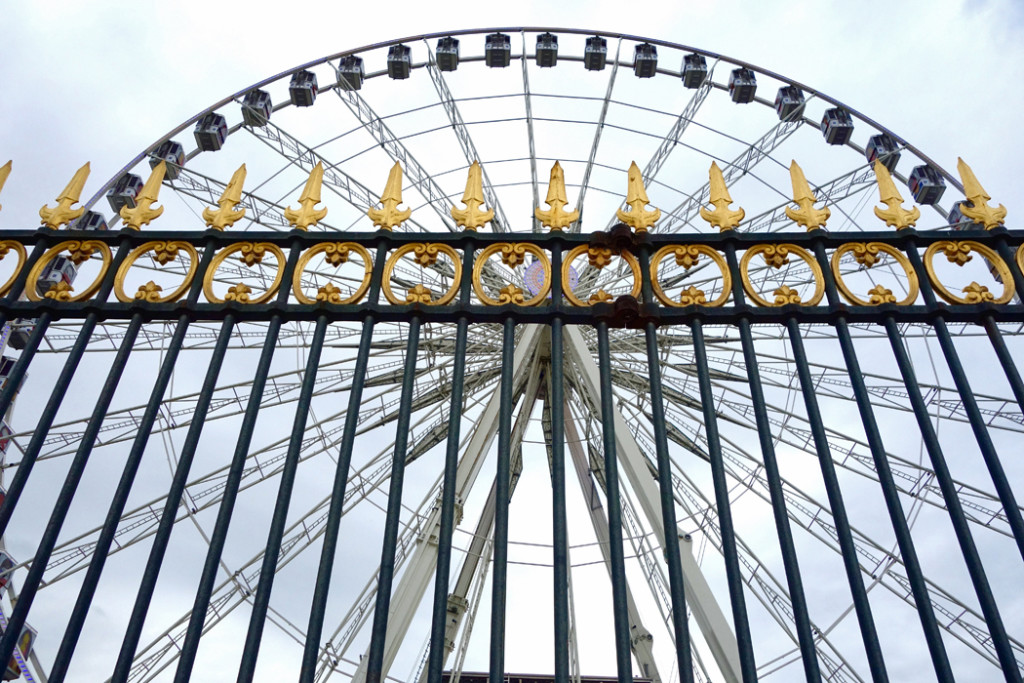
The best new amusement I found was the Paris Ferris wheel, spinning slowly next to the obelisk on Place de la Concorde at the bottom of the Champs-Elysées.

view from paris ferris wheel

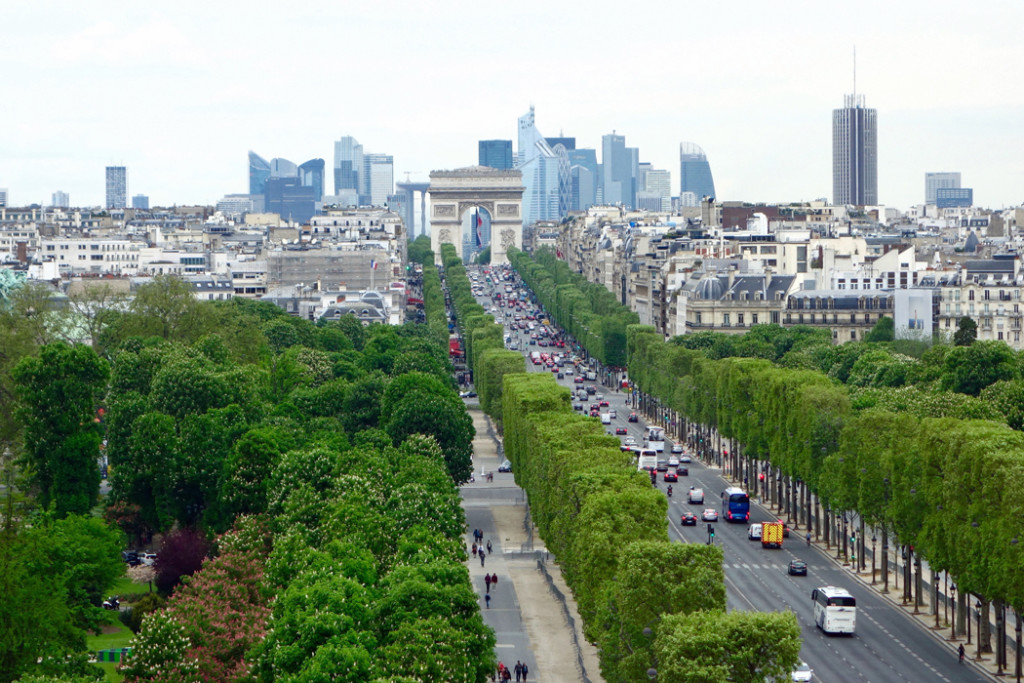
And the view from the top gives a new angle on Europe’s grandest boulevard, crowned by the Arc de Triomph (with the business district of La Défense beyond).