Video: A Symphonic Journey to Germany

A few years ago, I was a musical tour guide on an hour-long TV special that celebrated the patriotic music of seven European countries. In this clip from Rick Steves’ Europe: A Symphonic Journey, you’ll hear the music of Richard Wagner, the great German composer whose works stirred the souls of German kings and princes, nobles and peasants…and a certain Führer.

As I set up each piece, it occurred to me that I was demonstrating the work all our guides do at Rick Steves’ Europe Tours. On our tours, we not only bring our travelers to exciting culture — we do our best to give it meaning.
Video: Rick Steves’ Luther and the Reformation

On October 31, 1517 — 500 years ago today — Martin Luther nailed his “95 Theses” on the door of Wittenberg’s Castle Church, kicking off the Protestant Reformation. This courageous stand by one man sparked a century of conflict, changing Europe and Christianity forever.

In Rick Steves’ Luther and the Reformation, you’ll learn the story of a humble monk who lived a dramatic life. I visit key sites relating to the Reformation (including Erfurt, Wittenberg, and Rome) and explore the complicated political world of 16th-century Europe — from indulgences to iconoclasts, and from the printing press to the Counter-Reformation. It’s a story of power, rebellion, and faith that you’ll never forget. To watch, check your local public television listings or stream the full hour right here:

Video: A Night of Oktoberfest Fun Before a Happy Homecoming

On my last night in Europe this year, I enjoyed the mother of all keggers: Oktoberfest in Munich. In this clip, I take a break from my pork knuckle (with fresh horseradish sprinkled on top and sitting on a delicious bed of mashed potatoes and sauerkraut) to stand up and savor the fun all around me.

My crew and I walked home that evening marveling at the joy we had just experienced. I’d been so focused on the ugly and tragic story of fascism in 20th-century Europe (we just filmed a TV special about it), that I actually wished I could have made Adolf Hitler walk with me there, that evening, and seen his reaction to the scene: Bavarian culture high and low (lederhosen pulled up high and dirndl blouses plunging enticingly low) coexisting with a happy racial kaleidoscope of humanity — right there in the city where, just under a hundred years ago, his evil movement first mobilized fear and hatred to hijack Germany’s heart.

Under that big, big tent (one of a dozen that each hosted thousands of happy partiers), people from around the world were one — celebrating Germany, celebrating great beer, and (while many of them likely didn’t realize it) celebrating peace and freedom too. Prost!

A Sobering Glimpse at Nazi Propaganda

In producing our upcoming one-hour special, “Rick Steves’ The Story of Fascism in Europe,” I was impressed at how effectively 80 million Germans were led astray by their own government’s very clever propaganda.

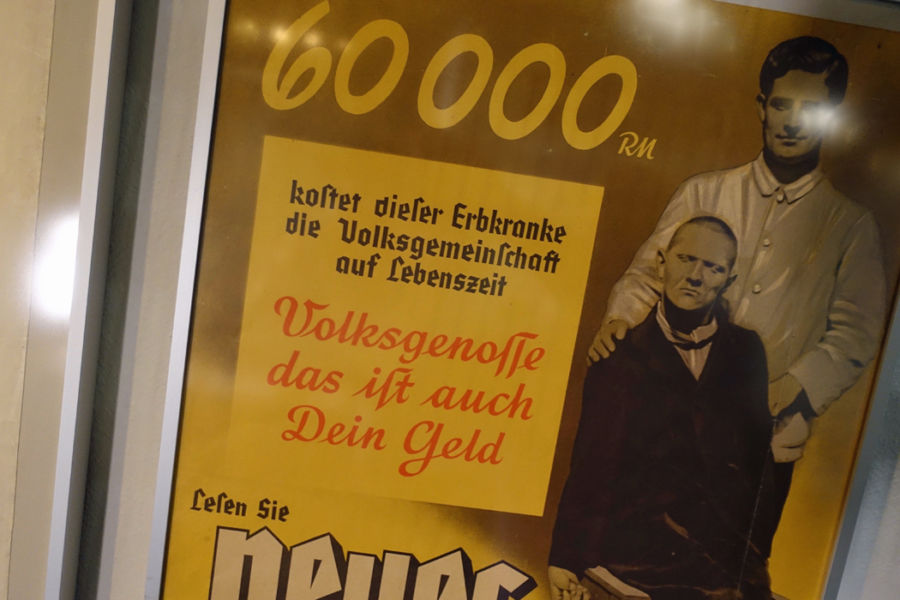
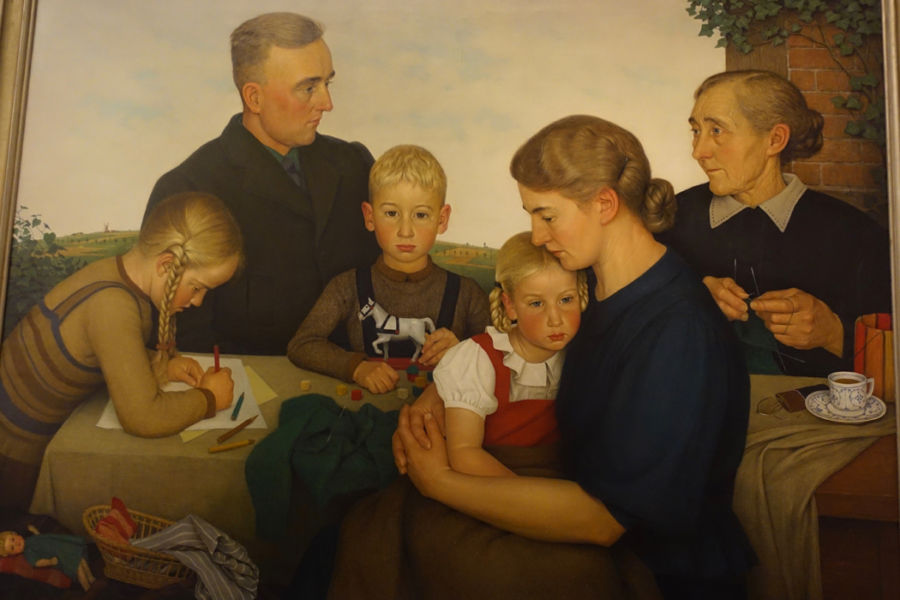
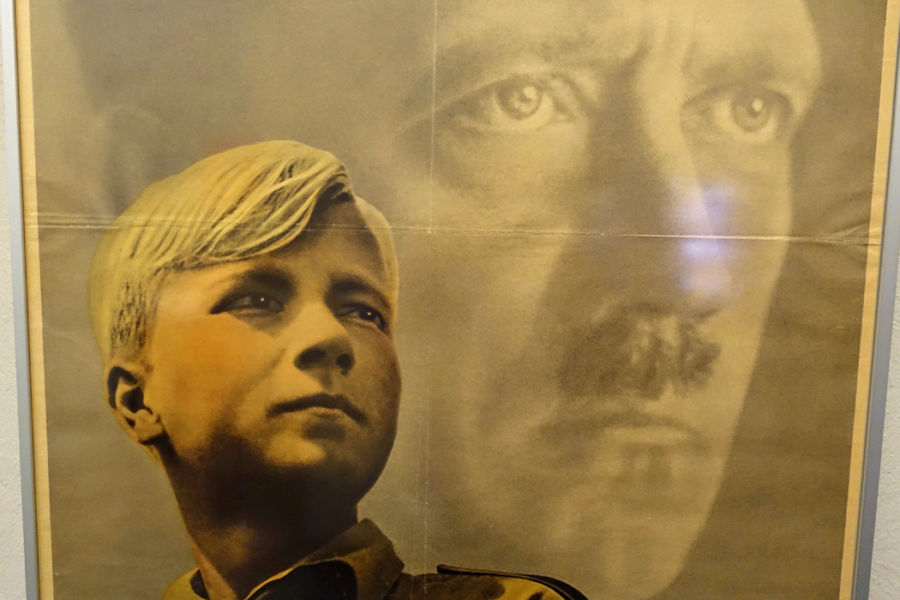
These photos give a glimpse of Germany in the 1930s. A painting shows a Norman Rockwell-style look at the ideal family — a fascist ideal hiding a harsh, racist agenda. A poster features a little boy, inspired and mesmerized by a messianic political rock star whose title was simply “the Leader.” Another poster basically asks a society, “Do you really want to pay 60,000 marks to let this retarded man live? Doesn’t our state have better things to do with our money?”

"Farm Family from Kalenberg" painting by Adolf Wissel

“Farm Family from Kalenberg,” Adolf Wissel


Nazi propaganda poster

A Nazi propaganda poster


Nazi propaganda poster

This poster exclaims, “60000 RM. This is what this person suffering from hereditary defects costs the Community of Germans during his lifetime. Fellow Citizen, that is your money, too.”


Germany’s Chilling Fascist Memorabilia

At the end, people did what they could to destroy any evidence that they were part of the Third Reich. A lot was just squirreled away and forgotten. In the last decade, as old Nazis have died, their children — exploring old boxes hidden away in attics — have found lots of memorabilia from those times. They donate it to the big state museums, which then store it away. I asked the curator at the great German History Museum in Berlin why there was so little of the excessive pomp and grandeur of the Nazi regime on display. He said that they keep the vast majority of artifacts that might inspire neo-Nazi groups warehoused and out of sight.

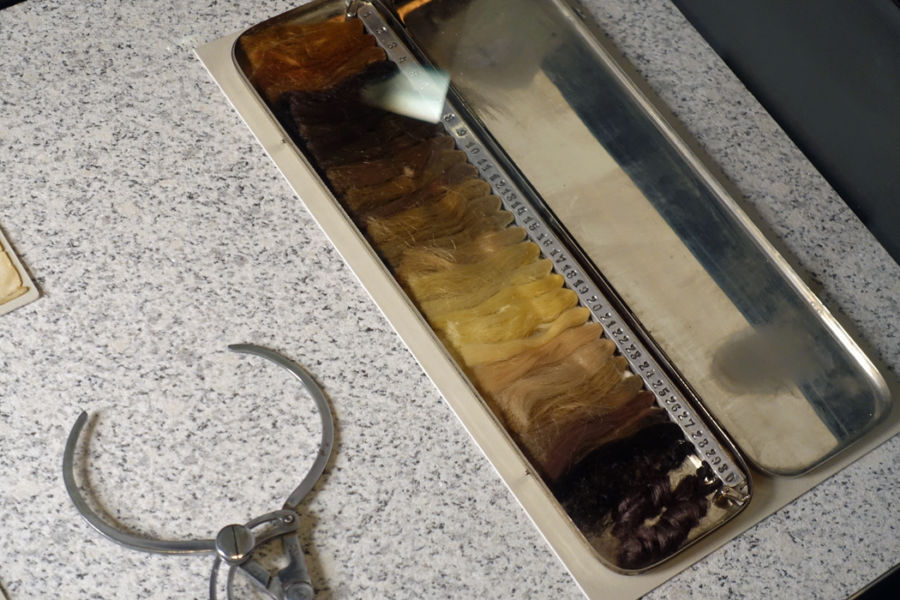
Museum visitors can, however, get a glimpse of Germany in the 1930s through exhibits which display the darkest side of the Nazi regime. A poster shows the facial features of people who were part of what was considered “the master race” (and those that didn’t belong). Calipers and hair samples help government officials determine who was of the proper racial stock to be a German citizen. And a huge hall with a dome that would house 180,000 people was envisioned to celebrate a world where the individual is sacrificed for the greatness of the state.

Master Race poster

Nazi hair chart and caliper

Volkshalle model

It’s all chilling…and with angry, populist, nativist political movements on the rise in many countries — and with images like those from the deadly white-supremacist rally in Charlottesville in our own country — it’s even more chilling.