The Story of Fascism: Hitler’s Rise to Power

“He promised jobs, jobs, jobs to everybody…and that was exactly what they wanted to hear.”

Hitler was a mesmerizing speaker. He offered simple solutions to complicated problems, and he repeated lies over and over until everything he said seemed true. By 1932, his political base was convinced that he would bring Germany “above all the world.”

https://www.facebook.com/ricksteves/videos/271520140153530/


This clip is excerpted from my new one-hour special “Rick Steves’ The Story of Fascism in Europe.” Check your local listings for air times — and if you don’t see it, please ask your public television station to add it to their schedule.


The Story of Fascism: Hitler’s “Mein Kampf”

In 1923, Hitler attempted to stage a coup…and failed. He was arrested and sent to prison, where he wrote a manifesto — filled with grammatical errors — about how he could unify Germany and restore it to its pre-WWI glory days.

https://www.facebook.com/ricksteves/videos/324436951638528/


This clip is excerpted from my new one-hour special “Rick Steves’ The Story of Fascism in Europe.” Check your local listings for air times — and if you don’t see it, please ask your public television station to add it to their schedule.


Spatis, Trdelník, CBD — The Things You Learn in Central Europe

Just being out and about on the road, you stumble onto scenes that give insight into different worlds. On my latest swing through Central Europe — Berlin, Prague, Vienna — I enjoyed being a “cultural lint brush.” Here are some slice-of-local-life insights I picked up.

Berlin’s late-night convenience stores — like bodegas in New York City — are nicknamed “Spatis” (meaning roughly “late-ies”). And when there’s a big soccer game on TV, they’ll set up a TV on the sidewalk, put out some milk crates for customers to sit on, and host a party. For the cost of a grocery-store beer, the neighborhood gathers and enjoys sharing the event together. My Berlin friends — who say “this would never be allowed in Munich” — love these examples of Berlin community.


people sitting on crates outside a storefront in front of a small TV showing a soccer game


In the last couple of years, a new fake tradition has been born in Prague: stands selling chimney cakes, or trdelník. You’ll see these stands on virtually every corner, with saucy medieval maidens hard at work baking rotisserie pastries…all conspiring to be seen as a local custom. But chimney cakes have nothing to do with Czech culture or traditions (they’re originally from two countries away, in Hungary). They’re just another clever way to make money off tourists.
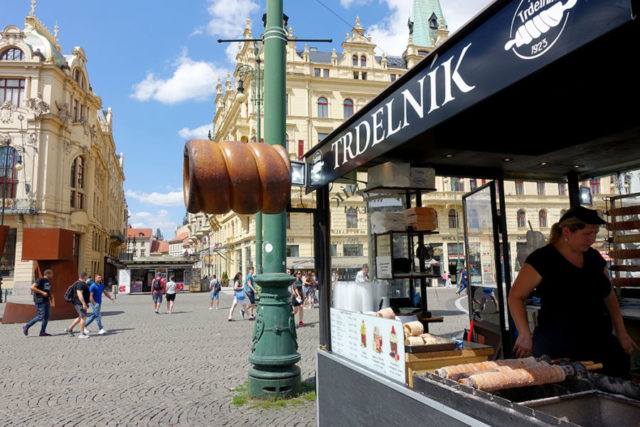
 

a stand in prague selling a snack


In Prague, ATMs not attached to real banks offer famously bad rates. Every local knows to avoid these rip-off ATMs.


guide holding an "x" in front of her face to mean "bad" next to ATM


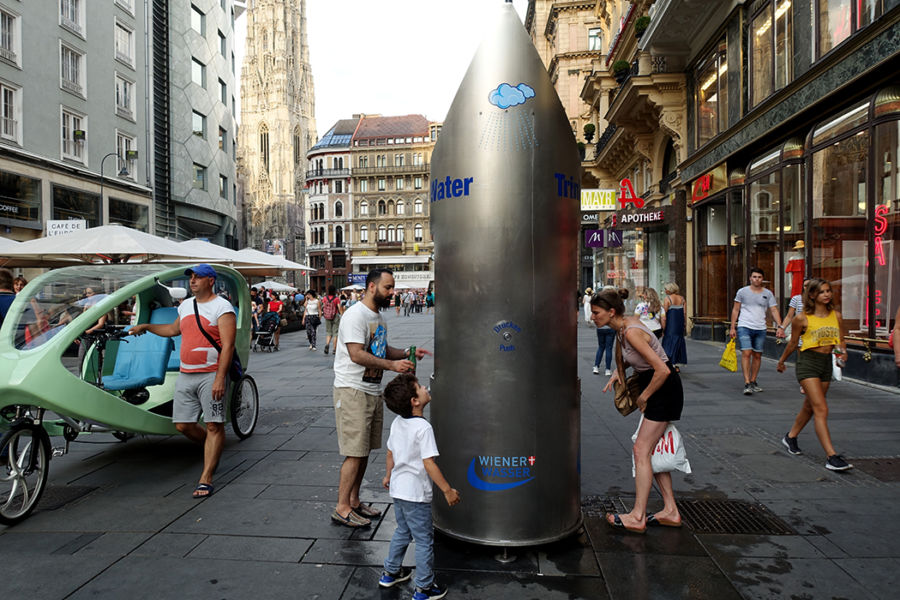
In Vienna, the city government — knowing both locals and tourists are dealing with hotter days than ever, thanks to climate change — have put out big cold-water stations with reminders to stay hydrated.
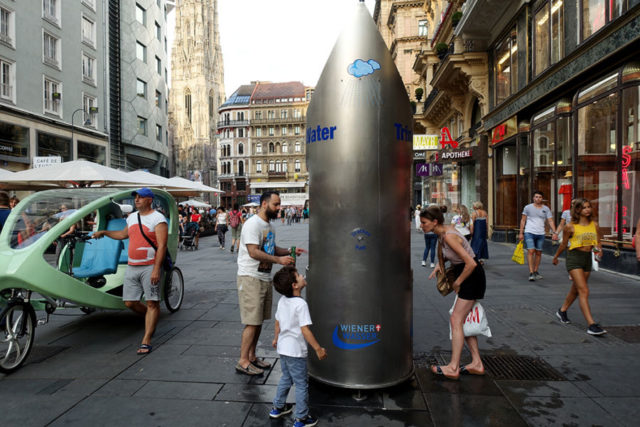
 

a large fountain shaped like a water bottle in vienna with people drinking from it


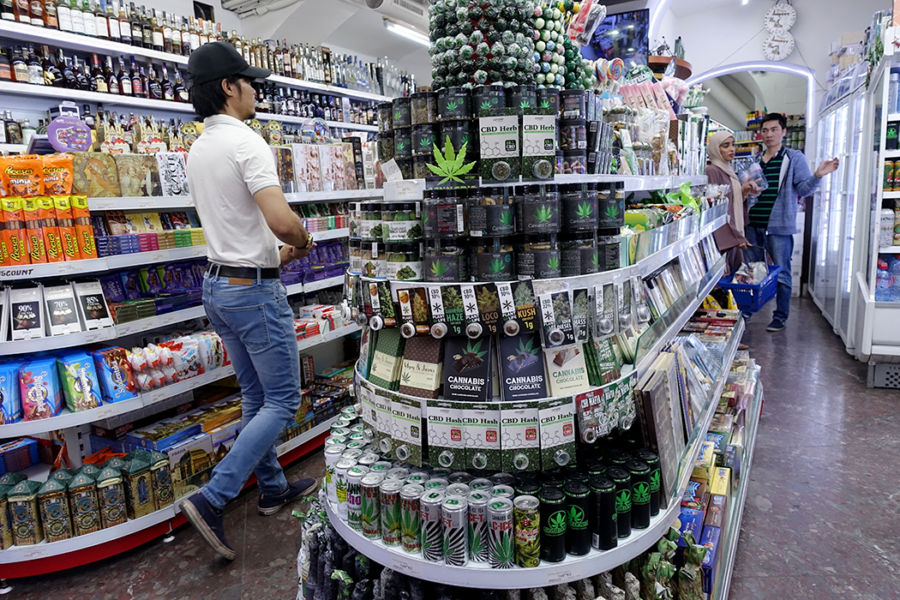
You see a lot of marijuana leaves and green packaging throughout Europe these days, and you might think, “Wow, I didn’t know pot was legal here.” But this is CBD cannabis — legal only if it contains less than one percent THC. CBD makes you calm and is considered a medicine. THC pot — the stuff that makes you giggle — is not yet legal here. Don’t worry (that’s OK)…be happy (not yet).
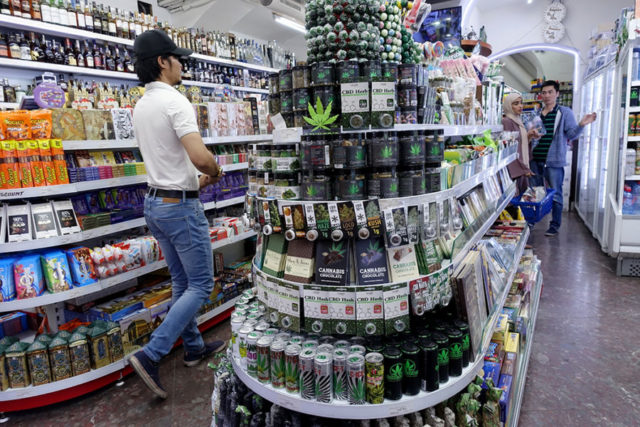
 

shelf of cbd products in a store


Join our traveling community — connect with me on Facebook and Twitter.


Video: Berlin’s Kreuzberg with a Guide

I’ve long wanted to better understand Berlin’s Kreuzberg neighborhoodtraditionally the home of many Turkish immigrants, and today gentrifying fast. Just like many Mexicans are guest laborers in the USA (doing the scut work that middle-class Americans and their kids don’t want to do), Turks have long served that “Gastarbeiter” role in the much wealthier Germany. As usual, the guest workers get the worst neighborhoods. And, in the case of the Turks here in postwar Berlin, it was “up against the Wall”…the Berlin Wall. Then, suddenly, in 1989, the Wall’s gone and Kreuzberg is free to blossom. I enjoyed a delightful afternoon with Hashim Anik, a Turkish German guide who grew up right here and has seen a lot of positive change. Join us for a little walk. I’d love to hear about any Kreuzberg experiences you’ve enjoyed.


Join our traveling community — connect with me on Facebook and Twitter.

Video: The Bridge of Spies, a Party Raft, and a Keg of Good German Beer

The best side-trip from Berlin is to the adjacent city of Potsdam. While today it’s a simple commuter train ride away, during the Cold War, Potsdam and Berlin were in two different worlds: the First and the Second. And the iron Glienicke Bridge was a particularly famous link in the Iron Curtain. I was walking across the bridge, playing spy exchange (my role: the American U-2 spy plane pilot, Gary Powers), when a party raft equipped with a cool keg of beer distracted me. This was one of those times when I wish I could just be on vacation.

Join our traveling community — connect with me on Facebook and Twitter.