As I walked out of my hotel in Vienna on Sunday morning, I realized I was in a city with a rich culture you can almost inhale, and a vivid history you can almost touch. I decided to max out on culture.
At about 9:00, I dropped by the Hofburg’s Imperial Music Chapel. The Vienna Boys’ Choir was singing, as they do each Sunday morning throughout their season. I didn’t actually see the boys — no one in the church did — as they sang like angels from the loft in the rear. But, like you don’t need to look at the sun to know it’s there on a beautiful day, you don’t need to see the boys to enjoy their delicately beautiful music. Their voices blended perfectly with the scene in front of us, as sunshine streaming through the windows made the Baroque starburst of gilded statuary truly seem to burst over the altar.
Energized, I ducked through a royal passageway and paid about €20 for a standing-room spot to see the much-loved Lipizzaner Stallions prance to some more music in the Emperor’s chandeliered Baroque riding hall. (It occurred to me that they prance in 4:4 time, but not 3:4 — even though this is the city of the waltz.) I enjoyed the show as much — and with a view just as good — as those who booked far more expensive seats long in advance.
Ready for more music, I strolled a hundred yards to the Augustinian church for Mass, where I sat above silver urns containing the hearts of centuries of Habsburg emperors. This being Vienna, the service came with a complete choir and an orchestra, and today wowed worshippers with the spiritual confidence of Anton Bruckner’s Mass No. 3 in F Minor.
After lunch under palm trees in the emperors’ conservatory, I dropped into the adjacent hothouse, a wonderland of butterflies. Enjoying the fluttering antics of these butterflies — most of which seemed drunk on the fermented banana juice they licked from the brown and sweating banana slices in their breakfast dish — is a Vienna tradition for me.
 |
|
Enlarge photo |
 |
|
Enlarge photo |
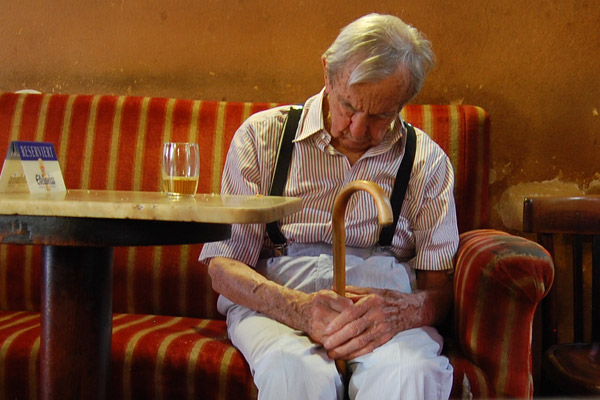
Then, for coffee, I pulled up a chair in the smoke-and-coffee-stained Café Hawelka, where intellectuals like Leon Trotsky once stewed. The decor was circa-1900. Old man Hawelka himself was snoozing on a Biedermeier chair near the bar. His granddad could well have served a Mélange (as they would have called their cappuccino) to Trotsky, Hitler, Stalin, Klimt, or Freud — all of whom were rattling around Vienna when the chair I was sitting on was made, bought, and put in this café. I pondered how, in the last days of the era of Europe’s family-run empires (essentially all of which died with the end of World War I), Vienna was a place of intellectual tumult.
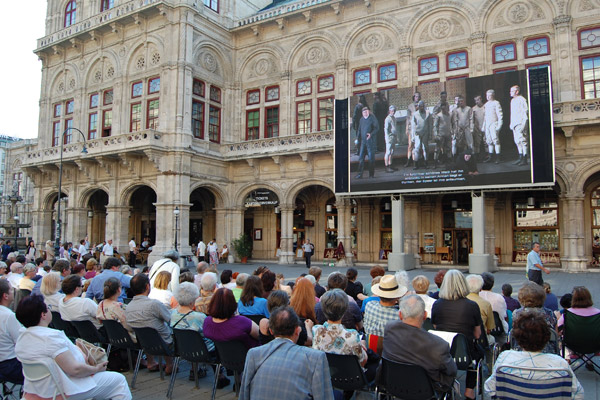
And my day was just half over. The Vienna Opera — arguably the world’s greatest — was performing Wagner’s Tannhäuser in the afternoon. No ticket? No problem. In good Vienna style, it was being projected outdoors for the rest of us in all its Teutonic glory, live on a huge screen. Arriving early to get a good seat, I waited with the people of Vienna — marveling at the potential richness of life, and how as I travel, I can experience much of its best.
Awaiting the start of Tannhäuser, I thought about how accessible all this was. Two musical Masses and this opera experience — free. Horses — $30. Butterflies — $6. Lunch under the palms — $20. Coffee and cake with sleeping Herr Hawelka — $7. As I reviewed all I had experienced today and the people I had rubbed shoulders with, I thought again — a theme for me this month — how much happiness there is in our world if you choose to see it. I’m not saying to ignore the problems. I’m saying to get out there, strive to keep things in perspective, and embrace not what turns you off, but what turns you on.