Tips for Making the Most of Your Cruise

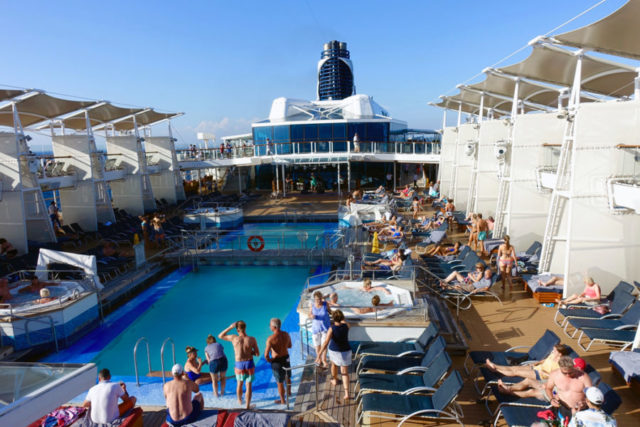
Cruise ship top deck poolside

My TV crew and I just spent two weeks on a Mediterranean cruise, filming a one-hour special that will air on public television in January 2019. The show will present an honest look at the pros and cons of cruising and will equip travelers with the skills they need to be smart cruisers.

Here are a few tips for making the most of your next cruise. (And if you have cruising tips to share, please chime in as well.)

Right off the bat, I recommend getting out of your cabin (ship lingo for “room”) and exploring the ship: Study the ship’s cutaway models on the signage, walk each deck (ship lingo for “floor”), and find those many delightful little corners so you can take full advantage of your ship.
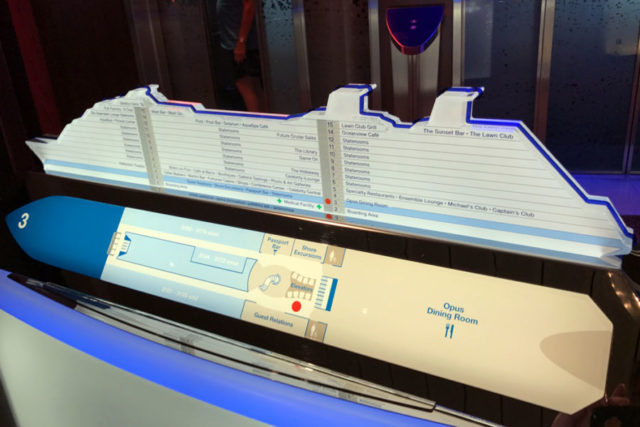
Cruise ship directory

I also recommend the “behind-the-scenes” ship tour (pricey at about $100, but an amazing two-hour look at how the ship and its crew manage to run the entire show in a parallel world that is invisible to the typical cruiser). Ship geeks will marvel at how these newer massive ships no longer use an old-style shaft and propeller. They are nimbly maneuvered by Azipods (pods with propellers that can rotate 360 degrees and, with the help of bow thrusters, can jockey a 300-yard-long ship into whatever pier is required).
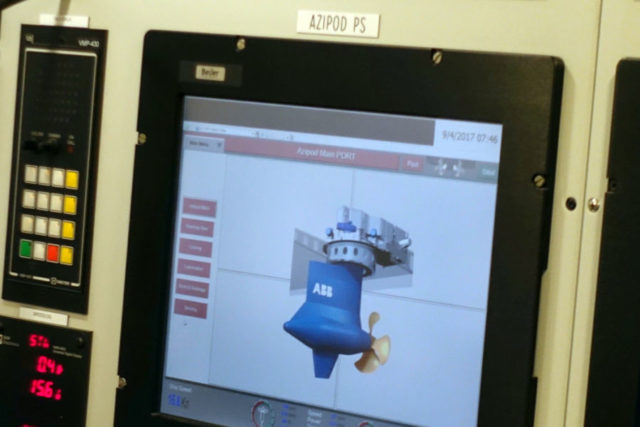
A monitor showing a ship's azipod

At port, most cruisers simply book the cruise line’s bus tours (and are generally happy they did). However, setting up your own shore excursions is usually less expensive and gives you more flexibility. Stepping off the ship in Naples, we got to film the intense scene of hustlers, guides, and taxi drivers scrambling for business from cruisers venturing ashore with no firm plan.

Tourists outside of the port terminal in Naples

Everywhere you go on a cruise ship, they’re pushing squirts of Purell. I’m of the school of thought that sanitizing everything with antibacterial products just makes you less resistant and is counterproductive — so, I shun the squirts.

Purell dispenser in the cruise ship

Cruising with the TV Crew

Our cruise TV shoot was everything I hoped it would be — and I’ve still got lots of photos to share with you.

When I was setting up the shoot, I needed to find a cruise line that understood our mission: Create a piece of travel journalism that would explain cruising, not be an ad for it. We would acknowledge that, while popular, cruising’s not for everyone; we would point out its pros and cons; and we would share the skills that enable an independent-minded traveler to be a smart cruiser. Celebrity Cruises got it, and they supported us on board, giving us access to everything we needed to make the show. I am really thankful — especially for the officers who made sure we could get up on the bridge with the captain, took us behind the scenes in the kitchen, and let me use their printer for the latest script revisions (even at midnight). Along with a full-capacity gang of 3,000 passengers, we sailed on the good ship Reflection.

The route we took on the Reflection.   

Simon and Karel (my producer and cameraman) are two of the best travelers I know (and both are avid sailors), but neither of them had ever been on a cruise ship. The entire notion of cruising was an anathema to them. They were good sports, open-minded, and ultimately recognized the economy, efficiency, and fun in this kind of tourism.

As a tour organizer, I have a particular fascination with organization and efficiency — how to make a decent profit while still providing travelers with a good vacation at a reasonable price — and I’m dazzled by how cruise lines do this. They are clearly feedback-driven and appreciate (as we do at Rick Steves’ Europe Tours) the loyalty of their frequent travelers.

Celebrity Cruises’ embarkation check-in procedure is impressive.   

Equip Yourself with Good Information About Cruise Ports

My Rick Steves Mediterranean Cruise Ports guidebook is a perfect example of that old business axiom: “Find a need and fill it.” So many people take a cruise and have no practical information to help them use their time on shore smartly. Every Mediterranean cruise has the same rhythm: Sail each night and sightsee in a different port each day. With this 1,200-page guidebook, you’ll know exactly how to get the most out of your precious shore time. I’ve been on a Mediterranean cruise for the past two weeks, and I’ve been using this book the whole time — it really helps!

Video: The Ethics of Cruising (From My Big, Big Chair on the Top Deck)

Okay, I’m on a massive cruise ship at sea with 3,000 mostly wealthy, mostly white tourists blitzing the great ports of the Mediterranean — and having lots of fun. No, I’m not suddenly abandoning my independent travel principles and becoming a huge proponent of cruising. But I am impressed by the economy, efficiency, and popularity of this kind of travel…and, to be honest, I enjoy cruising.

I’ve found it interesting reading your comments — pro and con — both here and on Facebook. Unfortunately, I’ve been too busy filming to respond directly. Here are a few general thoughts:

I am the first to agree that cruising is not for everyone. And why should it be? For some, it’s the anti-travel. For others, it’s the perfect vacation. On our ship, I met only people who seemed to be having a great time…most of them veterans of many cruises.

I’ve also met lots of budget-conscious, independent-minded travelers who’ve told me that a cruise (which includes all of their transportation, lodgings, and food for one discounted price) is, for them, a wonderful value.

My goal is not necessarily to promote cruising, but to acknowledge its huge presence in the travel world, and to outline its pros and its cons. Again, cruising isn’t for everyone. But lots of people are going to go on a cruise…whether I tell them to or not. My Mediterranean Cruise Ports and Northern European Cruise Ports guidebooks (and our upcoming public television special) are designed to help those who do cruise, to cruise smartly.

Some commenters have raised some important ethical issues. Here are a few of my thoughts on those (and I’d love to hear yours):

What about the environmental issues around cruising? Sure, a ship consumes a lot of energy and creates a lot of pollution. But how does that compare to 3,000 people traveling independently by car, bus, or boat?

What about the impact on local economies and communities? Cruising can trample towns with sightseers who leave almost no money (since they eat, sleep, and buy their tours on board). On the other hand, most of those communities seem to view cruise ships as a big economic boost (which explains why so many cities are investing in cruise ship-size piers and terminals).

Many point out that the industry is basically rich (on a global scale, anyone cruising is wealthy), white tourists being served by a black and brown crew from poor countries. I’ve talked to many people who work on cruise ships, who have told me that the income they earn on a cruise ship (and send home to their families) is far more than any employment prospects they have back home. And, not to be cynical, but isn’t that the reality of our world anyway — with the richest nations able to essentially ignore the fact that half the planet is trying to live on $2 a day? (Consider the $10 billion immediately given to help out Houston, while victims of a similar storm — which devastated entire Caribbean nations whose humble worlds were literally blown away — will hope for a tiny fraction of that and likely be ignored.)

Cruising might not be for everyone. But neither is my style of travel. And at least cruising gets people (who might otherwise stay home) out interacting with the world. And frankly, if I were to compare the people I met on our cruise ship to the people I’d meet on a typical train in Europe, those on the ship are more likely to be in need of the perspective broadening value of travel.

While I don’t really want to hear from people who’ve never been on a cruise ship saying that it’s a terrible way to go, I am interested in thinking a bit more about the ethics of cruising…and would welcome your comments.

Rothenburg’s Anneliese Friese, 1927 — 2017

Anneliese Friese, rest in peace

The medieval town of Rothenburg holds a special place in the hearts of Americans. A highlight for many travelers has been meeting Anneliese Friese, the charming woman who for decades ran her family’s souvenir shop — teeming with very German knick-knacks — just off the market square. Anneliese died last Tuesday and Rothenburg has lost one of the endearing characters that gave a charming human dimension to its venerable cobbles and facades.

While I generally make a point to not recommend tourist shops, for 30 years I’ve included The Friese Shop in my guidebooks, due to the sheer power of Anneliese’s personality and love of helping out visiting travelers.

Anneliese was also a founding member of Rothenburg’s English Conversation Club, which has been meeting every Wednesday for decades. This was her passion, where she would join both locals and tourists in a weekly excuse to get together, drink, and practice their fanciest English on each other. Every time I visited Rothenburg, if I was there on a Wednesday, I’d meander into the candlelit pub and squeeze a three-legged stool up to a table already crowded with Anneliese and the gang. She’d pour me a glass of wine, and we’d share our favorite slang and tongue twisters.

This photo shows Anneliese with her son Bernie and me. Bernie and his family will keep the shop going, but we’ll all miss his mother. Bless you, Anneliese, and thanks for the decades that you put delightful bits of Franconia into a box and shipped it home so we could enjoy those wonderful Rothenburg memories.