
For me, a strong symptom of getting older is being thrilled with the thoughtful and transformational travels of young Americans. That’s one reason why I’m so excited about (and proud of) my niece, Nicolina, and her adventures in India. I’ve linked to Nicolina’s blogs in the past as she paints her love of life on distant and dusty corners of our planet. Currently she is storming the small towns and megalopolises of India with her “Hearts of the World” project. In humble places she brings poor children, who have little access to art, the supplies, tools, instruction, and inspiration necessary to spill their inner selves onto templates of anatomically correct hearts. After her adventure, she’ll share her favorite murals at an art show in New York City. She’s reporting from India now at nicolinaart.tumblr.com and, when you follow Nicolina’s travels, you’ll understand why India is my favorite country and why I’m so inspired by my niece. Please, follow along as Nicolina brings Hearts of the World to India.
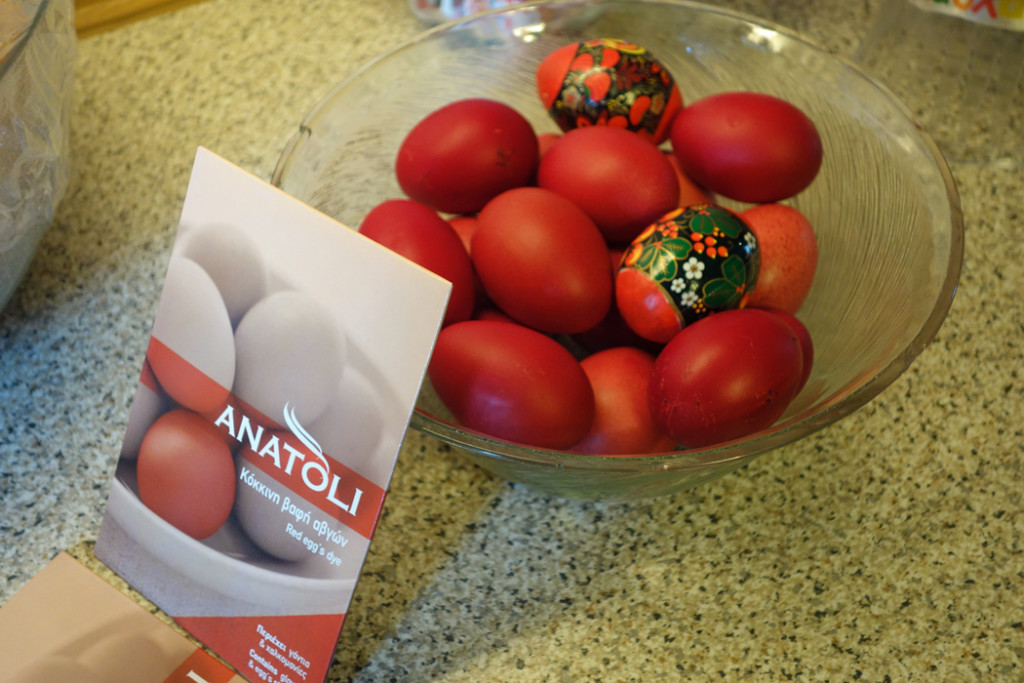 In Greece, Easter eggs are dyed deep red, symbolizing the blood of Christ shed at the Crucifixion. You can buy packets of blood-red dye at any store. On Easter Sunday at the big family feast, loved ones will crack their eggs together. The person whose egg doesn’t crack enjoys good luck in the following year.
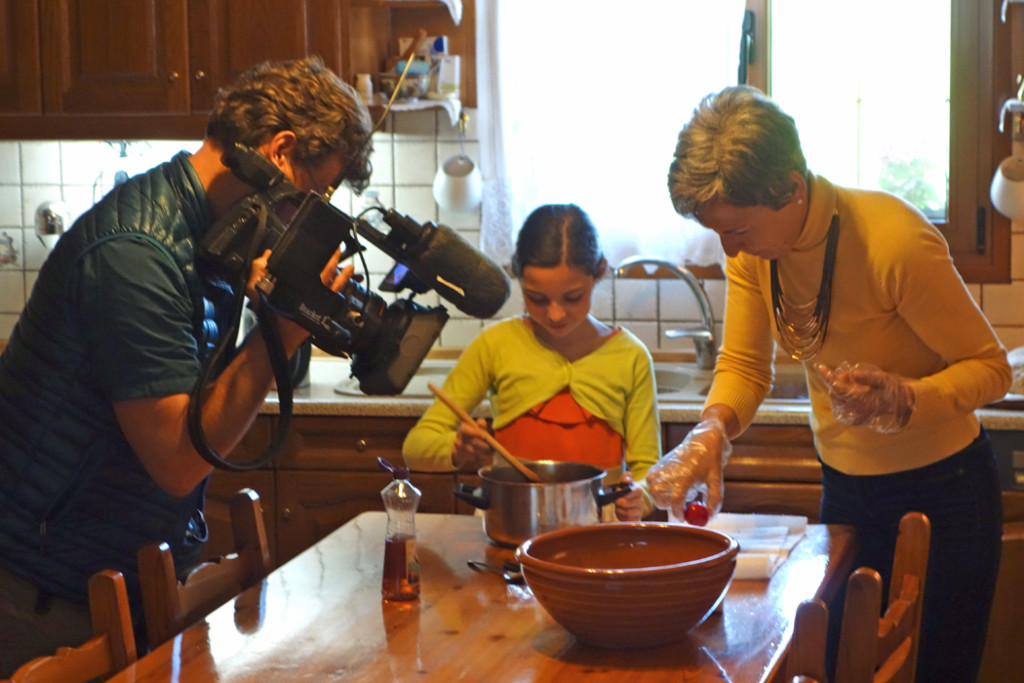 It’s a custom for godparents to have a little quality time with their godchildren at Easter. Why not decorate eggs? We filmed a delightful moment as this godmother lovingly helped her sweet godchild in the kitchen.
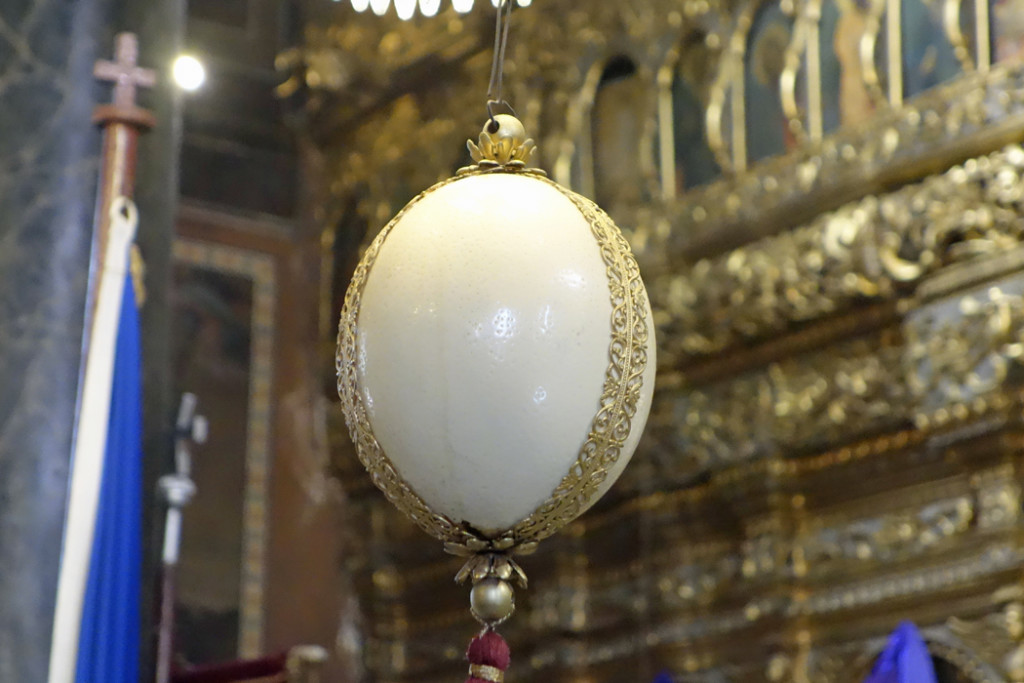 Even more than Western Christian churches, Greek Orthodox churches are slathered in symbolism. In our little Nafplio church, ostrich eggs hung from the chandeliers. Of course, eggs are a part of any Easter celebration — secular or religious. Easter is celebrated this time of year because it has pagan, pre-Christian, “end of winter, start of spring” roots. This ostrich egg may be precious, but like any old egg, it symbolizes how, just as life comes from an egg, life also comes with the Resurrection of Christ.
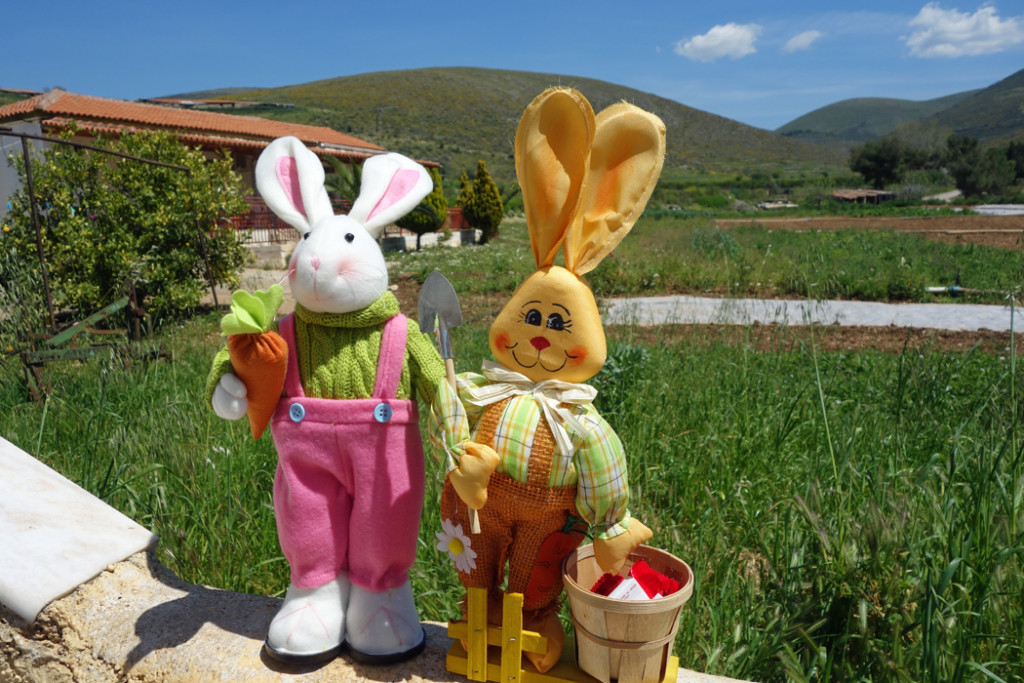 In our script, we mention how Easter is likely designed to replace the pagan spring festival of the fertility goddess Eostra. And Eostra’s sidekick was a rabbit — a very fertile critter, and the reason why we still have the Easter Bunny today. Here in Greece, I didn’t see a bunny anywhere, until I spotted these two guys on our last day.