Frederiksborg Castle, in the town of Hillerød near Copenhagen, is the top castle in Scandinavia by far, and a great example of how Scandinavian sights are really well-presented. Whenever possible, use the included audio tours. (By the way, in the clip, I accidentally call this place “Christiansborg.” Frankly, I’m overwhelmed by the many kings that are the cleats upon which you tie down an understanding of Danish history — and I sometimes get my borgs mixed up. While Denmark does have a Christiansborg, this one is named for a Frederik, not a Christian.)
The Zealand Blitz — Roskilde Cathedral, Viking Museum, and Frederiksborg Castle in a Day
If you have just one day for the most exciting side-trips possible from Copenhagen, here’s a plan for a wonderful day.
Leave Copenhagen by train at 8:00, arrive in Roskilde at 8:30, and wander through the town to be at the cathedral when it opens at 9:00. At 10:00, after an hour in the cathedral, stroll down to the harborfront to tour the Viking Ship Museum. They can call a taxi to take you back to the station for a 13:00 train back to Copenhagen. (Buy a picnic lunch at Roskilde station, and munch it on the train.) In Copenhagen, catch the next train to Hillerød (around 14:00), from where you catch the bus to Frederiksborg castle — arriving at 15:00. This gives you two hours to enjoy the castle before it closes at 17:00. Browse through Hillerød before catching a train at 18:00 back to Copenhagen. You’ll be back at your hotel by 19:00, having seen the highlights of Zealand.
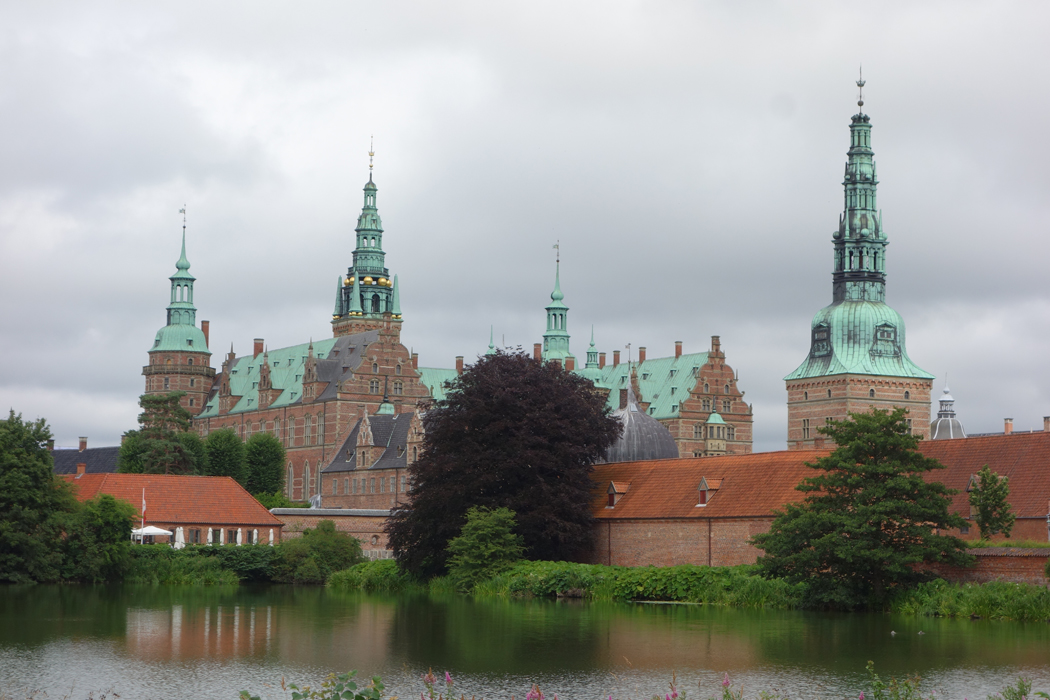 Frederiksborg Castle sits like a fairy tale on an island in the middle of a lake in the cute town of Hillerød, 50 minutes north of Copenhagen. This grandest castle in Scandinavia is often called the “Danish Versailles.” Built from 1602 to 1620, Frederiksborg was the castle of Denmark’s King Christian IV. Today it houses Denmark’s Museum of National History, taking you on a chronological walk through the story of Denmark from 1500 until today that comes to life thanks to the excellent iPod tour that comes with your admission. The countless musty paintings are a fascinating scrapbook of Danish history — it’s a veritable national portrait gallery, with images of great Danes from each historical period of the last five centuries.
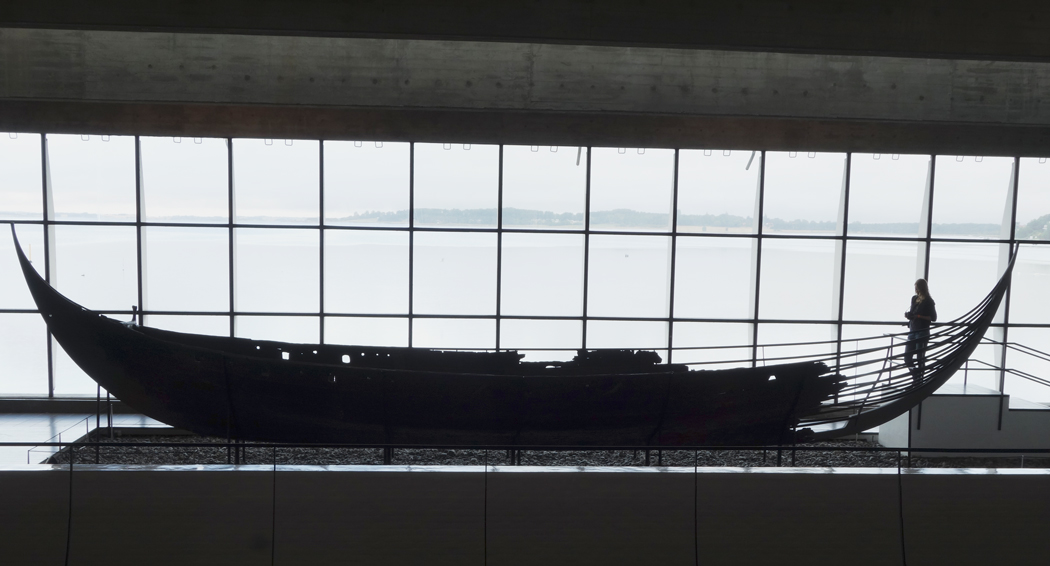 Vik literally means “shallow inlet,” and “vik-ings” were the people who lived along those inlets. Roskilde — and its award-winning Viking Ship Museum— are strategically located along one such inlet (half an hour west of Copenhagen). Centuries before Europe’s Age of Exploration, Viking sailors navigated their sleek, sturdy ships as far away as the Mediterranean, the Black Sea, the Persian Gulf, and the Americas. This museum displays five different Viking ships. These vessels were deliberately sunk a thousand years ago to block an easy channel into this harbor, and were excavated only in modern times.
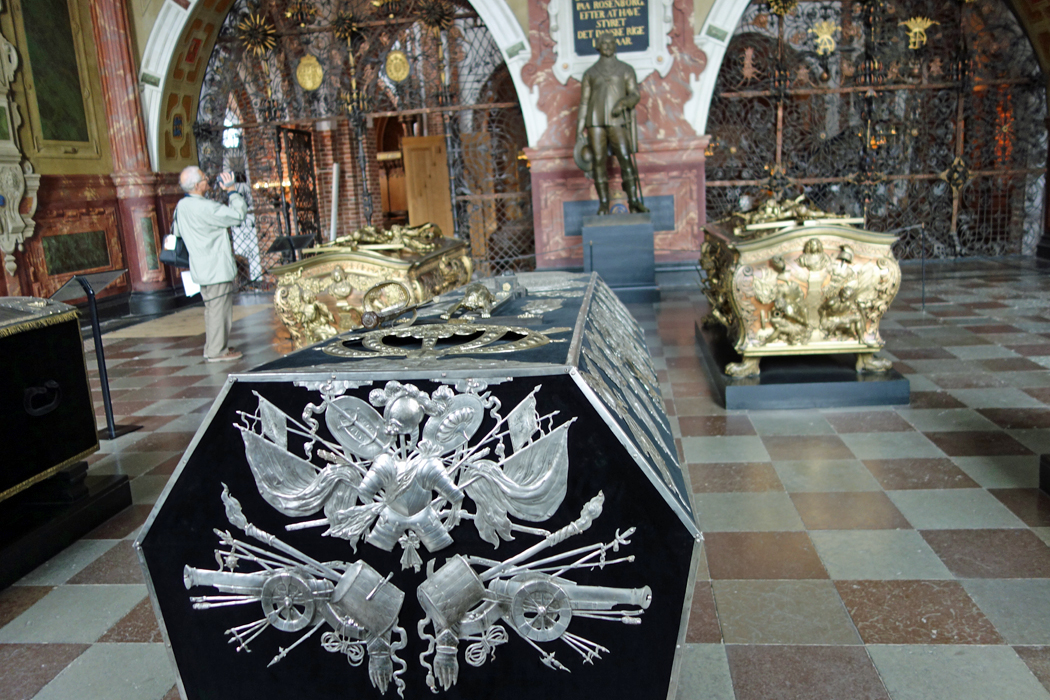 Roskilde’s imposing, 12th-century, twin-spired cathedral houses the tombs of nearly all of the Danish kings and queens (39 royals in all). It’s a stately, modern-looking old church with great marblework, paintings, and woodcarvings. The nave is ringed by chapels, each one with a king’s tomb. This rather austere tomb holds the body of one of Denmark’s least austere monarchs, King Christian IV.
Scandinavian Royals
Scandinavia feels like Europe’s most modern corner. But unlike Germany, France, Italy, or Greece, the Scandinavian countries all still have their royal families.
Norway, Sweden, and Denmark are all constitutional monarchies. Their royal families know they are anomalies. But as long as they don’t embarrass the citizens who pay for their jeweled lifestyles with stupid scandals (like Spanish and English royals have done in recent decades), pragmatic Scandinavians seem to like the idea that figurehead monarchs do the fancy VIP receptions and ribbon-cutting ceremonies… and their prime ministers get to focus on the serious governing.
Seeing this system working well — and seeing ours not (when our country’s appetite for a glittering human symbol of our government is incompatible with its insistence that our rulers are not above the rules) — I can understand why Scandinavians continue to enthrone kings and queens. And as for sightseeing, all those palaces, crown jewels, and glittering processions add some razzle-dazzle to the traveler’s day.
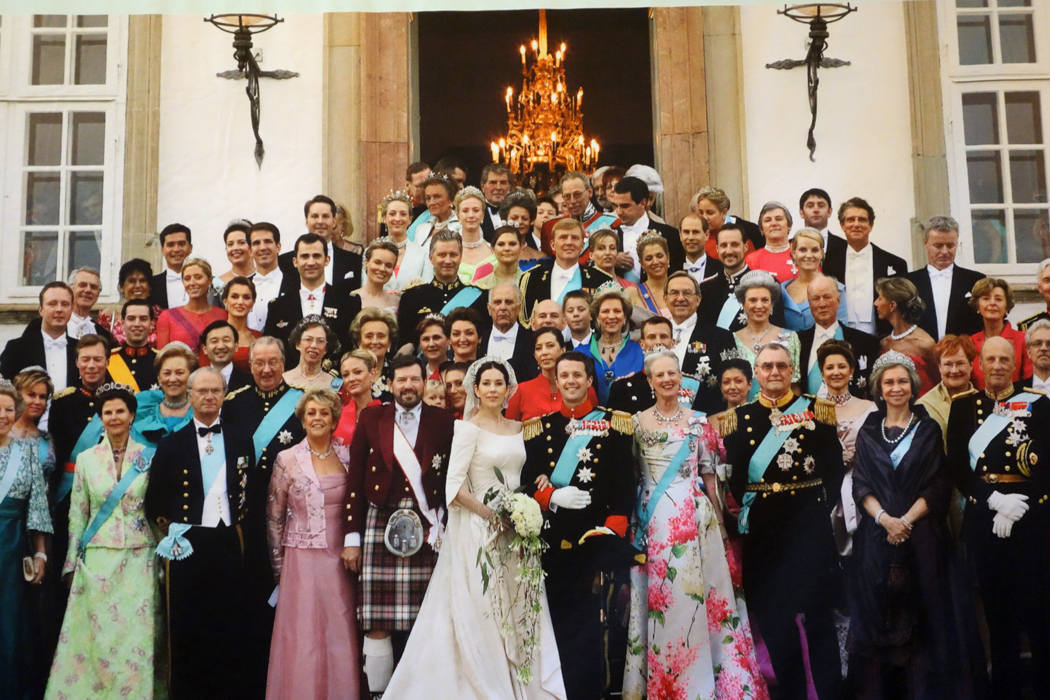
Touring a palace in Copenhagen, I enjoyed this photo of an extended royal family gathering, which included blue-blooded royals from all over Europe. Danish royals are particularly adept at marrying their children into other royal families. That used to be a key to a country’s well-being. These days, I think it just means that you have to put on the tux a little more often. Denmark’s King Christian IX was famously nicknamed the “father-in-law of Europe”— his children eventually became or married royalty in Denmark, Russia, Greece, Britain, France, Germany, and Norway.

In Copenhagen, much of your sightseeing involves Denmark’s royal heritage — like here, at Amalienborg Palace. While Queen Margrethe II and her husband live quite privately in one of the four mansions that make up the palace, the twin mansion just across the cobbled square is open as a museum, which I found particularly interesting. It displays the private studies of the four kings who ruled Denmark from 1863 to 1972 (the immediate predecessors of today’s Queen). Each room affords an intimate and unique peek into Denmark’s royal family. They feel particularly lived-in — with cluttered pipe collections and bookcases jammed with family pictures — because they were.

Many countries have one dominant figure in their history — a big and charismatic personality who really shaped the place. Denmark’s larger-than-life king was Christian IV, who ruled for 60 years in the 17th century and created modern Denmark. This painting decorates the chapel that holds his tomb in the cathedral at Roskilde. The king was a large man who also lived large. A skilled horseman and avid hunter, he could drink his companions under the table. He spoke several languages and gained a reputation as outgoing and humorous. His lavish banquets were legendary, as were his romantic affairs. This painting shows Christian IV wearing his trademark eye patch. He lost an eye to some shrapnel in a sea battle and, according to legend, pulled out the shard and made it into an earring for his mistress. Great he was… until his many wars impoverished his once-mighty country.