Festive Barcelona Is Packed

My visit to Barcelona coincided with a particularly crowded and lively time: Holy Week and Easter. I enjoyed getting a Catalan take on this holiday.

Barcelona — Where People Stroll Like Sardines

Barcelona is one of the darlings of European tourism lately. It’s the biggest cruise port in Europe and one of the biggest in the world (as a starting or ending point for a huge portion of all Mediterranean cruises). It’s trendy for its Gaudí “Modernisme”— Catalunya’s answer to Art Nouveau. Catalunya is feeling its nationalist spirit. It’s well served by discount airlines. And vacationers — both Spanish and foreign — fill its streets, especially during its many festivals. I happened to be here over Easter weekend, and the boulevards were often human traffic jams.

Barcelona Bunnies
Barcelona Bunnies

Easter is a huge deal in Spain, especially in the south. Semana Santa (Holy Week) is one of the busiest and most festive times in Andalucía. But here in Catalunya, I found that Easter isn’t quite such a big deal. Catalans seem less religious, and the main duty of godfathers is to buy their godchildren overpriced decorative chocolate creations that fill shop windows. There was a Semana Santa-style parade, with teams of people trudging slowing down the street in tight formation, hidden under the huge religious floats they carried. But locals told me Catalans would never do this; these celebrants were from Andalucía, and travel each year to Barcelona to share their Easter traditions. While the churches may not have been overwhelmed with crowds, the Easter parade certainly jammed the streets.

Back in Barcelona, Where There’s Always Something New

I’ve left Portugal and have landed in Barcelona, where I’m sprucing up my new guidebook on this fun and fascinating city. A trip to Barcelona always comes with lots of learning for me — whether it’s the hottest dining and drinking trends (food tours and vermouth bars), the latest restored building in this city of bold and creative architects, or getting up to speed on the movement for the surrounding region of Catalunya to declare independence from Spain.

The theme in Europe over the last generation has been the rise of ethnic regions. As power gravitates to Brussels, the national capitals seem less concerned about their restless, would-be breakaway mini-states. For example, this year we’re hearing a lot about Scotland and Catalunya both seriously pursuing the possibility of declaring their independence from Britain and Spain, respectively. It’s always impressive for me to note that more people are speaking Europe’s small languages (Irish, Basque, Catalan, and so on) today than a generation ago. Talking to my friends in Barcelona about the practicality of having their children learn Catalan first at home and in school — leaving them with a native tongue that less than 10 million people speak in an aggressive and global world — none of them questioned the notion. Of course they’d speak Catalan…they are Catalans.

Here are pictures of three very different experiences I enjoyed on my latest Barcelona visit.

Last week I posted about a food tour I enjoyed in Porto, Portugal. Food tours— offering a mobile feast with several stops to sample a variety of local flavors for about the cost of a splurge dinner, all thoughtfully explained by a local guide — are a big trend across Europe. In Barcelona, as in many places, vermouth bars are all the rage these days. And as this photo shows, a refreshing glass of vermouth is complemented by a plate of local taste treats. Especially in Spain, this “tapas” style of eating and drinking makes for fun meals.
In Barcelona, the Ramblas pedestrian drag and the Gothic Quarter are understandably popular, but overrun with tourists. The new, happening quarter is El Born, just beyond the Gothic Quarter. A square called El Born (named for the tournaments once held there) faced a big 19th-century iron-and-steel market. In the 1970s, the vendors moved out, and the market was slated for demolition and redevelopment. But then they discovered the remains of a centuries-old neighborhood with a rich history:  In 1714, the residents here lost an uprising against the Spanish, and were forced to demolish their homes and carry the very stones that gave them shelter to the neighboring hill to build a citadel — from where the Spanish crown would assert their control over the people of Catalunya. The leveled neighborhood then provided a cleared-out no-man’s-land outside the fort, which later became a place of execution. Later, in more peaceful times, the space was made into a market. And in the last few years, they unearthed the remains of those original Catalans. Today, the El Born Market is an inviting and inspirational cultural center that tells its story well.
In Barcelona, the Ramblas pedestrian drag and the Gothic Quarter are understandably popular, but overrun with tourists. The new, happening quarter is El Born, just beyond the Gothic Quarter. A square called El Born (named for the tournaments once held there) faced a big 19th-century iron-and-steel market. In the 1970s, the vendors moved out, and the market was slated for demolition and redevelopment. But then they discovered the remains of a centuries-old neighborhood with a rich history: In 1714, the residents here lost an uprising against the Spanish, and were forced to demolish their homes and carry the very stones that gave them shelter to the neighboring hill to build a citadel — from where the Spanish crown would assert their control over the people of Catalunya. The leveled neighborhood then provided a cleared-out no-man’s-land outside the fort, which later became a place of execution. Later, in more peaceful times, the space was made into a market. And in the last few years, they unearthed the remains of those original Catalans. Today, the El Born Market is an inviting and inspirational cultural center that tells its story well.
In Francisco Franco’s time (until the mid-1970s), the people of Catalunya were not allowed to speak their language or fly their flag. So instead, they’d fly their soccer team’s flag. Then, once allowed, they flew their yellow-and-red-striped flag of Catalunya. And now you see many flags with a feisty addition: a blue triangle and a white star. This is inspired by the flag and spirit of the former Spanish colony of Cuba, which won its freedom from Spain in 1902. This Cuban/Catalan hybrid flag indicates that the people in this household support Catalunya's independence from Spain.
In Francisco Franco’s time (until the mid-1970s), the people of Catalunya were not allowed to speak their language or fly their flag. So instead, they’d fly their soccer team’s flag. Then, once allowed, they flew their yellow-and-red-striped flag of Catalunya. And now you see many flags with a feisty addition: a blue triangle and a white star. This is inspired by the flag and spirit of the former Spanish colony of Cuba, which won its freedom from Spain in 1902. This Cuban/Catalan hybrid flag indicates that the people in this household support Catalunya’s independence from Spain.

A Picturesque Stroll Through Colorful Coimbra

I’m enjoying my visit to Coimbra. Just an hour from Lisbon, Coimbra is sort of the Oxford or Cambridge of Portugal —the home of its most venerable university. Here are a few colorful slices-of-life that I collected during my latest trip.

Coimbra Market — In the EU, but Still Funky

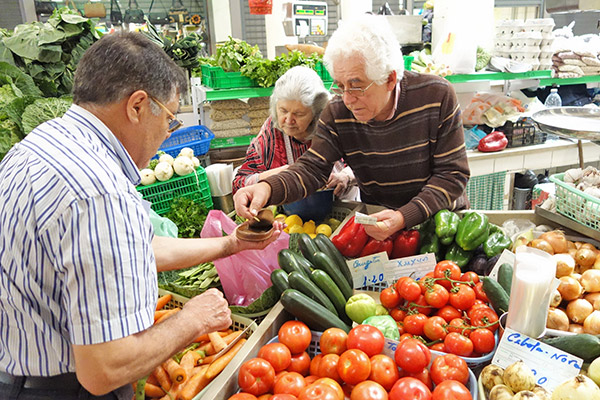
Every city in Europe seems to have a vibrant market where visitors can feel the wrinkled and fragrant pulse of the town. The European Union has asserted itself, raising hygiene standards and, in many cases, messing up a lot of the character. But here in Coimbra, the color and twinkle survives.

In Cod We Trust
In Cod We Trust

Spain’s cuisine is more rustic than France’s. And Portuguese cuisine is more rustic than Spain’s. But if you like seafood, Portugal is a tasty treat. While fresh seafood is abundant, the Portuguese favor cod — salted cod, to be specific. Perhaps cod is in their collective DNA from the age when preserved-in-salt cod was the life-sustaining protein sailors filled the bilges of their ships with five centuries ago. Even in our age of refrigeration, and even when their own cod is fished out, the Portuguese continue to import dried and salted cod from Norway, stack it like wood, and — when it’s time to eat it — soak it and cook it. Frankly, it’s just the strangest thing: a nation’s primary staple imported from far-away Norway. Here in the Coimbra market, it seems to be sold by the cord.

Munchies with the Students at Coimbra’s University

When touring any city, it’s fun to drop in on the local university. Coimbra’s university is the city’s leading attraction (with an amazing library and an equally amazing chapel). While visiting universities anywhere, you can generally enjoy the cheapest meals in town — with the most interesting crowd of fellow diners in town (and, very likely, the locals most likely to speak English well) — by eating at the university cafeteria. Here in Coimbra, the cafeteria welcomes tourists. During busy times, all seats are taken, and you’re very likely to find yourself munching with law students or their professors.

Three Dailies — All Sports (Football)

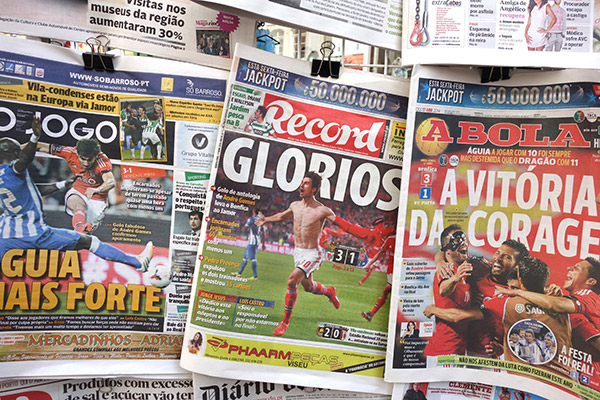
I have to admit that with all the world’s challenges, I sometimes think sports are a convenient diversion designed to distract the potentially restless masses. Many attribute Europe’s ability to avoid wars in the last generations in part to how soccer (or “football,” as it’s known here) lets a society’s working class blow off steam. The newspaper industry may be in turmoil. But at newsstands throughout Portugal, you’ll notice there are three daily newspapers…and each is devoted to sports. And when they say “sports,” they mean football. Each newspaper features one of the big soccer teams, and many locals marvel at how creatively they struggle to fill each daily edition with “news.”

A Mobile Feast in Porto — With a Guide

Wherever you’re traveling in Europe, you can search online for a local food tour. I took one in Porto and had a great time…and a great meal. Here, at the end of a delicious tour, our guide, Andre (of Taste Porto Food Tours), recaps what we did.

If you can’t see the video below, watch it on YouTube.

My Kind of Gut Bomb

Every country has its hot dog-like gut bomb. And if you’re going to sample one of these local grease treats — and you should — it’s best to find a bar with character (and characters) that honors tradition and uses the freshest ingredients. Of course, that’s easiest to accomplish with the help of a local guide… or a guidebook written by a guy who uses these guides for several months every year as he updates and broadens his information.

This little stop, in Porto, is Cervejaria Gazela, next to the national theater and midway between breakfast and lunch. Warming a stool, chatting about the struggle of traditions in a rapidly modernizing world, and watching the bartenders assemble and grill these wonderful snacks — simple as they might be — was a highlight of my Porto morning (and cost only about €3 with my beer).

If you can’t see the video below, watch it on YouTube.