What’s New in France in 2014

As part of our annual guidebook updating process, we assemble a series of “what’s new” articles for each region in Europe. This is the second in a series of these articles I’m posting to my blog. Today we’re going to France. If you or your friends have a trip coming up, get up-to-date with the help of these bulletins. We hope you can share them with anyone heading out, and that they will bring a little extra travel joy:

France is always working to show off its rich heritage in innovative ways. You’ll see some impressive changes this year.

The big news in Paris is that the extensive, multi-year makeover of the Picasso Museum is nearing completion. The museum, which will reopen sometime in 2014, is home to the world’s largest collection of Picasso works, representing the full range of the artist’s many styles (check www.musee-picasso.fr for the latest).

Also in Paris, the Rodin Museum will stay open, though some rooms will close from time to time while renovation continues through 2015; on the plus side, visitors can currently enjoy some rarely displayed pieces and temporary exhibits (included in the ticket price). The museum’s gardens–one of Paris’ best deals at only €1–also remain open.
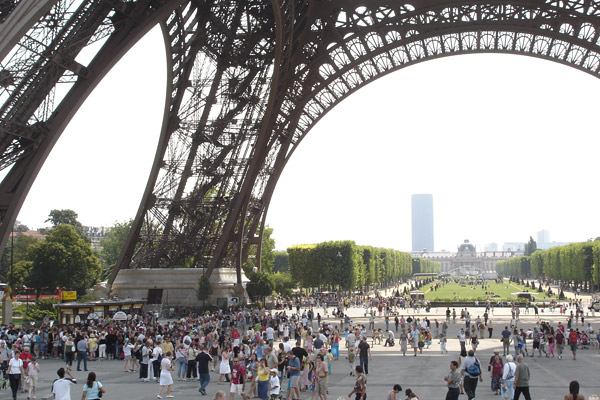
You can avoid lines, bypass crowds, and zip up the Eiffel Tower if you’ve booked your ticket ahead of time.

Online reservations for the Eiffel Tower, notorious for its lines, are easy if you book at least a month in advance. You can print out a paper ticket, or have the ticket sent to your mobile phone. An attendant scans the bar code on your phone, and voila, you’re on your way up.

St. Sulpice Church is no longer allowing visits to its massive pipe organ due to space constraints. However, the church’s superb organ recitals continue as usual.

Paris is going green: The Left Bank expressway from near the Orsay Museum to the Pont de l’Alma is being converted to a pedestrian promenade and riverside park and should be completed by 2014. Modeled on the city’s popular Vélib’ self-serve bike rentals, the Autolib’ electric car program (where users can pick up a car in one place and drop in another), is a smashing success.

In Arles, the new Fondation Van Gogh facility is the talk of the town, as it’s rumored that several original Van Gogh paintings will accompany its opening in early 2014 at Hôtel Léautaud de Donines. The restoration of the city’s Roman Arena (Amphithéâtre) is now complete, but the Arlaten Folk Museum remains closed until 2015.

France’s second city, Marseille, is still undergoing a massive 3.5 billion-euro face-lift as part of its designation as a European Capital of Culture for 2013. The pedestrian zone around the Old Port was redesigned–it’s now as wide as the Champs-Elysées–and a new tramway system is up and running.

In Nice, construction on the green parkway La Coulée Verte continues. When completed, the 30-acre parkway will extend from the sea through Place Masséna to the Museum of Modern Art, carving a people-friendly swath for biking and walking through Nice’s urban center.

In the Dordogne region, the prehistoric cave-painting sight Grotte de Font-de-Gaume currently is not taking reservations and is admitting just 80 people a day. Some visitors are camping out overnight to get a ticket. I recommend getting there by 7:30–the ticket booth opens at 9:30. At the Lascaux II cave, reservations are strongly recommended for July and August, and accepted only three to four days in advance (in France, call 05 53 51 96 23 for ticket availability and estimated English tour times).  Of the prehistoric sights in the region, only the Lascaux II, Pech Merle, and (in July and August) Abri du Cap Blanc caves take reservations; for all others it’s first-come, first-served.

In Normandy, June 6, 2014, will mark the 70th anniversary of the landings of the Allies on French soil during World War II. There will be huge D-Day commemorations around this date, so anyone planning a Normandy trip near the anniversary may find all the hotels already booked. New at the Caen Memorial Museum is the restoration of German General Wilhelm Richter’s command bunker next to the museum.
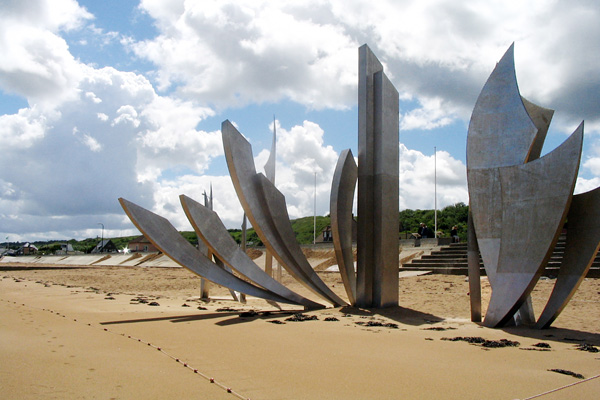
This year marks the 70th anniversary of D-Day, commemorated by this sculpture (Les Braves, by Anilore Banon) on Omaha Beach, honoring the courageous soldiers who landed here.

At Mont St-Michel, 2014 is the last year for the causeway that tourists have used for more than 100 years–it’s slated to be demolished by 2015. Restoration of the island’s ramparts may block some island walkways.

In Bayeux, the MAHB (Musée d’Art et d’Histoire Baron Gérard) has reopened, offering a modest review of European art and history in what was once the Bayeux bishop’s palace. Bayeux’s three main museums–the Bayeux Tapestry, Battle of Normandy Memorial Museum, and MAHB–offer combo-tickets that will save visitors money if they plan to see more than one sight.

And, as 2014 marks the centennial of the outbreak of World War I, all will not be quiet on the Western Front. WWI buffs will find plenty of special exhibits and a surge in activity at many sites in commemoration of the battles that hit Europe in 1914.

Boasting a startling wealth of historic sights, art museums, and cultural icons, France is a mecca for travelers. From its prehistoric caves to its progressive cities, it’s a rewarding destination any year.

What’s New in Italy in 2014

We get thousands of tips and feedback emails each year from our travelers. People who use our guidebooks know they are the most lovingly updated on the market, with in-person visits each year — and, it seems, they want to be sure we have no shortage of places to check out during our research rounds. I’m heading out in a month, and I’ll be packing 30 pages filled with reader tips and suggestions on the cities I’ll be updating.

As part of our updating process, we assemble a series of “what’s new” articles for each region in Europe. Today, I’m kicking off a series of these articles with Italy. If you or your friends have a trip coming up, get up-to-date with the help of these bulletins. We hope you can share them with anyone heading out, and that they will bring a little extra travel joy:

Florence is notorious for long lines at sights. Thankfully, ticketing and line-skipping options for the city’s blockbuster sights continue to improve. The Firenze Card, which admits you to 60-some museums for 72 euros, is now good for these cathedral (Duomo) sights: Baptistery, Campanile bell tower, dome climb, and Duomo Museum. If you want to see any single cathedral sight without a Firenze Card, you’ll need to buy the new 10-euro combo-ticket. It’s still free to enter the cathedral and have a look at Brunelleschi’s sublime dome from the inside.

Smart visitors to Florence buy a museum pass or advance tickets to avoid lengthy lines at key attractions such as the Uffizi Gallery.

At Florence’s Uffizi Museum, known for Renaissance art, there’s an exciting change. A new gallery is devoted to Michelangelo, with his famous Doni Tondo painting of the Holy Family as its centerpiece. It’s the only easel painting that’s definitely known to be by the master’s hand.

The private NTV/Italo high-speed train service is up and running, serving Florence along with Venice, Naples, Milan, and Rome. Because rail passes are not accepted, pass holders should choose Trenitalia’s equally fast Eurostar Italia or Le Frecce services instead.

Volterra has my vote for the best less-touristed hill town in Tuscany. Its new Alabaster Museum, featuring workmanship in the prized local stone from Etruscan times to the present, has opened within the 15th-century Pinacoteca painting gallery.

A new Alabaster Museum has opened in postcard-perfect Volterra, one of the least touristy Tuscan hill towns.

In Rome, there’s good news for those traveling on a budget or who enjoy eating in bars (or both). A pleasant practice traditionally found in northern Italian cities has migrated south: the aperitivo service. Bars set up an enticing buffet of small dishes and anyone buying a drink (at an inflated price) gets to eat “for free.” Drinks generally cost 8 to 10 euros, and the spread is out from 6 until 9 o’clock. Some places limit you to one plate; others allow refills. Another dining trend in Rome is that small restaurants with a full slate of reservations for 8:30 or 9:00 often will accommodate walk-in diners earlier–if they’re willing to eat a quick meal.

Venice is working hard to cope with its mobs of visitors. As ever-growing waves of tourists wash over the city every year, residents are struggling to ward off the trash (and trashiness) left in their wake. Picnicking remains illegal anywhere on St. Mark’s Square, and offenders can be fined. The city is taking a good-cop/bad-cop approach: On St. Mark’s Square, “decorum monitors” admonish snackers and sunbathers, while around town friendly posted guidelines cheerily encourage people to pick up their trash, refrain from pigeon-feeding, and save the beachwear for the Lido.

Structural renovation work on the iconic bell tower that looms over St Mark’s Square is finally finished; a titanium girdle wrapped around the underground foundations now shores up a crack that appeared in 1939. The city’s top art gallery, the Accademia, is still undergoing a seemingly never-ending renovation, with major rooms still closed. The Peggy Guggenheim Collection has also done some rearranging, largely to accommodate the recently bequeathed Schulhof Collection, which brings the museum’s holdings up to the late 20th century with works by Rothko, Calder, de Kooning, Warhol, and many others. Peggy would have loved it.

In Ravenna, a new museum is dedicated to Dante Alighieri, who spent three years here before succumbing to an infernal (or at least malaria-ridden) mosquito. While it’s a buzz for Italians, it’s skippable for those who aren’t fans of the author and his work.

Milan is preparing to host the 2015 World’s Fair. To welcome the expected 20 million visitors, the Rho-Pero district is revamping its layout with new parks, museums, and American-inspired skyscrapers.

Life is pretty much back to normal in the Cinque Terre, where flooding devastated the area just a few years ago. But the beautiful coastal trail system remains at the mercy of nature, with washouts or bad weather closing popular stretches. The popular Via dell’Amore (Path of Love), which was hit by a landslide in 2013, will reopen sometime in 2014. In Vernazza, a new “beach” was formed with debris from the floods. It’s great for wading and sunning, but wear shoes, as bits of rubble are mixed in with the pebbles.

Italy has long been my favorite country in Europe, and some of its thrills will never change with the calendar. Sit silently on a hilltop rooftop and get chummy with the Tuscan view. Write a poem over a glass of local wine in a sun-splashed, wave-dashed Riviera village. Lifelong travel memories are like low-hanging fruit in Italy — yours to harvest and preserve for years to come.

When Our Travel Memories Get Misty, Some Adult Care Is a Good Thing

Last week, the Washington Post hosted a workshop in Seattle to highlight the growing importance of adult caregivers in our nation. I was asked to share my take on that issue after my experiences with my Mom, who suffered from Alzheimer’s until she died two years ago, and my Dad, who took care of her. Here’s a 10-minute conversation about the importance of giving adult caregivers a break from 24/7 responsibilities by making an adult day care service available in our communities.

We all need to be comfortable with bringing our aging loved ones out in public, and we need to appreciate the huge (and unpaid) workforce that brings comfort to this growing part of our society. All of us will eventually outlive both our bodies and our minds — but generally not at the same rate. As a society, we should be better prepared.