I Know It's Midnight, But…

I really enjoy the emails people send me sharing magic moments and offering not only practical tips, but philosophical ones. Eric shared a magical midnight in Spain that will stay with him and his family for the rest of their lives.

When I travel, I know that serendipity is a friend. She leads me to unexpected magical moments that come with a warm welcome and leave me with a lifelong memory. We all need to take those crazy detours and embrace the experiences they offer. Here’s Eric’s letter. If it reminds you of a time you were proactive in making it happen, I’d love to hear about it in the comments.

Dear Rick,

I wanted to share a comment with Mr. Steves and the rest of your team. I have attended a number of sessions taught by Rick during your all-day travel events in Edmonds, as well as reading a number of his books. One bit of advice he shares that has always stuck with me is to be flexible ‘ and be prepared to go off the typical tourist route ‘ in order to experience the culture. That bit of advice was running through my head when the following occurred:

Last May, my wife, our 25-year-old daughter, and I travelled to Sevilla, Spain, to spend a week with our 21-year-old daughter who was ending her semester of studying abroad in Sevilla. The four of us had taken a side-trip to Granada for a couple of days, and were returning to Sevilla by bus. It dropped us off just before midnight, and we began the mile-and-a-half walk back to our Sevilla apartment. As we walked, we heard what sounded like amplified live music in the distance. At that point I asked myself, “What would Rick Steves do in this situation?”

I turned to the rest of the family and said, “I know it’s midnight, but let’s go find out where this music is coming from!”

They were all game, and off we went, following the music. We came to a large park that turned out to be the venue for a type of Renaissance Fair. Being Spain, at midnight the place was packed with people visiting various booths containing crafts and food. At the far end of the venue was a stage where the live music was coming from. It was a group of Spanish musicians playing Celtic music.

At this point I need to add that both our daughters have been trained in Irish Dance. In 2004, we’d travelled to Ireland, where one competed in the Irish Dance championships ‘ another two-week Rick Steves-inspired vacation that resulted in both daughters doing some impromptu dancing in an Irish pub in Doolin.

Okay, back to the story. As the group was coming to the close of their set, they announced that they were going to play an American song that, although not really a Celtic tune, had a similar beat. Then they launched into “Oh Susannah!” So here we were, watching a Spanish band playing an American song, trying to make it Celtic, and singing the American words with very heavy Spanish accents. It was an experience!
During the entire performance, a few people directly in front of the stage were dancing and moving to the music. All the while our eldest daughter was tapping her feet to the tunes.

Finally, the group announced its final number. As they began to play, our eldest daughter launched into her Irish dancing and moved to directly in front of the stage. As the band played, she danced, and the rest of the crowd parted into a large circle to watch her dance to the music. When it was all over, the band ‘ AND our daughter ‘ all received a great cheer and applause.

We would not have experienced and of this had I not asked myself: “What would Rick Steves do in this situation?”

Thank you to everyone at Rick Steves’ Europe for helping us to get more out of our vacations.

‘ Eric in Mount Vernon, WA
My Sister, Jan Steves, the Arctic Dog Musher: Living Her Dream

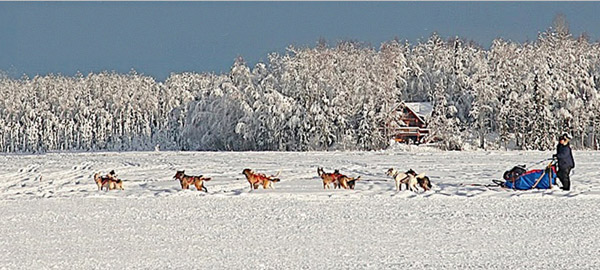
Dashing through the snow...

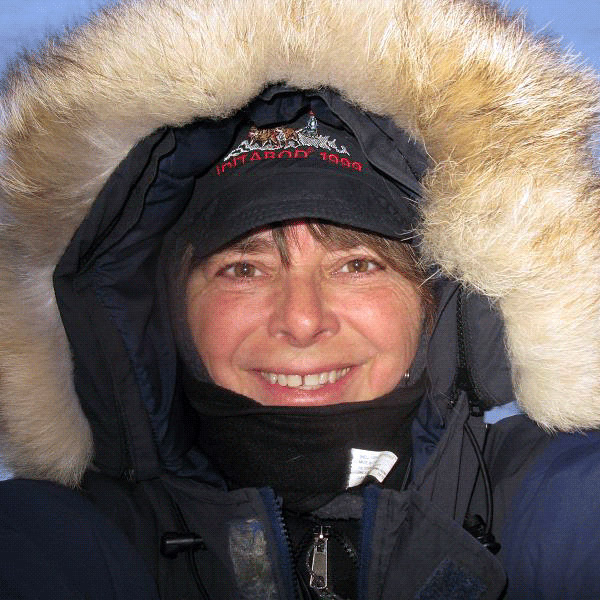
All her life, my little sister Jan has been into dogs, hiking, and skiing ‘ rather than (like her big brother) Botticelli, Berlin, and Belgian beers. Now, in her mid-fifties like me, she’s living her dream of being an arctic dog musher with an inspirational gusto that makes me feel like a couch potato.

With amazing personal (and financial) grit and determination, she’s one step away from actually racing in the Iditarod. For several years, she’s been wintering not (like so many Seattleites) in the sunny Southwest, but in Alaska…camping in a leaky trailer while training the dogs of a crusty, old, retired musher.

And as I write, she’s four days into a 20-day, 800-mile trip, retracing the historic “Serum Run” that brought diphtheria medicine to save a remote Eskimo community in 1925 and became the inspiration for the ultimate dog race, the Iditarod. In two weeks, God willing, she and the 10 other dog teams also doing the Serum Run should reach Nome.

At Jan’s website, you can follow her odyssey by clicking on “Jan Steves’ Blog.” Her recent adventures include how her team got away from her and she had to hire a helicopter to find them, how she nearly cut off her finger hacking through frozen meat to prepare food for her dogs, how she’s raising money by letting friends sponsor her lovable dogs, and what it’s like to be pulsing through the Alaskan wilderness at midnight under a full moon with icicles hanging from your eyebrows. I’ve never seen Jan happier. Here’s an email she sent me this morning:

Dear Rick,

I was chosen to be “Wild Bill Shannon” (who did the first leg of the original 1925 “Great Race of Mercy”), and I got to receive the serum from the train in Nenana and be the first musher on the trail and carry the serum from Nenana to Minto. That was exciting! It was quite the event, with spectators watching…and me hoping that I would go the right way! I led the 11 dog teams out onto the Tanana River and then onto the overland trail to Minto.

Arriving in the Indian village of Minto, we were greeted by its 250 residents…and shown great hospitality, as they had made fry bread and a big pot of moose stew for us. In the morning, they cooked us all breakfast of eggs, pancakes, and sausage.

Then we took off for Tolovana Road House. We had blizzard conditions both days, and the trails were often windblown and hard to find.

Arriving at Tolovana was awesome, and again, we were shown great hospitality. They had hot water ready for the dog teams. We set up our cots inside the Road House and slept well, got up and hit the trail to Manley with the crack of dawn.

Our journey to Manley was slow but we had beautiful weather. Below-zero temps but no winds or blizzards.

We are staying in the school house and have the use of their computers and showers!

Love you all!

“Wild Jan” and her dogs

P.S. The dogs are fabulous and doing great!!!!


Stretching All the Way to Peoria

I just got back from a torrid little lecture tour, giving talks in four cities I’ve never been to before ‘ Fort Wayne, Charlotte, Peoria, and Norfolk ‘ all in four days. I flew home savoring a big idea: This county is filled with beautiful people filling fine towns I’m likely never to see.

In Fort Wayne, 2,000 people packed a theater, and several hundred were turned away ‘ one of the biggest crowds I’ve ever had the thrill of talking to. (They said the only other person to fill the place was Henry Winkler. I think that’s a compliment.)

In each city, I shared my “Travel as a Political Act” talk (watch the recording of a similar talk on YouTube), and in several cases, I also got to meet with community leaders, local students, and teachers for more intimate discussions. The university in Fort Wayne reported that anthropology students went to a restaurant after the lecture ‘ with their professor ‘ and talked into the early morning. It’s fun to bring a European perspective to towns that have an appetite to open up to the world.

From the Chicago airport, Peoria is a three-hour drive through cornfields and past tornado damage. Sitting in the back of my long, long limo heading south to give a talk about how traveling on a budget gets you closer to the ground while writing TV scripts for upcoming shows, I surveyed the view…and thought what an interesting gig I’m enjoying.

If you can’t see the video below, watch it on YouTube.

Hooray for Marching Bands — I Love My Sousaphone

It’s funny to me that some people thought my previous entry was anti-marching band. It may have been pro-public broadcasting, but not at the expense of bands! I love marching bands. In fact, I transferred colleges (from the University of Puget Sound to the University of Washington) because I wanted to play the sousaphone in the Husky Marching Band. Recently, Seattle’s BECU (Boeing Employees’ Credit Union) asked me if I would join “celebrity alums” from the University of Washington to be part of a rousing fight song chorus. I said, “Sure” ‘ and did them one better by offering to play the sousaphone, too. I didn’t even know whether I could still toot the thing after a 30-year lay-off. They rented the sousaphone, and I was finally able to put all my hot air to good use ‘ just like the good old days. (To my horror, upon reviewing the footage I realized that I hadn’t screwed the bell on straight…but I doubt many people noticed.) Anyway, I like the ad they edited together. Here is the actual ad, and a couple of clips of me showing my purple-and-gold spirit. Go Huskies!

If you can’t see the videos below, watch them on YouTube: In the Office | On the Street

Save the Marching Bands, but Kill Public Broadcasting?

Earlier this week, I posted my thoughts on the proposed cuts in government funding for public broadcasting. USA Today liked my article and wanted to run it as an exclusive op-ed in Thursday’s edition, so I temporarily removed it from my blog. In order to fit the confines of their printed pages, it was edited down to what you see on their website. Below is my original, full-length version.

Congress is dealing with this issue imminently. If you are concerned, please contact your member of Congress today with a phone call or email.

————–

Our government spends $430 million a year on public broadcasting…less than the $500 million that (according to the Washington Post) it spends each year for marching bands in our military. With our current frenzy to cut the fat out of government, nothing is sacred ‘ except, apparently, non-essential expenses for the military. This puts marching bands on solid financial footing, while public broadcasting is facing the budget ax.

I’m certainly not anti-band. I actually transferred universities in order to play in a top-notch marching band. (In fact, every thirty years or so, I get out the old sousaphone to channel John Phillip Sousa.) But I believe non-commercial media that respects the electorate’s intelligence, assumes an attention span, and can produce content with no regard to advertiser interests is important to the fabric of our society and to the strength of our democracy.

Of course, I am part of public broadcasting. I produce radio and television shows that air across the nation on public broadcasting stations. While I could charge stations to air the shows I produce, I’d rather offer my TV and radio programs to the system for free (though, of course, my business benefits from the exposure I get). Therefore, I fund my own shows, then try to get underwriting from corporations (such as American Airlines, to whom I am grateful). My underwriters support my work, but do not dictate content. This allows me to introduce my viewers and listeners to the world I actually experience, rather than a version of the world shaped by the need to sell something. On TV, I can take viewers inside Iran to talk with everyday people, or to the Swiss Alps to celebrate Christmas, without wondering, “Will this offend advertisers?” On the radio, I can talk to the drug czar of Portugal about innovative drug policies, or to a gay activist in Lebanon, without sheltering our audience from thoughts that might get them out of their comfort zone.

But the value of public broadcasting in our society is much more important than being able to enjoy travel shows that aren’t shills for the mainstream tourism industry. Public broadcasting subsidizes news that is less exciting, but more insightful ‘ produced by journalists rather than entertainers…pursuing the truth, rather than advertising. Public television makes possible non-commercial children’s programming that is not shaped by people who sell our kids toys. And public broadcasting keeps culture alive even when it is not a commercial hit. Rather than lowering our society’s intellectual bar, it challenges us to be engaged. Public broadcasting inspires America to be smart. Of course, some will say, “Leave it to the marketplace.” But that’s just the point: Government-subsidized broadcasting makes possible media outside the marketplace and our society needs that for its own good.

Our society spends one-2,000th of a trillion dollars on providing the seed funds to make non-commercial broadcasting possible in our otherwise very commercial world. Public broadcasting requires much more money than that, which it gets from its audience through contributions and from corporate citizens through underwriting. Government funding is only about a tenth of what it takes to run public broadcasting in our country, but it enables this slice of our culture to exist. Does the American public ‘ which generates $13 trillion of wealth each year ‘ understand the cost to our society of sacrificing public broadcasting (to save less than $2 per citizen) in the name of fiscal restraint? (To learn more, visit www.170millionamericans.org. To make a difference, contact your member of Congress.)

I believe cutting government funding for public broadcasting would result in huge costs to our society ‘ even to people who find PBS or NPR threatening and annoying. You can make a very good case that, considering the complex and unprecedented challenges facing our nation today, programming like Sesame Street, All Things Considered, and public broadcasting’s trademark brand of quality independent journalism are actually important to our national security interests. Yes, marching bands can stir our troops to valor. But shouldn’t we find the resources, even in challenging economic times, to stir our minds to action as well?

By Rick Steves, host and producer of Rick Steves’ Europe on public television and Travel with Rick Steves on public radio.

If you can’t see the video below, watch it on YouTube.