With home-quarantine and self-isolation efforts ramping up on both sides of the Atlantic, we continue to hear from many of our European guides. Here are a few highlights from this week:
Everyone’s trying to stay positive and cheer each other up. David Tordi, who we heard from a few weeks ago, did a live concert with his neighbor for his entire neighborhood in Orvieto, and live-streamed it on Facebook:
https://www.facebook.com/davidtordi/videos/10157264020656569
And we’re all getting creative. One guide described how he discovered two baguettes he’d intended to freeze, which had already gone stale. So he sliced them up, stuck them in the oven, and made toasts. Another guide shared a video of her daughter making homemade bath bombs. And another has been using one of those freebie eye masks they give out on overnight flights as a makeshift mask to cover her nose and mouth for trips to the store.
We also received some beautiful “slice-of-life” reports:
In Northern Italy — so hard-hit by the virus — Patti Fanon writes:
“Greetings from my home town of Riva del Garda, where lockdown keeps the streets practically empty.
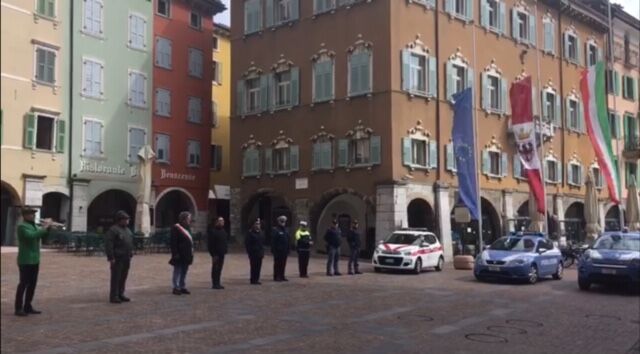
“The exception was a moving ceremony this week to honor Italy’s virus victims. It was on my way to the communal garbage bins — a trip I am allowed to make — so I stopped and listened to the haunting bugle lament which could be heard all over my deserted town.
“I am busy organizing my 12-year-old son’s home schooling. He’s a willing online learner of the saxophone and often plays to amuse me, bless him!
“I also volunteer for anything needed by my elderly neighbors who have to stay completely indoors because of their medical vulnerability. That includes the 200-meter household rubbish run to the communal bins at the top of the lake where the big boats normally ply their trade.
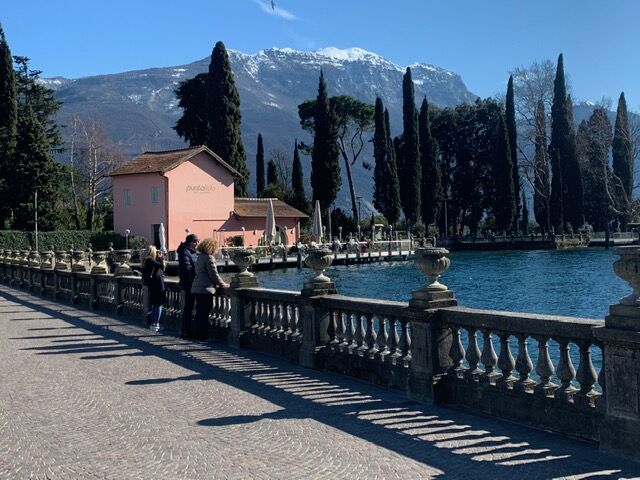
“To be honest, it’s the highlight of my day, not just because it’s a rare chance to get out and about, or because of the stunning views of which I never tire, but also because it takes me past the beautiful Chapel of San Rocco. Believe it or not, this holy man is the patron saint of Contagious Diseases, so I stop every time to have a little word with him.
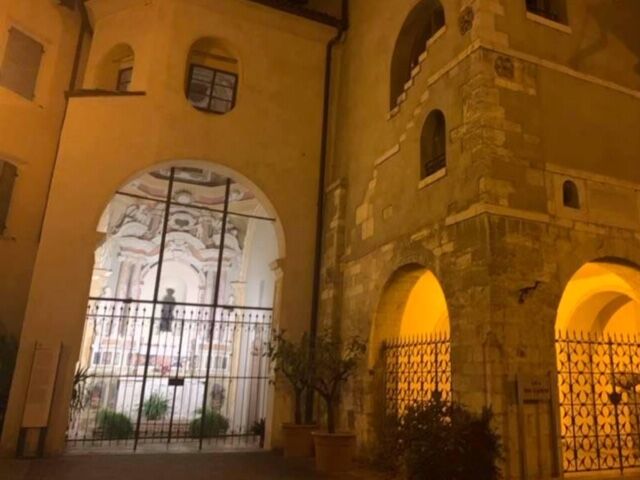
“I think we all need him to hear my prayer!!!🙏🙏🙏”
In Prague, Jana Kratka wrote to explain how the pandemic is affecting her family’s Easter celebrations:
“This is our 5th week that we’re locked down in Prague. We’re in a rather small apartment, so it’s not easy. But we spend a lot of time home schooling. We also cook, bake, exercise, play table games, and watch movies. My kids love to watch your Classroom Europe videos! I already recommended it to several of my friends, so their kids can practice English and history at the same time. So I‘m sending a huge THANK YOU from all of us!
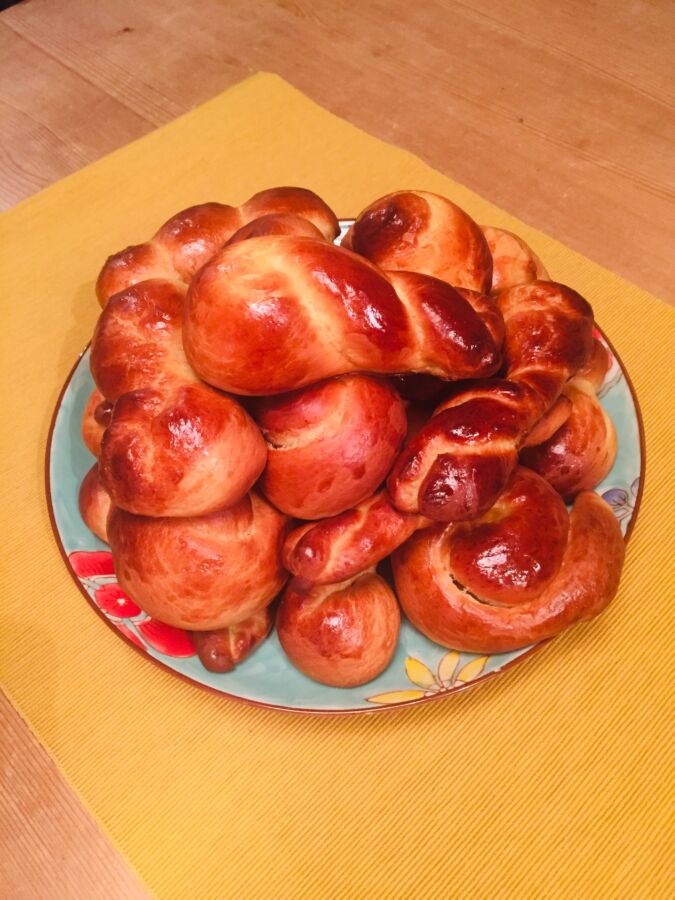
“We’re getting ready for Easter even though it’s going to be very different this year. We’ll miss being with our larger family, being outdoors, and breathing the fresh air. We’ll miss all the traditions. We baked a special Easter sweet with my kids yesterday – it’s called jidáše in Czech, or “Judas buns” in English. This is a special sweet baked on Holy Thursday named after Judas Iscariot. It’s made from a special dough that is shaped and baked as a knot. It’s supposed to symbolize Judas’s betrayal. And it’s yummy.
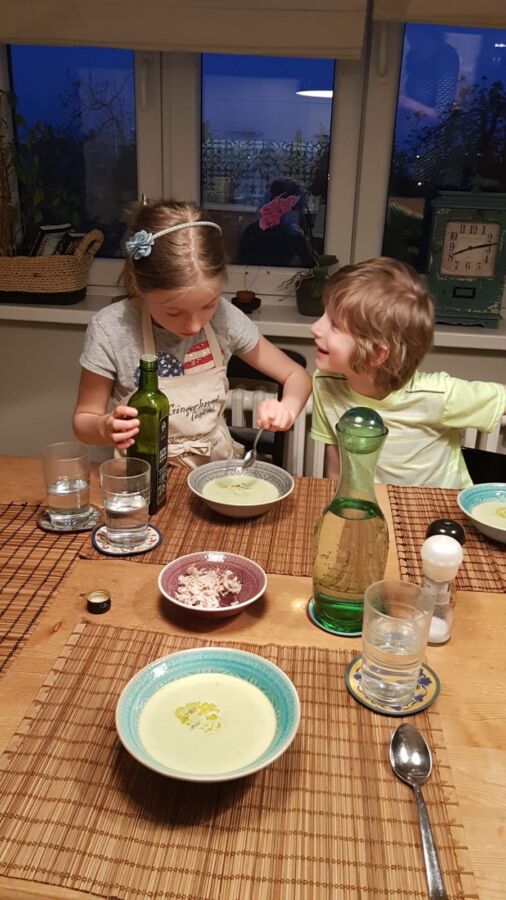
“There’s another Czech tradition related to Holy Thursday, or Green Thursday as we call it in the Czech Republic. Everyone is supposed to eat something green that day. My daughter Nela made a pea cream soup with smoked mackerel last night for us. It was delicious and it made her day, as well as ours!
“I miss my job so much, I miss the tours and our tour members. I can’t wait for the day my next RS tour will start!! I believe that after this – people will keep on travelin´!!”
Finally, Lale Sürmen Aran, tour guide and co-author of our Rick Steves Istanbul guidebook, explains how the pandemic has caused a surprising shortage in Turkey:
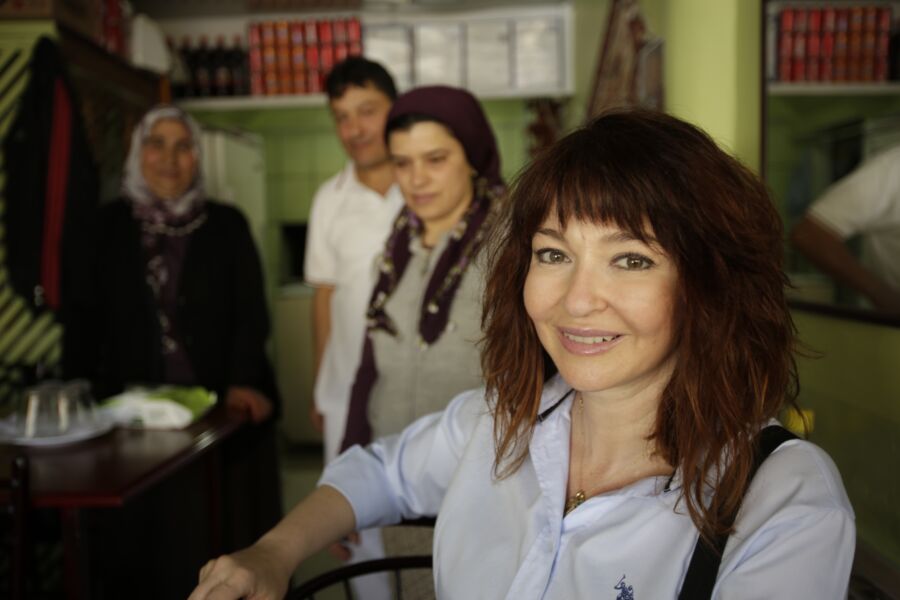
“There has been a shopping craze in each country after COVID-19 started spreading. It has been interesting to see what people buy in different countries: toilet paper, hand sanitizer, canned goods, flour and baking supplies, and so on.
“Here in Turkey, we all rushed to pharmacies, markets, and medical suppliers to buy…cologne! This is not because we want to smell good, but because cologne is a staple in our lives that we use as a disinfectant.
“Variations are sold as perfume worldwide and called ‘Eau de Cologne.’ But in Turkey, it is simply called kolonya (kohl-ahn-yuuh). The simplified name points out the everyday use and affordable price. It costs about $6-10 per liter if bought in plastic containers, as most of us buy it.
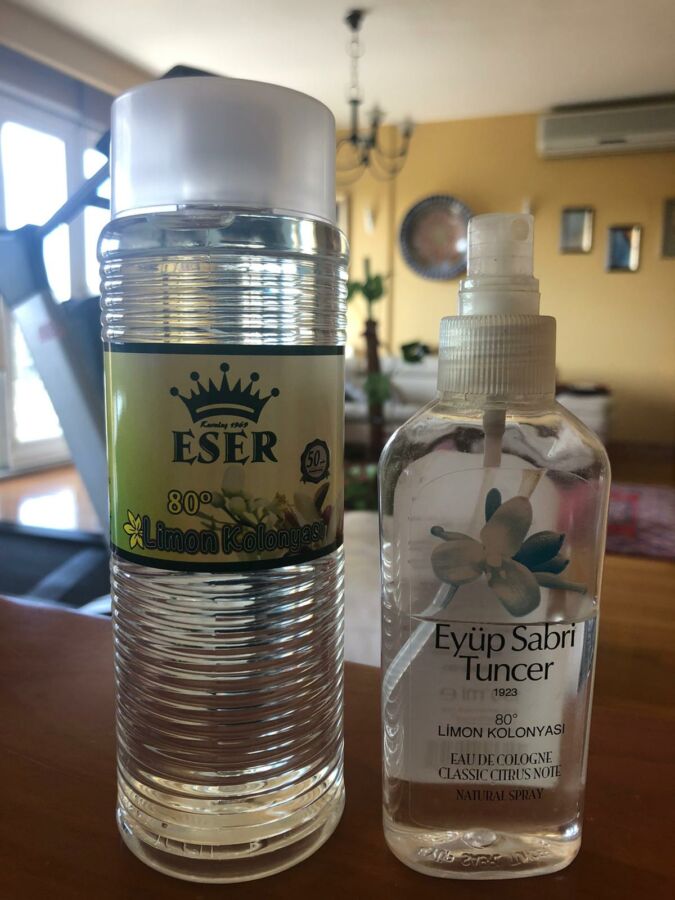
“Turkish kolonya includes at least 80% germ-killing ethanol, distilled water, and fruit fragrance, mostly lemon. As little as 3 grams would suffice to disinfect both hands. So a liter goes a long way.
“Culturally, kolonya is mostly perceived as a refresher that replaced rose water after it arrived in the Ottoman Empire in the 19th century. With COVID-19, all of a sudden we realized it is also a very strong disinfectant.
“You can’t think of a Turkish home without kolonya. It is always the first thing a guest is offered upon arrival; it refreshes and helps get rid of germs.
“Every barbershop carries it. The barbers would bathe clients’ faces with it after a shave. It is also offered on intercity bus trips, in restaurants, and in public bathrooms. It is some sort of a cleansing ritual for us.
“On the other hand, like a one-size-fits-all product, kolonya is also used to treat dizziness, fainting, and headaches.
“As a result, at the end of the week schools closed due to the coronavirus, there was a dire shortage of kolonya. Outside the branded retail shops, lines were longer than 100 yards to buy directly from the producer.
“Due to huge demand and public grumbling about the shortage, the government decided to temporarily stop requiring ethanol in gasoline to help boost disinfectant production. The nation praised the move, and it seems we are settling in for a long period of heavy kolonya use.”
Thanks to all of our guides for keeping us up-to-date on the situation in their home countries. Hopefully we can all be reunited, in person, soon.